

As an Amazon Associate and eBay Partner, toptenpick.com earns from qualifying purchases. Prices and availability are subject to change.
There is one question you have to answer before any stylus recommendation for a PLX-500 means anything, and it is not about budget. It is: are you going to touch the record while it plays?
If you back-cue, scratch, or drop the needle by hand onto a moving platter, you need a spherical (conical) tip tracking at a relatively high force — around 3 grams and sometimes more. A spherical tip has a large, rounded contact patch that sits in the middle of the groove, rides over debris, and survives being dragged backwards against the groove wall. If instead the record spins and you sit down and listen, you want an elliptical or finer profile at a much lower force — often under 2 grams. An elliptical tip is narrower front-to-back, so it follows the tiny high-frequency modulations a spherical tip smooths over, and the difference in treble detail is not subtle.
Here is why the choice matters so much rather than being a preference: put a fine elliptical on a DJ setup and you will damage records. That narrow contact patch concentrates the same force on a far smaller area of vinyl, and dragging it backwards is exactly the abuse it is least able to take. It is also far more likely to jump out of the groove when the platter is nudged. The reverse error is merely disappointing — a spherical tip on a listening deck sounds duller than it should, and tracks at a force that wears records faster than necessary, but nothing is destroyed in an evening.
The PLX-500 makes this easy to act on, because it uses a universal half-inch headshell mount — the PC-HS01 — which means essentially the entire world of moving-magnet cartridges will fit. That is the single most useful fact about upgrading this turntable. You are not restricted to Pioneer parts, and the factory PN-X05 stylus is a floor rather than a ceiling.
One terminology note that saves money: a stylus is the replaceable needle assembly that clips into the cartridge body; a cartridge is the whole transducer. If your PLX-500 still has its original cartridge, a replacement stylus is the cheaper fix. If you want a genuine improvement, replace the cartridge.
| # | Product | Price | Where to buy |
|---|---|---|---|
| 1 | Pioneer DJ PN-X05 Replacement Stylus | $30-$55 | Amazon · eBay |
| 2 | Audio-Technica AT-VM95E Cartridge | $60-$90 | Amazon · eBay |
| 3 | Audio-Technica AT-VM95C Conical Cartridge | $40-$65 | Amazon · eBay |
| 4 | Ortofon OM Series Cartridge | $50-$120 | Amazon · eBay |
| 5 | Ortofon Concorde MkII Mix Cartridge | $90-$160 | Amazon · eBay |
| 6 | Shure-Compatible / Aftermarket Replacement Stylus | $20-$60 | Amazon · eBay |
| 7 | Pioneer PC-HS01 Spare Headshell | $35-$60 | Amazon · eBay |
| 8 | Cartridge Alignment Protractor | $10-$40 | Amazon · eBay |
| 9 | Digital Stylus Force Gauge | $12-$35 | Amazon · eBay |
| 10 | Stylus Cleaning Brush and Gel Pad | $8-$25 | Amazon · eBay |
The picks, in detail
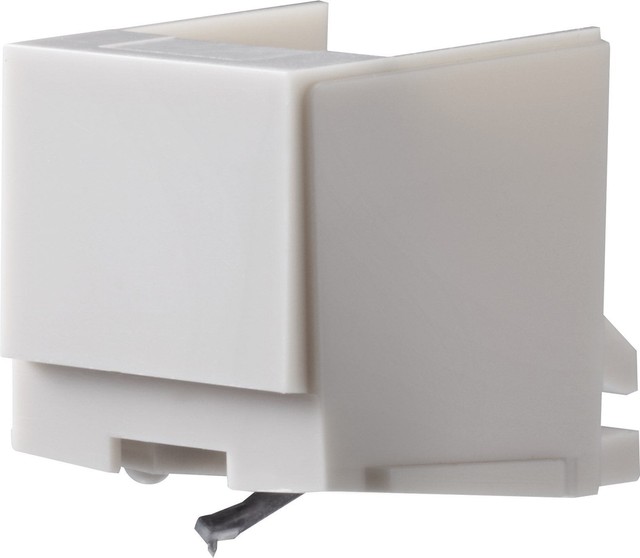
Pioneer DJ PN-X05 Replacement Stylus
The direct factory replacement for the stylus supplied with the PLX-500, and the simplest possible purchase: it clips into the cartridge already on your deck, no alignment, no protractor, no headshell wiring. If your current needle is simply worn — and a stylus that has done several hundred hours is worn whether or not it looks it — this restores the deck to how it sounded new in about thirty seconds. It is not an upgrade, and it is not pretending to be. It is the correct part.
- Pioneer DJ PN-X05, factory stylus for the PLX-500
- Clips into the supplied cartridge body
- No alignment or rewiring required
- Protective stylus guard included
- Genuinely a thirty-second job
- Restores factory performance exactly
- No risk of getting alignment wrong
- No sonic improvement over the original
- Costs a significant fraction of a better cartridge
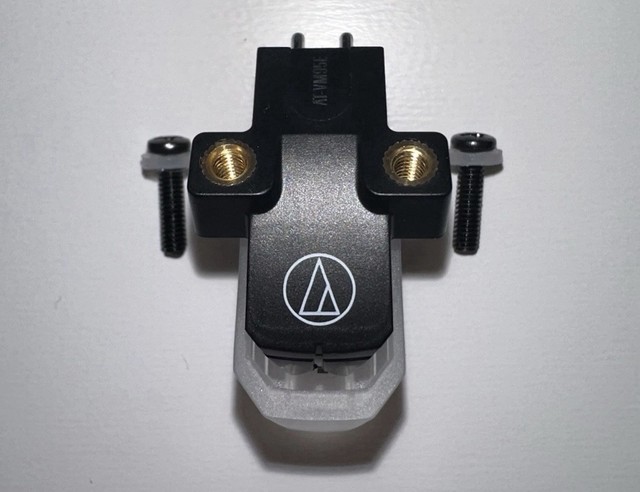
Audio-Technica AT-VM95E Cartridge
The single best-value upgrade available to a PLX-500 owner, and the one most people should buy. It is an elliptical moving-magnet cartridge on the VM95 body, which is the clever part: Audio-Technica sells a whole family of replacement styli for that same body, from conical up to Shibata and MicroLine. Buy the VM95E now and you can upgrade the stylus alone later without touching alignment again. For listening rather than DJing, this is a clear step beyond anything the deck ships with.
- Elliptical stylus, moving magnet
- Half-inch mount, fits the PC-HS01 headshell
- Upgrade path to conical, microlinear and Shibata styli on the same body
- Recommended tracking force around 2 g
- Large, genuinely audible improvement for the money
- Stylus upgrade path with no realignment
- Very widely supported and easy to find styli for
- Not suitable for scratching or heavy back-cueing
- Needs correct alignment and tracking force to perform
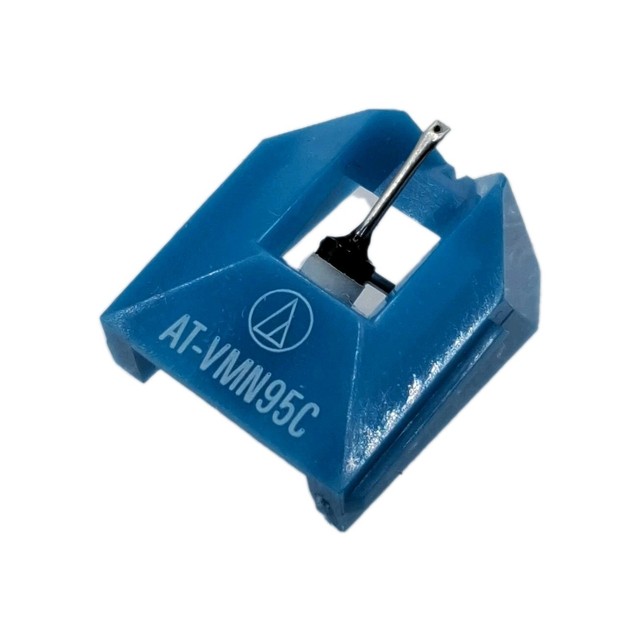
Audio-Technica AT-VM95C Conical Cartridge
The same body and the same upgrade path as the VM95E, with a conical tip instead. That makes it the DJ-appropriate member of the family: robust, forgiving of a nudged platter, happy at higher tracking force, and much kinder to your records if you cue by hand. If you bought a PLX-500 to actually mix on, this is the one to fit, and you retain the option of buying an elliptical stylus for the same body later if the deck’s role changes.
- Conical (spherical) stylus profile
- Same VM95 body as the elliptical version
- Half-inch universal mount
- Higher tracking force tolerance
- Handles back-cueing without damaging records
- Same later upgrade path to finer styli
- Inexpensive to re-tip
- Noticeably less high-frequency detail than an elliptical
- Not the right choice for a pure listening deck

Ortofon OM Series Cartridge
Ortofon’s OM line uses one body across several stylus grades, from the entry OM 5E up to the sharper profiles, so it offers the same replaceable-stylus logic as the VM95 family from a different house. The Ortofon voicing tends to be a touch warmer and fuller than the Audio-Technica, which some people prefer on older or brighter pressings. It also mounts on a half-inch headshell without fuss. Between this and the VM95E you are choosing a flavour, not a tier.
- Shared body across multiple stylus grades
- Elliptical options from OM 5E upwards
- Half-inch mount
- Lightweight body suits a range of tonearms
- Alternative voicing to the Audio-Technica house sound
- Same swap-the-stylus upgrade path
- Long-established, easy to get parts for
- Entry styli are beaten by a VM95E at similar money
- Not intended for DJ handling
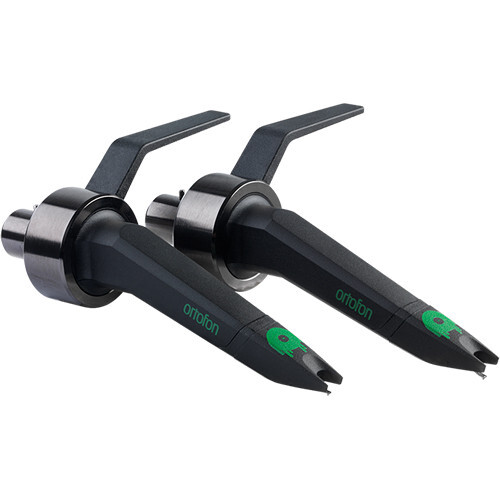
Ortofon Concorde MkII Mix Cartridge
The other way to solve this entirely: a Concorde is a cartridge and headshell in one moulded body that mounts straight to the tonearm, with no alignment to set and nothing to wire. For DJ use that is a serious practical advantage — you can swap between decks in seconds and the geometry is fixed by the manufacturer. The Mix version is the general-purpose DJ option with a spherical tip and high output. If the PLX-500 is a working deck rather than a listening one, this removes an entire category of setup error.
- Integrated cartridge and headshell
- Spherical stylus for DJ use
- No alignment or wiring required
- High output level
- Alignment is impossible to get wrong
- Swaps between decks in seconds
- Built for handling, cueing and mixing
- Replaces the headshell, so the PC-HS01 goes unused
- Not a hi-fi listening cartridge

Shure-Compatible / Aftermarket Replacement Stylus
If your PLX-500 has been fitted with a second-hand cartridge — very common, since these decks change hands with whatever the last owner bolted on — you may need a stylus for a body that is no longer made. Aftermarket stylus manufacturers cover an enormous range of discontinued cartridges, and quality has improved a great deal. The critical step is identifying the cartridge body exactly before ordering: the model is usually printed on the side or the top of the body, and one wrong digit means a stylus that does not clip in.
- Covers many discontinued cartridge bodies
- Conical and elliptical profiles available
- Much cheaper than a new cartridge
- Sold by specialist stylus suppliers
- Revives a cartridge that has no factory support left
- Far cheaper than replacing the whole cartridge
- Wide catalogue coverage
- Quality varies considerably between suppliers
- You must identify the body exactly or it will not fit

Pioneer PC-HS01 Spare Headshell
A second headshell is the accessory that makes everything above practical. Mount a conical DJ cartridge on one and an elliptical listening cartridge on the other, align each once, and then switching between them is a twist of the collar rather than a twenty-minute job with a protractor. The PC-HS01 is the PLX-500’s own part, weighs 4 grams, and takes optional weights. Note that it ships bare — no cartridge, no stylus — which surprises a lot of buyers.
- Pioneer PC-HS01, 4 g shell weight
- Fits PLX-500, PLX-1000 and standard half-inch tonearms
- Accepts optional added weights
- Black, silver and gold finishes
- Lets two cartridges stay permanently aligned
- Matches the deck exactly
- Optional weights tune the arm for heavier cartridges
- Supplied with no cartridge or stylus
- Generic headshells cost considerably less

Cartridge Alignment Protractor
A printed or mirrored protractor that shows you where the stylus tip must sit and at what angle, and it is the difference between a good cartridge performing and a good cartridge sounding worse than the one it replaced. Misalignment produces distortion that gets worse towards the centre of the record — the classic symptom is inner tracks sounding harsh while the outer ones are fine. A mirrored protractor is worth the small extra over a paper one because it lets you sight the cantilever against its own reflection.
- Two-point alignment grids
- Mirrored surface on better versions
- Works with any half-inch cartridge
- Some include an overhang gauge
- Unlocks the performance you paid for
- Cures inner-groove distortion caused by bad setup
- One purchase serves every cartridge change
- Fiddly and needs patience and good light
- Paper versions warp and lose accuracy
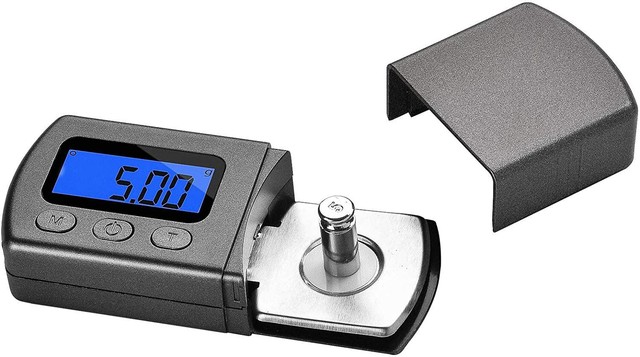
Digital Stylus Force Gauge
The counterweight dial on a tonearm is a rough guide, not a measurement, and tracking force is the setting that decides whether your records survive. Too light and the stylus chatters in the groove, which damages vinyl faster than too heavy does; too heavy and you add wear and dull the sound. A digital gauge reading to a hundredth of a gram costs very little and takes the guesswork out completely. Set it to the cartridge maker’s recommended figure, not to the middle of its range.
- 0.01 g resolution
- Weighs at record height
- Battery powered with calibration weight
- Works with any tonearm
- Protects records from mistracking damage
- Removes reliance on an inaccurate counterweight dial
- Very cheap for what it prevents
- Cheap gauges need regular calibration checks
- Must be used at the correct height to read truly

Stylus Cleaning Brush and Gel Pad
The cheapest way to make any stylus on this list sound better and last longer. Dust welds itself to the tip under playing pressure, and a loaded stylus both sounds dull and grinds that debris into your grooves. A carbon-fibre brush used front-to-back before every side handles the routine; a gel pad, which the tip is simply lowered onto, lifts the stubborn material off without solvents or sideways force. Never brush a stylus side to side — that is how cantilevers get bent.
- Carbon-fibre brush for routine cleaning
- Polymer gel pad for deep cleaning
- No solvents required
- Stylus brush often bundled with a record brush
- Immediately audible improvement on a dirty stylus
- Extends stylus life significantly
- Costs almost nothing
- Gel pads pick up dust and need replacing
- Careless sideways brushing can damage the cantilever
Buying tips
- Decide first whether you will touch the record. Back-cueing, scratching and hand-dropping need a spherical tip at around 3 g. Pure listening wants an elliptical or finer at under 2 g. Fitting a fine elliptical to a deck you DJ on concentrates the force on a much smaller patch of vinyl and drags it backwards through the groove — that damages records, and it is the most expensive mistake in this category.
- Stylus and cartridge are not the same thing. The stylus is the replaceable needle assembly that clips into the cartridge body; the cartridge is the whole transducer. Replacing a worn stylus restores what you had. Replacing the cartridge is what actually improves the sound. Knowing which you need before you shop saves both money and disappointment.
- The PLX-500 takes any half-inch cartridge, and that is its best feature. The PC-HS01 headshell is a universal mount, so the entire moving-magnet world is available to you. Do not restrict yourself to Pioneer-branded parts — an Audio-Technica VM95E or an Ortofon OM will fit perfectly and outperform the factory stylus by a wide margin.
- Buy a second headshell rather than swapping cartridges. Alignment takes real time and care to get right, and undoing it every time you change role is miserable. One headshell with a conical DJ cartridge and one with an elliptical listening cartridge, each aligned once, turns the switch into a few seconds with the collar.
- Set tracking force with a gauge, not the counterweight dial. The dial is a calibration aid and it drifts. Too light is worse than too heavy: a stylus that chatters in the groove damages vinyl fast, and it is the failure mode people mistakenly consider the safe side. Set the figure the cartridge manufacturer specifies and check it again after any change.
- Replace the stylus on hours, not on looks. A worn tip is not visible without magnification, and by the time a stylus sounds obviously bad it has already been abrading your records for a while. Most manufacturers quote several hundred hours for a conical or elliptical tip. Keep a rough count from the date you fitted it and replace on schedule.
- Brush front to back, never side to side. The cantilever is designed to move vertically and laterally within tiny limits, and sideways force from a brush or a finger is how it gets bent. A bent cantilever is not repairable at this price level. One gentle pass from the back of the stylus towards the front, before each side, is the whole routine.
- If inner tracks sound harsh but outer ones are fine, that is alignment. Distortion that grows towards the label is the classic signature of a cartridge that is not aligned to the tonearm’s geometry, and no amount of stylus money fixes it. Spend fifteen minutes with a protractor before concluding you need a better cartridge — very often the one you already own was simply set up badly.
As an Amazon Associate and eBay Partner, toptenpick.com earns from qualifying purchases. Prices and availability are subject to change.