

As an Amazon Associate and eBay Partner, toptenpick.com earns from qualifying purchases. Prices and availability are subject to change.
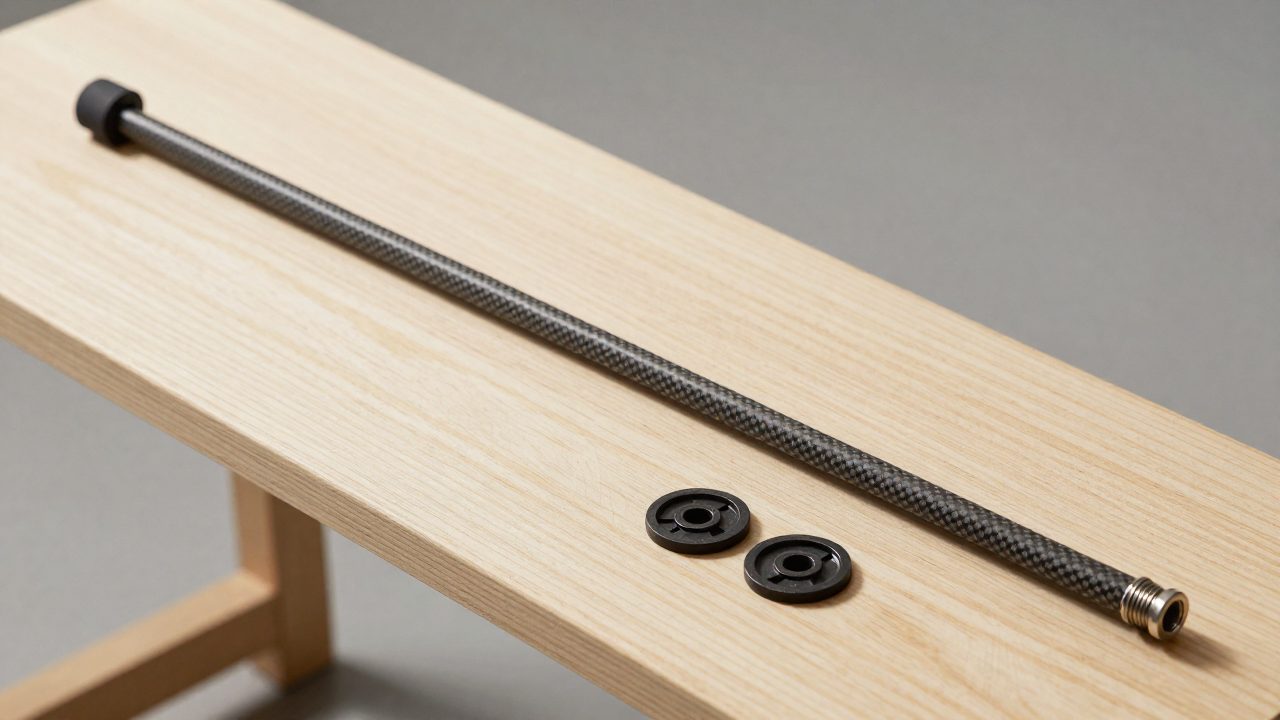
Most people buying a stabilizer for a recurve bow assume they’re buying a shock absorber, something to soak up the twang and kill hand vibration. That’s not wrong exactly, but it isn’t the rod’s main job. Both Archery GB’s own buying guide and Bow International’s stabilization explainer point to something else: a stabilizer’s primary function is resisting rotation. It adds mass out at the end of a rod, away from the riser, which raises the bow’s moment of inertia and keeps the riser from twisting off-line during the shot. The rubber damper bolted to the end is a secondary feature, not the mechanism.
That distinction changes what you should actually be shopping for. A stiff, light rod with adjustable end weight resists torque far better than a soft, padded short rod marketed mainly on its vibration-killing rubber, because physics rewards mass at a distance, not cushioning. Two stabilizers of identical total weight are not equal: the one carrying more of that weight out at the tip, on a longer rod, does more to hold the bow steady through release.
The practical upshot is to buy for length and the weight system first, and treat the damping material as a bonus. A 30-inch rod with a proper stainless weight stack will do more for your groups than a 20-inch rod stuffed with rubber. Start light, add weight gradually, and stop once the bow starts to feel like dead weight at full draw instead of a stabilized one.
One piece of good news: hardware compatibility is close to universal. Nearly every target recurve riser drills its front stabilizer bushing to a 5/16-24 thread, the spec used across Olympic-style bows under the ATA/AMO standard, so almost anything on this list threads straight in without an adapter. It’s worth a 30-second check against your own riser before ordering, but it isn’t the gamble it looks like.
The ten below span that range deliberately, from budget carbon rods a club shooter can try without much financial risk, up to the stiff, heavy-duty systems used at the competitive end of Olympic recurve. None of them will fix bad form, but a properly matched rod does measurably more for a steady hold than the marketing copy about vibration usually lets on.
| # | Product | Price | Where to buy |
|---|---|---|---|
| 1 | Easton Contour Stabilizer | $220–$300 | Amazon |
| 2 | Doinker Platinum Estremo Hi-Mod Stabilizer | $380–$420 | Amazon |
| 3 | Win&Win WIAWIS ACS15 Carbon Long Rod Stabilizer | $250–$270 | Amazon |
| 4 | Gillo GS13 Long Rod Carbon Stabilizer | $190–$210 | Amazon |
| 5 | Gillo GS7 Stabilizer | $75–$85 | Amazon |
| 6 | Fivics Vellator V2 Long Stabilizer | $75–$100 | Amazon |
| 7 | Cartel Maxion Carbon Long Rod | $40–$55 | Amazon |
| 8 | Sanlida X10 Stabilizer | $90–$100 | Amazon · eBay |
| 9 | SF Archery Axiom Plus Long Bar Stabilizer Set | $35–$55 | Amazon |
| 10 | Beiter Centralizer Long Rod (Single Tuner) | $90–$150 | Amazon |
The picks, in detail
Easton Contour Stabilizer
Easton’s flagship recurve long rod, built as a single hollow carbon tube rather than a padded compound-style rod. It comes in 27, 30 and 33 inch lengths so you can match reach to your riser and draw, and it’s the rod many club-to-elite shooters graduate to once they know they want to compete. The trade-off is price: this sits at the expensive end of a bare long rod, before you’ve added a V-bar or side rods.
- Hollow carbon-tube construction
- 27, 30 and 33 inch length options
- Multiple color options (white, red, blue, black)
- Threads to standard riser bushing
- Proven build quality from a major target-archery brand
- Length options let you dial in reach precisely
- Recognized name with wide parts and accessory support
- Expensive for a bare rod before weights and dampers
- Can run on backorder for certain lengths or colors
- More rod than a casual or beginner shooter typically needs
Doinker Platinum Estremo Hi-Mod Stabilizer
Doinker’s recurve-specific flagship, built around a Hi-Mod carbon rod paired with a stainless-steel weight system so you can add or remove mass without buying a second product. It’s aimed squarely at competitive Olympic recurve archers who already know their preferred length and weight distribution and want the stiffest platform available. For anyone earlier in the sport, it’s a lot of stabilizer, and a lot of price, for a first purchase.
- Hi-Mod carbon rod for high stiffness
- Stainless-steel 421 weight system included
- 1/4-20 weight screws in multiple lengths
- Designed specifically for recurve and Olympic setups
- Elite-level reputation and proven competitive use
- Fine-grained weight adjustment straight out of the box
- Very stiff rod resists flex under load
- Among the most expensive single rods on the market
- The weight-screw thread differs from the riser thread, easy to mix up parts
- Overkill for a recreational or first-time buyer
Win&Win WIAWIS ACS15 Carbon Long Rod Stabilizer
Made by Win&Win, the same company behind the WIAWIS riser and limb lines used across national teams, this long rod is sold in 26, 28, 30 and 32 inch versions so it can match a range of riser sizes and draw lengths. It’s a straightforward, well-regarded carbon tube rather than a full system, so you’re buying the rod, not a bundled weight or V-bar. That makes it a clean upgrade if you already own the rest of the hardware.
- Carbon long rod in 26/28/30/32 inch lengths
- Made by Win&Win (WIAWIS line)
- Standard threaded fitting
- Competition-grade construction
- Pairs naturally with the widely used WIAWIS and Win&Win ecosystem
- Track record at national and international competition level
- Multiple lengths cover most riser and draw combinations
- Premium price for a bare rod
- Weight system and dampers are sold separately
- Import stock and lead times can vary by retailer
Gillo GS13 Long Rod Carbon Stabilizer
Gillo builds its rods from high-module 40-ton carbon in a 3K weave with a thick wall, aiming for maximum stiffness rather than minimum weight, the idea being a rod that won’t flex or drift in a crosswind. It works on both recurve and compound risers, which is useful if you shoot more than one bow. Like most rods at this level, it’s sold as the tube alone, not a complete weighted system.
- High-module 40-ton carbon, 3K weave
- 15mm external diameter, thick wall for stiffness
- Compatible with recurve and compound risers
- Extra-stiff build to resist side-wind drift
- Very high stiffness-to-weight for a consistent hold
- Works across both recurve and compound setups
- Established competitive pedigree from an Italian stabilizer specialist
- Expensive for a single rod
- Still needs a separate weight and damper system
- Extreme stiffness is wasted on a beginner setup
Gillo GS7 Stabilizer
The budget entry point into the Gillo lineup, a 28 inch carbon rod that carries over the brand’s build quality without the flagship price. It’s a sensible step for someone who has outgrown a stock or bundled stabilizer and wants a stiffer rod, without committing to GS13-level spending. It’s shorter than the long rods higher on this list, so the moment-of-inertia gain is smaller, but it’s a genuine upgrade over a starter stabilizer.
- 28 inch carbon rod
- Standard threaded fitting
- Gillo build quality at a lower price point
- Works well as a first true upgrade rod
- Much cheaper entry into a respected competition brand
- Good stiffness for the price
- Straightforward upgrade path for club-level shooters
- Shorter length means less MOI gain than a full long rod
- Not the flagship model used at top competition
- No included weight system
Fivics Vellator V2 Long Stabilizer
Fivics sells the Vellator as a complete unit: a 28 inch, 134 gram carbon rod that ships with a rubber damper and an end weight already attached, so there’s nothing extra to source before you can shoot with it. It’s aimed at intermediate archers moving up from a stock stabilizer, and it undercuts the premium brands on price while still coming from an established Korean manufacturer with a real competitive track record.
- 28 inch carbon rod, 134 grams
- Rubber damper and end weight included
- Built by Fivics, an established target-archery manufacturer
- Sized for intermediate-level recurve shooters
- Complete out of the box, no extra parts to buy first
- Solid mid-price alternative to the premium brands
- Reasonably light for its length
- Side rods, V-bar and extenders are sold separately for a full system
- Not marketed as a top-tier competition rod
- Fixed weight and damper combo, less fine-tuning than adjustable systems
Cartel Maxion Carbon Long Rod
The cheapest purpose-built recurve long rod worth buying rather than a generic universal rod, a carbon tube with the standard threaded fitting, sized to actually add meaningful reach and weight capacity instead of being a token accessory. It’s a reasonable way to find out whether stabilization is worth the spend to you before committing to a much pricier rod, and it’s widely stocked at archery retailers that also carry beginner-friendly recurve brands.
- Carbon long rod construction
- Standard threaded riser fitting
- Budget-tier pricing for a purpose-built recurve rod
- Widely stocked alongside beginner recurve brands
- One of the least expensive genuine long rods available
- Low-risk way to try stabilization before upgrading
- Lightweight for the price
- Archery-forum feedback rates the finish and materials below the Doinker/Fivics/Win&Win tier
- Less refined damping than pricier rods
- No included weight system

Sanlida X10 Stabilizer
A newer name gaining traction at club level, the X10 is a full carbon long rod in 28 or 30 inch lengths with CNC alloy hardware and a quick-disconnect fitting that makes it faster to pull the rod off for a case than unscrewing it every time. It lands in the middle of this list on both stiffness and price, a reasonable option for anyone comparing beyond the two or three brands their club already stocks.
- Full carbon rod, 28 or 30 inch lengths
- CNC-machined alloy hardware
- Quick-disconnect fitting for easy removal
- Mid-tier stiffness and pricing
- Solid stiffness-to-price ratio for a club-level upgrade
- Quick-disconnect speeds up storage and transport
- Growing user base outside its home market
- Less established parts and support network than Easton or Win&Win
- Import shipping can add cost and lead time
- Fewer long-term reviews than older brands
SF Archery Axiom Plus Long Bar Stabilizer Set
Unlike everything else on this list, this is sold as a full set: a roughly 32 inch 3K carbon long rod plus side rods, V-bar, extender and dampers, rather than a bare tube you build a system around. SF sits at the same beginner-to-club tier as other entry recurve brands, so the fit and finish match what a first-year target archer is already used to. Expect to outgrow the materials before you outgrow the concept.
- 3K carbon long rod, about 32 inches, plus side rods
- Includes V-bar, extender and dampers
- Sold as a complete set, not a single rod
- Beginner and club-tier recurve brand
- Cheapest way to get a full stabilizer system, not just one rod
- Familiar, budget-friendly brand tier alongside other beginner bows
- Good training setup for learning what stabilization actually does
- More hardware than a first-time buyer who wants just a long rod needs
- Entry-level materials and damping, expect to upgrade later
- Less stiff than any single premium rod on this list
Beiter Centralizer Long Rod (Single Tuner)
Beiter’s stabilizer looks nothing like the others here: instead of one carbon tube, it’s four thin carbon rods held in a square by plastic tuner blocks, which lets you change the rod’s flex characteristics by swapping tuners rather than buying a different rod. It’s sold from 26 inches up to 54 inches, covering setups nothing else on this list reaches, and it carries Beiter’s Swiss precision reputation as a genuinely different tool, not a drop-in swap for a normal long rod.
- Four-rod carbon cage design with tuner blocks
- Available from 26 inches up to 54 inches
- Flex adjustable by swapping tuners, not the rod itself
- Weight-adapter or end-cap options
- Tunable stiffness without buying multiple rods
- Swiss-made precision engineering
- Widest length range of any rod on this list
- Different design language takes time to learn and tune
- Pricier once tuners and weights are added
- Unusual look may not suit shooters who want a conventional rod
Buying tips
- A stabilizer’s real job is resisting rotation, which raises the bow’s moment of inertia, not soaking up vibration, so buy for length and end weight first and treat the rubber damper as a bonus.
- Nearly all recurve risers use a standard 5/16-24 threaded bushing up front, so almost any long rod on this list will thread straight in without an adapter.
- Longer rods gain more steadying effect per gram of end weight than short ones, because resistance to torque scales with distance from the riser, not just total mass.
- Add weight gradually and stop once the bow feels heavy or tiring to hold at full draw rather than steady; more mass is not automatically better.
- A rubber damper does cut hand shock and noise and is worth having, but it is a bonus feature, not the reason the rod works.
- Most long rods are sold on their own; a full V-bar setup with side rods needs those parts bought separately, so budget for the whole system if that’s the goal.
- A heavy long rod can feel front-heavy and awkward on a light beginner riser, so match the stabilizer to the bow you actually shoot, not just your budget.
- Borrowing or trying a stabilizer at a club before buying is common advice among coaches, since the right length-to-weight balance is personal and hard to judge from a spec sheet alone.
As an Amazon Associate and eBay Partner, toptenpick.com earns from qualifying purchases. Prices and availability are subject to change.