


As an Amazon Associate and eBay Partner, toptenpick.com earns from qualifying purchases. Prices and availability are subject to change.
Before anything else: which engine does your Discovery 2 have? Because a large share of people searching for spark plugs for this vehicle do not have an engine that uses them.
The Discovery 2 was sold with two very different engines. The 4.0-litre Rover V8 petrol uses eight spark plugs and is what this article is mostly about. The Td5 five-cylinder diesel, which is what a great many Discovery 2s outside North America have, uses glow plugs — a completely different component doing a completely different job. A diesel has no spark at all; glow plugs pre-heat the combustion chamber so the engine will start from cold, and they are consulted by the engine only during starting and warm-up. Ordering spark plugs for a Td5 is a thing that happens, and the parts will not fit anything.
For the V8, two things are worth knowing before you order.
The Rover V8 has aluminium heads, and steel plugs seize into aluminium. A plug that has been in for years can shear off on removal, and an extraction from an aluminium head is a considerably worse day than a plug change. Penetrant applied days in advance, removal on a warm-but-not-hot engine, and a careful, patient back-and-forth motion are what prevent it.
And a misfire on a Discovery 2 V8 is often not the plugs. These engines are well known for ignition leads breaking down, coil packs failing, and — the classic — a cracked or leaking plenum and intake gasket producing a lean misfire that looks exactly like ignition trouble. Plugs are cheap and worth replacing, and they are frequently not the cause. Read the fault codes, and if the misfire is on one cylinder, swap that cylinder’s coil or lead with its neighbour and see whether the misfire follows.
Ten picks below, covering both engines and the parts that actually fix misfires.
| # | Product | Price | Where to buy |
|---|---|---|---|
| 1 | NGK Spark Plugs for the 4.0 V8 | $25-$70 for eight | Amazon |
| 2 | Champion or Bosch Equivalent Plugs | $25-$80 for eight | Amazon · eBay |
| 3 | Iridium or Platinum Plugs for a Longer Interval | $60-$140 for eight | Amazon |
| 4 | Glow Plugs for the Td5 Diesel | $40-$100 for five | Amazon · eBay |
| 5 | Ignition Lead Set (HT Leads) | $40-$120 | Amazon · eBay |
| 6 | Ignition Coil Pack | $50-$200 | Amazon · eBay |
| 7 | Anti-Seize Compound | $10-$22 | Amazon |
| 8 | Penetrating Oil | $8-$20 | Amazon |
| 9 | Spark Plug Socket with a Swivel and Long Extension | $15-$45 | Amazon · eBay |
| 10 | OBD-II Scan Tool | $25-$200 | Amazon |
The picks, in detail
NGK Spark Plugs for the 4.0 V8
The standard answer for the petrol Discovery 2. NGK is the usual original-equipment brand for this engine and the plugs are cheap, consistent and available everywhere. Buy eight — the V8 has eight cylinders and there is no sense fitting some — and confirm the part number against a parts catalogue for your exact year, since the V8 spans several specifications. Heat range is the specification that actually matters, and the manual’s figure is the one to match.
- OE-specification plugs for the Rover V8
- Copper or platinum options
- Correct heat range for the engine
- Sold individually — buy eight
- The specification the engine was developed with
- Cheap and available everywhere
- Consistent quality
- Copper plugs have a shorter service interval
- Specifications vary across model years — check
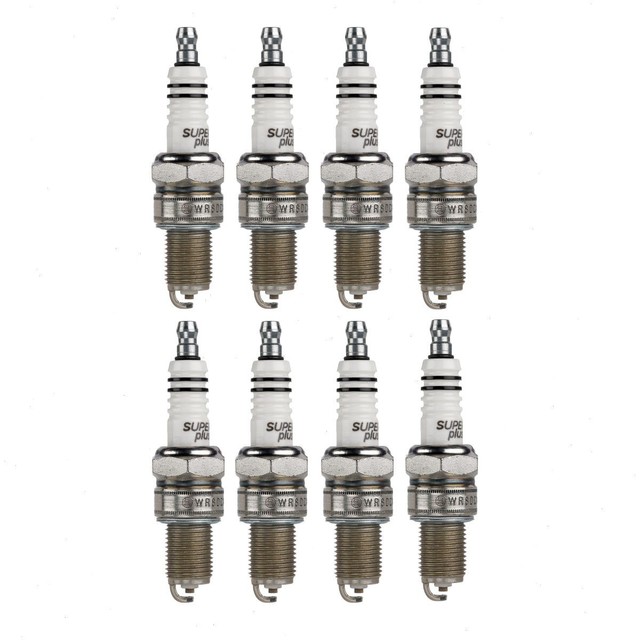
Champion or Bosch Equivalent Plugs
Legitimate alternatives rather than substitutes. Both are original-equipment suppliers to European manufacturers and both list plugs for this engine. Choose on availability and price — there is no meaningful performance difference between properly specified plugs from any of the major makers on a standard engine. As always, check the number rather than the fitment description; a near-match on heat range is not a match, and heat range is the one specification that genuinely changes how the engine behaves.
- OE-grade plugs from established manufacturers
- Copper, platinum and iridium options
- Cross-referenced to the Rover V8 specification
- Widely stocked in Europe and North America
- Choice on price and availability
- Same performance as NGK when correctly specified
- Several electrode materials available
- Cross-referencing needs care across model years
- Counterfeits circulate — buy from known sellers
Iridium or Platinum Plugs for a Longer Interval
Worth the premium on this engine for a reason specific to it: the rear plugs on a Discovery 2 V8 are awkward to reach, and the labour of a plug change is far more of the cost than the plugs. A precious-metal plug lasts several times as long as a copper one, which means fewer trips into that awkward space. They make no more power — the benefit is entirely longevity — and on a vehicle where access is the real cost, longevity is exactly what you want to buy.
- Iridium or platinum centre electrode
- Several times the service interval of copper
- Pre-gapped from the factory
- Same heat range as the copper equivalent
- Far fewer trips into an awkward space
- Consistent spark over a long life
- Fit and forget
- Two to three times the price of copper
- No performance gain on a standard engine
Glow Plugs for the Td5 Diesel
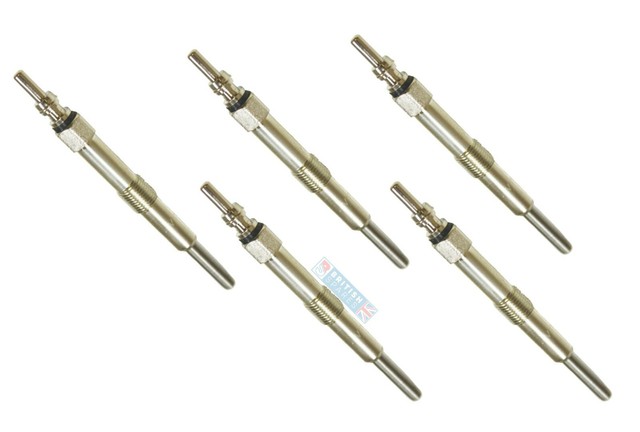
The part a Td5 actually needs, included because the search that brought you here frequently should have been for these. Glow plugs pre-heat the combustion chamber so a diesel will start cold; they have nothing to do with running. Symptoms of failure are hard cold starting, extended cranking and white smoke on a cold morning, all worse as the temperature drops. Replace them as a set of five, and confirm the correct part for the Td5 specifically rather than a generic Land Rover listing.
- Five glow plugs for the Td5
- Pre-heat the combustion chamber for cold starting
- OE and aftermarket options
- Correct voltage rating for the Td5 system
- Cures hard cold starting on a Td5
- Cheap relative to the symptom
- Straightforward to test with a multimeter
- Can seize in the head and shear on removal
- Nothing to do with spark plugs — different part entirely
Ignition Lead Set (HT Leads)
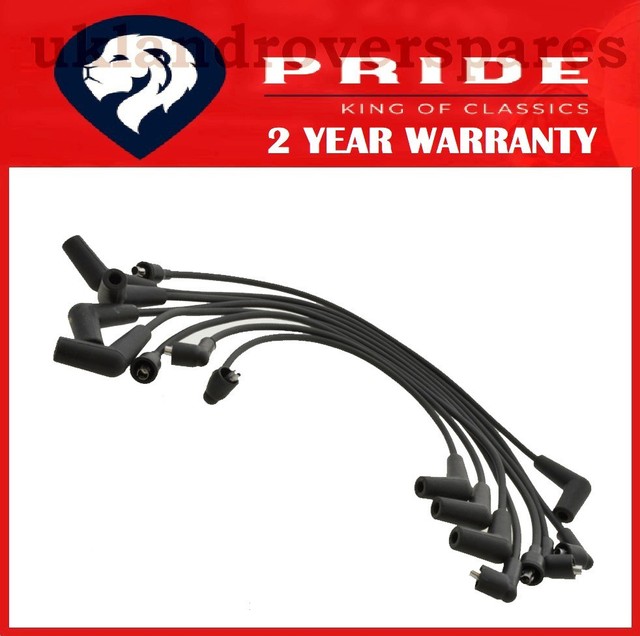
The part that causes more Discovery 2 misfires than the plugs do. Ignition leads degrade from heat and age, their internal resistance rises, and they start leaking voltage to earth rather than delivering it to the plug — which produces a misfire under load, a rough idle, and sometimes a visible corona in the dark with the bonnet up. Replace them as a set; a new lead alongside seven old ones simply moves the problem. Route them exactly as the originals were, since leads lying against hot metal fail quickly.
- Full set of eight leads
- Silicone insulation rated for engine bay heat
- Correct lengths and boot angles
- Numbered for routing
- Very common cause of misfires on this engine
- Cheap relative to chasing the fault
- Easy to test with a multimeter
- Must be replaced as a set
- Poor routing against hot metal kills new leads fast

Ignition Coil Pack
The other common misfire source, and the one worth suspecting when a fault code points at a specific cylinder. Coils fail with heat and age, often intermittently — working when cold and misfiring when hot, which is a maddening fault to chase without a scan tool. The useful diagnostic costs nothing: swap the suspect coil with a neighbouring cylinder’s and see whether the misfire code follows it. If it does, you have found the part. If it does not, look at the plug, the lead, or the intake.
- Direct-fit coil packs for the V8
- OE and aftermarket options
- Sold individually or in pairs
- Bolt-on replacement
- The swap test identifies it definitively and for free
- Common cause of heat-related intermittent misfires
- Straightforward to replace
- Aftermarket quality is inconsistent
- Replacing all of them is expensive
Anti-Seize Compound
Essential on this engine specifically, because steel plugs in aluminium heads seize, and a sheared plug in a Rover V8 head is an expensive afternoon. A thin film of nickel-based anti-seize on the threads of the new plugs makes the next change straightforward. Two disciplines matter: keep it off the electrode entirely, and remember that anti-seize changes the friction, so the plug will feel tight well before it is correctly loaded. Torque to the manual figure with a wrench, not to feel.
- Nickel-based high-temperature compound
- Brush-in-cap applicator
- Rated well above cylinder head temperatures
- A small tub covers many jobs
- Prevents seizure in aluminium heads
- Makes the next change straightforward
- One tub lasts years
- Must not go on the electrode
- Alters torque readings — a wrench is required
Penetrating Oil
Applied days in advance, not on the day. Plugs that have been in an aluminium head for years are seized rather than merely tight, and the correct approach is patience: penetrant, a small turn, more penetrant, a heat cycle, repeat. Working a stuck plug loose over several days costs nothing; shearing one costs an extraction from an aluminium head. Use a genuine capillary-creep penetrant rather than a general-purpose spray lubricant — they sit next to each other and behave completely differently.
- Low-viscosity capillary creep formula
- Straw applicator for plug wells
- Works across repeated heat cycles
- Safe on aluminium
- Cheapest possible mitigation for the job’s real risk
- Can be applied days ahead with no downtime
- Useful on exhaust fasteners on the same vehicle
- Needs patience and repeat applications
- General-purpose lubricants do not do this job

Spark Plug Socket with a Swivel and Long Extension
The Discovery 2’s rear plugs are the awkward ones, and the right tool is the difference between a straightforward job and a knuckle-destroying one. A thin-wall plug socket with a rubber retainer, a universal swivel and a long extension lets you reach the back cylinders and — crucially — keeps the load axial rather than levering the plug sideways in the head. Sideways load on a seized plug in aluminium is exactly what shears them, so this tool is protecting the head as much as your temper.
- Thin-wall plug socket with rubber retainer
- Universal swivel joint
- Long extension bars
- 3/8 in drive
- Reaches the awkward rear cylinders
- Keeps the load axial, which prevents shearing
- Retains the plug on the way out
- Cheap swivels develop play and reintroduce side load
- Some sets omit the long extension you need
OBD-II Scan Tool
The step that tells you whether to buy plugs at all. A misfire on a Discovery 2 V8 reports as a specific cylinder code, and that immediately narrows the diagnosis to one plug, one lead, one coil or one injector — which you then identify by swapping with a neighbour and seeing whether the fault follows. Without a code reader you are replacing eight of everything and hoping. Given how many Discovery 2 misfires turn out to be the intake or the leads, that is an expensive way to work.
- Reads per-cylinder misfire codes
- Live data on better tools
- Freeze-frame capture at the fault
- Handheld and Bluetooth formats
- Narrows a misfire to one cylinder immediately
- Enables the swap test that identifies the part
- Cheap relative to replacing everything
- Basic readers show codes but not live data
- Some Discovery 2 systems need a compatible protocol
Buying tips
- Confirm which engine you have first. The 4.0 V8 petrol uses eight spark plugs. The Td5 diesel has no spark plugs at all — it uses five glow plugs, which pre-heat the chamber for cold starting and do a completely different job. Ordering spark plugs for a Td5 is a common and entirely avoidable mistake.
- Do not fight a seized plug. Steel plugs in the Rover V8’s aluminium heads seize, and a sheared plug means an extraction from an aluminium head. Penetrant days in advance, a warm-but-not-hot engine, and a patient back-and-forth motion. If it does not want to move, stop, apply more penetrant and come back tomorrow.
- Read the codes before you buy anything. A misfire reports as a specific cylinder, and that narrows the problem to one plug, one lead, one coil or one injector. Swap that cylinder’s coil or lead with a neighbour and see whether the misfire follows — that test is free and it identifies the part definitively.
- Suspect the leads and the intake, not just the plugs. Discovery 2 V8s are well known for ignition leads breaking down with age and for cracked or leaking plenum and intake gaskets producing a lean misfire that looks exactly like ignition trouble. Plugs are cheap and worth changing anyway, and they are frequently not the cause.
- Use anti-seize, sparingly, and then torque with a wrench. A thin film on the threads prevents the seizure this engine is prone to. Keep it entirely off the electrode. And remember it changes the friction, so the plug feels tight well before it is correctly loaded — the manual’s torque figure with an actual wrench, not feel.
- Replace all of them, whichever part it is. Eight plugs, eight leads, five glow plugs — they share an age and a duty cycle, so one failing is a statement about the rest. On a vehicle where access to the rear cylinders is the expensive part of the job, doing half a set means paying that access twice.
- Read the old plugs before you throw them away. They should all look similar, with a light tan or grey deposit. One that is oily, sooty or unusually white is telling you something specific about that cylinder that you will not learn any other way. Lay them out in cylinder order and take a photograph.
- Buy precious-metal plugs for the access, not the performance. Iridium and platinum make no more power on a standard engine — the benefit is a service interval several times longer than copper. On a Discovery 2, where reaching the rear cylinders is most of the work, buying fewer trips into that space is a genuinely good use of the extra money.
As an Amazon Associate and eBay Partner, toptenpick.com earns from qualifying purchases. Prices and availability are subject to change.