

As an Amazon Associate and eBay Partner, toptenpick.com earns from qualifying purchases. Prices and availability are subject to change.
Two things about spark plugs on a CBR600RR are worth knowing before you order anything, and both of them save money.
The first: do not gap a fine-wire iridium plug with a gapping tool. The centre electrode on an iridium plug is a wire a fraction of a millimetre across — that thinness is the entire point of the design, because a fine tip concentrates the electric field and fires reliably at lower voltage. It is also mechanically fragile. Levering against it with the hooked tool that comes on every gap gauge will snap it or bend it, and a plug with a damaged centre electrode either misfires or, worse, sheds metal into a cylinder. Iridium plugs come pre-gapped from the factory and they should be checked visually and fitted as they are. If a gap genuinely needs adjusting, the ground strap is moved — never the centre electrode, and never with anything levering against it.
The second: a “performance” plug will not make your 600 faster. On a healthy engine with a standard ignition system, the plug’s job is to reliably ignite a mixture that is already going to burn. Multi-ground plugs, exotic alloys and coloured insulators change nothing measurable on a stock bike. What a good iridium plug genuinely buys you is longevity and consistent starting, which on this engine matters for a reason that has nothing to do with the plug itself.
That reason is access. The CBR600RR’s plugs sit deep in wells under the airbox, which sits under the fuel tank. Getting to them means a meaningful strip-down, and the labour dwarfs the cost of the plugs. Which produces the sensible strategy for this bike: fit the best plugs available, because the price difference between adequate and excellent is trivial against the work of getting there — and do the job at the same time as an air filter change or a valve clearance inspection, since you are already most of the way in.
Always confirm the plug specification for your exact model year against the owner’s manual or a Honda parts catalogue before ordering. Ten picks below.
| # | Product | Price | Where to buy |
|---|---|---|---|
| 1 | NGK Iridium IX Spark Plugs | $40-$70 for four | Amazon |
| 2 | NGK Laser Iridium Spark Plugs | $55-$90 for four | Amazon · eBay |
| 3 | Denso Iridium Power Spark Plugs | $40-$75 for four | Amazon · eBay |
| 4 | OEM Honda Spark Plugs | $50-$90 for four | Amazon · eBay |
| 5 | Spark Plug Socket with a Rubber Retainer | $10-$25 | Amazon |
| 6 | 1/4 in Torque Wrench (5-25 Nm) | $40-$120 | Amazon · eBay |
| 7 | Dielectric Grease | $6-$15 | Amazon · eBay |
| 8 | Air Filter | $25-$70 | Amazon · eBay |
| 9 | Fuel System Cleaner | $8-$20 | Amazon · eBay |
| 10 | Service Manual for Your Model Year | $25-$90 | Amazon · eBay |
The picks, in detail
NGK Iridium IX Spark Plugs
The standard upgrade and a sensible default. NGK’s Iridium IX uses a fine iridium centre electrode with a tapered ground strap, giving a strong, consistent spark and a long service life. Buy four — a CBR600RR is an inline four and there is no sense fitting one — and confirm the exact part number for your model year rather than trusting a listing title. Fit them as supplied. The factory gap is correct and the centre electrode will not survive being levered against.
- Fine iridium centre electrode
- Tapered ground electrode for better flame propagation
- Pre-gapped from the factory
- Sold individually — buy four
- Long service life, which matters given the access
- Consistent starting and idle
- Widely available and well documented
- No power gain on a stock bike
- Centre electrode is fragile — never gap it
NGK Laser Iridium Spark Plugs
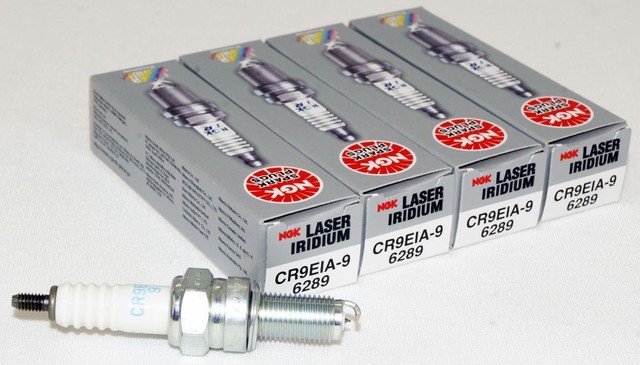
A step above the Iridium IX, adding a platinum pad on the ground electrode so both surfaces resist erosion rather than just the centre. That translates into a longer service interval, which on a bike where the labour is the expensive part is exactly the right thing to pay for. The performance difference on a running engine is nil. Buy these if you want the longest possible interval between strip-downs, which is a genuinely good reason on this particular machine.
- Iridium centre and platinum ground pad
- Longest service interval of the NGK range
- Pre-gapped
- OE fitment on many modern engines
- Longest interval, which is what matters here
- Both electrodes resist erosion
- Factory-fit quality
- Most expensive of the sensible options
- No performance benefit over Iridium IX

Denso Iridium Power Spark Plugs
Denso’s equivalent, and a legitimate alternative rather than a second choice — Denso supplies original equipment plugs to several Japanese manufacturers. The Iridium Power line uses a notably fine 0.4 mm centre electrode, among the thinnest available, which is the property that makes iridium plugs work. As always, check the cross-reference against your model year’s specified plug carefully; Denso’s numbering is its own and a near-match is not a match.
- 0.4 mm iridium centre electrode
- U-groove ground electrode
- Pre-gapped
- OE supplier to Japanese manufacturers
- Among the finest centre electrodes available
- Genuine OE-grade manufacturer
- Often cheaper than the NGK equivalent
- Numbering system needs careful cross-referencing
- Same fragility as any fine-wire plug

OEM Honda Spark Plugs
The dealer part, and the zero-risk option. You get exactly what Honda specified, with no cross-referencing and no chance of a heat range mismatch — which matters because heat range is the one plug specification that genuinely affects how an engine runs, and getting it wrong causes fouling or, at the other extreme, detonation. If you are at all unsure what your bike takes, buying the part number the dealer gives you for your VIN removes the entire question for a modest premium.
- Honda part number matched to your VIN
- Correct heat range guaranteed
- Usually an NGK or Denso plug in a Honda box
- Available through any dealer
- No possibility of getting the specification wrong
- Heat range guaranteed correct
- Dealer can confirm against your VIN
- Dearer than buying the same plug in its own box
- May need ordering in
Spark Plug Socket with a Rubber Retainer
Required, not optional. The plugs sit at the bottom of deep wells and a standard socket will neither reach nor hold the plug on the way out — and a plug dropped down a well or, worse, into a cylinder turns a service into an engine strip. A thin-wall plug socket with a rubber insert grips the insulator and lifts the plug out with it. Check the size your model takes before buying; motorcycle plugs are commonly 16 mm but this varies.
- Thin-wall design for deep plug wells
- Rubber insert grips the plug insulator
- Common motorcycle sizes around 16 mm
- 3/8 in drive with extension
- Retains the plug so it cannot drop into the well
- Thin wall reaches where a normal socket cannot
- Cheap relative to the disaster it prevents
- Sizes vary — check your model first
- Rubber inserts perish and fall out over time

1/4 in Torque Wrench (5-25 Nm)
Spark plugs go into an aluminium cylinder head, and both directions of error are expensive: too loose and the plug works free or fails to seal, too tight and you strip the thread — which on a head means a thread insert or worse. The torque figures involved are small, so a large wrench is too coarse to be useful. A 1/4 inch wrench covering roughly 5 to 25 Nm suits the plugs and most of the fasteners you will disturb getting to them.
- 1/4 in drive, roughly 5-25 Nm
- Audible click with a positive detent
- Small enough for confined access
- Calibration certificate on better models
- Protects aluminium threads that are expensive to repair
- Also covers fairing and airbox fasteners
- Small drive reaches into tight spaces
- A second wrench if you already own a larger one
- Cheap wrenches lose calibration quickly

Dielectric Grease
A small tube that prevents a specific and annoying failure. A thin smear inside each coil boot keeps moisture out, stops the rubber bonding itself to the plug insulator over years of heat cycling, and makes the boot come off cleanly next time instead of tearing. That last point matters: a torn coil boot on a CBR600RR means buying a coil, and the coils sit at the bottom of the same wells you just spent an hour reaching. Use it sparingly and keep it off the electrodes.
- Silicone dielectric compound
- Non-conductive and moisture resistant
- Small tube covers many services
- Safe on rubber and plastics
- Stops coil boots bonding to plug insulators
- Keeps moisture out of the plug wells
- One tube lasts for years
- Should not go on the electrodes themselves
- Easy to over-apply

Air Filter
Do this at the same time, because you have already removed the tank and opened the airbox to reach the plugs and the filter is right there. Doing it as a separate job later means repeating most of the strip-down for a part that costs very little. A clogged filter also does something a plug cannot fix — it restricts airflow, which richens the mixture and fouls the plugs you just fitted. Standard paper filters are fine unless you have a specific reason to want a reusable one.
- Direct-fit paper or reusable cotton element
- Model-year specific fitment
- Reusable filters come with cleaning kits
- Accessible only with the tank raised
- Almost no extra labour if done with the plugs
- A restricted filter fouls new plugs
- Cheap part
- Reusable filters need correct oiling or they pass dirt
- A separate job later repeats most of the strip-down

Fuel System Cleaner
Worth a sentence of honesty: this will not fix a mechanical problem, and it is not a substitute for a service. What a good PEA-based cleaner does do is remove deposits from injector tips, and dirty injectors produce a poor spray pattern, which produces exactly the rough idle and hesitation people blame on spark plugs. Running a bottle through before you decide the plugs are at fault is cheap and occasionally saves the whole job. It is a diagnostic step, not a repair.
- PEA-based detergent formulation
- Single-tank treatment bottles
- Safe for catalytic converters and oxygen sensors
- Motorcycle-appropriate concentrations
- Cheapest way to rule out injector deposits
- Occasionally fixes the symptom outright
- Easy — pour it in and ride
- Will not fix a mechanical fault
- Many cheap additives contain no meaningful detergent

Service Manual for Your Model Year
The item that makes everything else correct rather than approximate. The manual gives you the specified plug, the torque figure, the tightening sequence for everything you removed, and the fastener locations you would otherwise be hunting for with the tank in the air. It also tells you the valve clearance inspection interval — and since that job requires the same strip-down as a plug change, knowing whether you are due is what turns two services into one.
- Model-year specific torque figures and specifications
- Full disassembly procedures
- Maintenance schedule including valve clearances
- Printed or digital
- Correct specifications instead of forum numbers
- Tells you whether to combine with a valve inspection
- Pays for itself on the first avoided mistake
- Genuine manuals are not cheap
- Digital copies of uncertain origin are often incomplete
Buying tips
- Never gap a fine-wire iridium plug. The centre electrode is a wire a fraction of a millimetre across, and levering against it with a gap tool will bend or snap it. Iridium plugs come correctly gapped and should be inspected visually and fitted as they are. If a gap genuinely needs changing, only the ground strap is moved, and never with anything bearing on the centre electrode.
- Heat range is the only plug spec that changes how the engine runs. It describes how fast the plug sheds heat into the head, and getting it wrong causes fouling at one extreme or detonation at the other. Everything else — electrode metal, number of grounds, insulator colour — is about longevity and reliability, not power. Match the manual’s specification exactly.
- The labour dwarfs the parts on this bike. The plugs sit under the airbox, which sits under the tank, so reaching them is a real strip-down. Given that, fit the best plugs available — the price difference between adequate and excellent is trivial next to the time. And combine the job with the air filter and, if it is due, the valve clearance inspection.
- Use a proper plug socket with a rubber retainer. Deep plug wells and a plain socket are how plugs get dropped, and a plug that goes into a cylinder turns a service into an engine strip. A thin-wall socket with a rubber insert holds the plug on the way out. It is one of the cheapest tools you will buy and the one that prevents the worst outcome.
- Torque to the manual figure, in aluminium. Too loose and the plug works free or fails to seal; too tight and you strip a head thread, which is an expensive repair on a bike. The figures are small enough that a large torque wrench cannot read them accurately — use a 1/4 inch wrench in the 5 to 25 Nm range.
- Put dielectric grease in the coil boots. It keeps moisture out and stops the rubber bonding itself to the plug insulator over years of heat cycling. A boot that has bonded tears when you pull it, and a torn boot means a new coil — which lives at the bottom of the same well you just spent an hour reaching. A thin smear, and keep it off the electrodes.
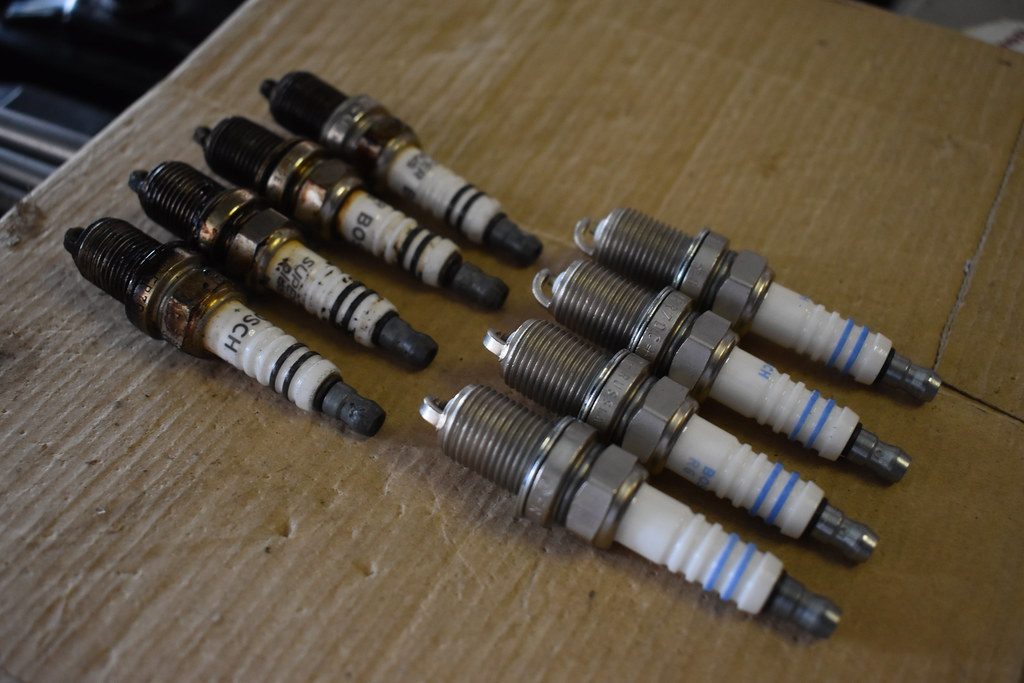
- Read the old plugs before you throw them away. All four should look similar: a light tan or grey deposit on the insulator nose. One that is oily, sooty black or unusually white is telling you something specific about that cylinder, and it is information you get only once. Lay them out in cylinder order and photograph them.
- Replace all four, always. They share the same age and duty cycle, so one failing is a statement about the others, and half a set means paying the strip-down labour twice. This is true on any engine and it is particularly true on one where getting to the plugs is most of the work.
As an Amazon Associate and eBay Partner, toptenpick.com earns from qualifying purchases. Prices and availability are subject to change.