

As an Amazon Associate and eBay Partner, toptenpick.com earns from qualifying purchases. Prices and availability are subject to change.
There is a piece of tuning wisdom that goes back decades: pull a plug, look at the colour of the insulator nose, and read the mixture. Chocolate brown is right, white is lean, black is rich. It is genuinely useful knowledge — and on a standard fuel-injected R1 it is close to useless, which surprises people who learned it on carburettor bikes.
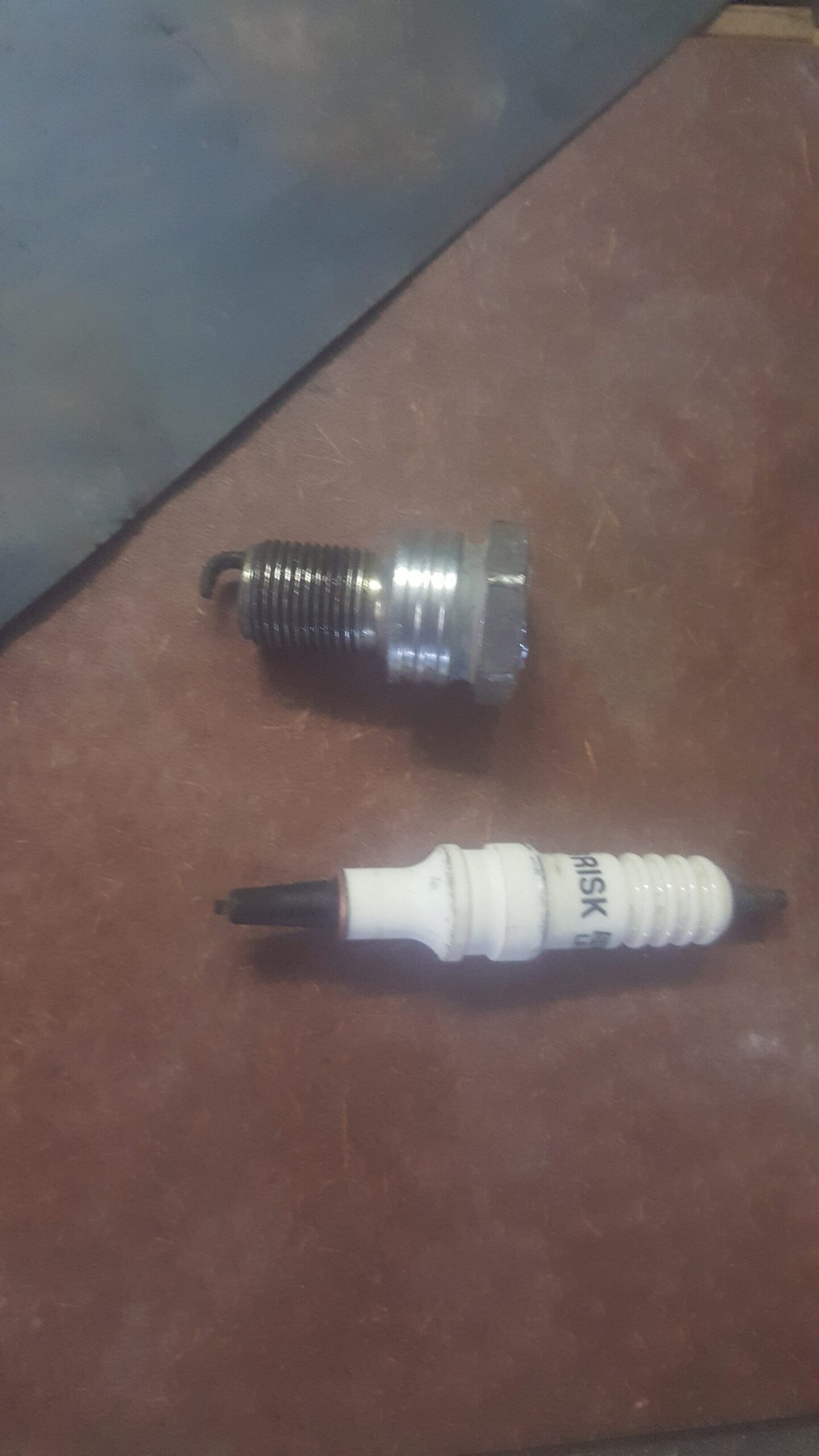
The reason is closed-loop fuelling. A modern R1 has oxygen sensors in the exhaust and an ECU that continuously adjusts the injectors to hold the mixture at a target. It does that constantly and it does it well, which means the plugs come out looking the same regardless of what you were hoping to learn — a uniform light tan, on every cylinder, every time. The system has already corrected whatever you were trying to diagnose. Plug reading still works on a tuned bike running open loop at wide throttle, which is why dyno operators still do it, and it still tells you about mechanical problems: oil on a plug, a wet plug, one that looks different from the other three. What it will not do is tell you about your fuelling.
Which leaves two things that genuinely matter when buying plugs for an R1.
Heat range, which you should not change. Heat range describes how fast a plug sheds heat into the head, and it is matched to the engine’s compression, cooling and duty cycle. A colder plug — sometimes fitted in the belief that it is a performance upgrade — will foul at commuting speeds on a standard engine. A hotter one risks pre-ignition. Unless the engine is genuinely modified and a tuner has specified otherwise, fit what the manual says.
And the fact that a “performance” plug makes no power. On a healthy engine with a standard ignition system, the plug’s job is to ignite a mixture that is going to burn anyway. Multi-ground electrodes, exotic alloys and coloured insulators change nothing measurable.
Ten picks below, including the tools that matter on a bike where reaching the plugs is most of the work.
| # | Product | Price | Where to buy |
|---|---|---|---|
| 1 | NGK Iridium Plugs in the Factory Heat Range | $40-$80 for four | Amazon |
| 2 | OEM Yamaha Spark Plugs | $50-$90 for four | Amazon · eBay |
| 3 | Denso Iridium Plugs | $40-$85 for four | Amazon |
| 4 | Spark Plug Socket with a Rubber Retainer | $10-$25 | Amazon |
| 5 | 1/4 in Torque Wrench (5-25 Nm) | $40-$120 | Amazon · eBay |
| 6 | Dielectric Grease | $6-$15 | Amazon |
| 7 | Ignition Coil (Coil-on-Plug) | $60-$250 | Amazon · eBay |
| 8 | Air Filter | $40-$100 | Amazon · eBay |
| 9 | OBD or Diagnostic Interface for Yamaha | $50-$300 | Amazon |
| 10 | Service Manual for Your Model Year | $25-$90 | Amazon · eBay |
The picks, in detail
NGK Iridium Plugs in the Factory Heat Range
The straightforward answer for a standard R1. Iridium’s fine centre electrode fires reliably at lower voltage and lasts far longer than a copper plug, which matters on this engine because the plugs sit under the airbox and the tank, and the labour of getting there dwarfs the price of the parts. Buy four, in the heat range the manual specifies, and confirm the exact part number for your model year — the R1 spans several generations with different specifications.
- Fine iridium centre electrode
- Factory heat range
- Pre-gapped from the factory
- Sold individually — buy four
- Long service life, which is what matters given the access
- Reliable firing and consistent idle
- Well documented and widely stocked
- No power gain on a standard engine
- Fragile centre electrode — never gap it

OEM Yamaha Spark Plugs
The zero-risk route. Buying the part number the dealer gives you against your VIN removes every question about heat range and reach, which are the two specifications that actually matter and the two that are easiest to get wrong across model years. You are generally buying an NGK or Denso plug in a Yamaha box at a premium, and for someone who is not certain what their bike takes, that premium buys real certainty.
- Yamaha part number matched to your VIN
- Correct heat range and reach guaranteed
- Usually an NGK or Denso plug
- Available through any dealer
- No possibility of a specification error
- Dealer can confirm against the VIN
- Correct reach as well as heat range
- Dearer than the same plug in its own box
- May need ordering in
Denso Iridium Plugs
The alternative from the other major Japanese supplier, and a genuine equal rather than a second choice. Denso’s iridium range uses an extremely fine centre electrode, which is the property that makes iridium plugs work at all. Cross-reference carefully: Denso’s numbering is its own system and a near-match is not a match. Where the NGK equivalent is out of stock — which happens with popular motorcycle applications — this is the one to reach for rather than dropping down a grade.
- Very fine iridium centre electrode
- Factory heat range equivalents
- Pre-gapped
- OE supplier to Japanese manufacturers
- Equal to the NGK equivalent in practice
- Often available when NGK is not
- Sometimes cheaper
- Numbering requires careful cross-referencing
- Same fragility as any fine-wire plug
Spark Plug Socket with a Rubber Retainer
Required, not optional. The plugs sit at the bottom of deep wells in the cylinder head, and a standard socket will neither reach cleanly nor hold the plug on the way out — and a plug dropped down a well, or worse into a cylinder, turns a service into an engine strip. A thin-wall socket with a rubber insert grips the insulator and lifts the plug with it. Check the size for your model; motorcycle plugs are commonly 16 mm but this is not universal.
- Thin-wall design for deep plug wells
- Rubber insert grips the insulator
- Common motorcycle sizes around 16 mm
- 3/8 in drive with extension
- Retains the plug so it cannot drop
- Thin wall reaches where a normal socket cannot
- Cheap relative to the disaster it prevents
- Sizes vary — check your model first
- Rubber inserts perish and fall out over time

1/4 in Torque Wrench (5-25 Nm)
Plugs go into an aluminium head at a modest torque figure, and both errors are expensive — too loose and the plug works free or fails to seal, too tight and you strip the thread, which on a cylinder head means an insert or a head off the bike. The figures involved are small enough that a large torque wrench cannot read them accurately. A 1/4 inch wrench in the 5 to 25 Nm range covers the plugs and most of the fairing and airbox fasteners you will disturb getting to them.
- 1/4 in drive, roughly 5-25 Nm
- Audible click with a positive detent
- Small head for confined access
- Calibration certificate on better models
- Protects an aluminium head thread
- Covers fairing and airbox fasteners too
- Small drive reaches into tight spaces
- Cheap wrenches drift out of calibration
- Must be wound back to its lowest setting for storage
Dielectric Grease
A small tube that prevents an annoying and expensive failure. A thin smear inside each coil-on-plug boot keeps moisture out and stops the rubber bonding itself to the plug insulator over years of heat cycling. That second point is the one that costs money: a boot that has bonded tears when you pull it, and a torn boot means buying a coil — which lives at the bottom of the same well you just spent an hour reaching. Use it sparingly and keep it entirely off the electrodes.
- Silicone dielectric compound
- Non-conductive and moisture resistant
- Small tube covers many services
- Safe on rubber and plastics
- Stops coil boots bonding to plug insulators
- Keeps moisture out of the plug wells
- One tube lasts years
- Should not go on the electrodes
- Easy to over-apply

Ignition Coil (Coil-on-Plug)
The part to suspect when one cylinder misfires and the plug looks fine. Coils fail with heat and age and often intermittently — working cold and misfiring hot, which is a difficult fault to pin down without a scan tool. The free diagnostic is the swap test: move the suspect coil to a neighbouring cylinder and see whether the misfire code follows it. If it does, you have your part. Replace it while the airbox is already off, since that is where the labour is.
- Direct-fit coil-on-plug units
- OE and aftermarket options
- Sold individually
- Accessible only with the airbox removed
- The swap test identifies it for free
- Common cause of heat-related intermittent misfires
- Same access as the plug change
- Aftermarket coil quality is inconsistent
- Expensive to replace all four preventatively

Air Filter
Do it at the same time, because the airbox is already off and the filter is right there. Doing it as a separate job later means repeating almost the entire strip-down for a part that costs very little. A restricted filter also does something the plugs cannot fix: it reduces airflow, which on a closed-loop bike makes the ECU compensate and on an open-loop wide-throttle pull simply costs power. Standard or a quality reusable filter both work; the reusable ones need correct oiling.
- Direct-fit paper or reusable element
- Model-year specific
- Reusable filters supplied with cleaning kits
- Accessible only with the tank raised
- Almost no extra labour alongside a plug change
- A restricted filter costs power at full throttle
- Cheap part
- Reusable filters pass dirt if over- or under-oiled
- A separate job later repeats the whole strip-down
OBD or Diagnostic Interface for Yamaha
The tool that replaces plug reading for the thing plug reading no longer tells you. A diagnostic interface shows fault codes, per-cylinder misfire information and, on better setups, live fuel trim and oxygen sensor data — which is the actual modern answer to “is my fuelling right?” It is also what makes the coil swap test conclusive rather than a guess. Check what interface your model year needs before buying; Yamaha’s systems vary across generations.
- Reads Yamaha diagnostic codes
- Per-cylinder misfire data
- Live fuel trim on better tools
- Model-year specific connectors
- Replaces plug reading with actual fuelling data
- Makes the coil swap test conclusive
- Catches faults before they become symptoms
- Connector and protocol vary by model year
- Generic car readers often will not connect

Service Manual for Your Model Year
What turns approximate into correct. The manual gives the specified plug, the torque figure, the fastener sequence for everything you removed, and the location of the ones you will otherwise hunt for with the tank raised. Most usefully for this job, it tells you the valve clearance inspection interval — and since that inspection needs the same strip-down as a plug change, knowing whether you are due is what turns two services into one and saves a whole afternoon.
- Model-year specific torque and specifications
- Full disassembly procedures
- Maintenance schedule including valve clearances
- Printed or digital
- Correct figures instead of forum numbers
- Tells you whether to combine with a valve inspection
- Pays for itself on the first avoided mistake
- Genuine manuals are not cheap
- Digital copies of unclear origin are often incomplete
Buying tips
- Plug reading no longer diagnoses fuelling on a standard R1. Closed-loop control with oxygen sensors holds the mixture at target and corrects whatever you were hoping to see, so the plugs come out a uniform light tan every time. It still reveals mechanical problems — an oily plug, a wet one, one that looks different from the other three — and that is worth looking for.
- Do not change the heat range. It describes how fast the plug sheds heat into the head and it is matched to the engine’s compression, cooling and duty cycle. A colder plug fitted as a supposed upgrade will foul at commuting speeds; a hotter one risks pre-ignition. Unless a tuner has specified otherwise for a modified engine, fit what the manual says.
- Never gap a fine-wire iridium plug. The centre electrode is a wire a fraction of a millimetre across, and levering a gap tool against it will bend or snap it. Iridium plugs are correctly gapped from the factory. Inspect them visually and fit them as they come — this is the most expensive avoidable mistake in the category.
- Combine the job with the air filter and, if due, the valve clearances. The plugs sit under the airbox, which sits under the tank, so reaching them is most of the work. The filter is right there, and a valve clearance inspection needs the same access. Check the manual’s interval before you start and do everything in one strip-down.
- Use a proper plug socket with a rubber retainer. Deep wells and a plain socket are how plugs get dropped, and a plug that goes into a cylinder turns a service into an engine strip. A thin-wall socket with a rubber insert holds the plug on the way out, and it is one of the cheapest tools that prevents the worst outcome.
- Torque to the manual figure, with a small wrench. Aluminium heads punish both under- and over-tightening, and the figures are small enough that a large torque wrench cannot read them accurately. A 1/4 inch wrench in the 5 to 25 Nm range is the right tool, and it covers the fairing and airbox fasteners as well.
- Put dielectric grease in the coil boots. It keeps moisture out and stops the rubber bonding to the plug insulator over years of heat cycling. A bonded boot tears when pulled, and a torn boot means a new coil at the bottom of the same well you just reached. A thin smear inside each boot, nowhere near the electrodes.
- Replace all four, always. They share an age and a duty cycle, so one failing is a statement about the others. On a bike where reaching the plugs is the entire job, doing half a set means paying that labour twice — and this is one of the few maintenance items where the parts cost is genuinely trivial against the work.
As an Amazon Associate and eBay Partner, toptenpick.com earns from qualifying purchases. Prices and availability are subject to change.