

As an Amazon Associate and eBay Partner, toptenpick.com earns from qualifying purchases. Prices and availability are subject to change.
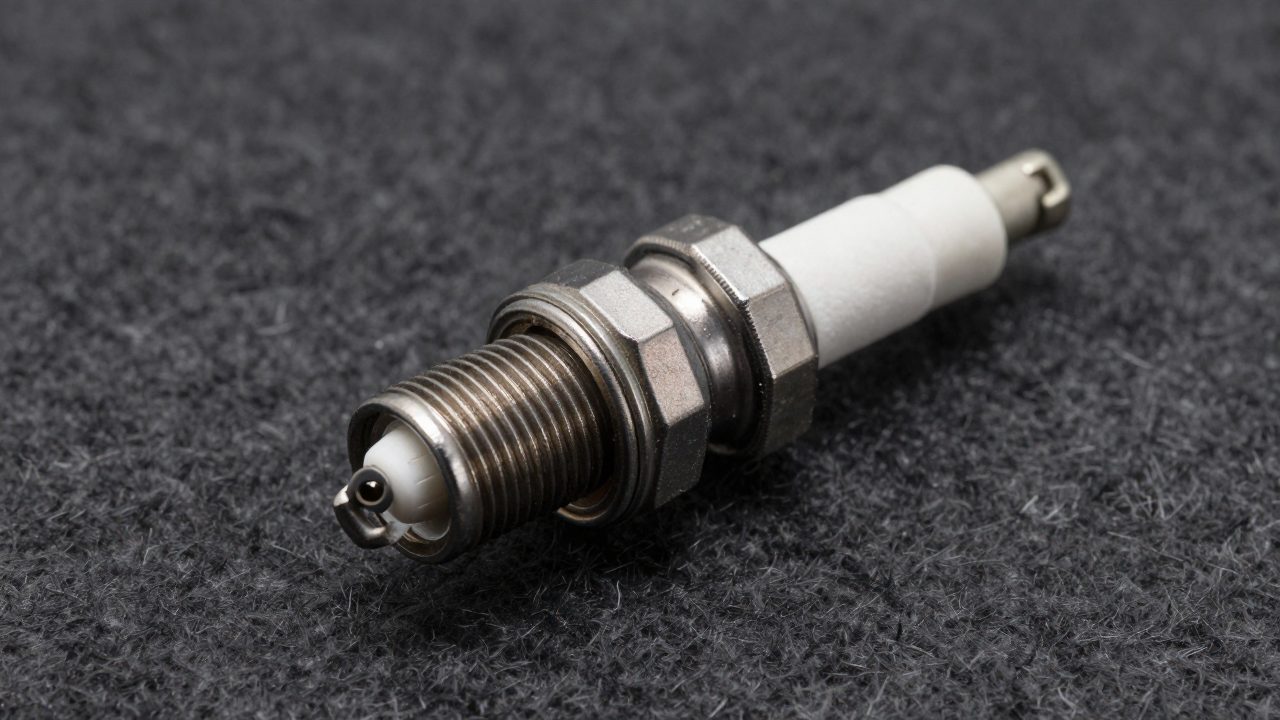
A spark plug does not make power. It either ignites the mixture or it does not, and a plug that fires reliably is doing its entire job. That one sentence disposes of most of what is sold in this category. Iridium and platinum plugs are genuinely worth buying, but for longevity — the fine precious-metal electrode erodes far more slowly than nickel, so the gap stays correct for tens of thousands of kilometres instead of a few thousand. They do not add horsepower to a 150cc single, and anything advertising a power gain from a plug is selling you a story.
What actually matters is heat range, and on a scooter the usual advice runs backwards. Heat range describes how fast the plug sheds heat into the cylinder head. A hotter plug retains more heat and burns deposits off its own nose; a colder plug sheds heat faster and resists pre-ignition under sustained high load. Scooters live at the opposite end of the duty cycle from a racing engine: short trips, a lot of idling in traffic, low sustained load, frequent cold starts. That is exactly the regime where a plug that runs too cold never gets hot enough to self-clean and fouls with carbon — which presents as hard starting and a misfire and gets blamed on the battery or the carburettor. Fitting a colder “performance” plug to a commuter scooter is a common and counterproductive upgrade.
So use the heat range your manufacturer specifies. It is in the handbook and stamped into the old plug — in the NGK system, a higher number is colder, so a CR7HSA is colder than a CR6HSA and the difference is deliberate. Match the number unless you have a specific reason and a specific measurement.
The second genuinely useful thing is that the plug is a diagnostic instrument. Pull it after a run and read it: a light tan or grey nose is correct; dry black soot means the mixture is rich or the plug is too cold; oily black means oil is getting past rings or valve seals; a white, blistered or melted nose means it is running too hot or too lean and needs attention before it does damage. Nothing else on the engine gives you that much information for free.
One practical note specific to scooters: the plug is often buried under bodywork with awkward access, and the thread is in aluminium. Use a proper plug socket with a rubber insert, torque to the handbook figure rather than by feel, and a smear of anti-seize on the threads is cheap insurance against a stripped head.
| # | Product | Price | Where to buy |
|---|---|---|---|
| 1 | NGK CR7HSA (or the heat range your handbook specifies) | $4–$10 | Amazon · eBay |
| 2 | NGK Iridium IX Equivalent | $10–$20 | Amazon · eBay |
| 3 | Denso Iridium Power Plug | $10–$22 | Amazon · eBay |
| 4 | Bosch Standard Nickel Plug | $4–$10 | Amazon |
| 5 | Spark Plug Socket with Rubber Insert | $8–$18 | Amazon · eBay |
| 6 | Feeler Gauge or Wire Gap Tool | $6–$15 | Amazon · eBay |
| 7 | Anti-Seize Compound | $8–$16 | Amazon · eBay |
| 8 | Torque Wrench, Low Range | $35–$80 | Amazon |
| 9 | Spark Plug Cap / HT Lead | $6–$15 | Amazon · eBay |
| 10 | Colder Racing or Performance Plug (usually wrong here) | $10–$25 | Amazon |
The picks, in detail

NGK CR7HSA (or the heat range your handbook specifies)
The standard fitment for a very large number of 150cc scooters and the safe default. NGK’s numbering is the industry reference here, and the letters and numbers describe thread, reach, heat range and construction rather than being a model name. Check your handbook or the markings on the plug you removed, then buy that exact code — this is one purchase where matching rather than upgrading is correct.
- Nickel centre electrode
- Heat range specified by the manufacturer
- 10 mm thread on most small scooters
- Pre-gapped but should be checked
- Correct heat range for a commuter duty cycle
- Cheap enough to change as routine maintenance
- Available almost everywhere
- Nickel electrode erodes faster than precious metals
- Needs replacing every few thousand kilometres
- Counterfeit NGK plugs are common — buy from a known seller

NGK Iridium IX Equivalent
The upgrade worth making, for the right reason. A fine iridium electrode erodes far more slowly, so the gap stays within specification for a great deal longer — which on a scooter buried under bodywork means fewer awkward changes. Buy the iridium plug in the same heat range as the standard one, never a colder one, and expect longevity rather than performance.
- Fine iridium centre electrode
- Same heat range as the standard fitment
- Substantially longer service interval
- Tapered ground electrode on many
- Gap stays correct far longer than nickel
- Fewer changes on a plug that is awkward to reach
- Slightly easier starting when cold
- Several times the price of a nickel plug
- No power gain despite the marketing
- Fine electrodes are easy to damage when gapping

Denso Iridium Power Plug
Denso’s equivalent, and a genuine alternative rather than a second choice — they use a very fine centre electrode and are original equipment on a lot of Japanese machinery. The cross-reference from an NGK code to a Denso one is published and reliable, so matching heat range across brands is straightforward. As always, match the number, do not chase a colder one.
- Very fine iridium centre electrode
- Published NGK cross-reference
- Long service interval
- OE fitment on many Japanese engines
- Excellent electrode longevity
- Reliable cross-reference from NGK codes
- OE quality control
- Priced as a premium plug
- Fine electrode damages easily if mishandled
- Availability varies by region
Bosch Standard Nickel Plug
A perfectly good nickel plug from a major manufacturer, and worth knowing about mainly for availability — in some markets Bosch is easier to find in the right heat range than NGK. The cross-reference tables between Bosch and NGK codes are straightforward, and a correct-heat-range Bosch is a much better purchase than an unbranded plug in a number you guessed at.
- Nickel centre electrode
- Published cross-reference to NGK codes
- Wide availability in Europe and India
- Standard service life
- Easy to find where NGK is scarce
- Major manufacturer quality control
- Cheap
- Nickel service life, so regular changes
- Cross-referencing is an extra step
- Fewer heat range options in small threads

Spark Plug Socket with Rubber Insert
The small tool that prevents an expensive mistake. Scooter plugs sit deep and often at an awkward angle, and the rubber insert both grips the ceramic to lift the plug out and stops you dropping the new one down into the cylinder head recess. A thin-wall version matters because scooter plug wells are tight. Cheaper than one ruined plug.
- Rubber insert grips the plug body
- Thin wall for tight plug wells
- Common sizes are 16 mm and 18 mm
- Usually with a 3/8 inch drive
- Stops the plug being dropped or cross-threaded
- Thin wall fits confined scooter wells
- Very cheap
- Wrong size is useless — check your plug hex first
- Rubber inserts perish and fall out
- Deep wells may need an extension bar too

Feeler Gauge or Wire Gap Tool
Plugs are sold pre-gapped and they are not always right, and a plug knocked in transit can be well out. A wire-type gauge is the correct tool for measuring a plug gap — the flat blade type can sit on a worn electrode and read high. Check against the handbook figure, and adjust the ground electrode only, never by levering against the centre one.
- Wire loop gauges in graduated sizes
- Adjusting tool built into most
- Reads the true gap on a worn electrode
- Pocket sized
- Catches an out-of-spec plug before fitting
- Wire type reads accurately on a worn electrode
- Costs almost nothing
- Iridium electrodes can be damaged by adjusting
- Flat feeler blades read inaccurately on worn plugs
- Easy to bend the ground electrode too far

Anti-Seize Compound
A smear on the threads, and the reason is the metal the head is made of. A steel plug threaded into an aluminium head can seize over time and take the threads with it when removed, which turns a five-minute service into a helicoil repair or a new head. A tiny amount on the threads — not on the electrode — prevents that. Reduce the torque figure slightly when using it.
- High-temperature anti-seize paste
- Copper or nickel based
- A small tube lasts years
- Applied to threads only
- Prevents seizing in an aluminium head
- One tube lasts many services
- Cheap insurance against thread damage
- Reduce torque slightly or you will over-tighten
- Must not get onto the electrode
- Some plug makers advise against it — check the packaging
Torque Wrench, Low Range
Small plug threads in an aluminium head are exactly where feel fails people. Under-tighten and the plug does not seal or transfer heat properly, which changes its effective heat range; over-tighten and you strip the head. A low-range torque wrench covering roughly 5 to 25 Nm handles plugs and most of the fasteners on a scooter, and it removes the guesswork permanently.
- Low range, roughly 5–25 Nm
- Click type with an audible signal
- 3/8 inch drive fits plug sockets
- Calibration certificate on better units
- Prevents both stripped threads and poor heat transfer
- Covers most scooter fasteners, not just plugs
- Removes guesswork on a soft alloy head
- Cheap wrenches drift out of calibration
- Must be wound back to zero after use
- Another tool for an occasional job

Spark Plug Cap / HT Lead
Worth checking when a plug change does not cure a misfire, because the cap is a common failure and it fails intermittently, which is the worst kind. The resistor inside the cap degrades, and moisture tracking across a cracked cap produces a fault that comes and goes with the weather. Caps are cheap and they screw onto the lead — a two-minute job that solves a fault people chase for weeks.
- Resistor cap screws onto the HT lead
- Straight and angled versions
- Rubber boot seals against moisture
- Standard threads on most scooters
- Cures intermittent misfires a new plug does not
- Cheap and quick to replace
- Weatherproof boot prevents tracking
- Getting the right angle matters for bodywork clearance
- Cheap caps have inconsistent resistor values
- Needs the lead cut back cleanly to fit
Colder Racing or Performance Plug (usually wrong here)
Named because it is widely sold to scooter riders as an upgrade and it is generally the opposite of one. A colder plug is correct for an engine under sustained high load, and a commuter scooter is the reverse duty cycle — short journeys, a lot of idling, low load. A plug that runs too cold never reaches the temperature at which it burns its own deposits off, so it fouls, and the resulting hard starting gets blamed on everything except the plug.
- Heat range colder than standard
- Marketed for performance and racing
- Same thread and reach as the standard plug
- Often multi-electrode or exotic designs
- Correct for a genuinely modified, hard-worked engine
- Fouls on a commuter duty cycle of short trips and idling
- Hard starting and misfires get misdiagnosed as electrical faults
- No benefit at all on a standard engine
Buying tips
- Match the heat range in your handbook rather than upgrading it. A spark plug does not make power — it ignites the mixture or it does not, and heat range is the only spec that genuinely changes behaviour.
- Remember that in the NGK system a higher number is colder. A CR7HSA is colder than a CR6HSA, and that difference is deliberate rather than a quality tier.
- Do not fit a colder performance plug to a commuter scooter. Short trips, idling in traffic and low load are exactly the regime where a cold plug never self-cleans and fouls with carbon.
- Buy iridium for longevity, not performance. The fine electrode holds its gap far longer, which matters most on a plug buried under bodywork.
- Read the old plug before throwing it away. Light tan is correct; dry black soot means rich or too cold; oily black means oil past the rings or seals; white and blistered means too hot or too lean.
- Check the gap with a wire gauge rather than a flat blade. A flat feeler sits on a worn electrode and reads high, and plugs are not always correctly gapped out of the box.
- Use a small amount of anti-seize on the threads and reduce torque slightly. A steel plug seizing in an aluminium head is how a routine service becomes a helicoil repair.
- Change the plug cap if a new plug does not cure a misfire. The resistor degrades and moisture tracks across a cracked cap, producing an intermittent fault people chase for weeks.
As an Amazon Associate and eBay Partner, toptenpick.com earns from qualifying purchases. Prices and availability are subject to change.