

As an Amazon Associate and eBay Partner, toptenpick.com earns from qualifying purchases. Prices and availability are subject to change.
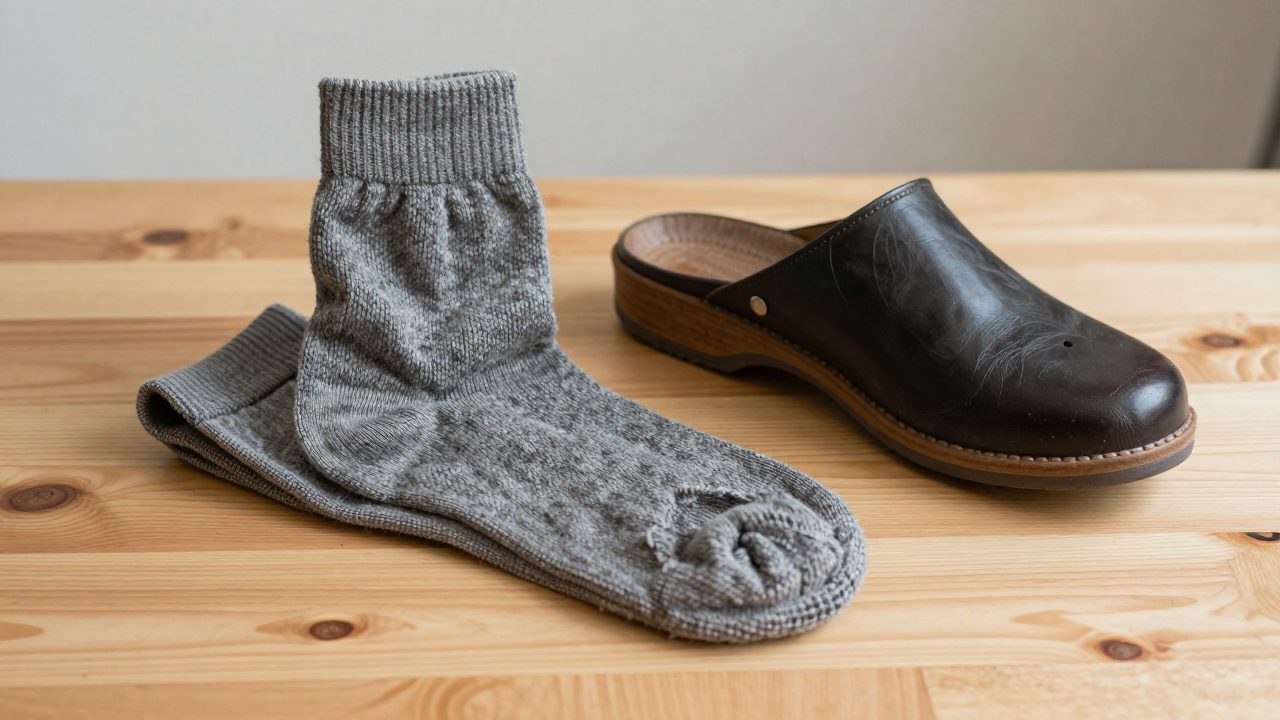
A clog is held on by friction at the instep, not by a heel counter — so a slippery sock is working against the shoe. That is the thing almost every sock guide gets backwards. On a laced shoe the heel is captured, and a smooth sock that lets the foot glide is a good thing. On a Dansko there is nothing behind your heel at all; the shoe stays on because the top of your foot presses up into the instep of the clog. If the sock is too thin and too slick, the heel lifts on every step, the clog slaps, and the repeated rubbing gives you exactly the blisters people blame the shoe for.
So the sock has a structural job here, and the specification is a little thicker and a little grippier than you would choose for a trainer. A cushioned cotton or wool blend takes up the small amount of slack that lets the heel move, and wool in particular has enough surface texture to resist sliding. What you do not want is a dress sock in a slippery synthetic — that is the combination that produces the clattering walk, and the one most often worn with clogs at work because people are dressing for the job rather than the shoe.
The second problem is moisture, and it is worse in a clog than you would expect. A Dansko is a closed leather shoe worn for ten- and twelve-hour shifts by people who are on their feet the entire time. Cotton absorbs sweat and holds it against the skin, and damp skin blisters far more readily than dry skin does. Merino wool moves moisture away and keeps insulating when damp; modern synthetic blends do the same thing more cheaply. This is the argument for wool over cotton in a shoe that is otherwise a summer clog.
The third thing is fit, and it is a real trap when changing sock thickness. Danskos are sized in European whole and half steps with limited increments, and the fit is snug across the instep by design. Switching from a thin dress sock to a thick boot sock can genuinely change how the shoe fits — too thick and it presses the top of your foot, too thin and the heel lifts. If you are between thicknesses, the thicker sock usually wins, but try it before a long shift rather than during one.
And a note on compression, since it comes up constantly among nurses and chefs: graduated compression socks are widely recommended for people who stand all day, and they are usually thin and smooth — which is the slippery end of this problem. Compression is worth having; just be aware you may need to size the clog accordingly, or accept a little more heel movement than a thick wool sock gives.
| # | Product | Price | Where to buy |
|---|---|---|---|
| 1 | Merino Wool Crew Sock, Medium Cushion | $18–$30 | Amazon · eBay |
| 2 | Darn Tough Merino Crew Sock | $22–$30 | Amazon · eBay |
| 3 | Bombas or Similar Cushioned Ankle Sock | $15–$25 | Amazon · eBay |
| 4 | Graduated Compression Sock, 15–20 mmHg | $15–$30 | Amazon · eBay |
| 5 | Wool-Blend Boot Sock, Heavy Cushion | $18–$32 | Amazon · eBay |
| 6 | Bamboo Viscose Crew Sock | $12–$22 | Amazon · eBay |
| 7 | Toe Socks (for blister-prone feet) | $14–$28 | Amazon · eBay |
| 8 | Non-Slip Grip Socks | $12–$22 | Amazon · eBay |
| 9 | Anti-Blister Balm or Tape | $10–$20 | Amazon · eBay |
| 10 | Thin Dress Sock in Slippery Synthetic (what not to wear) | $8–$18 | Amazon · eBay |
The picks, in detail

Merino Wool Crew Sock, Medium Cushion
The best overall answer here and it solves both problems at once. Merino moves moisture away from the skin instead of holding it, keeps insulating when damp, and resists odour over a long shift. The medium cushion takes up just enough slack to keep the heel seated without pressing the instep. It costs several times what a cotton multipack does and lasts several times longer.
- Merino wool blend with nylon for durability
- Medium cushioning underfoot
- Crew height
- Reinforced heel and toe
- Handles moisture far better than cotton
- Enough texture and bulk to stop heel lift
- Resists odour over long shifts
- Several times the price of cotton socks
- Needs careful washing to avoid shrinking
- Warm in a hot kitchen

Darn Tough Merino Crew Sock
The one worth the money if you are on your feet professionally, largely because of the warranty: Darn Tough replace socks that wear out, permanently, which changes the arithmetic on a sock that costs four times a supermarket pair. Dense merino knit with real cushioning, tight enough not to bunch inside a clog, and durable enough to survive daily washing.
- Merino wool with nylon and Lycra
- Unconditional lifetime replacement warranty
- Several cushion weights
- Knitted in the United States
- Lifetime warranty genuinely changes the cost calculation
- Dense knit resists bunching in a clog
- Multiple cushion weights to tune the fit
- Expensive up front
- Warranty claims mean posting socks back
- Heavier weights are too thick for a snug clog
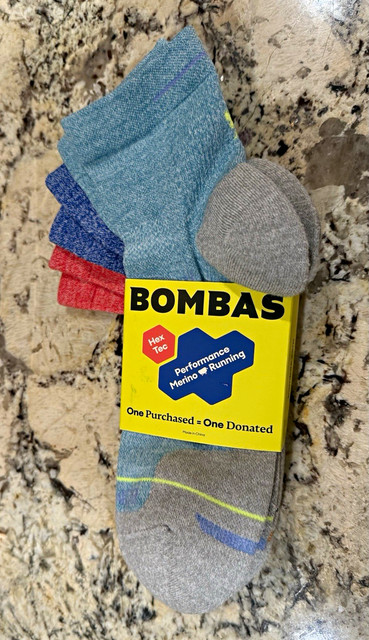
Bombas or Similar Cushioned Ankle Sock
A good middle option for people who want cushioning and a lower cuff. The relevant features are the honeycomb arch support band, which helps the sock stay put rather than rotating inside the shoe, and a seamless toe. In a clog a sock that rotates is a sock that bunches under the ball of the foot, and that is its own blister.
- Cushioned footbed with arch support band
- Seamless toe closure
- Cotton-rich blend
- Ankle and crew heights
- Arch band stops the sock rotating in the shoe
- Seamless toe removes a common pressure point
- Comfortable straight out of the packet
- Cotton-rich, so worse on moisture than wool
- Expensive for a cotton sock
- Arch band is too tight for some feet
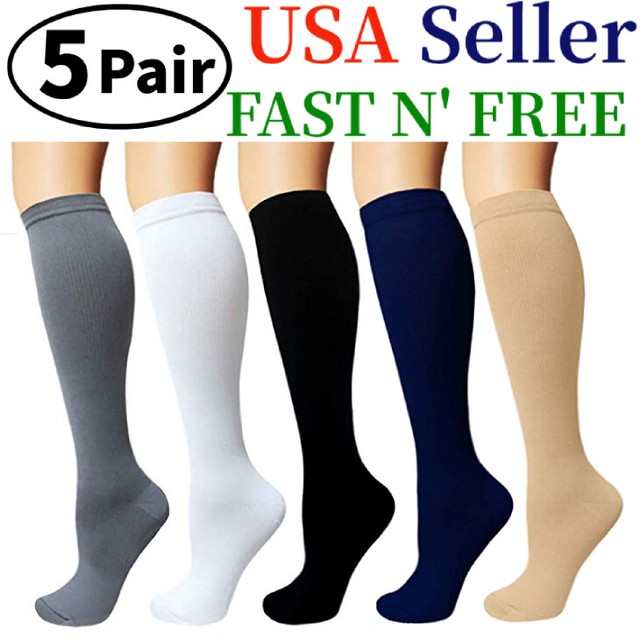
Graduated Compression Sock, 15–20 mmHg
Widely worn by nurses, chefs and anyone else standing for twelve hours, and worth understanding properly. Graduated compression is tightest at the ankle and eases up the leg, which helps venous return and reduces the aching and swelling of a long shift. The trade-off in a clog is that compression socks are thin and smooth — good for the leg, less good for keeping the heel seated.
- Graduated compression, typically 15–20 mmHg
- Knee-high and over-calf lengths
- Thin, smooth knit
- Nylon and spandex blends
- Genuinely helps with aching and swelling over long shifts
- Widely recommended for people who stand all day
- Available in work-appropriate plain colours
- Thin and smooth, which allows more heel lift in a clog
- Sizing is by calf and ankle measurement, not shoe size
- Higher compression grades should be discussed with a clinician
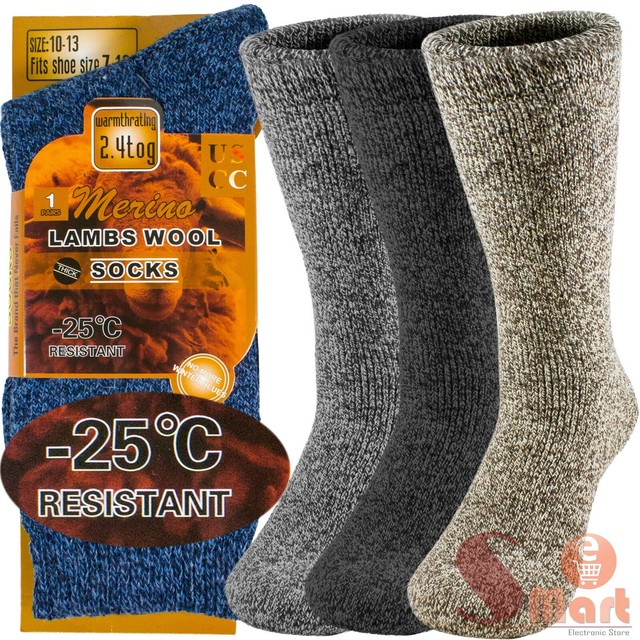
Wool-Blend Boot Sock, Heavy Cushion
The answer if your clogs have stretched and the heel has started lifting. A heavy cushioned boot sock takes up real volume, which resnugs a shoe that has relaxed with wear, and the thick underfoot padding helps on hard hospital and kitchen floors. Check it does not press on the instep — a clog that is snug across the top with a thick sock will be uncomfortable within the hour.
- Heavy cushioning underfoot and around the foot
- Wool blend with synthetic reinforcement
- Crew or boot height
- Substantial volume
- Takes up slack in a stretched clog
- Best cushioning on hard floors
- Warm in a cold environment
- Too thick for a well-fitting new clog
- Presses on the instep if the shoe is snug
- Hot in a kitchen
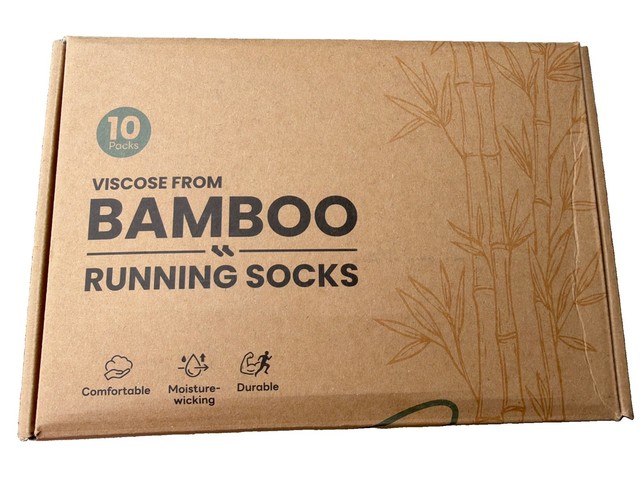
Bamboo Viscose Crew Sock
A good compromise for hot environments where wool is too warm and cotton holds too much sweat. Bamboo viscose moves moisture better than cotton at the same thickness and has a soft, slightly matt surface that grips a little better than a slick synthetic. Not as durable as wool or a nylon blend, but comfortable and inexpensive enough to replace regularly.
- Bamboo viscose with a little elastane
- Moisture-wicking knit
- Soft matt surface
- Crew and ankle heights
- Cooler than wool, drier than cotton
- Soft surface grips reasonably in a clog
- Inexpensive
- Wears through at the heel faster than wool
- Loses elasticity after many washes
- Quality varies widely between sellers
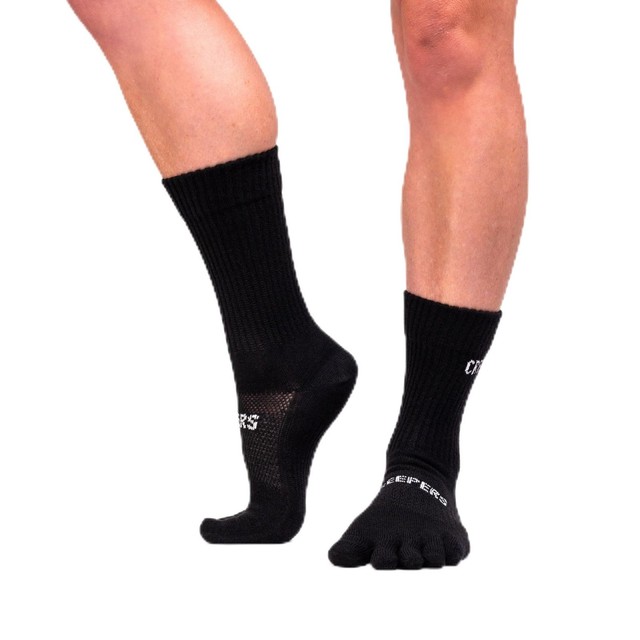
Toe Socks (for blister-prone feet)
Worth trying if your blisters are between the toes rather than at the heel, which is a common pattern in a roomy clog where the foot slides forward. Individually sleeved toes remove skin-on-skin friction entirely. They feel strange for a day or two, they are fiddly to put on, and for people who get that specific blister they solve it completely.
- Individual toe sleeves
- Thin to medium cushioning
- Merino and synthetic versions
- Crew and ankle heights
- Eliminates between-toe friction completely
- Merino versions handle moisture well
- Genuinely effective for that specific problem
- Fiddly and slow to put on
- Feel odd for the first few wears
- Does nothing for heel lift, which is the main clog problem

Non-Slip Grip Socks
Usually sold for hospital floors and yoga, and useful here for a different reason: the silicone dots that grip a floor also grip the inside of a clog. If your heel lifts on every step and a thicker sock is not an option because the shoe is already snug, a thin grip sock adds friction rather than volume, which is the other way to solve the same problem.
- Silicone grip dots on the sole
- Thin to medium knit
- Cotton or synthetic blends
- Ankle and crew heights
- Adds friction without adding thickness
- Useful when the clog is already snug across the instep
- Cheap
- Grip dots wear off after many washes
- Some find the dots uncomfortable underfoot
- Usually cotton, so poorer on moisture

Anti-Blister Balm or Tape
For the transition period, because a new pair of Danskos and a changed sock both take time to settle. A silicone-based anti-friction balm on the heel and instep, or a patch of kinesiology or specialist blister tape on a known hot spot, buys you through the first week while the leather moulds. Cheaper than a lost shift and far cheaper than treating a blister that has torn.
- Silicone or wax anti-friction balm
- Adhesive blister patches and tape
- Applied before the shift, not after
- Small enough for a pocket
- Gets you through the break-in period
- Prevents rather than treats
- Very cheap
- Balm wears off over a long shift and needs reapplying
- Tape lifts once the foot is damp
- Masks a fit problem rather than fixing it

Thin Dress Sock in Slippery Synthetic (what not to wear)
Named because it is what most people are wearing when they search for this. A fine, smooth polyester or nylon dress sock is the worst combination with an open-backed clog: too thin to take up any slack and too slick to generate friction, so the heel lifts on every step and the shoe slaps. It is also the sock people choose because they are dressing for the workplace rather than the shoe.
- Fine gauge polyester or nylon
- Smooth, low-friction surface
- Minimal cushioning
- Dress or trouser sock styling
- Smart appearance
- Thin enough for a tight dress shoe
- Cheap
- Slick surface lets the heel lift on every step
- No cushioning on hard floors
- Traps moisture against the skin
Buying tips
- Remember what is holding the shoe on. A clog has no heel counter — it stays on by friction at the instep — so a thin slippery sock lets the heel lift on every step and that is what causes the slapping and the blisters.
- Go slightly thicker and grippier than you would for a trainer. A medium-cushion wool or wool-blend sock takes up the slack that lets the heel move.
- Choose wool or a wicking blend over cotton. A closed leather clog over a twelve-hour shift gets damp, and damp skin blisters far more readily than dry skin.
- Test a new sock thickness before a long shift, not during one. Danskos are snug across the instep by design, and changing sock weight genuinely changes the fit.
- If the clog is already snug, add friction rather than thickness. A thin grip sock with silicone dots keeps the heel seated without pressing the top of your foot.
- Expect compression socks to be slippery, and plan for it. They are genuinely worth wearing if you stand all day, but they are thin and smooth, which is the opposite of what a clog wants.
- Check whether your blisters are at the heel or between the toes. Heel blisters are a lift problem solved by sock thickness; toe blisters are a friction problem solved by toe socks.
- Replace socks before they thin out at the heel. A worn heel is exactly where the sock’s grip and cushioning mattered, and a thinning sock quietly recreates the original problem.
As an Amazon Associate and eBay Partner, toptenpick.com earns from qualifying purchases. Prices and availability are subject to change.