

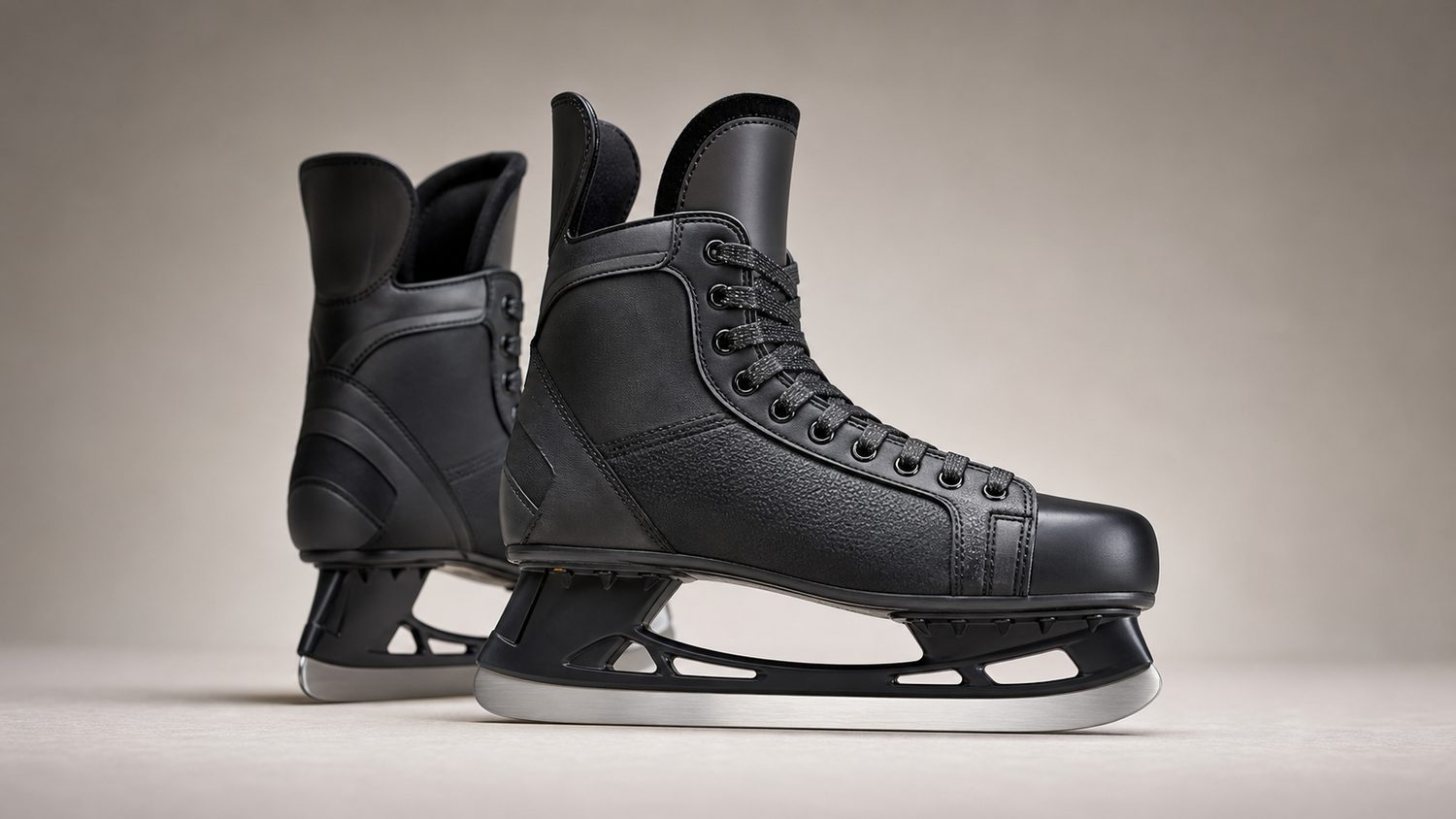
There is no universal best skate profile for a defenseman because blade profile changes how the runner meets the ice, while a defenseman’s size, skating mechanics, holder length, and job on the ice all change what feels useful. A good starting point is a profile that gives stable backward skating and consistent glide, then an adjustment after several skates if the player needs more agility or a different balance point. Do not confuse profile with hollow: the profile is the lengthwise shape of the runner, while the hollow is the groove cut across it during sharpening.
Start with the role, not a pro-player comparison
A defenseman repeatedly opens the hips, pivots from backward to forward skating, manages a gap, and absorbs contact near the boards. A profile that feels quick in a straight-line drill can still be a poor fit if it makes backward balance or heel-edge control uncomfortable. Start by describing the actual problem to a qualified skate technician. “I lose balance when opening up,” “I want more glide on the penalty kill,” and “I feel stuck during crossovers” are useful observations. “Give me the profile used by a professional player” is not, because the same profile can feel very different on a different runner and skater.
Single-radius profiles: a clear baseline
A single-radius profile has one continuous radius over the profiled section of the blade. It is often the simplest way to learn what a change does because the feel is predictable. ProSharp lists common single-radius templates such as 10-foot, 13-foot, and 17-foot options. Retail guidance from The Hockey Shop describes shorter radii, roughly 7 to 10 feet, as increasing agility because less blade is in contact at one time; longer radii, roughly 11 to 17 feet, place more blade on the ice and emphasize glide and speed.
For many defensemen, an 11-foot or 13-foot single radius is a sensible place to begin rather than a proclamation that it is best for everyone. It offers a more stable, gliding feel than a short profile while remaining familiar and easy to evaluate. A player who is developing basic mechanics may benefit from keeping the experiment simple. Skate it through practices, backwards drills, transitions, and game shifts before deciding that it needs another change.
Quad profiles: blending parts of the blade
A Quad profile uses four radii along the runner rather than one. ProSharp’s Quad I, for example, is listed as 6-foot, 9-foot, 12-foot, and 15-foot radii, while its templates vary by holder size. The company describes the Quad family as a centrally balanced profile intended to support powerful skating strides. The short sections toward the front can make the front of the blade feel more responsive, while the longer sections toward the rear provide a different gliding and stability feel. That blend appeals to a mobile defenseman who needs pivots and acceleration without giving up a stable base.
The important word is feel. A multi-radius template is not a guaranteed upgrade, and its named number does not transfer cleanly across every skate size. The technician should select the template for the holder size and explain any pitch change. Profile changes can also take several sessions to evaluate because a player may initially overcorrect while getting used to the new balance point. Make one change at a time and record what improved or worsened.
Profile and hollow solve different problems
A common mistake is to change the hollow when the issue is really the lengthwise profile, or to change the profile when the issue is edge bite. A deeper hollow creates more pronounced edges and can feel grippier; a shallower hollow has less bite and can feel faster or less resistant. NHL coverage of skate sharpening notes that lower hollow numbers represent a deeper cut and higher numbers a flatter curve. Neither setting is automatically right for a defenseman. Body weight, ice quality, skating strength, and personal preference all affect the result.
Keep the hollow constant when testing a new profile whenever possible. If both are changed at once, there is no reliable way to know which change caused the improved turn or the loss of confidence on a hard stop. Once a profile is settled, adjust hollow in small steps with the help of the same technician. This approach protects the useful baseline you have already established.
A practical test plan
- Have the runners checked for level edges and damage before profiling. A bad edge can imitate a profile problem.
- Choose one baseline profile suited to the holder size, then keep the hollow unchanged for the first test.
- Skate enough sessions to test forward stride, backward glide, transitions, tight pivots, stops, and board battles.
- Write down specific feedback immediately after skating. Note whether the issue appeared on the toes, middle, or heels of the blade.
- Discuss that feedback with the technician before selecting a shorter single radius, longer single radius, or multi-radius alternative.
What to choose first
- Want a stable, easy-to-understand baseline: try an 11-foot or 13-foot single radius appropriate for the runner size.
- Want a centrally balanced profile with acceleration and glide: ask a technician whether a holder-size-matched Quad template is appropriate.
- Feel unstable or are rebuilding skating mechanics: avoid chasing an aggressive profile change and work from a single-radius baseline.
- Need more bite rather than a different balance point: discuss hollow first, but do not alter hollow and profile together.
The right result is a profile that helps the player execute ordinary defensive movements repeatedly, not one that promises a dramatic transformation. A defenseman should be able to hold a gap, open up, recover to the middle, and stop under pressure without thinking about the blade. Use the initial profile as measured feedback, then make the next adjustment only when the on-ice problem is clear.