

As an Amazon Associate and eBay Partner, toptenpick.com earns from qualifying purchases. Prices and availability are subject to change.
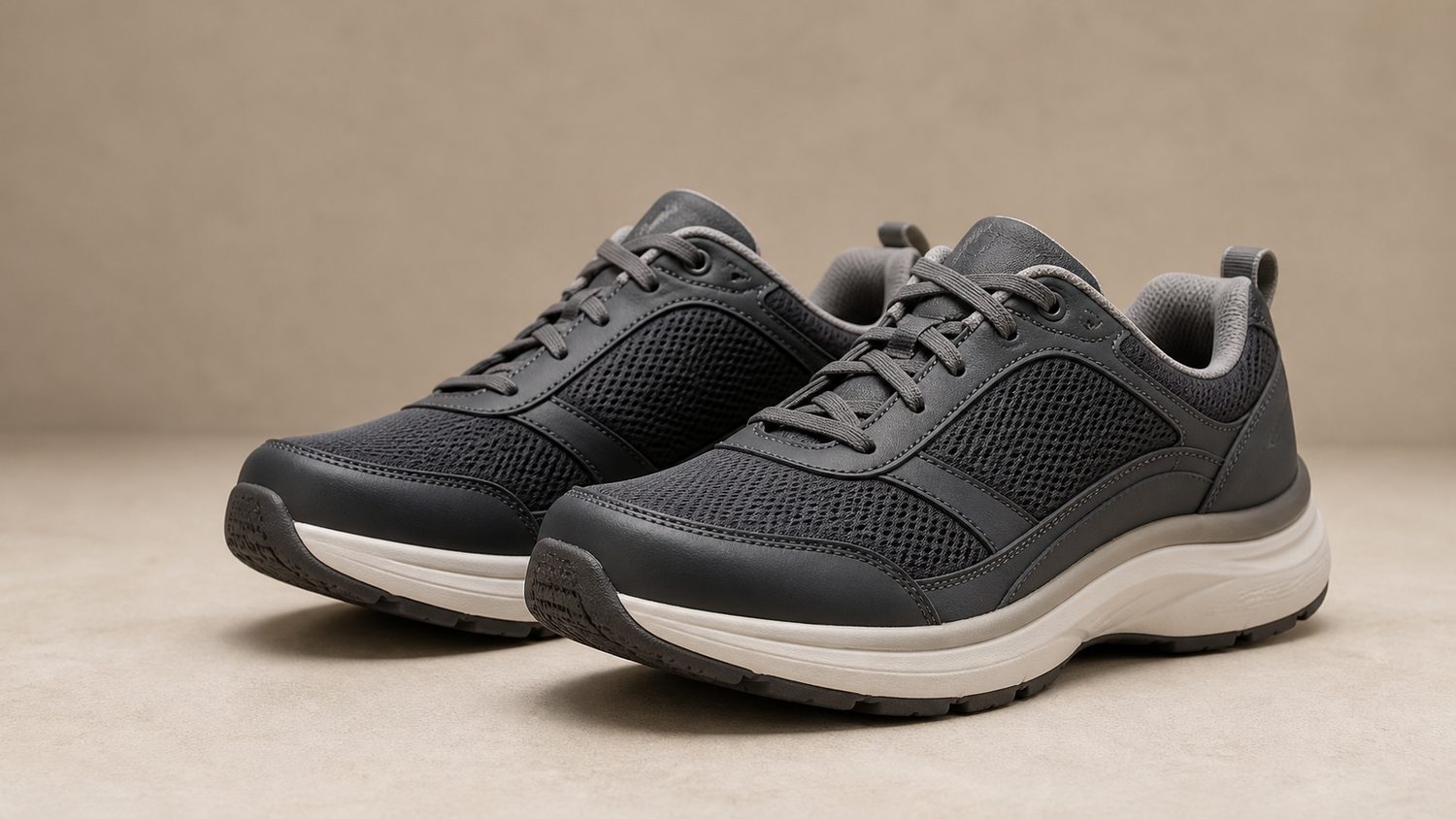
Almost every instinct you have about buying shoes for sore feet is wrong here, and the reason is anatomical. A tarsal coalition is an abnormal bridge — bone, cartilage or fibrous tissue — between two of the bones in the back of the foot, most often between the talus and the calcaneus or between the calcaneus and the navicular. The joint it crosses cannot move properly, and the pain comes from the foot being asked to move anyway: walking on uneven ground, pushing through the arch, rolling the hindfoot. So the shoe’s job is not to be soft and flexible and let the foot move naturally. It is to stop the foot moving.
That means a stiff sole, and it means a rocker. Orthopaedic guidance for this condition points consistently at footwear that restricts hindfoot motion — a sole rigid enough that it does not twist, with a slight curve along its length so that you roll over it rather than bending the foot at each step. A rocker sole is what lets a stiff shoe still walk comfortably. A cushioned, flexible running shoe, which is what almost everyone with foot pain buys, allows exactly the motion that hurts.
Height helps too. A boot or a shoe with a firm heel counter and a collar that comes up around the ankle restricts hindfoot movement further, which is why a walking boot is prescribed when symptoms flare badly. A supportive lace-up boot is the everyday version of that idea.
Orthotics are the other half. Arch supports, heel cups and wedges are routinely recommended alongside footwear to stabilise the foot and take load off the coalition, and inexpensive over-the-counter supports help plenty of people before anyone talks about custom devices. A shoe with a removable footbed is therefore worth more than one without, because it has room to take an insert.
And avoid heels. A raised heel pushes the hindfoot into exactly the position that provides least support, and it is one of the few footwear choices orthopaedic sources name specifically as making this worse.
The honest boundary. Shoes manage symptoms. They do not change the coalition, and a tarsal coalition that keeps hurting despite sensible footwear and an insert has a treatment pathway that runs through a podiatrist or orthopaedic foot and ankle specialist — immobilisation, injections, and surgery for some people. If a growing teenager is limping, that is a conversation to have sooner rather than later.
The list runs from the stiffest, most restrictive options down to everyday shoes that get the principles roughly right.
| # | Product | Price | Where to buy |
|---|---|---|---|
| 1 | Hoka Bondi or Gaviota (maximal, rockered) | $140–$190 | Amazon · eBay |
| 2 | Brooks Addiction Walker | $130–$160 | Amazon · eBay |
| 3 | Rigid Carbon or Composite Insole Plate | $30–$70 | Amazon · eBay |
| 4 | Powerstep Pinnacle or Similar OTC Orthotic | $40–$60 | Amazon · eBay |
| 5 | Walking Boot / CAM Boot | $50–$110 | Amazon · eBay |
| 6 | New Balance 928 Walking Shoe | $130–$170 | Amazon · eBay |
| 7 | Hiking Boot with a Stiff Shank | $130–$250 | Amazon |
| 8 | Dansko Professional Clog | $130–$160 | Amazon · eBay |
| 9 | Heel Cup / Heel Wedge Inserts | $12–$30 | Amazon · eBay |
| 10 | Rocker-Sole Recovery Sandal | $40–$70 | Amazon |
The picks, in detail

Hoka Bondi or Gaviota (maximal, rockered)
Hoka’s whole design language is a thick, firm midsole with a pronounced rocker — which happens to be exactly the specification this condition wants. The stack is stiff enough that the foot does not twist through it, and the rocker does the bending so your midfoot does not have to. The Gaviota adds a firmer medial post for stability. Widely stocked, and podiatrists recommend them often for this reason.
- Thick firm midsole with meta-rocker geometry
- Removable footbed on most models
- Wide sizes available
- Stability versions with a firmer medial side
- Rocker geometry is the key feature, not a marketing term
- Sole resists twisting well
- Easy to find and try on
- Tall stack feels unstable on uneven ground at first
- Midsoles compress and lose the stiffness within a year of heavy use
- Bulky appearance
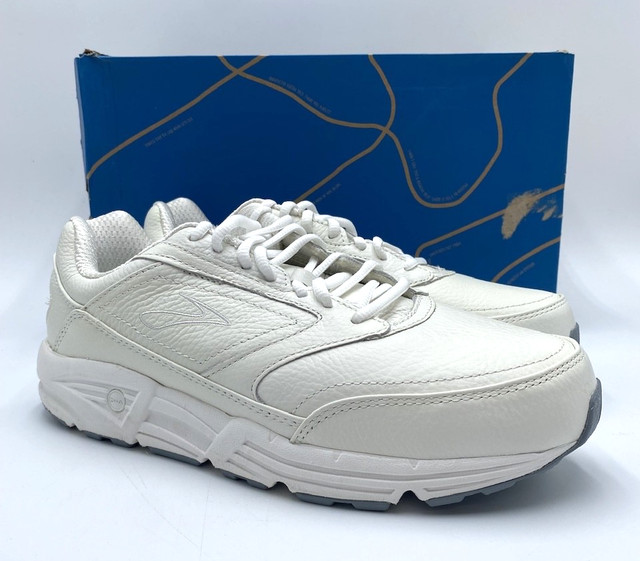
Brooks Addiction Walker
A long-standing recommendation from podiatry clinics, and the reason is the construction rather than the marketing: a genuinely rigid sole unit, a substantial medial post, a firm heel counter and a roomy last that takes an orthotic without cramping. It is a leather walking shoe rather than a trainer, it looks like one, and it is one of the most consistently recommended shoes for rigid-foot conditions.
- Rigid sole with extended medial post
- Firm heel counter
- Removable insole for orthotics
- Available in multiple widths
- Genuinely stiff rather than merely supportive
- Room for a prescribed orthotic
- Multiple widths including extra wide
- Heavy
- Unmistakably orthopaedic in appearance
- Leather upper is warm in summer
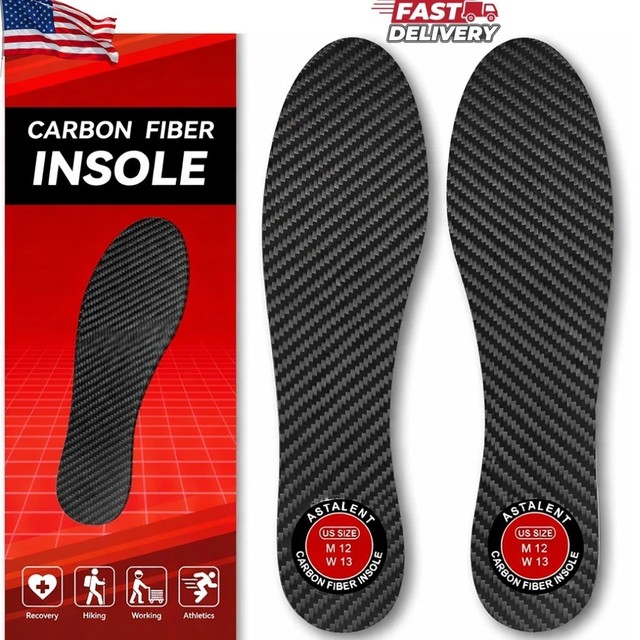
Rigid Carbon or Composite Insole Plate
The cheapest way to make a shoe you already own stiff, and a genuinely clever intervention: a thin full-length carbon or composite plate slips under the existing insole and stops the shoe bending. Podiatrists use these for several rigid-forefoot and midfoot conditions. It changes nothing about the upper, and it turns a flexible shoe into a stiff one for a fraction of the price of new footwear.
- Thin full-length carbon fibre or composite plate
- Sits under the existing insole
- Trimmable to shoe size on some models
- Available in several stiffness grades
- Converts shoes you already own
- Very thin, so it does not change the fit much
- Far cheaper than replacing footwear
- Alters the feel of walking and takes acclimatisation
- Too stiff a plate causes problems elsewhere in the chain
- Not a substitute for proper assessment

Powerstep Pinnacle or Similar OTC Orthotic
The over-the-counter arch support that orthopaedic sources routinely mention as worth trying before custom devices. A semi-rigid shell with a deep heel cup cradles the hindfoot and limits the rolling motion that provokes symptoms. It costs a fraction of a custom orthotic and it tells you cheaply whether more support helps at all — which is useful information to bring to a clinician.
- Semi-rigid supportive shell
- Deep heel cup
- Full length with cushioned top cover
- Sized to shoe size, trimmable
- Cheap way to test whether support helps
- Deep heel cup restricts hindfoot motion
- Fits most shoes with a removable insole
- Takes up volume — shoes may need to be a half size larger
- Generic shape does not suit every foot
- Shell softens over a year of daily use

Walking Boot / CAM Boot
The flare-up tool rather than everyday footwear, and included because it is a standard part of managing this condition. A removable walking boot immobilises the hindfoot almost completely and lets an inflamed area settle, which is exactly what clinicians prescribe for a bad episode. It is worth owning if you get flares, and it is worth taking off as soon as the flare passes — prolonged immobilisation has its own costs.
- Rigid shell with rocker sole
- Adjustable straps and optional air bladder
- Removable for washing and sleeping
- Tall and short versions
- The most effective restriction of hindfoot motion available
- Standard clinical approach for flare-ups
- Removable, unlike a cast
- Causes a leg-length difference — use a levelling shoe on the other foot
- Muscle loss with prolonged use
- Should be used on clinical advice, not indefinitely

New Balance 928 Walking Shoe
A motion-control walking shoe built on a stiff last with a substantial roll bar, available in a genuinely wide range of widths including very wide. Width matters more than people expect here: a foot that cannot pronate to accommodate a narrow shoe just gets compressed. Removable insole, firm heel counter, and the sort of shoe a podiatry clinic stocks rather than a running shop.
- Motion control construction with roll bar
- Rigid last and firm heel counter
- Widths from narrow to 6E
- Removable footbed
- Exceptional width range
- Genuinely motion-controlling rather than just supportive
- Takes a prescribed orthotic comfortably
- Heavy and conservative looking
- Expensive at full retail
- Less rocker than a Hoka, so stiffness is felt more
Hiking Boot with a Stiff Shank
The everyday answer for a lot of people, and it hits three of the four principles at once: a shank stiff enough that the sole will not twist, a high collar and firm heel counter restricting the ankle and hindfoot, and a lacing system that holds the foot back into the heel. Look for a boot rated for backpacking rather than a light trail shoe — the stiffness rating is the point.
- Half or full-length stiff shank
- Above-ankle collar with firm heel counter
- Lugged sole with some rocker
- Removable footbed on most
- Stiffness and ankle restriction in one purchase
- Socially normal footwear
- Durable and resoleable at the better end
- Hot and heavy for indoor or office wear
- Needs breaking in
- Stiff boots are unforgiving if the fit is wrong

Dansko Professional Clog
A rigid rockered sole on a shoe people wear for twelve-hour shifts, which is a useful real-world test of the principle. The sole does not bend at all and the rocker carries you through the step. The compromise is the open back: it holds on by friction at the instep rather than by a heel counter, so it restricts the hindfoot less than a laced shoe. Good for standing, less good for distance.
- Completely rigid rockered sole
- Roomy toe box
- Open-back clog construction
- Removable footbed on some models
- Genuinely rigid sole with a proper rocker
- Very comfortable for long periods standing
- Easy on and off
- No heel counter, so less hindfoot control than a laced shoe
- Takes practice to walk in without slapping
- Poor on uneven ground or stairs

Heel Cup / Heel Wedge Inserts
Small, cheap and named specifically in orthopaedic guidance for this condition. A firm heel cup cradles the fat pad and limits how much the heel can roll; a wedge alters the angle the hindfoot sits at. They are the least intrusive thing you can put in a shoe, they fit in almost anything, and they are worth trying before a full-length orthotic because they take up almost no volume.
- Firm plastic or gel heel cups
- Medial and lateral wedges available
- Fits inside most shoes
- Sold in pairs, several sizes
- Very cheap and worth trying early
- Takes up almost no room in the shoe
- Moves easily between pairs
- Less control than a full-length orthotic
- Gel versions compress and lose effect
- Wrong wedge direction makes symptoms worse
Rocker-Sole Recovery Sandal
For the house, where people with foot pain do most of their damage by going barefoot on hard floors. A moulded recovery sandal with a thick firm footbed and a pronounced rocker applies the same principles indoors. It is not as controlling as a shoe — there is no heel counter — but it is enormously better than bare feet or a flat slipper on tile.
- Thick moulded EVA footbed
- Pronounced rocker profile
- Contoured arch
- Waterproof and washable
- Applies the right principles to indoor wear
- Much better than barefoot on hard floors
- Cheap and long-lasting
- No heel counter, so limited hindfoot control
- Slip-on style is unstable on stairs
- Foam softens over time
Buying tips
- Buy stiff, not soft. The pain comes from the hindfoot being asked to move through a joint that cannot, so a shoe that allows natural foot motion is allowing exactly the thing that hurts.
- Look for a rocker sole. A rigid shoe is only comfortable to walk in if the sole curves along its length so you roll over it instead of bending the foot at each step.
- Test stiffness in the shop by holding the heel and toe and twisting. If the sole wrings like a towel, it is the wrong shoe however comfortable it feels standing still.
- Avoid heels. Orthopaedic sources name raised heels specifically as providing inadequate hindfoot support for this condition.
- Buy shoes with a removable insole. Arch supports, heel cups and wedges are a standard part of managing this, and a shoe with a glued-in footbed has no room for one.
- Try an over-the-counter orthotic before a custom one. Inexpensive supports help plenty of people, and whether they help at all is useful information to take to a clinician.
- Consider a carbon plate to stiffen shoes you already own. It is a fraction of the price of new footwear and it is the same principle a podiatrist would apply.
- See a podiatrist or orthopaedic foot specialist if symptoms persist, and sooner if a growing teenager is limping. Footwear manages this; it does not change the coalition, and there is a treatment pathway beyond shoes.
As an Amazon Associate and eBay Partner, toptenpick.com earns from qualifying purchases. Prices and availability are subject to change.