

As an Amazon Associate and eBay Partner, toptenpick.com earns from qualifying purchases. Prices and availability are subject to change.
Before you buy any blade at all, there is a question worth answering: does your rabbit need to be cut?
English angoras and many French angoras moult on a roughly quarterly cycle, and during that moult the mature wool releases from the coat on its own. Harvesting it is a matter of gently drawing the loose fibres away from the new growth with your fingers or a wide comb — plucking, in the usual term, though nothing is being pulled from a rabbit that does not want to give it up. Done at the right moment it takes only what has already let go. That produces longer, more uniform fibre than cutting does, because you are collecting whole staples rather than sections, and it leaves the short new coat intact so the rabbit is not left bare. It is not faster than shearing — if anything it is slower — but the fibre is better and the risk of injury is zero.
Some lines simply do not release their coat, and satin angoras and giant angoras generally have to be shorn. If that is your rabbit, the thing to understand is where the danger actually lies. Rabbit skin is extraordinarily thin and loose, and a blade will cut it as easily as it cuts wool. The injuries that happen are not caused by blunt tools or by lack of strength. They are caused by the tip of a blade reaching skin, and by a fold of loose skin being lifted into the path of a blade you thought was clear. That is why the standard advice is a blunt-tipped scissor, held at an angle away from the body, taking small bites, with the skin held taut by your other hand.
There is one more thing that matters to anyone who spins or sells the wool: second cuts. Going over the same patch twice produces a crop of short fragments that contaminate the fleece and are almost impossible to sort out afterwards. One clean pass per area, even if it leaves the coat slightly uneven, is worth far more than a tidy-looking rabbit and a ruined fleece.
The ten items below cover both routes — the tools for plucking and the ones for cutting safely — with an honest note on which jobs each is actually good for.
| # | Product | Price | Where to buy |
|---|---|---|---|
| 1 | Blunt-Tip Grooming Scissors | $10-$25 | Amazon · eBay |
| 2 | Curved Grooming Shears | $20-$45 | Amazon · eBay |
| 3 | Small Cordless Clipper with a Fine Blade | $35-$110 | Amazon · eBay |
| 4 | Replacement Clipper Blades and Cooling Spray | $20-$60 | Amazon |
| 5 | Wide-Tooth Comb for Plucking | $8-$25 | Amazon |
| 6 | Slicker Brush with Coated Pin Tips | $10-$30 | Amazon · eBay |
| 7 | Mat Splitter or Dematting Rake | $12-$30 | Amazon |
| 8 | Non-Slip Grooming Mat or Table Surface | $12-$30 | Amazon · eBay |
| 9 | Styptic Powder and a Small First Aid Kit | $10-$25 | Amazon · eBay |
| 10 | Breathable Fleece Storage Bags | $10-$25 | Amazon |
The picks, in detail

Blunt-Tip Grooming Scissors
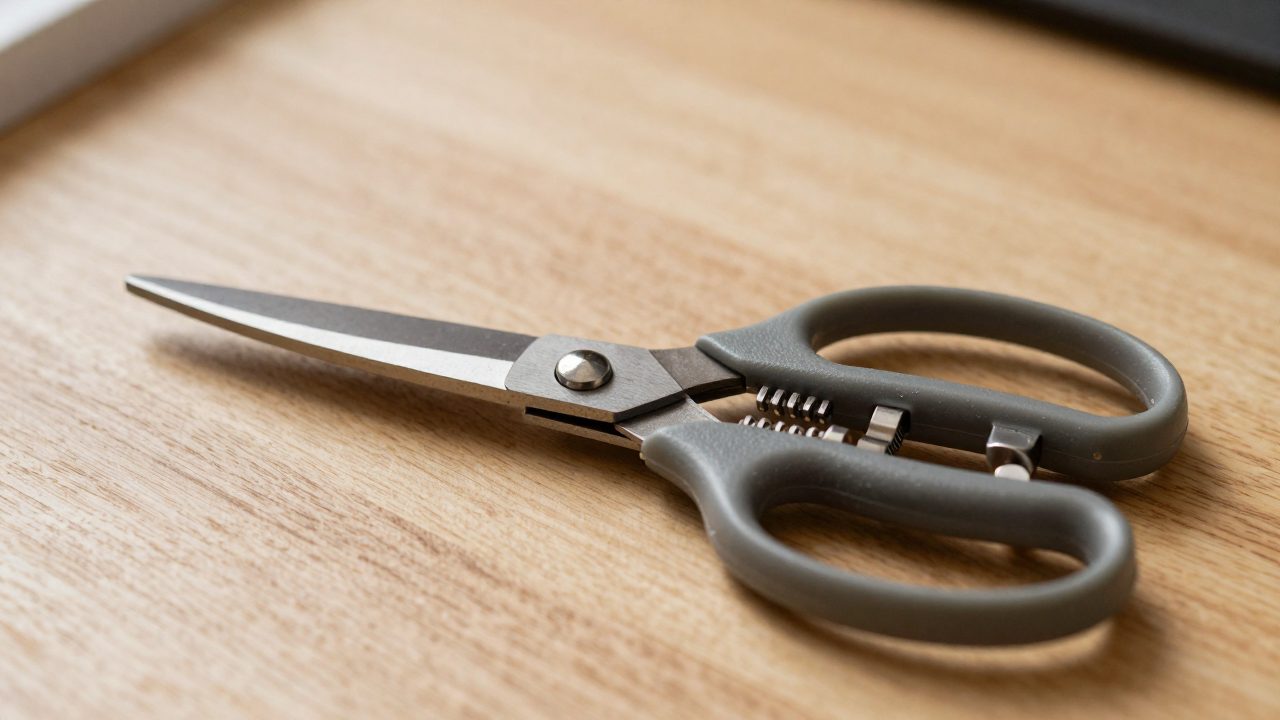
The safest cutting tool for a rabbit and the right first purchase if you shear at all. A rounded, ball-tipped end means the one part of the blade most likely to reach skin physically cannot puncture it. You want a short blade — around three to four inches — because a long blade encourages large bites, and large bites are how skin folds get caught. Hold them at an angle so the blades travel across the coat rather than towards the body, and cut small sections at a time.
- Rounded safety tips on both blades
- Short 3-4 inch blade length
- Stainless steel with a fine edge
- Finger rests on better pairs
- The tip cannot puncture skin
- Short blade discourages over-large bites
- Cheap enough to own two pairs
- Slow across a full-coated rabbit
- Cheap pairs lose their edge quickly and drag the wool

Curved Grooming Shears
Worth owning alongside straight scissors because a rabbit is not flat. Curved blades follow the contour of the body, which means the cutting edge stays a consistent distance from the skin across a shoulder or a haunch rather than running into it at one end. That geometry does more for safety than the sharpness of the blade does. Buy a pair with rounded tips if you can find them; a curved shear with a fine point is a sharper risk than a straight one, not a lesser one.
- Curved blade following body contours
- Available with rounded or fine tips
- 4-6 inch blades typical
- Tension screw for adjustment
- Follows the shape of shoulders and haunches
- Keeps a consistent distance from the skin
- Faster than straight scissors over a rounded area
- Fine-tipped versions are a real hazard on a rabbit
- Takes practice to use the curve correctly

Small Cordless Clipper with a Fine Blade
The fastest option for a rabbit that must be shorn regularly, and the one that demands the most care. Clippers cut through rabbit skin as readily as through wool, so the discipline is keeping the skin pulled taut with your free hand so no fold is picked up, and never pressing the blade in. Choose a small, quiet, low-vibration cordless model rather than a powerful dog clipper — noise and vibration frighten rabbits, and a frightened rabbit moves at exactly the wrong moment. Keep the blade cool and check its temperature often.
- Cordless, low noise and low vibration
- Fine blade suited to soft coats
- Detachable blade for cleaning and cooling
- Small body sized for one hand
- Dramatically faster than scissors on a full coat
- Consistent length across the whole rabbit
- Quiet models are much less stressful for the animal
- Cuts skin as easily as wool if a fold is caught
- Blades get hot and will burn — check constantly
Replacement Clipper Blades and Cooling Spray
Two consumables that belong with any clipper and are routinely forgotten. A dull blade pulls rather than cuts, which hurts, makes the rabbit struggle and makes an injury more likely — so a spare blade is a safety item, not a convenience. Blade coolant matters just as much: clipper blades get hot enough to burn skin within a few minutes of continuous use, and on an animal whose skin is this thin a burn is a serious injury. Spray, wipe, and swap to the spare blade while the first one cools.
- Spare blade in the same size as the clipper
- Coolant and lubricant spray in one
- Blade wash for cleaning between rabbits
- Small brush for clearing wool from the teeth
- A sharp blade is safer, not just faster
- Coolant prevents a genuine burn risk
- Swapping blades lets you work continuously
- Blades are model-specific
- Aerosol coolant is another thing to store safely
Wide-Tooth Comb for Plucking
The tool for the better harvesting method. During a moult the mature wool has already released, and a wide-tooth comb drawn gently through the coat collects it while leaving the tight new growth behind. Tooth spacing is what matters: too fine and the comb grips the undercoat and pulls; too wide and it passes through without collecting. Look for rounded tooth ends rather than pointed ones, and work in small sections in the direction the coat lies. No blade means no cut.
- Wide, evenly spaced teeth
- Rounded tooth ends
- Metal teeth on a comfortable handle
- Often sold in coarse and medium pairs
- No risk of cutting the animal at all
- Collects longer, more uniform fibre than shearing
- Leaves the new coat intact
- Only works while the rabbit is actually moulting
- Useless on breeds and lines that do not release the coat

Slicker Brush with Coated Pin Tips
For routine maintenance rather than harvesting, which is where most angora work actually happens. Angora wool mats quickly, and a matted rabbit is both a welfare problem and a fleece you cannot use. Daily or near-daily brushing keeps the coat open and drastically reduces how much cutting is ever needed. Coated pin tips are important — bare wire tips scratch a skin this thin. Use a light hand: the point is to lift and separate, not to drag through a mat.
- Fine bent pins with coated tips
- Small head sized for a rabbit
- Self-cleaning versions eject the collected wool
- Light, well-balanced handle
- Prevents matting, which reduces the need to cut
- Coated tips are much kinder to thin skin
- Self-cleaning heads save a lot of time
- Aggressive use causes brush burn
- Not the right tool for an existing tight mat
Mat Splitter or Dematting Rake
For the mats that have already formed, where scissors are the most dangerous possible tool. A mat sits tight against the skin and lifts it, so cutting a mat off with scissors is the classic way rabbits get injured. A splitter has a shielded blade that works through the mat from the outside in, breaking it into sections that can then be combed out. Work slowly and always slide a comb between the mat and the skin first so you can see where the skin actually is.
- Shielded blades set into a rake or hook
- Cuts through the mat rather than against skin
- Several blade counts for different mat densities
- Left- and right-handed versions available
- Far safer than scissors on a tight mat
- Breaks the mat up so the coat can be saved
- Cheap relative to a vet visit
- Still a blade — slow, careful work only
- Severe matting is a job for a vet or a professional groomer

Non-Slip Grooming Mat or Table Surface
A safety item that does more than most tools. A rabbit that feels its feet slipping panics, and a panicking rabbit is how blades meet skin — rabbits can also injure their own spine kicking out against a slippery surface. A dense non-slip mat gives the feet something to grip and immediately calms most animals. The secondary benefit is that harvested wool sits on the mat instead of drifting off the table, which makes collecting a clean fleece much easier.
- Dense rubber or silicone, non-slip both sides
- Wipe-clean surface
- Sized for a table or a lap
- Rolls up for storage
- A secure footing calms the rabbit noticeably
- Reduces the sudden movements that cause injuries
- Keeps harvested wool contained
- Thin mats slide despite the marketing
- Wool clings to some silicone surfaces

Styptic Powder and a Small First Aid Kit
Buy it before you need it, and hope it stays sealed. Anyone who shears regularly will eventually nick skin, and a rabbit’s reaction to bleeding is worse than the wound usually warrants. Styptic powder stops minor bleeding almost immediately. Add saline, non-stick pads and vet wrap. This is not pessimism — it is the same logic as a fire extinguisher, and the moment you discover you need it is exactly the moment you cannot go and buy one. Anything more than a superficial nick needs a vet the same day.
- Styptic powder or gel for minor bleeding
- Sterile saline for cleaning
- Non-stick pads and self-adhesive vet wrap
- Small sealed case
- Stops minor bleeding in seconds
- Cheap and shelf-stable for years
- Turns a frightening moment into a manageable one
- Styptic powder stings
- No substitute for a vet on anything beyond a nick
Breathable Fleece Storage Bags
Where the harvest goes, and it matters more than people expect. Angora wool is hygroscopic and will felt if it is stored damp, compressed or in plastic. Breathable cotton or mesh bags let it dry and keep air moving, and storing each harvest separately by rabbit and by date preserves the record a spinner or a buyer actually wants. Fibre collected carefully and then stuffed into a sealed plastic box is fibre you have wasted — which makes this the cheapest way to protect the value of everything above.
- Breathable cotton or fine mesh
- Drawstring closure
- Several sizes for separating grades
- Label window or tie-on tag
- Prevents the felting that plastic storage causes
- Keeps harvests separated by rabbit and date
- Costs very little relative to the fibre’s value
- Offers no protection against moths on its own
- Mesh can catch on very fine fibre
Buying tips
- Find out whether your rabbit moults before you buy a blade. English and many French angoras release their coat on a roughly quarterly cycle, and harvesting it by hand during that moult gives longer, more uniform fibre and leaves the new growth intact. Satin and giant angoras generally have to be shorn. Knowing which you have changes everything else on this list.
- The danger is the tip and the skin fold, not the sharpness. Rabbit skin is very thin and very loose. Injuries come from a blade tip reaching skin and from a fold being lifted into a blade you believed was clear. Blunt-tipped scissors held at an angle, small bites, and your free hand keeping the skin taut are the whole technique.
- Never cut a mat off with scissors. A tight mat pulls the skin up with it, so what looks like wool under the blade is often skin. Slide a comb between the mat and the body first so you can see where the skin actually is, then use a shielded mat splitter to break the mat up. Severe matting is a vet or professional groomer job, not a home one.
- One pass per area — avoid second cuts. Going back over the same patch produces short fragments that contaminate the whole fleece and are effectively impossible to sort out later. A slightly uneven rabbit and a clean fleece beats a tidy rabbit and a ruined one, and any spinner receiving the wool will agree.
- Check clipper blade temperature constantly. Clipper blades reach burning temperature within a few minutes of continuous use, and on skin this thin a burn is a serious injury. Touch the blade to the back of your hand regularly, use coolant spray, and keep a second blade so you can swap while one cools rather than pushing on.
- Work in short sessions and stop when the rabbit has had enough. A stressed rabbit struggles, and struggling is when accidents happen. Twenty minutes and a break is far better than an hour of increasing tension — and unlike a fleece, a frightened rabbit is harder to handle next time too. Several short sessions across a few days is a completely normal way to harvest.
- Never put a rabbit on its back to work on its belly. Trancing looks like calm and is closer to a fear response, and a rabbit that comes out of it suddenly can kick hard enough to injure its own spine. Work with the rabbit upright on a non-slip surface, turning it gently on its side with support if you need to reach underneath.
- Store the harvest in breathable bags, never plastic. Angora absorbs moisture and will felt if it is stored damp or compressed. Cotton or mesh bags let it breathe, and labelling each harvest by rabbit and date preserves the information a buyer or a spinner wants. It is the cheapest step in the whole process and the one that protects the value of all the rest.
As an Amazon Associate and eBay Partner, toptenpick.com earns from qualifying purchases. Prices and availability are subject to change.