

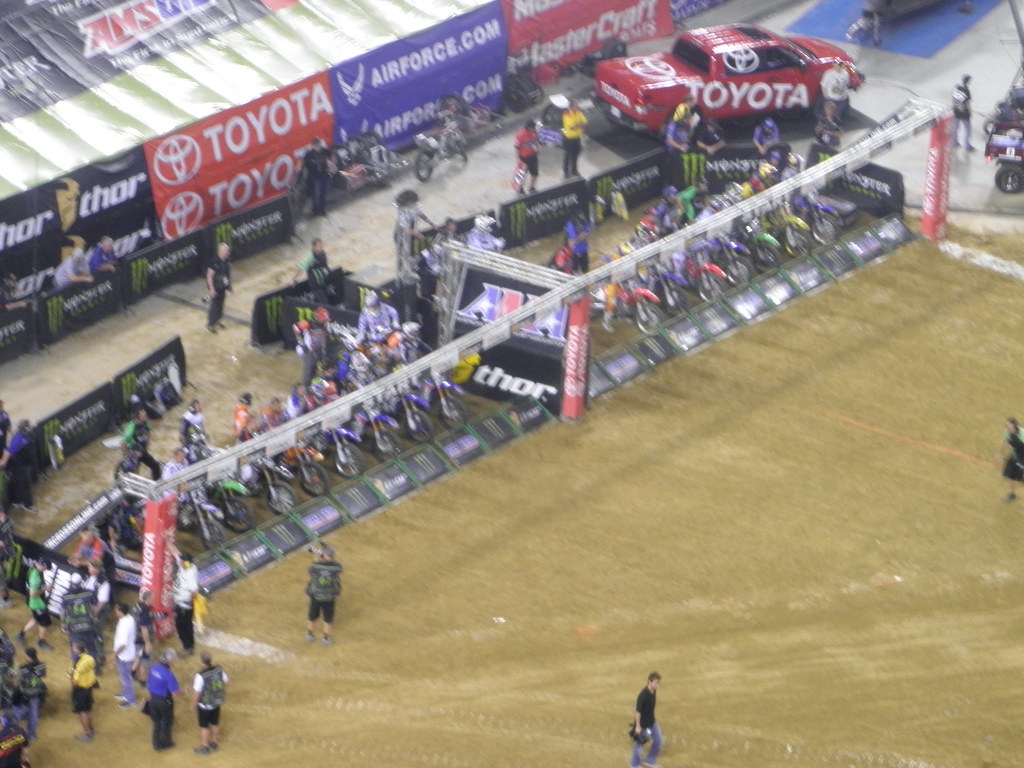
There is no universal best seat for Supercross because the circuit is built inside a different stadium for each round. The useful choice is a seat that matches how you want to watch: a whole-track view for following a race, a closer view of a jump or start for spectacle, or an accessible and practical location for the person attending. Do not buy by generic section number alone. Use the current event’s official seating map and, when published, its track map.
Best all-round choice: elevated side-on seating
For most first-time spectators, a middle-height seat on the long side of the stadium is the safest starting point. It is high enough to see riders enter and leave several obstacles, yet close enough to read lines, passes, and mistakes without relying entirely on the video boards. This choice is usually more useful than the lowest rows. Low seats can make the bike noise and jump faces feel dramatic, but berms, track infrastructure, riders, and other spectators may block the far side of the course.
Look across the event layout rather than only at the venue’s normal football or baseball sightlines. The exact start, whoops, rhythm lane, and finish can shift from one Supercross round to the next. The official championship schedule currently lists stadium rounds across different venues, so a favorable section at one stop is not automatically favorable at another.
Choose by what you want to see
Start and first turn: seats with a clear diagonal look at the gate can be rewarding for holeshots and opening-lap congestion. They are less ideal if the angle hides the rest of the track. Confirm the gate’s position on the current track map first.
Rhythm lanes and jumps: a seat with a side view can make the spacing, line choice, and timing easier to understand. Avoid assuming that a seat directly in front of one jump sees every major obstacle. A taller viewpoint often reveals more of the sequence.
Whole-race context: choose a middle or upper bowl position with a broad view of the infield. The riders look smaller, but it becomes easier to follow gaps, lapped traffic, and where an incident happened. This is a strong option for a long program with heats, LCQs, and main events.
Photos and close-up atmosphere: a lower-bowl seat near a visible jump can provide a more immediate experience. Expect obstructed sections of the course and use the screens to follow the action elsewhere. Never lean into aisles or try to move to a better photo position during racing.
Use the official event information
Monster Energy AMA Supercross publishes the championship schedule and ticket links, while the host stadium or ticket provider commonly supplies the seat map for its event. Some rounds also publish a dedicated track or event map. Those documents are the current authority for section access, gates, accessible seating, prohibited items, parking, and whether a particular block is held for production equipment. They can change after a general seating chart is first released.
Check the map close to purchase and again before travel. Do not rely on a previous year’s course layout, an online seat-view photo from another event, or a social-media claim about a specific section. Stadium roofs, club levels, video towers, camera platforms, and temporary Supercross structures affect sightlines in ways the standard venue map may not show.
Practical factors that matter
- Row height: a few rows above the lowest level can improve the view over barriers and spectators.
- Sun and weather: open-air venues can have sun, wind, or rain exposure; use the stadium map to identify cover only if it is shown for that event.
- Noise: motorcycles and stadium sound systems are loud. Bring hearing protection suitable for adults and children.
- Accessibility: use the official venue’s accessible-seating process rather than assuming an ordinary aisle seat meets a need.
- Travel: confirm gate, parking, transit, and bag policies from the current venue notice.
The best Supercross seat is usually an elevated side-on view that covers much of the track, with a current map used to avoid temporary obstructions. Move lower only when the priority is proximity to a specific jump or the start, and accept that the video boards will fill in the rest of the race. If attending with children, agree on a meeting point and plan breaks around the program rather than changing seats during racing. Ear protection, water rules, and entry timing are venue-specific. A seat that looks less exciting on a chart may be the better family choice if it offers straightforward access and an unobstructed route. Ticket availability, exact sections, prices, and track layouts vary by round, so check the organizer and host venue before committing. Daytona publishes its own color-coded 2026 Supercross seating map, while Protective Stadium publishes a separate event map; use the map for the exact round, not either as a universal section guide.