

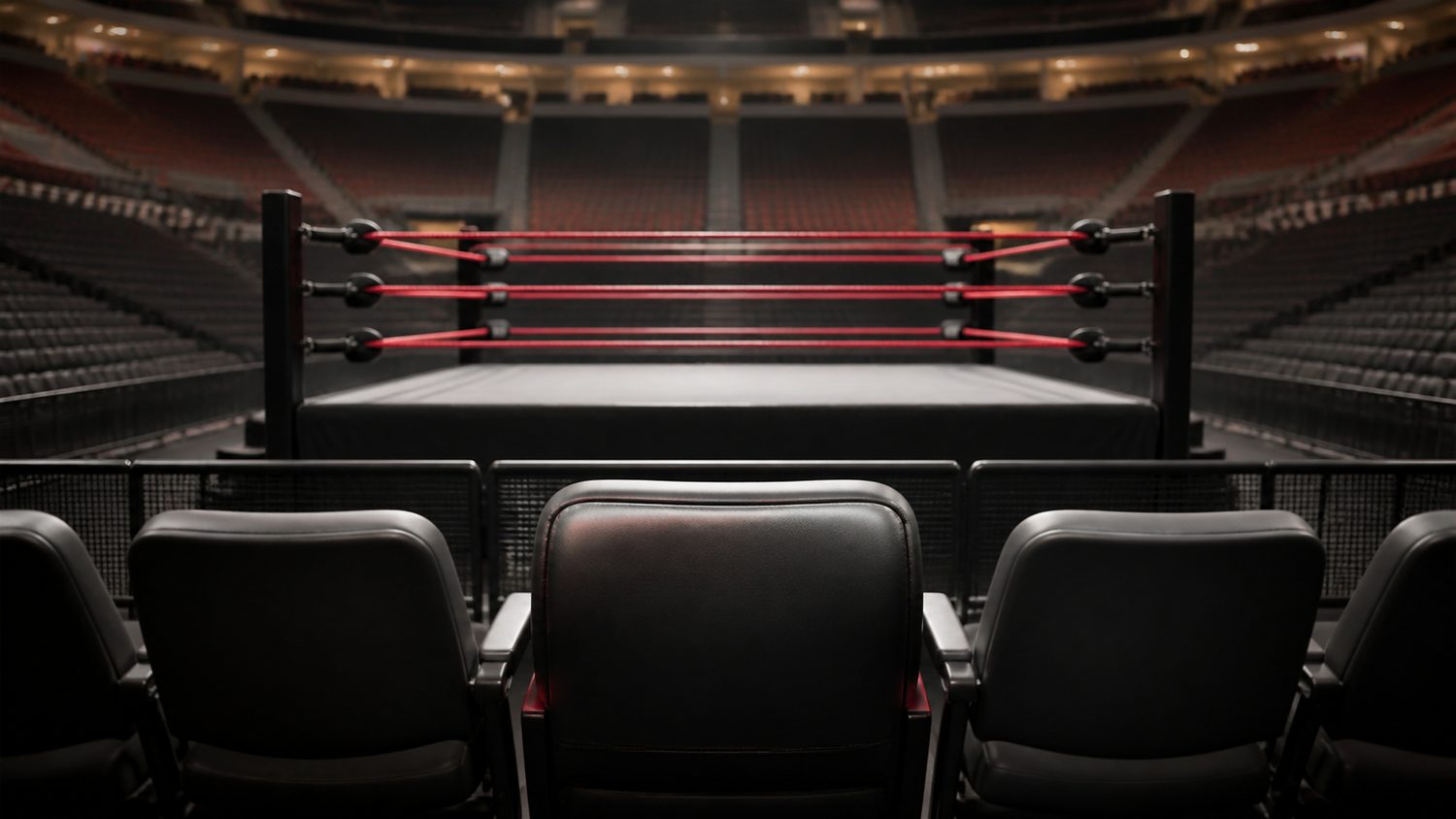
The best seats for a WWE event depend on the particular arena layout, show type, and the experience you want. WWE tours through different venues, and each event page can use a different ring, entrance, floor, camera, and production configuration. There is no universal “best section.” Start with the official WWE event listing, then examine the primary seller’s interactive map for that specific date before deciding.
A good choice balances three views: the ring, the entrance route, and the large screens. The closest floor seat can be unforgettable when action comes nearby, but it can also be blocked by people standing, the ring apron, wrestlers, or broadcast equipment. An elevated lower-bowl seat often gives a more complete view of a match even when it is farther away.
Best overall: elevated lower bowl near the ring
For most first-time attendees, choose a lower-bowl section with some elevation and a clear angle toward the ring. It usually gives a better sense of the full match than a low floor row behind several people. You can see movement around ringside, follow action on the far side, and use the screens without making them the only way to understand a sequence.
Use the map to compare the section’s angle, not merely its distance. A centred section that can see both the ring and entrance route is more versatile than a closer seat far behind a stage or at an extreme corner. If individual-seat views or row information are available, favor the row that preserves an unobstructed line above the floor crowd.
Best for proximity: ringside or a front floor row
Ringside is for fans whose priority is being close to entrances, ringside interaction, and the atmosphere around the ring. It can deliver details that are lost from the bowl: the crowd response, ring impact, and the possibility of seeing a performer pass nearby. It is usually a premium choice, so it should be bought for proximity rather than the assumption that it offers the cleanest view of every move.
The limitation is elevation. During mat-based action, a referee, camera operator, or standing spectator can obscure the view. Before purchasing, check whether the map identifies the ring side, aisle, camera platform, or stage. A front floor seat on a side with a direct line to the ring can be great; one behind a tall floor section may be less satisfying than an elevated seat at the same price.
Best value: first rows of an upper level
The front of an upper deck is often the value choice for fans who want to see the entire production. Elevation helps you track entrances, ringside movement, and major visual moments. The performers will look smaller, but the overall view can be less obstructed than a distant floor seat. Pick a location facing the ring rather than judging it by the word “upper” alone.
Do not assume every upper-level ticket has the same sightline. Some sections are steep, far from the screens, or behind a stage installation. Zoom into the interactive map, inspect the listed row, and read any restricted-view wording attached to the ticket. A lower-priced seat is good value only if it supports the kind of event experience you want.
Choose seats differently for televised shows and stadium events
RAW and SmackDown tapings use broadcast equipment and may direct the most visible presentation toward a hard-camera side. Premium live events and stadium shows can have a much larger stage, longer entrance route, or different scale altogether. Rather than rely on an old seating chart or a fan photo from another city, use the map issued for your date. Ticketmaster states that venue maps are representative and layouts or specific locations can change.
For any show, identify where the entrance is placed and whether the ticket is behind it. A seat that looks close on a generic arena diagram can lose the ring or ramp to production structures. Conversely, a section opposite the entrance may give a useful two-part view: performers arriving on the stage route and action taking place in the ring.
Accessible seating and group needs
Accessibility should be a primary filter, not an afterthought. Ticketmaster says accessible-seat type and availability vary by venue and event, and its interactive map can filter for accessible tickets. If the map does not show suitable options, contact the venue box office or primary seller promptly. Confirm the venue’s current accessibility guide for entry routes, companion arrangements, elevators, restrooms, and any other needed detail.
Groups should decide whether they value sitting together, a particular view, or a price limit. Ticketmaster’s map lets buyers filter by quantity and price where supported, but selected seats are not secured until checkout is completed. Have the realistic section and row alternatives ready before sales begin, especially when a popular WWE date is likely to move quickly.
Buying checklist
- Open the exact event listing. WWE’s event search identifies shows by location, date, venue, and event.
- Read the current map. Zoom into the section and individual rows; do not use a map from a previous tour stop.
- Prioritize elevation for match visibility. Lower bowl is often the balanced pick; ringside is the proximity pick.
- Check ticket labels. Confirm whether a listing is assigned seating, resale, VIP, accessible, or general admission.
- Review the final total and restrictions. Ticket type, fees, transfer rules, and venue policies matter as much as the section number.
If you want the safest all-around choice, select an elevated lower-bowl seat with a clear ring-and-ramp angle. Pay for ringside when closeness is the goal, and use first-row upper-level seats when you want a complete view for less. Let the official map for that exact WWE event overrule any blanket seat advice.