

As an Amazon Associate and eBay Partner, toptenpick.com earns from qualifying purchases. Prices and availability are subject to change.
There is a hard ceiling on this camera and it is not a recommendation — it is a limit. Samsung specifies microSD cards up to 256 GB for the Gear 360, and a card above that is not simply slower or partly usable; the camera may refuse it, fail to format it, or behave unpredictably. That is the first thing to check before buying, and it is the mistake that generates most of the one-star reviews on 400 GB and 512 GB cards for this device. Samsung also recommends Class 10 as a minimum, which today is a low bar that any reputable card clears.
The second thing is which Gear 360 you own, because there are two and they are different cameras. The original 2016 model (SM-C200) is the spherical one that stands on its own little tripod; the 2017 model (SM-R210) is the handheld cylinder. They have different resolutions, different battery arrangements and different card behaviour, and a guide written for one is not reliably true of the other. Check the model number on the body before you follow anyone’s advice, including this page’s.
Now the spec that actually matters, which is not the big number on the front. A 360 camera stitches two fisheye streams and writes a high-bitrate video file continuously for as long as you are recording. What breaks that is not peak read speed — it is sustained write. A card whose small fast cache fills and then collapses to a crawl will drop frames or stop the recording outright, and it will do so several minutes in, when you thought it was working. The rating to look for is the V-class (V30 and above) or, failing that, UHS Speed Class U3, both of which guarantee a sustained floor rather than a marketing peak.
Heat is a genuine and underrated part of this. The Gear 360 is a small sealed body with two sensors and a processor packed into it, and it gets hot — hot enough that recording time limits are a well-known characteristic of the camera rather than a fault. A card working hard inside that body is in a warm place, which is another reason to buy a properly rated card from a maker with real thermal specifications rather than the cheapest 256 GB on the marketplace.
And format in the camera, not on a computer. The camera writes the file system it expects; a card formatted by a PC is a common source of write errors that look like a hardware fault.
| # | Product | Price | Where to buy |
|---|---|---|---|
| 1 | Samsung EVO Select / EVO Plus microSDXC 128 GB | $15–$30 | Amazon · eBay |
| 2 | SanDisk Extreme microSDXC 128 GB | $18–$35 | Amazon · eBay |
| 3 | Samsung PRO Plus microSDXC 256 GB | $25–$45 | Amazon · eBay |
| 4 | SanDisk Extreme PRO microSDXC 128 GB | $28–$50 | Amazon · eBay |
| 5 | Lexar Professional 1066x microSDXC | $18–$35 | Amazon · eBay |
| 6 | Kingston Canvas Go! Plus microSDXC | $15–$32 | Amazon · eBay |
| 7 | USB 3.0 microSD Card Reader | $10–$25 | Amazon · eBay |
| 8 | Second Card for Swapping | $15–$30 | Amazon |
| 9 | Small Card Case | $8–$18 | Amazon · eBay |
| 10 | 400 GB or 512 GB microSD Card (over the limit) | $35–$70 | Amazon · eBay |
The picks, in detail
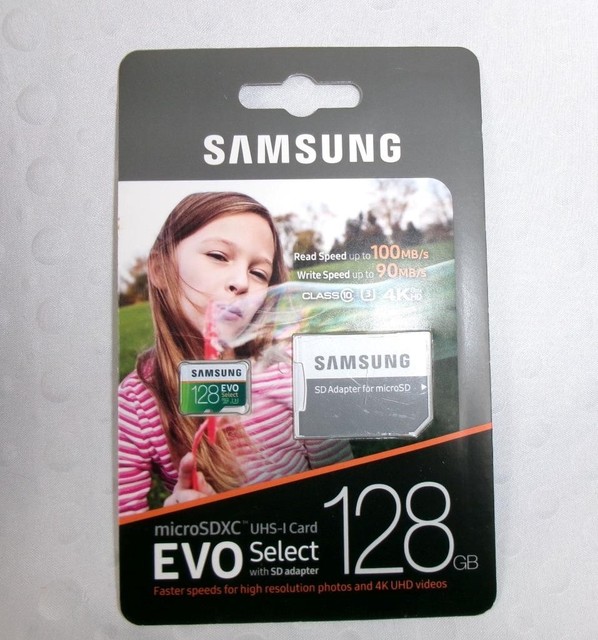
Samsung EVO Select / EVO Plus microSDXC 128 GB
The obvious default for a Samsung camera, and it earns it: U3 and V30 rated so sustained write is guaranteed rather than hoped for, well within the 256 GB ceiling, and from the same manufacturer as the camera, which removes any compatibility argument. At 128 GB it holds a lot of 360 footage without approaching the limit.
- U3 and V30 sustained write rating
- 128 GB, comfortably under the 256 GB ceiling
- Temperature, water and X-ray rated
- 10-year limited warranty
- Same manufacturer as the camera
- Guaranteed sustained write floor
- Widely available at sensible prices
- Counterfeits are common — buy from a reputable seller
- Headline speed is a read figure
- No advantage over other V30 cards beyond brand match

SanDisk Extreme microSDXC 128 GB
The action-camera standard, and the reason it suits this device is that it was designed for exactly this workload — continuous high-bitrate video written in a hot small body. A4 and V30 rated with genuinely good sustained performance, and SanDisk’s track record on failure and recovery is the best in this market. Sits comfortably inside the capacity limit.
- V30 and U3 rated
- A2 application class on current versions
- Designed for continuous video capture
- Lifetime limited warranty
- Built for the sustained-write workload this camera creates
- Excellent reliability record
- Recovery software included
- Heavily counterfeited — verify the seller
- Premium pricing over budget V30 cards
- A2 rating is irrelevant here, so do not pay extra for it
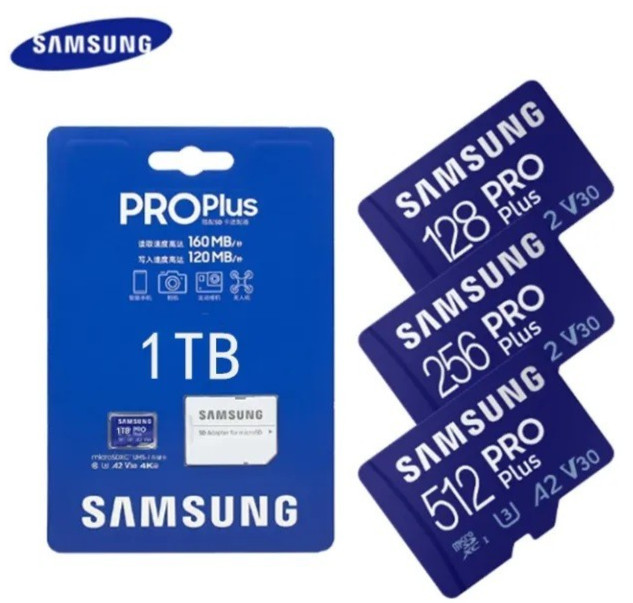
Samsung PRO Plus microSDXC 256 GB
The maximum capacity this camera supports, for people who record a lot before offloading. At 256 GB you are exactly at the specified ceiling — which is fine and is the point — and the PRO Plus carries a V30 rating for sustained write. Format it in the camera on first use, and be aware that a very large card takes longer for the camera to index.
- 256 GB, the maximum Samsung specifies
- U3 and V30 rated
- Higher sustained write than the EVO line
- 10-year limited warranty
- Largest capacity the camera officially supports
- Strong sustained write performance
- Fewer card swaps on a long shoot
- Losing or corrupting one card costs a lot more footage
- Larger cards are slower for the camera to scan
- More expensive per gigabyte than 128 GB
SanDisk Extreme PRO microSDXC 128 GB
A step up in sustained performance, which for a camera writing two stitched streams is the useful direction to spend. V30 with higher sustained figures than the standard Extreme, and the same reliability record. Honestly, the standard Extreme is enough for this camera — buy the PRO if you also use the card in a higher-bitrate device, where the headroom will be used.
- V30 with higher sustained write than Extreme
- A2 application class
- 128 GB and 256 GB options
- Lifetime limited warranty
- Real headroom above what the camera demands
- Useful across other cameras too
- Best-in-class reliability
- More card than the Gear 360 needs
- Notable price premium
- Counterfeited as heavily as the standard Extreme
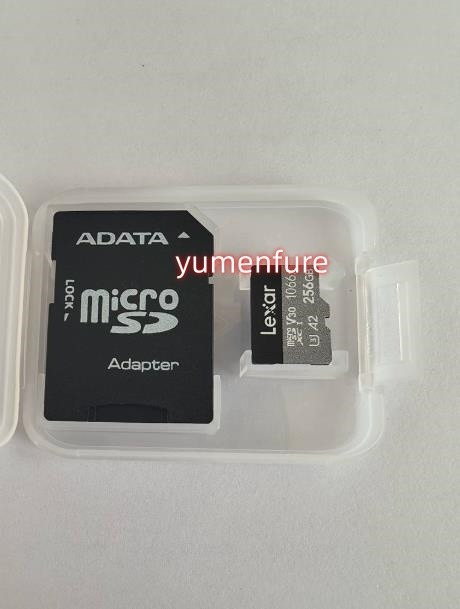
Lexar Professional 1066x microSDXC
The value alternative to the SanDisk and Samsung duopoly, with published sustained write figures rather than peak-only marketing. V30 rated and available in the capacities that matter here. Worth considering if you want two or three cards rather than one, which is a sensible strategy on a camera whose recording sessions are limited by heat anyway.
- V30 and U3 rated
- Published sustained write specification
- 128 GB and 256 GB
- Limited lifetime warranty
- Cheaper than the equivalent SanDisk
- Sustained figures published rather than implied
- Good capacity range within the limit
- Less independent testing data available
- Brand has changed ownership, so older reviews may not apply
- Fewer retail outlets
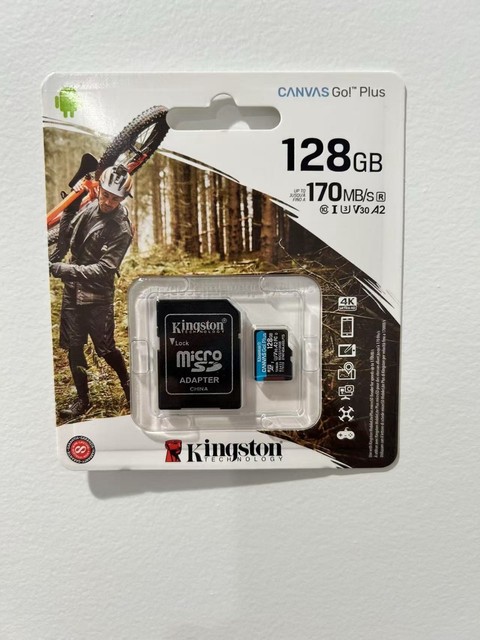
Kingston Canvas Go! Plus microSDXC
A well-priced V30 card with a lifetime warranty and honest specifications. For this camera the requirement is a guaranteed sustained floor and a capacity at or below 256 GB, and this meets both without the brand premium. A reasonable choice if you are buying several cards to swap through a day of shooting.
- V30 and U3 rated
- A2 application class
- Up to 512 GB in the range — stay at or below 256 GB
- Lifetime warranty
- Good value for a genuinely rated card
- Lifetime warranty
- Widely stocked
- The range includes capacities above this camera’s limit
- Confusing model naming across Kingston’s lines
- Less recovery support than SanDisk
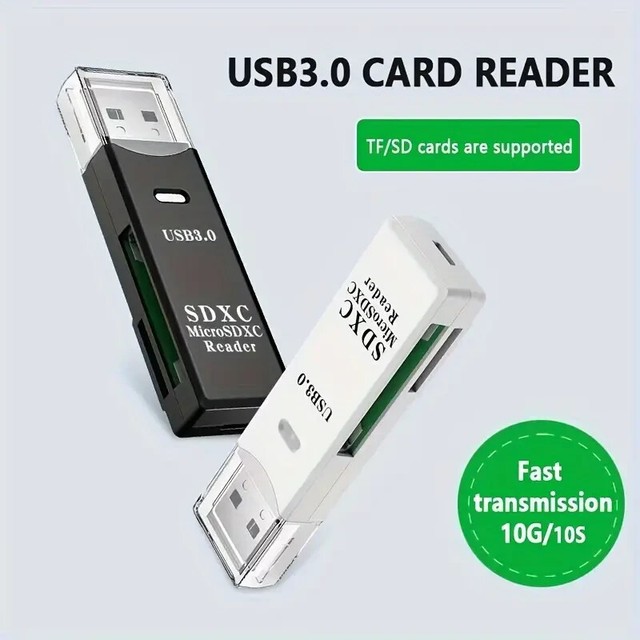
USB 3.0 microSD Card Reader
The Gear 360 offloads slowly over its own connection, and 360 footage files are large. A cheap USB 3.0 reader pulls a full card off in a fraction of the time and saves the camera’s battery for shooting. It also lets you keep shooting on a second card while the first copies, which matters on a camera with limited recording sessions.
- USB 3.0 or later
- microSD direct slot, no adapter needed
- Bus powered
- Pocket sized
- Far faster than offloading through the camera
- Saves camera battery for recording
- Lets you shoot and copy simultaneously
- Very cheap readers throttle and run hot
- Another dongle to lose
- USB-C versions cost slightly more
Second Card for Swapping
More useful on this camera than a single larger card, for a reason specific to the hardware. The Gear 360 heats up and has known recording-session limits, so shooting tends to come in bursts with cooling breaks — which is exactly the rhythm that suits swapping cards. Two 128 GB cards also mean a single card failure costs you half a day rather than all of it.
- Any second V30 card of matching capacity
- Allows offloading while continuing to shoot
- Halves the exposure to a single card failure
- Cheaper per card than one large one
- Failure of one card costs half the footage, not all of it
- Suits the camera’s burst-and-cool shooting pattern
- Two 128 GB cards often cost less than one 256 GB
- Small cards are easy to lose
- Requires labelling to avoid confusion
- More formatting and file management
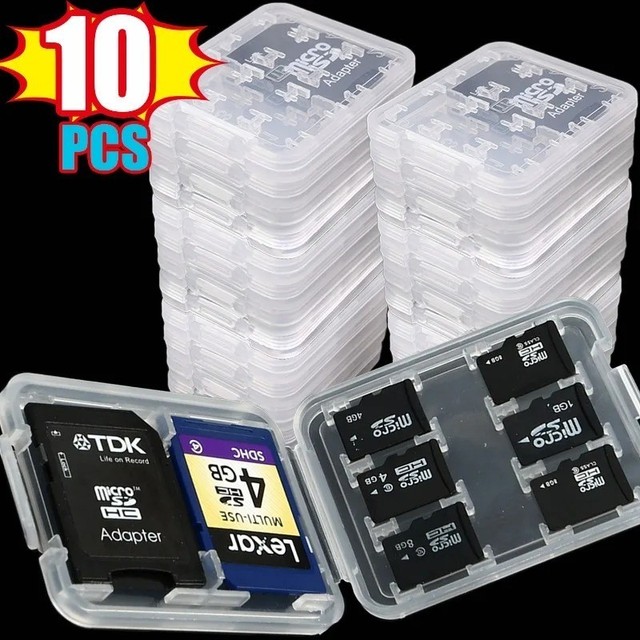
Small Card Case
A microSD card is the size of a fingernail and a camera bag is a hostile environment for one. A hard case with moulded slots keeps cards out of the grit, keeps shot and unshot cards visibly separate, and stops the specific failure of a card ending up loose in a pocket with keys. Costs almost nothing and prevents a category of loss that no warranty covers.
- Hard shell with moulded microSD slots
- Often includes full-size SD slots
- Water-resistant seals on better models
- Holds 8 to 24 cards
- Prevents loss and contact damage
- Separates shot from unshot cards
- Costs a couple of pounds
- Cheap cases pop open when dropped
- Easy to leave behind
- Does not stop you formatting the wrong card
400 GB or 512 GB microSD Card (over the limit)
Named plainly because it is the most common mistake on this camera. Samsung specifies up to 256 GB, and cards above that are not a bonus — the camera may refuse them, fail to format them, or write unreliably. The card is not faulty and neither is the camera; the combination is simply outside spec. If you already own a 512 GB card, use it in something else.
- 400 GB, 512 GB and larger capacities
- Usually V30 rated and otherwise good cards
- Above the camera’s specified maximum
- Fine in devices that support them
- Excellent cards in a device that supports the capacity
- Above the 256 GB maximum Samsung specifies for this camera
- May be refused, fail to format, or write unreliably
- Generates returns and bad reviews that are really a compatibility mismatch
Buying tips
- Stay at or below 256 GB. That is the maximum Samsung specifies for the Gear 360, and larger cards may be refused, fail to format, or write unreliably rather than simply working more slowly.
- Check which Gear 360 you have first. The 2016 SM-C200 and the 2017 SM-R210 are different cameras, and advice written for one is not reliably true of the other.
- Buy on sustained write, not peak read. Look for V30 or U3 — both guarantee a floor, where the big number on the front of the packet is a burst figure.
- Ignore the A1 and A2 application ratings here. Those describe random access for running apps, which is a phone workload, not a video one.
- Format the card in the camera on first use. A card formatted by a computer is a common source of write errors that look like a hardware fault.
- Buy two smaller cards rather than one large one. This camera shoots in bursts because of heat, which suits swapping, and a single failure then costs half your footage rather than all of it.
- Buy from a reputable seller. Counterfeit microSD cards are widespread, and they fail specifically under sustained write — which is the exact thing this camera does.
- Offload with a USB 3.0 reader rather than through the camera. It is far faster and it saves the camera’s battery for shooting.
As an Amazon Associate and eBay Partner, toptenpick.com earns from qualifying purchases. Prices and availability are subject to change.