

As an Amazon Associate and eBay Partner, toptenpick.com earns from qualifying purchases. Prices and availability are subject to change.
This is one of the few aquarium decisions where the wrong choice is routinely fatal, so it is worth being direct about why.
Axolotls feed by suction. They do not pick food up with their mouths — they open them suddenly and draw in water, and whatever is near the food comes in with it. That means they swallow substrate constantly, every single time they eat, and they have no mechanism for spitting it out selectively. Gravel is the single most common cause of death in captive axolotls: a piece of gravel is too large to pass through the digestive tract, it lodges, and the animal stops eating and dies of impaction over days or weeks. It is not a rare accident. It is the predictable outcome of gravel in an axolotl tank.
Fine sand is the answer, and fine means fine. Grains under about a millimetre pass through the gut and out again without lodging. Anything coarser — including the products sold as “aquarium gravel, small” — does not. The test is simple: if you can distinguish individual grains easily by eye and they feel gritty rather than soft between your fingers, it is too coarse.
For juveniles, use nothing at all. An axolotl under about five inches has a digestive tract small enough that even fine sand is a risk, and the standard advice is a bare-bottom tank until they are comfortably past that size. Bare glass is unattractive and it is also the safest setup there is, and it is far easier to keep clean.
One thing that matters as much as substrate and is worth stating here: axolotls are cold-water animals. They need roughly 16-18 °C, and a heated tropical tank slowly kills them regardless of what the floor is made of. Warmth is the other common fatal mistake, and the two are frequently made together.
Ten picks below.
| # | Product | Price | Where to buy |
|---|---|---|---|
| 1 | Fine Aquarium Sand (Under 1 mm Grain) | $20-$50 | Amazon |
| 2 | Washed Play Sand | $8-$20 | Amazon |
| 3 | Bare-Bottom Setup (Tank with No Substrate) | $15-$40 for slates and tiles | Amazon |
| 4 | Large Smooth Slates and Rounded Stones | $15-$45 | Amazon |
| 5 | Aquarium Chiller or Cooling Fan | $25-$400 | Amazon · eBay |
| 6 | Accurate Aquarium Thermometer | $10-$25 | Amazon · eBay |
| 7 | Sponge Filter or Low-Flow Filtration | $15-$45 | Amazon |
| 8 | Gravel Vacuum Sized for Sand | $15-$40 | Amazon · eBay |
| 9 | Water Test Kit (Ammonia, Nitrite, Nitrate) | $25-$50 | Amazon · eBay |
| 10 | Water Conditioner (Dechlorinator) | $10-$25 | Amazon · eBay |
The picks, in detail
Fine Aquarium Sand (Under 1 mm Grain)
The correct substrate, and the specification is the grain size rather than the brand. Aquarium-branded fine sand is sold graded, which removes the guesswork, and it is inert — it will not alter your water chemistry. Look for a stated grain size under a millimetre and a description that says fine rather than medium. Rinse it thoroughly before it goes in the tank; fine sand carries a great deal of dust and an unrinsed bag will cloud the water for days.
- Graded grain size under 1 mm
- Chemically inert, does not alter pH
- Sold in aquarium-standard bags
- Natural or coloured options
- Passes safely through the digestive tract
- Graded, so no guessing about grain size
- Inert and predictable in a cold-water tank
- Needs very thorough rinsing before use
- More expensive than play sand for the same volume
Washed Play Sand
The budget route and a perfectly legitimate one, used by a great many axolotl keepers. Children’s play sand is graded fine, cheap by the large bag, and inert. Two checks matter: confirm it contains no additives, dyes or anti-caking agents, and wash it far more thoroughly than you think necessary — repeatedly, in batches, until the rinse water runs genuinely clear. That washing is an afternoon of work and it is the entire difference between this and an aquarium product.
- Fine graded silica sand
- Very cheap in large bags
- Inert when free of additives
- Requires extensive washing
- A fraction of the cost of aquarium sand
- Grain size is correct for axolotls
- Available anywhere
- Washing it properly takes an afternoon
- Must be verified free of additives and dyes
Bare-Bottom Setup (Tank with No Substrate)
The safest option and the only appropriate one for a juvenile. An axolotl under about five inches has a digestive tract small enough that even fine sand poses a risk, so the standard advice is bare glass until it is comfortably past that size. It is also far easier to keep clean — waste sits on the glass where you can see and siphon it, rather than working into a substrate. Add a few smooth flat slates or terracotta pieces for grip and shelter so the animal is not on bare glass alone.
- No substrate at all
- Waste visible and easy to siphon
- Slates or tiles for grip and shelter
- Standard for juveniles
- Zero impaction risk
- Much easier to keep clean
- The correct setup for any axolotl under about five inches
- Bare glass gives poor grip — add flat slates
- Less attractive than a planted tank
Large Smooth Slates and Rounded Stones
The decoration that is safe by virtue of being too large to swallow. Flat slates give an axolotl grip to walk on, which bare glass does not, and large rounded stones create the low caves and shaded corners these animals genuinely prefer. The rule is size: anything an axolotl could conceivably draw into its mouth is a hazard, so err heavily on the side of too big. Avoid anything with sharp edges — axolotls have delicate skin and external gills that damage easily.
- Flat slates and large rounded stones
- Far too large to be swallowed
- Smooth edges throughout
- Inert stone types only
- Provides grip that bare glass cannot
- Creates the shelter axolotls need
- No impaction risk at all
- Sharp edges damage delicate skin and gills
- Some stones alter water hardness — use inert types
Aquarium Chiller or Cooling Fan
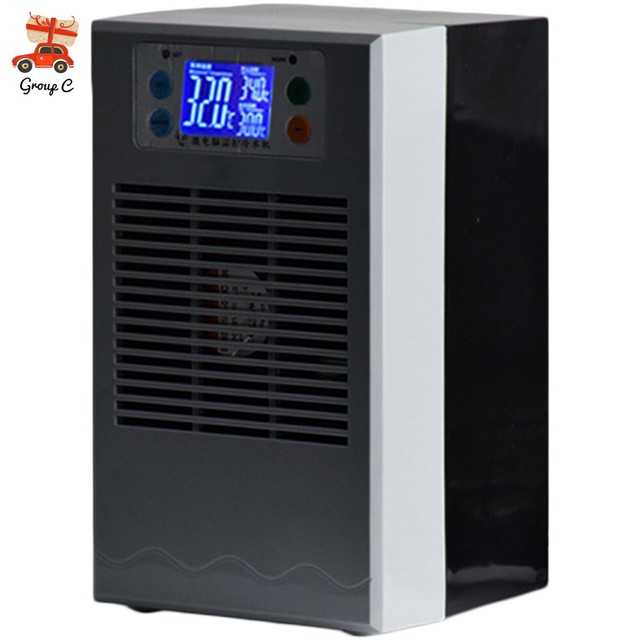
The other thing that kills axolotls, and it belongs on this list because the two mistakes are usually made together. Axolotls need roughly 16-18 °C, and sustained temperatures above about 22 °C cause stress, loss of appetite and eventually death. In most homes that means active cooling in summer. A clip-on cooling fan blowing across the surface drops the temperature a few degrees by evaporation and is cheap; a chiller is expensive, effective and the only reliable answer in a warm climate.
- Clip-on surface fans or inline chillers
- Thermostatic control on chillers
- Fans work by surface evaporation
- Chillers plumbed into the filter loop
- Addresses the second common fatal mistake
- Fans are cheap and help by several degrees
- Chillers hold a set temperature reliably
- Chillers are expensive and need plumbing in
- Evaporative fans raise water loss significantly

Accurate Aquarium Thermometer
You cannot manage a temperature you are not measuring, and the stick-on strip thermometers that come with most tanks read the glass rather than the water and are frequently several degrees out. A digital thermometer with a submerged probe, ideally with a min/max memory, tells you what the tank actually did overnight and during the hottest part of the day — which is the number that matters, since it is the peaks that cause harm. Cheap, and the first thing to buy in a cold-water setup.
- Digital with a submerged probe
- Min/max recording
- Accurate to a fraction of a degree
- Suction cup or magnetic mounting
- Stick-on strips read the glass and are often wrong
- Min/max catches the daytime peak you never see
- Very cheap
- Battery to replace periodically
- Cheap probes drift — check against a known reference
Sponge Filter or Low-Flow Filtration
Axolotls come from still water and dislike current — a strong filter outflow stresses them visibly, and stressed axolotls curl their gills forward and stop eating. A sponge filter driven by an air pump gives you biological filtration with almost no flow, which suits them exactly. If you use a canister or hang-on filter for the extra capacity, fit a spray bar or a flow baffle to break the current up. Gentle is the requirement, and it is one people get wrong by over-filtering.
- Air-driven sponge filtration
- Very low water movement
- Large biological surface area
- Cheap and simple to maintain
- Almost no current, which is what axolotls need
- Excellent biological filtration
- Nothing to break and cheap to replace
- Needs an air pump, which is audible
- Less mechanical filtration than a canister

Gravel Vacuum Sized for Sand
A standard gravel vacuum pulls fine sand straight up the tube and out of the tank, which is why sand tanks need a different technique. A narrower-diameter siphon, or a wider one held an inch or two above the surface, lifts waste while the heavier sand falls back. Some vacuums have a valve to throttle the flow for exactly this. Hovering rather than plunging is the technique, and it takes a couple of attempts to get the height right.
- Narrow tube or adjustable flow valve
- Designed for fine substrates
- Hand pump or tap-driven
- Hovering technique rather than plunging
- Removes waste without removing the sand
- Flow valve gives precise control
- Makes a sand tank practical to maintain
- Standard gravel vacuums pull sand out
- Technique takes a little practice
Water Test Kit (Ammonia, Nitrite, Nitrate)
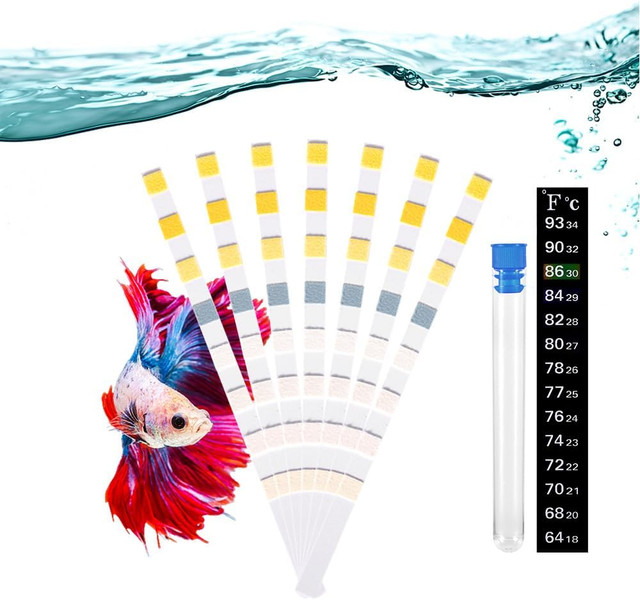
Axolotls are notably sensitive to ammonia and nitrite, and both are invisible — a tank that looks perfectly clear can be poisoning its occupant. A liquid reagent test kit is far more accurate than the paper strips and it is the only way to know whether your tank is cycled before an animal goes in it. Test before stocking, test weekly for the first months, and test any time an axolotl stops eating, which is the first sign of almost everything going wrong.
- Liquid reagent tests for ammonia, nitrite and nitrate
- Also pH and hardness in full kits
- Hundreds of tests per kit
- More accurate than test strips
- The only way to confirm a tank is cycled
- Catches invisible problems before the animal shows symptoms
- Far more accurate than paper strips
- Reagents expire — check the date
- Takes several minutes per test

Water Conditioner (Dechlorinator)
Non-negotiable with any tap water. Chlorine and chloramine are added to drinking water specifically to kill microorganisms, and they will kill the beneficial bacteria in your filter as well as damaging the animal’s gills — which on an axolotl are external and exposed. A conditioner neutralises both instantly. Dose for the whole tank volume rather than the bucket you are adding, and choose one that states it handles chloramine as well as chlorine, since many water supplies use it.
- Neutralises chlorine and chloramine
- Instant action
- Dosed by total tank volume
- Some also bind heavy metals
- Protects the filter bacteria and the animal’s gills
- Works instantly
- A small bottle treats a great deal of water
- Many products handle chlorine but not chloramine
- Must be dosed for the tank, not the bucket
Buying tips
- Never use gravel. Axolotls feed by suction and swallow whatever is near their food, and a piece of gravel is too large to pass through the gut. It lodges, the animal stops eating, and it dies of impaction over days or weeks. This is the single most common cause of death in captive axolotls and it is entirely preventable.
- Fine means under about a millimetre. If you can easily distinguish individual grains by eye, or they feel gritty rather than soft between your fingers, the substrate is too coarse. Products sold as ‘small gravel’ are emphatically not fine sand. Buy graded aquarium sand or properly washed play sand and check the grain size yourself.
- Use no substrate at all for juveniles. An axolotl under about five inches has a digestive tract small enough that even fine sand is a risk. Bare glass with a few large flat slates for grip is the correct setup until it is comfortably past that size, and it is much easier to keep clean in the bargain.
- Wash play sand far more than feels necessary. Fine sand carries an enormous amount of dust, and an unrinsed bag will cloud the tank for days and clog a filter. Wash it in batches, repeatedly, until the rinse water runs genuinely clear. It is an afternoon of work and it is what makes the cheap option viable.
- Keep the water cold. Axolotls need roughly 16-18 °C and sustained temperatures above about 22 °C cause stress, appetite loss and eventually death. This is the other common fatal mistake and it is frequently made alongside the gravel one. Measure it with a digital probe, not a stick-on strip, and record the daily peak.
- Keep any substrate layer thin. An inch or less. Deep sand develops anaerobic pockets where gas can build up, and disturbing one releases it into the water. A thin layer is easier to clean, less likely to trap waste, and gives no advantage up to an axolotl.
- Hover the siphon rather than plunging it. A standard gravel vacuum pushed into sand pulls the sand straight up the tube. Held an inch or two above the surface, the flow lifts the lighter waste while the heavier sand falls back. A vacuum with a flow valve makes this much easier to control.
- Watch for loss of appetite. It is the first sign of almost everything that goes wrong with an axolotl — impaction, warm water, poor water quality, stress. If one stops eating, test the water and check the temperature immediately rather than waiting to see. An axolotl that has swallowed something it cannot pass needs a vet who sees exotics, not a change of substrate.
As an Amazon Associate and eBay Partner, toptenpick.com earns from qualifying purchases. Prices and availability are subject to change.