

As an Amazon Associate and eBay Partner, toptenpick.com earns from qualifying purchases. Prices and availability are subject to change.
A JawJacker doesn’t just hold your rod — it bends it and leaves it under tension, sometimes for hours, waiting for a strike to trip the trigger. That’s a completely different job than a rod normally does, and it changes which material actually survives. Fiberglass is built to flex deeply and repeatedly without damage; graphite is stiffer by design and more prone to cracking or snapping when it’s held in a sustained bend, especially once cold air makes carbon fiber more brittle. Anglers who’ve cracked a nice graphite rod in a hook-setter and switched to glass report the difference isn’t subtle.
Because the device — not your hands — supplies the hookset motion, the two specs anglers usually chase on an ice rod, sensitivity and a fast tip, mostly stop mattering. What actually matters is a light-to-medium-light power rod with a moderate-to-fast action that loads predictably against the trigger’s tension, and a straight handle shape that seats cleanly in the holder without twisting loose mid-fight.
Length is a hardware-fit question, not a casting one. The JawJacker’s own literature says its holder fits rods up to about 30 inches comfortably, with some rods up to 32-36 inches also working — except unusually stiff, dedicated pike or lake-trout blanks, which don’t flex enough to seat and load correctly in the trigger. Check your device’s rated holder length before buying anything longer than 30 inches, rather than sizing the rod to how far you’d normally cast.
Because the rod sits outside, bent, in real cold, for hours at a stretch — and eventually a decent pike or a clumsy boot is going to test it — it’s worth running several inexpensive rods across a spread of holes rather than one expensive one. A cracked $25 glass rod is an inconvenience; a cracked $130 one is a bad afternoon on the ice.
The list below runs from the JawJacker maker’s own purpose-sized house rods through boutique glass builders and the cheap, famously hard-to-break glass/graphite hybrids ice anglers already reach for — all picked for surviving a sustained bend rather than for finesse.
| # | Product | Price | Where to buy |
|---|---|---|---|
| 1 | JawJacker Ice Rod 29″ M Spinning Panfish/Kokanee | $25–$30 | Amazon |
| 2 | JawJacker Ice Rod 31″ MH Spinning Trout/Walleye | $27–$32 | Amazon |
| 3 | Frostbite Twilight 39L Dipstick | $70–$80 | Amazon |
| 4 | Frostbite Twilight Drench 39ML | $70–$80 | Amazon |
| 5 | Haat Fishing Signature Series 40″ Medium Spinning | $115–$130 | Amazon · eBay |
| 6 | St. Croix Avid Glass Ice Panfish Rod, 26″ Light | $45–$60 | Amazon |
| 7 | Ugly Stik GX2 Ice Spinning Rod, 30″ Medium-Heavy | $25–$37 | Amazon · eBay |
| 8 | HT Enterprises Ice Blue Super-Flex Rod, 34″ Heavy (IBT34) | $20–$28 | Amazon |
| 9 | Clam Jason Mitchell Dead Meat Rod | $35–$50 | Amazon · eBay |
| 10 | Clam Dave Genz Ice Buster Combo, 24″ | $15–$20 | Amazon |
The picks, in detail
JawJacker Ice Rod 29″ M Spinning Panfish/Kokanee
Made by the same small company that builds the JawJacker itself, sized specifically to its rod holder. The medium-action 29-inch blank has a softer tip and midsection built to protect light line on panfish and kokanee, while carrying enough backbone that the trigger still drives a clean hookset. Because it’s built to the device’s own spec, there’s no guessing on fit.
- 29-inch medium-action spinning blank
- sized to the JawJacker’s rated holder length
- soft tip and midsection tuned for light line
- built by the JawJacker’s own manufacturer
- Purpose-fit to the device — no length guesswork
- Soft enough tip to protect light panfish line
- Cheap enough to run several at once across a spread of holes
- Underpowered for anything bigger than perch or small trout
- Only sold direct from the small maker’s own site, not big retailers
JawJacker Ice Rod 31″ MH Spinning Trout/Walleye
The same maker’s step up in power from the 29-inch panfish rod, rated medium-heavy for trout and walleye rather than panfish. It stays inside the device’s ideal length range at 31 inches, so it still seats and loads the way the shorter model does — it just has the backbone to handle a heavier strike once the trigger fires.
- 31-inch medium-heavy spinning blank
- rated for trout and walleye
- within the device’s ideal 28-34 inch length range
- same house-brand construction as the 29-inch model
- More backbone for fish that fight harder than panfish
- Still short enough to sit comfortably in the holder
- Same purpose-built fit as the rest of the maker’s line
- Too stiff for finesse panfish presentations
- Small manufacturer means slower shipping and no in-store returns
Frostbite Twilight 39L Dipstick
A dedicated light-power fiberglass rod from a builder whose Twilight series is explicitly marketed for hook-setting devices. The extra length past the JawJacker’s core range gives a longer, gentler load curve for light bites, and the full fiberglass blank tolerates being left bent for hours without the stress cracking a stiffer material would show.
- 39-inch light-power fiberglass blank
- Twilight series with stainless guides and cork handle
- deep, slow-flexing action
- marketed specifically for JawJacker-style rigs
- Full fiberglass construction holds a sustained bend without stress-cracking
- Extra length gives a longer, gentler load curve for light bites
- Built with hook-setter devices as the stated use case, not an afterthought
- At 39 inches it’s past the device’s listed 30-inch sweet spot — confirm your holder fits it first
- Light power isn’t enough rod for walleye or pike
Frostbite Twilight Drench 39ML
The medium-light sibling to the Dipstick, with a deep-flexing, slow action that’s exactly the loading curve a mechanical trigger wants. It has enough extra backbone over the Dipstick to step up from pure panfish work to light walleye or bass, while staying fiberglass throughout so a long day bent in the trigger doesn’t stress the blank.
- 39-inch medium-light fiberglass blank
- deep-flexing slow action
- stainless guides and cork handle
- sized for light walleye and bass techniques as well as panfish
- Slow, deep flex is exactly the loading curve a mechanical trigger wants
- Enough backbone to step up from pure panfish to light walleye
- Fiberglass tolerates being left bent for hours
- Same oversize-for-the-holder caveat as the Dipstick — verify fit before buying
- Costs more than double a basic Ugly Stik for the same core function

Haat Fishing Signature Series 40″ Medium Spinning
Built by a small custom-rod maker whose whole JawJacker-and-Automatic-Fisherman collection is sized around hook-setting devices rather than adapted from a jigging rod. The IX glass composite blank, custom graphite/nylon reel seat and thick cold-weather cork handle are all built around the sustained-bend use case, not repurposed from a rod meant to be held.
- 40-inch medium-power IX glass composite blank
- custom graphite/nylon reel seat with stainless hood
- AAA cork handle sized for cold-weather grip
- part of a line built specifically for JawJacker and Automatic Fisherman devices
- Glass-composite blank engineered around sustained-bend hook-setter use from the start
- Premium guide train and reel seat for the price bracket
- Reputable small builder with a whole line sized for these devices
- 40 inches is longer than most devices’ rated holder — confirm fit before buying
- Priced well above a basic combo for a single rod with no reel included
St. Croix Avid Glass Ice Panfish Rod, 26″ Light
A solid fiberglass blank from a major American rod builder rather than a budget import, with a high-visibility flexible tip built to show subtle bites. At 26 inches it sits comfortably inside any device’s rated holder length, and the solid-glass construction handles sustained bend the same way it handles the deep parabolic bend of a fighting panfish.
- 26-inch light-power solid fiberglass blank
- Kigan stripper guide plus low-profile running guides
- high-visibility flexible tip
- made in the USA
- Solid glass blank from a major rod builder, not a budget import
- Short enough to sit well inside any device’s holder
- High-vis tip doubles as a strike indicator if you also hand-jig it
- Light power is panfish-only — no backbone for trout or walleye
- Costs several times more than a basic glass ice rod of the same size

Ugly Stik GX2 Ice Spinning Rod, 30″ Medium-Heavy
The rod ice anglers on hook-setter forums keep coming back to, largely because Ugly Stik’s hybrid glass/graphite Clear Tip construction is built and marketed around not breaking. It’s cheap enough that losing one to a big pike or a bad transport day isn’t a financial event, and the 30-inch length lands right in the JawJacker’s ideal range.
- 30-inch medium-heavy spinning blank
- Ugly Tech hybrid graphite/fiberglass construction with Clear Tip
- one-piece stainless Ugly Tuff guides
- EVA foam grip
- Fiberglass-reinforced build is specifically engineered and marketed as hard to break
- Cheap enough that losing or cracking one isn’t a big deal
- Widely used and recommended specifically for hook-setter rigs on ice fishing forums
- Heavier and less sensitive than a pure glass finesse rod
- Standard factory reel seat isn’t as refined as the boutique options above
HT Enterprises Ice Blue Super-Flex Rod, 34″ Heavy (IBT34)
A budget solid-fiberglass blank built with oversized guides to resist ice buildup and a bright fluorescent tip for bite detection. The heavy action gives it enough lifting power for trout and lake trout, and the low price makes it realistic to dedicate two or three of these to a spread of holes instead of babying one nicer rod.
- 34-inch heavy-action fiberglass blank
- large guides sized to resist ice buildup
- high-visibility fluorescent tip
- budget price point
- Solid fiberglass blank built to flex deeply, not just to look bright blue
- Heavier action handles bigger trout and lake trout strikes
- Inexpensive enough to dedicate several rods to a spread of holes
- 34 inches is at the upper edge of most devices’ comfortable fit — confirm before buying
- Basic guides and handle compared to the pricier glass options here
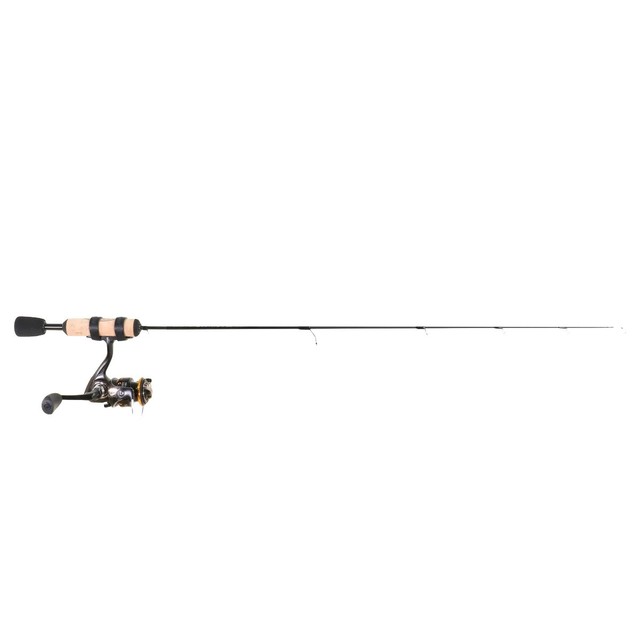
Clam Jason Mitchell Dead Meat Rod
A solid fiberglass deadstick rod designed from the outset to sit passively in a holder with a bait dangling — exactly the role a rod plays clamped in a JawJacker. Oversized wire guides resist line freeze-up on cold days, and the glass blank gives a strong, forgiving backbone rather than the crisp stiffness a jigging rod is built for.
- solid fiberglass blank
- oversized wire guides to resist line freeze-up
- high-visibility black-and-yellow tip
- available in multiple lengths, medium power
- Designed from the outset as a deadstick rod, which is exactly the passive role it plays in a JawJacker
- Solid glass blank built for a strong, forgiving backbone
- Widely stocked at major ice fishing retailers
- Medium power only fits a narrow slice of species — check the specific length’s rating before buying
- Novelty skull-and-crossbones handle graphic won’t be to everyone’s taste
Clam Dave Genz Ice Buster Combo, 24″
A complete rod-and-reel combo built around a solid fiberglass blank, cheap enough to buy three or four and run a full spread of JawJackers without thinking twice about the cost of a cracked rod. It’s on the short side of the ideal range, which actually makes it easy to seat, but it means less reach on a bigger fish once the trigger fires.
- 24-inch solid fiberglass rod paired with a 2-ball-bearing reel
- steel Dynaflow guides
- EVA foam handle with graphite locking reel seat
- pre-spooled with 4 lb ice line
- Comes as a complete rod-and-reel combo for one low price
- Solid glass blank tolerates sustained bend without extra cost
- Cheap enough to buy several and run a full spread of holes
- At 24 inches it’s on the short side of the device’s ideal range
- Included reel and line are entry-level and worth upgrading later
Buying tips
- Check your JawJacker’s rated maximum rod length before buying — most hold rods up to 30 inches comfortably, with 32-36 inches fitting only if the blank is flexible enough.
- Choose fiberglass or a glass-composite blank over pure graphite: graphite is stiffer and more prone to cracking when held in a sustained bend through hours of cold air, while fiberglass is built to flex like that indefinitely.
- Match rod power to target species, not to casting feel — light or medium-light for panfish and trout, medium-heavy to heavy for walleye and pike, since the trigger’s tension does the hookset instead of your wrist.
- Look for a straight, cylindrical handle rather than a pistol-grip or offset shape — it seats more securely in the holder’s channel and won’t twist loose under tension.
- Run two or three cheap rods instead of one premium one if you’re fishing a spread of holes — a rod left outdoors, bent, for hours is going to get iced up, dropped, or hit by a big fish eventually.
- Set the trigger tension to match the rod’s actual power rating — an underpowered rod cranked against a heavy trigger setting is what cracks blanks, not the fish that eventually hits it.
- Re-seat the rod fully in the holder after every fish — a rod that slips even slightly changes how much bend the trigger is loading, which changes hookset reliability on the next bite.
- For pike or lake trout, buy a rod rated specifically for that species even near your device’s length limit — an underpowered rod can’t drive a hookset hard enough on a big strike even with a machine doing the pulling.
As an Amazon Associate and eBay Partner, toptenpick.com earns from qualifying purchases. Prices and availability are subject to change.