

As an Amazon Associate and eBay Partner, toptenpick.com earns from qualifying purchases. Prices and availability are subject to change.
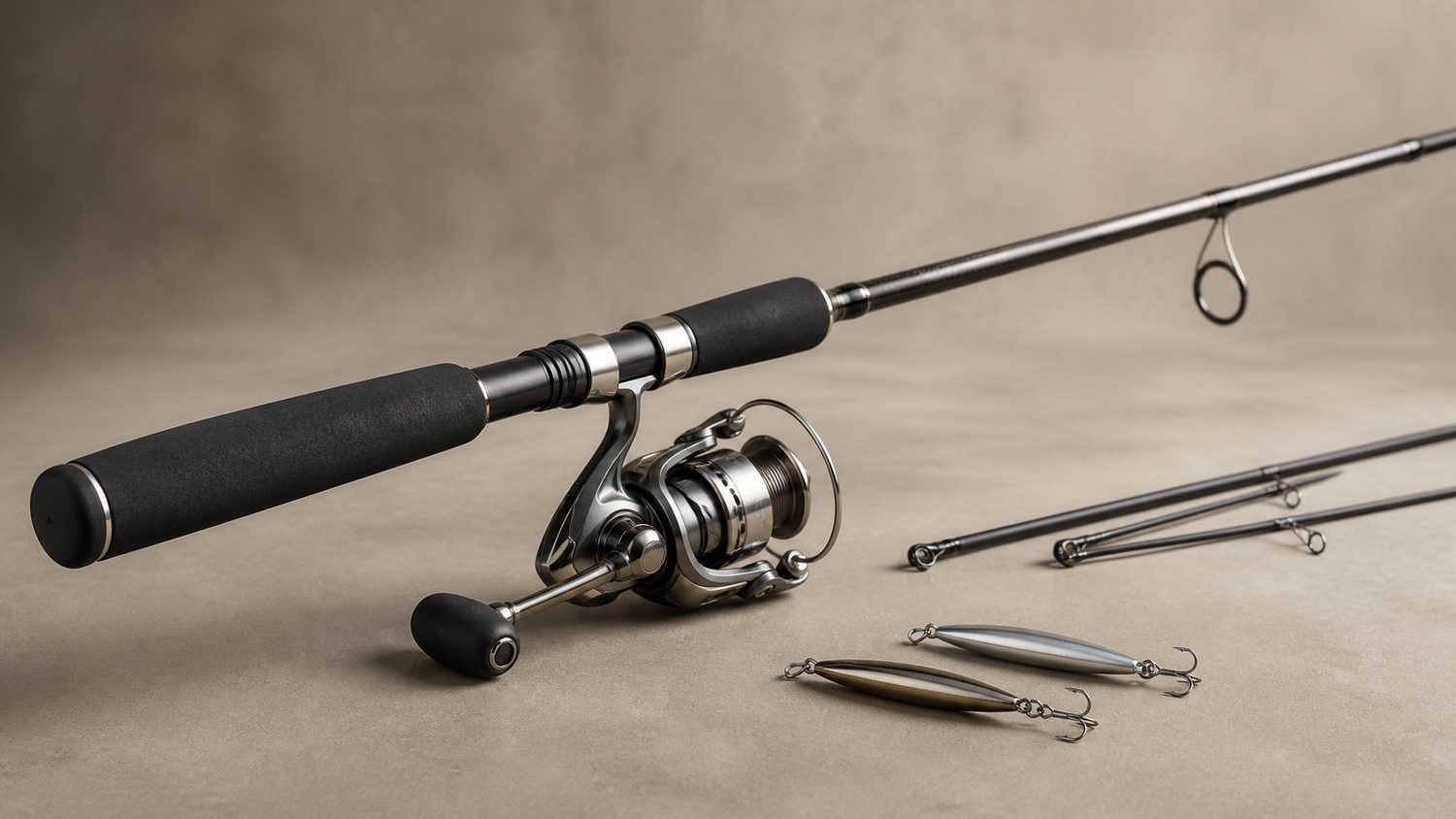
A Gotcha plug is an unusual lure and it asks unusual things of a rod. It is a short, dense, lead-headed tube with a nose that makes it dart, and it is fished by ripping it back through the water as fast as a human arm can turn a handle. Almost everything about rod selection follows from those two facts.
Density first. A one-ounce Gotcha is physically tiny for its weight, so it flies like a bullet and cuts wind that would stop a bigger, lighter plug dead. To get that out, the rod needs to load and then unload sharply — a fast or extra-fast taper, where the tip flexes and the lower two-thirds stays stiff. A moderate-action rod, which bends further down the blank, feels lovely with a light lure and simply will not fire a dense one. The consensus for pier and surf work is roughly 6’6″ to 7’6″, medium to medium-heavy, rated around an ounce, and many anglers happily throw plugs half again heavier than the rating. For false albacore off a beach, where distance matters more, 8 to 8½ feet in a medium-fast action is the usual answer.
The retrieve is the second fact, and it is the one people miss. The Gotcha only works fast — a slow retrieve produces nothing at all. That makes the reel’s gear ratio arguably more important than the rod: a high-speed reel recovers far more line per handle turn, and over a day of continuous ripping that is the difference between fishing effectively and being exhausted by noon. If your budget is split, the reel is where the extra should go.
One more thing about the lure itself. Gotchas have very sharp exposed trebles and hit hard, and bluefish have teeth. A short length of heavier leader is sensible — not because these fish are leader-shy about it, but because a bluefish will cut straight through light line at the knot.
Ten picks below: rods, the reel that matters as much, and the bits that keep you fishing rather than re-rigging.
| # | Product | Price | Where to buy |
|---|---|---|---|
| 1 | 7 ft Medium-Heavy Fast-Action Spinning Rod | $70-$200 | Amazon · eBay |
| 2 | 8 to 8½ ft Medium-Fast Surf Rod | $90-$250 | Amazon |
| 3 | 6’6″ Travel or Pack Rod | $70-$180 | Amazon · eBay |
| 4 | High-Speed Spinning Reel, 3000-4000 Size | $80-$300 | Amazon |
| 5 | Braided Line, 20-30 lb | $20-$50 | Amazon · eBay |
| 6 | Fluorocarbon Leader Material, 30-50 lb | $15-$35 | Amazon · eBay |
| 7 | Gotcha Plugs in Several Weights and Colours | $20-$50 for several | Amazon |
| 8 | Replacement Treble or Single Hooks | $10-$30 | Amazon · eBay |
| 9 | Pliers, Cutters and a Fish Grip | $25-$70 | Amazon · eBay |
| 10 | Rod and Reel Rinse Kit | $20-$50 | Amazon |
The picks, in detail

7 ft Medium-Heavy Fast-Action Spinning Rod
The standard answer for pier and jetty work with Gotchas, and the rod most people should buy. Seven feet gives you enough leverage to cast a dense lure a long way without being unwieldy in a crowd, and a fast action loads sharply enough to launch it. A medium-heavy power handles the hook-set and the fight with bluefish that pull well above their weight. Look for a lure rating around an ounce and a comfortable, corrosion-resistant reel seat — this rod lives in salt spray.
- 7 ft, medium-heavy power
- Fast taper for casting dense lures
- Lure rating around 3/8 to 1½ oz
- Corrosion-resistant guides and reel seat
- The versatile default for pier and jetty fishing
- Fast taper fires a dense plug hard
- Manageable length in a crowded spot
- Short for casting distance from an open beach
- Medium-heavy power is overkill for small fish
8 to 8½ ft Medium-Fast Surf Rod
For beach work and for false albacore, where the fish is further out and every extra yard of cast matters. The extra length is leverage: a longer blank moves the lure through a bigger arc and, with the same effort, sends it further. Medium-fast rather than extra-fast suits the albie’s fast, head-shaking fight, where a very stiff tip pulls hooks. It is more tiring to fish all day than a seven-footer, so choose based on where you actually fish rather than on maximum reach.
- 8 to 8½ ft length
- Medium-fast taper
- Designed for beach and open-water casting
- Longer butt section for two-handed casting
- Noticeably more casting distance
- Softer tip is kinder on light hook holds
- Keeps line above breaking surf
- Tiring over a full day
- Awkward on a crowded pier

6’6″ Travel or Pack Rod
Gotcha fishing is often opportunistic — a pier at the end of a family holiday, a jetty you drove past — and a rod that breaks into three or four sections and fits in a suitcase is the one that actually gets used. Modern multi-piece blanks lose very little to the ferrules and are far better than their reputation suggests. Shorter than ideal for distance, but a Gotcha is heavy enough to cast well even off a compact rod, which makes this format suit the lure unusually well.
- Three or four piece construction
- 6’6″ to 7 ft assembled
- Hard tube case included on most
- Fast action despite the ferrules
- Fits in luggage, so it is actually there
- Modern multi-piece blanks lose very little
- Dense lures cast well even off a short rod
- Ferrules can loosen during a session
- Less distance than a one-piece of the same length
High-Speed Spinning Reel, 3000-4000 Size
Arguably more important than the rod, for the reason the introduction gives: a Gotcha only works fished fast, and a high gear ratio recovers far more line per handle turn. Over a day of continuous ripping that is the difference between fishing properly and giving up early. A 3000 or 4000 size balances a seven or eight foot rod, holds enough braid, and — crucially in salt — should have sealed or shielded bearings. Rinse it after every trip regardless of what the marketing claims.
- 3000-4000 size, high gear ratio
- Sealed or shielded bearings
- Smooth sealed drag
- Aluminium or braid-ready spool
- High retrieve rate is what the lure demands
- Balances a 7-8 ft rod properly
- Sealed drags survive salt spray
- High-speed reels have less cranking power under load
- Salt water kills reels that are not rinsed

Braided Line, 20-30 lb
Braid is the right choice here for two specific reasons. It has essentially no stretch, so a hook-set at distance actually reaches the fish rather than being absorbed by the line — which matters with a fast-moving lure at the end of a long cast. And it is much thinner than monofilament for the same strength, so you fit more on a spool and cut through wind better. Twenty to thirty pound test suits Gotcha work and matches the pier and jetty tackle most anglers already run.
- 20-30 lb test braid
- Very low stretch
- Thin diameter for the strength
- High-visibility and low-visibility colours
- Hook-sets reach the fish at long range
- Thin diameter casts a dense lure further
- Long service life compared with mono
- No stretch means a hard hook-set can pull hooks
- Needs a leader — it is highly visible and cuts easily on structure

Fluorocarbon Leader Material, 30-50 lb
The short length between braid and lure, and it is doing a mechanical job rather than an optical one. Bluefish have teeth that will shear light line at the knot in a single hit, and the pilings and rocks you fish Gotchas around are abrasive. Thirty to fifty pound fluorocarbon takes both. Tie a couple of feet with an FG or double uni knot — a leader knot that will not pass through the guides makes casting a dense lure extremely awkward, so keep it small and neat.
- 30-50 lb fluorocarbon
- High abrasion resistance
- Small spools sized for leader use
- Lower visibility than braid
- Survives bluefish teeth and abrasive structure
- Less visible than braid at the lure
- One spool lasts a whole season
- A bulky leader knot fouls the guides on the cast
- Stiffer than mono and harder to knot neatly
Gotcha Plugs in Several Weights and Colours
Buy them in quantity, because you will lose them. Sharp trebles, hard-fighting toothy fish and the structure you fish around all take their toll, and running out of the one colour that is working is a genuinely miserable way to end a session. The 100-series is the classic, and stocking a range of weights lets you cast into different wind conditions and fish different depths. Chrome-and-red and chartreuse are the perennial starting points.
- Lead-head tube body with a darting nose
- Available from around ½ oz upwards
- Several colour patterns, chrome and red the classic
- Fitted with treble hooks
- Casts like a bullet and cuts wind
- Cheap enough to carry plenty
- A proven pattern for decades
- You will lose them to fish and structure
- Exposed trebles tangle in a tackle bag

Replacement Treble or Single Hooks
Gotchas come with sharp hooks and they do not stay sharp — a few casts against pier pilings and a session with toothy fish dull them fast, and a blunt hook on a fast-moving lure simply bounces off. Replacing hooks is cheap and it is the maintenance most anglers skip. Many people also swap the rear treble for a single inline hook, which unhooks fish far more easily, tangles less in the bag, and does less damage to fish you intend to release.
- Saltwater-grade trebles and inline singles
- Several sizes to match the lure
- Split ring pliers usually needed
- Corrosion-resistant coatings
- A sharp hook is the difference between a hit and a fish
- Inline singles are far easier to unhook
- Very cheap
- Changing hooks needs split ring pliers
- Singles can reduce hook-up rate on short strikes

Pliers, Cutters and a Fish Grip
Not optional when the target has teeth and the lure has trebles. Long-nosed pliers get a hook out of a bluefish without your fingers going anywhere near its mouth, braid cutters actually cut braid — ordinary scissors will not — and a grip tool holds a thrashing fish still while you work. This is the kit that prevents the injury that ends a trip, and it is also what lets you release fish quickly and in good condition. Buy corrosion-resistant versions and rinse them.
- Long-nose pliers with braid cutters
- Lip grip or jaw tool
- Corrosion-resistant coatings
- Lanyard and sheath
- Keeps fingers away from teeth and trebles
- Braid cutters actually work, unlike scissors
- Faster, safer releases
- Cheap pliers seize solid after a few salt trips
- Easy to drop off a pier without a lanyard
Rod and Reel Rinse Kit
The least interesting item and the one that decides whether your gear lasts two seasons or ten. Salt is doing damage from the moment it lands, and it works into guide frames, reel seats and drag housings where you cannot see it. A freshwater rinse with a gentle spray — not a jet, which drives salt past the seals — plus a reel-safe lubricant afterwards takes five minutes. Pier anglers who skip this replace reels; the ones who do it keep the same gear for years.
- Gentle spray rather than a jet nozzle
- Reel-safe lubricant and corrosion inhibitor
- Soft brush for guide frames and reel seats
- Microfibre cloths
- By far the cheapest way to extend gear life
- Takes five minutes after a trip
- One kit covers every rod and reel you own
- A high-pressure jet drives salt past the seals
- Needs doing every trip to be worth anything
Buying tips
- Buy a fast taper, not a soft one. A Gotcha is tiny for its weight, so it needs a rod that loads at the tip and unloads sharply. A moderate-action rod bends too far down the blank and simply will not fire a dense lure. Fast to extra-fast, medium to medium-heavy, rated around an ounce is the combination that works.
- Spend on the reel before the rod. The lure only works fished fast, and a high gear ratio recovers far more line per handle turn — which over a day of continuous ripping is the difference between fishing properly and being worn out by lunchtime. If the budget is tight, a modest rod with a good high-speed reel beats the reverse.
- Match the length to where you fish, not to maximum distance. Seven feet is the versatile pier and jetty answer. Eight to eight and a half suits an open beach and false albacore, where every extra yard counts. A long rod in a crowded pier crowd is a nuisance and a short rod off an open beach costs you fish. Decide by location.
- Always run a heavier leader. Bluefish teeth shear light line at the knot in one hit, and pilings and rocks are abrasive. A couple of feet of 30 to 50 lb fluorocarbon fixes it. Keep the connecting knot small and smooth — a bulky leader knot passing through the guides on a hard cast with a dense lure is genuinely awkward.
- Check and replace hooks often. Gotchas dull fast against pilings and toothy fish, and a blunt hook on a fast-moving lure bounces off rather than sticking. Run a thumbnail over the points; if a point does not catch, change it. Many anglers swap the rear treble for an inline single, which unhooks far more easily and tangles less in the bag.
- Retrieve faster than feels reasonable. The lure’s darting action only appears at speed, and a slow retrieve produces nothing at all. New anglers almost always fish it too slowly. Start faster than you think is sensible, add a sharp rod-tip twitch every few turns, and let the fish tell you when to ease off.
- Keep the lures somewhere the trebles cannot reach you. Loose Gotchas in a bag become a knot of sharp hooks that will eventually go into a finger. A compartment box with individual slots, or foam lure wraps, costs very little and removes a genuinely common injury. Tuck the leading treble into the box’s foam rather than letting it swing.
- Rinse everything after every trip. Salt starts working into guide frames, reel seats and drag housings immediately, and the damage is invisible until something seizes. A gentle freshwater spray — never a jet, which forces salt past the seals — plus a reel-safe lubricant takes five minutes and is the difference between gear that lasts two seasons and gear that lasts ten.
As an Amazon Associate and eBay Partner, toptenpick.com earns from qualifying purchases. Prices and availability are subject to change.