

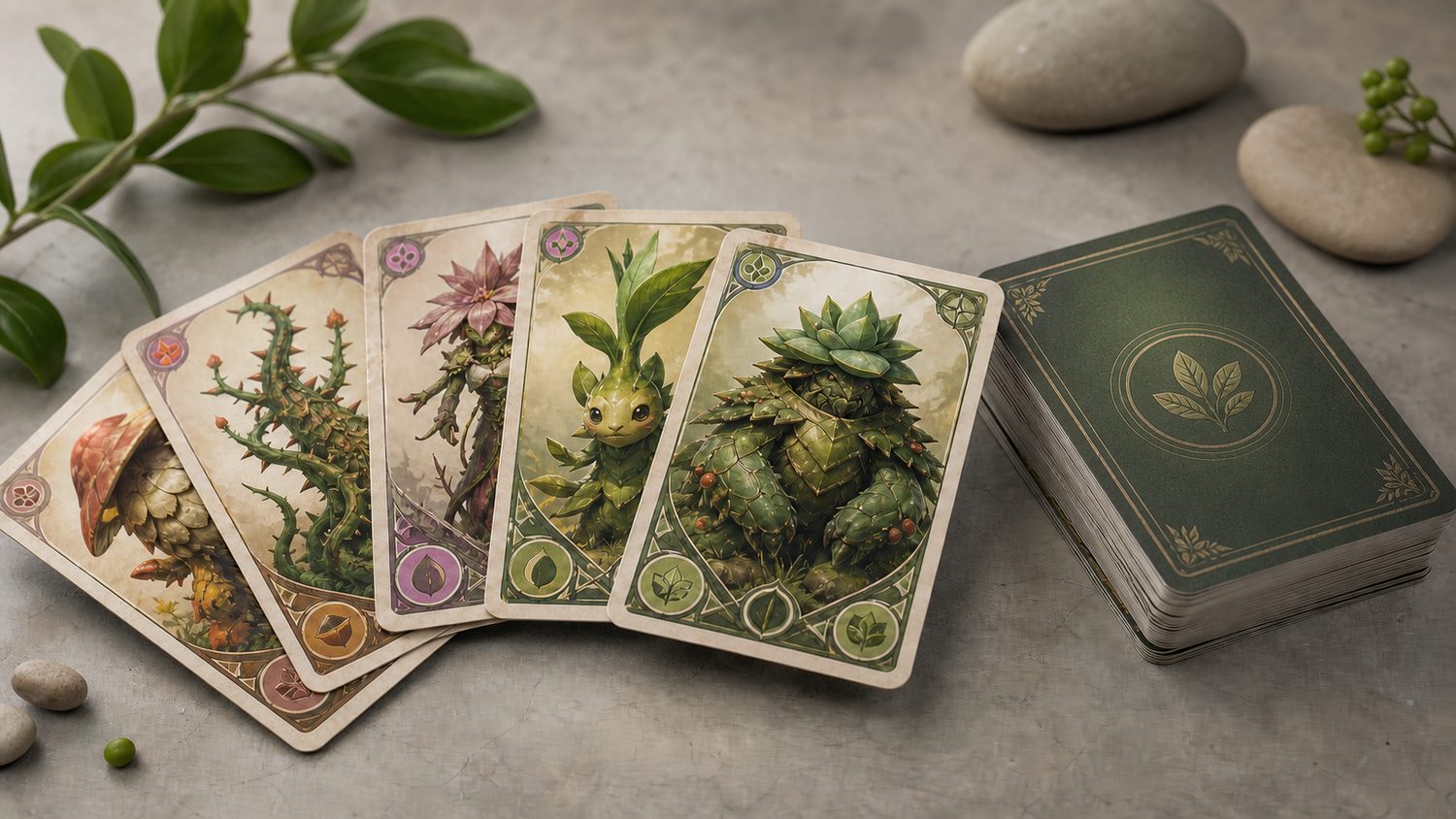
Plants vs. Zombies Heroes rewards understanding archetypes far more than copying a card list. Plant decks fall into three broad families, each with heroes that support them and a distinct way of winning. This guide covers what each archetype is doing, which heroes to build it on, and the deckbuilding rules that separate a functional list from a pile of good cards.
Why archetype matters more than the card list
The single most common mistake in PvZH is building a deck out of individually strong cards with no agreement about how the game ends. Zombies always move second on the board but get the last play in each turn, which means plants must decide early whether they are racing that tempo or absorbing it. A deck that does both does neither.
Before adding a card, answer one question: does this help me win by turn 6, or does it help me survive to turn 12? If the answer is “a bit of both,” cut it.
Aggro / Mega-Grow tempo
The most straightforward plant archetype and the best starting point for new players. You flood the board early, use Mega-Grow’s pump effects to push damage past blockers, and close the game before the zombie hero stabilises.
The plan: establish presence on turns 1-3, apply pressure every single turn, and treat your removal as a way to keep attacking rather than a way to survive.
Deckbuilding rules: keep the curve brutally low — the majority of your deck should cost three or less. Cheap pump tricks outperform expensive bodies, because you win by attacking with what is already there. Cut anything costing five or more unless it wins the game on the spot.
Where it loses: to decks with cheap, repeatable board clears and heavy healing. If your opening flurry is answered, aggro has no second act — which is the trade you accepted.
Midrange (Smarty / Solar)
The most flexible family and generally the strongest in experienced hands. Midrange plays efficient bodies with value attached, contests the board through the middle turns, and wins because its cards are individually better than the aggro deck’s while being faster than the control deck’s.
The plan: trade favourably, accumulate small advantages, and close with a threat the zombie hero cannot answer profitably.
Deckbuilding rules: this is where card quality genuinely matters. Every slot should either affect the board immediately or generate value over time — a card that does neither is a dead draw. Solar’s ramp lets you cheat the curve, so a small number of expensive, genuinely game-ending cards is correct here in a way it never is for aggro.
Where it loses: to decks that go over the top of it. Midrange has the most decisions per game and punishes sloppy play hardest.
Control (Spudow, Chompzilla)
The archetype for players who want long games. You answer everything the zombie hero commits, heal back the damage that gets through, and win in the late game with cards the aggro decks cannot afford to run.
The plan: survive. Every early turn is about not dying efficiently, and every removal spell should trade up in cost.
Deckbuilding rules: run more removal than feels comfortable, and build in healing — plant hero health is your real resource and control decks spend it deliberately. Keep two or three genuine finishers and no more; control decks lose far more often to flooding on defensive cards than to lacking a win condition.
Where it loses: to a fast start it cannot answer, and to its own pilot conceding tempo for too long.
Deckbuilding rules that apply to every plant deck
- Respect the 40-card minimum, then stop. Every card past 40 dilutes your best ones. There is essentially never a reason to run more.
- Count your two-drops. Most losing plant decks are short on cheap plays and spend the early game doing nothing. Whatever your archetype, you need turns 1-3 to matter.
- Play around the last word. Zombies act after you in each turn. Committing a fragile plant into an open lane with the zombie holding mana is how good decks lose to worse ones.
- Lane discipline. Spreading across every lane looks safe and usually is not. Concentrating pressure forces the zombie hero to answer where you are strong.
- Superpowers are cards. Factor your hero’s block and signature abilities into the curve rather than treating them as a bonus.
Keeping up with the meta
PvZH’s balance shifts with patches, and specific card recommendations date faster than archetype logic. For current per-hero lists, the community-maintained PvZH Vault publishes the top-rated deck for all 22 heroes with full 40-card lists, and TierMaker’s community-voted plant card rankings are a reasonable sanity check on whether a card is still worth its slot. Use those for lists; use the archetype rules above to understand why a list is built the way it is, which is the part that survives the next balance patch.