

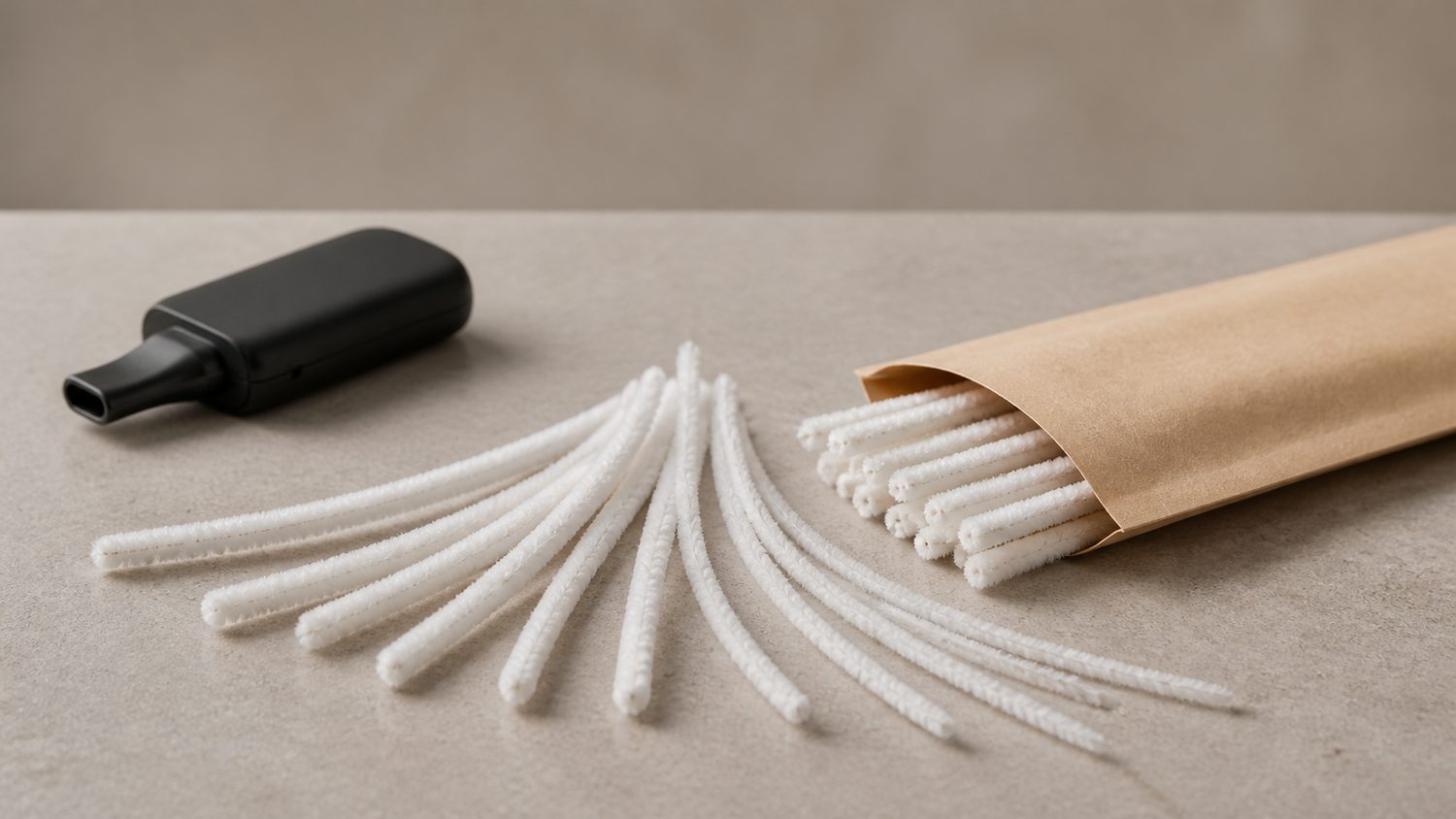
PAX vaporizers and their cleaning accessories fall within vaping hardware. This is an informational maintenance page, not a product roundup: it does not recommend cleaners, replacement parts, accessories, brands or models, and it includes no affiliate links. The goal is to explain how to approach cleaning without damaging a heated electronic device or creating a contamination risk.
Use the manufacturer’s instructions first
Start with the manual and official care instructions for the exact device generation. Similar-looking portable vaporizers can have different removable parts, temperature limits, charging arrangements and materials. Power the device off, disconnect it from charging and allow it to cool completely before handling its chamber or mouthpiece. Do not clean a device while it is hot, charging or switched on.
Cleaning frequency depends on use, material residue and the maker’s instructions. Waiting until airflow is restricted or residue has baked onto a component makes cleaning harder and encourages excessive force. A short, routine inspection is safer than aggressively scraping a neglected device. Look for residue around the airflow path, chamber edge, mouthpiece and seal areas, but do not insert a hard tool into an opening just because it appears reachable.
Choose methods that protect materials and electronics
Only use materials and cleaning agents that the manufacturer explicitly permits for the relevant removable component. Liquids should never be poured into the device body, charging port, display, switch or internal air path. A damp part must be fully dry before it is reinstalled or the device is charged. Unknown solvents, fragranced cleaners, abrasive powders and improvised metal tools can damage plastics, coatings, seals and electrical contacts, or leave residues that do not belong in an inhalation device.
A pipe-cleaner-like tool is only appropriate where the official instructions specify a soft, lint-free cleaning method and the tool can move freely without force. Do not push until a passage is blocked, twist aggressively against a seal or use a wire core that can scratch or detach. If residue will not release with the approved method, pause rather than escalating to a stronger chemical or a sharp object.
Disassembly, inspection and reassembly
Lay removable pieces on a clean surface and keep small parts together. Photographing the arrangement before disassembly can help with correct reassembly, but the manual is the authority. Inspect for split seals, cracked plastic, bent contacts, loose screens, worn mouthpieces or damaged charging hardware. A part that no longer fits securely should not be held in place with tape, glue or an improvised spacer. Those materials may soften with heat or obstruct airflow.
Reassemble only after every cleaned component is dry and seated as documented. Do not perform a test cycle with a wet or partially assembled device. If it shows an error, unusual odour, abnormal heat, persistent leaking or a change in draw resistance after cleaning, stop using it. Cleaning does not repair a damaged battery, sensor, heater or electrical connection.
Storage and exposure precautions
Store the device away from heat, direct sun, children and pets. Keep it dry and do not leave it in a car where temperature can rise rapidly. If the device uses a rechargeable battery, follow its official charging guidance and do not use a damaged cable or power source. Nicotine-containing material can be harmful if ingested or absorbed through skin; follow the label and contact poison control or emergency services if exposure is suspected.
Local law may regulate vaporizer possession, age, public use and cannabis-related use differently across jurisdictions. Check current local rules rather than assuming a cleaning task is legally neutral. The safest approach is ordinary: use the official instructions for the exact device, avoid force and unapproved chemicals, keep liquid away from electronics, and take any fault or damage as a reason to stop using the device.
Cleaning principles that protect the device
Residue can change airflow, odour and the fit of removable pieces, but cleaning should never become a forceful attempt to make a device perform differently. Work on a cool, powered-off device away from charging equipment. Use the official instructions for the exact version to determine what may be removed, what may contact a surface and how components should dry. A method that is suitable for one removable part may damage a seal, coating, sensor or electrical contact elsewhere.
Material compatibility and residue control
Do not introduce liquid into the device body, charging port, switch, display or internal electronics. Avoid abrasive or sharp items, unknown solvents, scented household cleaners and adhesive fixes. They can scratch air paths, degrade plastics, leave inhalable residue or conceal a damaged part. If a removable item cannot be cleaned with the published care method, do not escalate by forcing material through an opening. Keep cleaned parts on a clean surface, separate from food areas and away from children and pets.
Drying, reassembly and warning signs
Every cleaned component must be completely dry before reassembly, charging or heating. Reinstall parts only as documented; a loose screen, split seal, cracked mouthpiece, bent contact or changed draw resistance is not something to compensate for with extra force. Stop use if there is abnormal heat, an error message, persistent leakage, a damaged battery area, unusual smell or a component that will not seat correctly. Cleaning does not correct electrical damage. Vaping devices may be regulated by age, possession and public-use rules, and nicotine exposure can be dangerous for children and animals. Follow current local law and consult a clinician or poison-control service when an exposure or health concern arises.