


As an Amazon Associate and eBay Partner, toptenpick.com earns from qualifying purchases. Prices and availability are subject to change.
Thoracic outlet syndrome is a compression problem. The nerves and vessels that supply the arm pass through a narrow corridor between the collarbone and the first rib, and between the scalene muscles in the neck — and the width of that corridor changes with posture. That is why symptoms are so position-dependent, and it is why sleep is often the worst part of the day: you spend eight hours in a posture you did not consciously choose and cannot correct.
Here is the part that most pillow guides get wrong. They treat this as a neck-support question, recommend a cervical pillow, and stop. But the arm position is at least as important as the head position, and a head pillow cannot do anything about it. The classic aggravators — the arm drifting up overhead, sleeping on the affected shoulder, tucking a hand under the pillow so the arm is both elevated and rotated — all narrow the space directly. You can have perfect cervical alignment and still wake with a numb hand because your arm spent four hours above your head. Solving this usually takes two pillows doing two different jobs.
There is a second counter-intuitive point, and it runs against the standard advice about mattresses. For a side sleeper, a firmer surface is often worse. A firm mattress pushes the shoulder upward into the body, which narrows the space between the collarbone and the first rib — exactly the compression you are trying to avoid. A surface that lets the shoulder sink in opens it. So the usual instinct to buy something more supportive can make symptoms worse rather than better.
The practical target is straightforward even if achieving it is not: keep the neck level rather than bent towards either shoulder, keep the arms below shoulder height and slightly forward of the body, keep the shoulders from rolling in, and avoid lying on the symptomatic side. The ten items below are the pillows and props that make those things happen while you are asleep. None of this is medical advice — TOS is diagnosed and managed by a clinician, and persistent numbness, weakness, colour change or swelling in an arm needs proper assessment rather than a new pillow.
| # | Product | Price | Where to buy |
|---|---|---|---|
| 1 | Adjustable-Fill Shredded Memory Foam Pillow | $40-$90 | Amazon · eBay |
| 2 | Contoured Cervical Support Pillow | $35-$80 | Amazon · eBay |
| 3 | Full-Length Body Pillow | $35-$80 | Amazon · eBay |
| 4 | U-Shaped or J-Shaped Pregnancy Pillow | $45-$110 | Amazon · eBay |
| 5 | Arm and Elbow Support Wedge | $20-$45 | Amazon · eBay |
| 6 | Adjustable Wedge Bed Pillow | $40-$120 | Amazon · eBay |
| 7 | Cervical Neck Roll | $15-$35 | Amazon · eBay |
| 8 | Soft-to-Medium Mattress Topper | $70-$200 | Amazon · eBay |
| 9 | Posture Support Sleep Shirt or Shoulder Brace | $20-$50 | Amazon |
| 10 | Knee Pillow for Side Sleepers | $20-$45 | Amazon · eBay |
The picks, in detail

Adjustable-Fill Shredded Memory Foam Pillow
The most useful first purchase, because the correct pillow height for you is a specific number you do not yet know, and this is the only category that lets you find it. A shredded-fill pillow with a zip lets you remove or add filling until the neck sits level — not tilted up towards the ceiling, not sagging down towards the mattress. For side sleepers that height is roughly the distance from the outside of the shoulder to the side of the neck, and it varies a lot between people. Adjust in small amounts over several nights.
- Zip access to add or remove fill
- Shredded memory foam conforms to the neck
- Usually supplied with a spare bag of fill
- Machine-washable cover
- You can dial in the exact height your shoulder width needs
- Fill can be adjusted again if your usual position changes
- Works for both back and side sleeping
- Finding the right level takes a week of small changes
- Shredded fill compacts over time and needs topping up
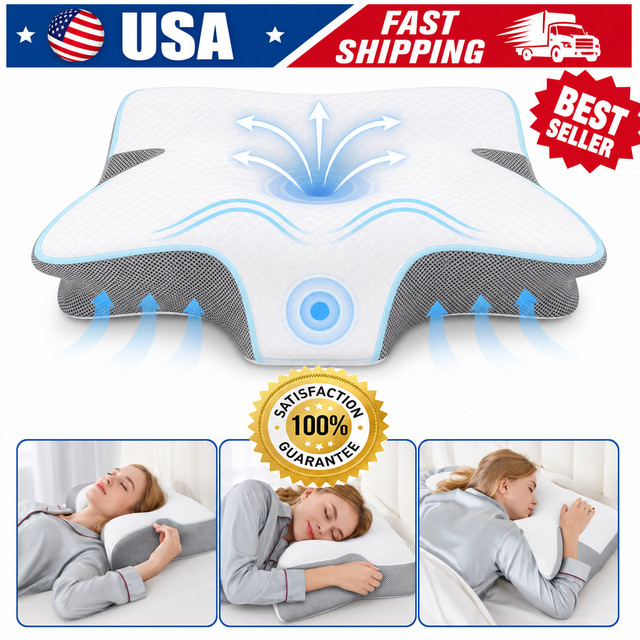
Contoured Cervical Support Pillow
A moulded pillow with a raised roll under the neck and a lower hollow for the head, so the cervical curve is supported rather than propped. Many come with two different roll heights on opposite edges, which lets you set one for back sleeping and one for side sleeping. The reason it belongs on this list is specific: it discourages the head from drifting into side-bending towards one shoulder, and side-bending shortens the scalene muscles on that side. The trade-off is that contoured pillows are unforgiving if the height is wrong for you.
- Moulded contour with a neck roll and head hollow
- Dual-height edges for back and side sleeping
- Memory foam or latex construction
- Removable, washable cover
- Actively holds the neck in a neutral position
- Two heights in one pillow
- Consistent shape night after night
- No adjustment if neither height suits you
- Takes several nights to get used to
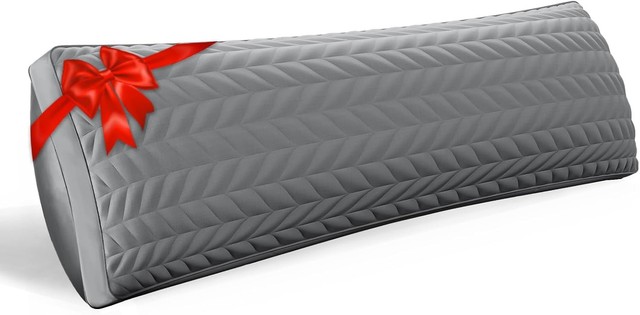
Full-Length Body Pillow
The item that addresses the half of the problem a head pillow cannot. Hugged in front of you as a side sleeper, a body pillow does three things at once: it holds the top arm forward and below shoulder height instead of letting it drift overhead, it stops the top shoulder rolling across the chest, and it physically prevents you from rolling onto your stomach — which forces the neck into rotation and the shoulders into compression. For many people this single item changes more than any head pillow.
- Full length, typically 48 to 54 inches
- Polyester, memory foam or shredded fill
- Removable washable cover
- Straight or contoured shapes
- Keeps the top arm out of the aggravating overhead position
- Prevents rolling onto the stomach
- Also supports the top leg, which settles the pelvis
- Takes up a great deal of bed space
- A partner may object
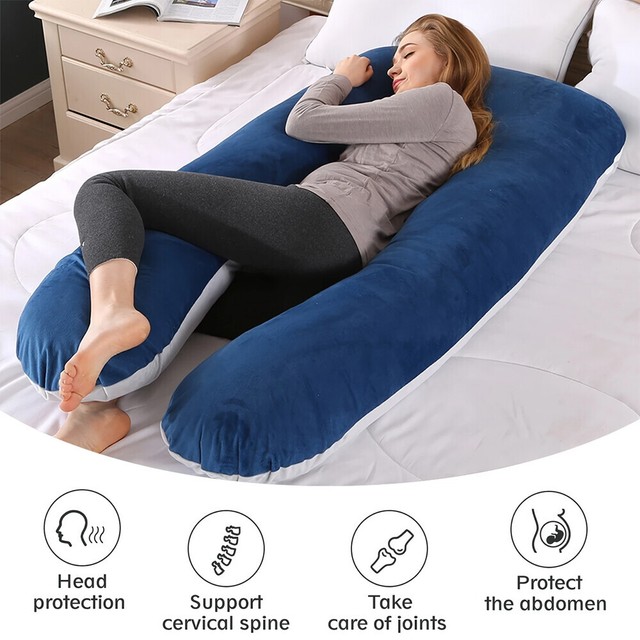
U-Shaped or J-Shaped Pregnancy Pillow
Designed for a different purpose and very well suited to this one. A U-shape supports the front and the back simultaneously, which means your top arm is held forward while your back is blocked from rolling — so you stay in the position you fell asleep in rather than ending up prone by 3 am. That stability is the real benefit for TOS, where the problem is not the position you choose but the positions you drift into. A J-shape is the compromise for a smaller bed or a shared one.
- U or J shape supporting front and back together
- Full body length
- Removable jersey or cotton cover
- Polyfill, usually adjustable in the better ones
- Holds the sleeping position through the whole night
- Supports arm, back and legs at once
- Replaces three or four separate pillows
- Very large, and effectively takes over the bed
- Bulky to wash and slow to dry
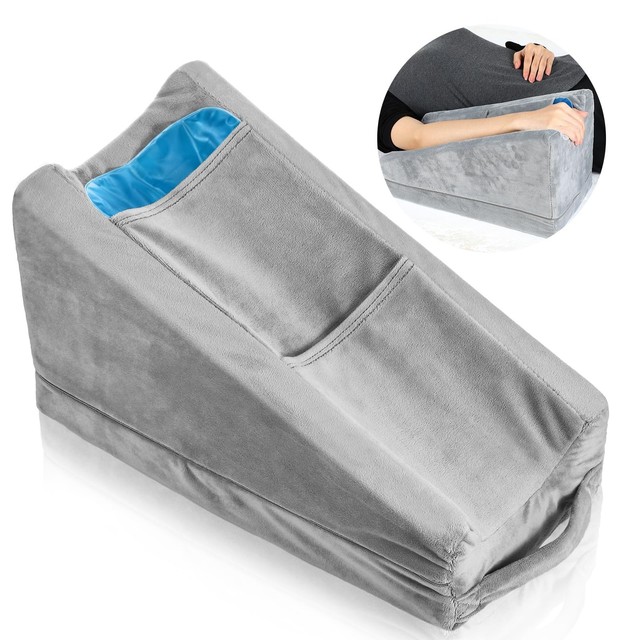
Arm and Elbow Support Wedge
A small foam wedge placed under the forearm or elbow to bring it up to roughly shoulder level rather than letting it hang, which is a position many people with TOS find relieving. The important detail is where the support sits: under the arm itself, not under the shoulder. Propping the shoulder pushes it upwards and narrows exactly the space you are trying to open. Under the forearm it keeps the arm forward and level without loading the joint. Cheap, small, and easy to experiment with.
- Small foam wedge or half-roll
- Supports forearm and elbow specifically
- Firm enough to hold height overnight
- Washable cover
- Directly addresses arm position, which head pillows cannot
- Small enough to use alongside any other pillow
- Inexpensive to try
- Easy to displace during the night
- Placed under the shoulder instead of the arm it makes things worse
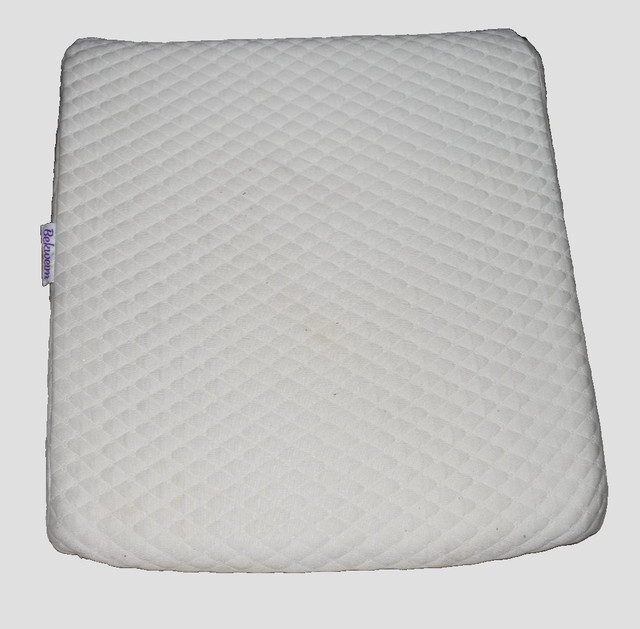
Adjustable Wedge Bed Pillow
A larger wedge for sleeping partly upright, and worth trying if your symptoms are strongly worse lying flat. A modest incline changes the angle at the base of the neck and, for some people, also helps with the venous and lymphatic side of the picture. Look for a moderate angle rather than a steep one: too much and you slide down the wedge overnight, ending up in a bent position that is worse than lying flat. Adjustable multi-piece wedge systems let you find the angle that works.
- Typically 7 to 12 inch rise
- Memory foam top layer over a firmer base
- Multi-piece adjustable systems available
- Breathable removable cover
- Useful when symptoms are clearly worse lying flat
- Adjustable systems let you tune the angle
- Also helps reflux and congestion
- Too steep an angle causes sliding and neck flexion
- Bulky and hard to store
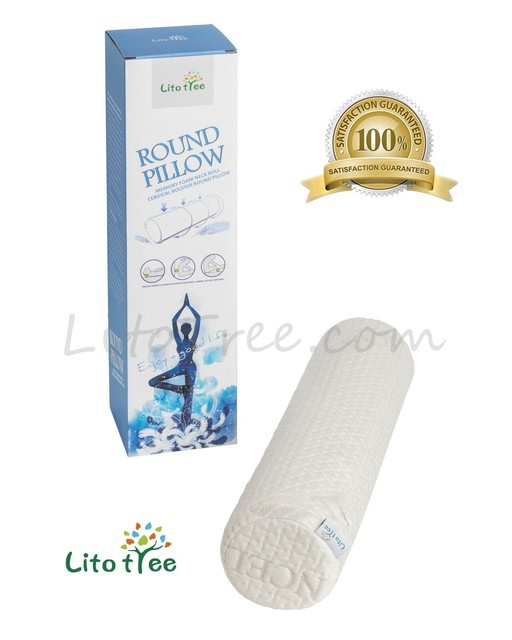
Cervical Neck Roll
A small cylindrical bolster, used either inside a pillowcase behind the neck or on its own. Its job is narrow and useful: it fills the gap under the cervical curve so the neck is supported along its length rather than only at the head. For back sleepers that stops the head tipping back, which is a position that tensions the front of the neck. It is also small enough to travel with, which matters more than it sounds — a hotel pillow is a common reason a settled problem flares.
- Cylindrical bolster, several diameters available
- Memory foam or firm polyfill
- Fits inside a standard pillowcase
- Small enough to pack
- Fills the cervical gap that flat pillows leave
- Easy to combine with an existing pillow
- Genuinely portable
- Too large a diameter pushes the head forward
- Rolls out of position during the night

Soft-to-Medium Mattress Topper
The counter-intuitive recommendation, and the one worth taking seriously. For a side sleeper, a firm surface holds the shoulder up into the body and narrows the space between collarbone and first rib; a softer surface lets the shoulder sink and opens it. A two- or three-inch soft-to-medium topper is a cheap way to test whether your mattress is part of the problem before spending on a new one. If it helps noticeably within a fortnight, you have learned something useful about what to buy next.
- 2-3 inch memory foam or latex
- Soft to medium firmness
- Elasticated corner straps
- Cooling gel-infused options
- Lets the shoulder sink instead of being pushed up
- Far cheaper than replacing a mattress to test the idea
- Reversible if it does not help
- Softer surfaces can worsen unrelated low back pain
- Memory foam sleeps warm
Posture Support Sleep Shirt or Shoulder Brace
A soft brace worn overnight to discourage the shoulders from rolling forward, which is the posture that closes the space between collarbone and first rib. The emphasis has to be on soft: anything that grips hard enough to actually restrict circulation is worse than the problem. Used as a gentle reminder rather than a restraint it can help someone who habitually curls into a tight foetal position. Talk to your physiotherapist before wearing anything like this overnight, since opinions on night bracing vary.
- Soft elastic figure-of-eight or vest design
- Adjustable tension straps
- Breathable fabric for overnight wear
- Sized rather than one-size on better versions
- Discourages the shoulders-forward posture directly
- Useful for habitual tight curling
- Cheap to try
- Must be loose — a tight brace makes compression worse
- Night bracing is not universally recommended; ask your clinician

Knee Pillow for Side Sleepers
Placed between the knees, this looks like it has nothing to do with the shoulder, and that is exactly why it works. Without it the top leg falls forward, the pelvis rotates, and the whole spine twists — which pulls the upper body out of alignment and rolls the top shoulder across the chest. Stabilising the pelvis lets the shoulders stay stacked. It is a small, cheap item that makes the larger pillows above work properly, and side sleepers with any spinal complaint tend to find it useful anyway.
- Contoured memory foam shaped for the knees
- Optional strap to stop it migrating
- Removable washable cover
- Compact enough to travel with
- Stops the pelvic rotation that twists the upper body
- Keeps the shoulders stacked rather than rolled
- Cheap, and useful for hips and lower back too
- Works its way out of position without a strap
- Some people find anything between the knees intrusive
Buying tips
- The arm position matters as much as the head position. Arms drifting overhead, a hand tucked under the pillow, or lying on the affected shoulder all narrow the space directly, and no head pillow can prevent any of them. A body pillow hugged in front keeps the top arm forward and below shoulder height. That is usually the change that makes the most difference.
- Match pillow height to your shoulder width, not to a product description. For side sleeping the pillow needs to fill the gap between the ear and the mattress so the neck stays level. Too thin and the head drops towards the lower shoulder; too thick and it is pushed the other way. An adjustable-fill pillow is the only practical way to find your own number.
- Firmer is not better here, and that surprises people. A firm mattress pushes a side sleeper’s shoulder up into the body and narrows the costoclavicular space. A surface that lets the shoulder sink opens it. A soft-to-medium topper is a cheap way to test whether your mattress is contributing before you spend on a new one.
- Support the arm, never the shoulder. A prop under the forearm or elbow holds the arm forward and level, which many people find relieving. A prop under the shoulder pushes it upward and narrows exactly the space you are trying to open. It is a small difference in placement with an opposite effect, and it is the most common mistake made with a support wedge.
- Avoid sleeping on the symptomatic side, and use the bed to enforce it. Willpower does not survive unconsciousness. A body pillow behind your back, or a U-shaped pillow that blocks both directions, physically prevents the roll. Positioning props work because they keep you where you started, not because they are more comfortable in the first minute.
- Stomach sleeping is the position to eliminate first. It forces the neck into sustained rotation and pushes the shoulders into compression, and it is very hard to do anything else wrong that is worse. If you are a habitual stomach sleeper, a full-length or U-shaped pillow that blocks the roll is the most valuable purchase on this list.
- Give any change two weeks before you judge it. Sleep posture is a habit, and a better position is usually less comfortable for the first few nights simply because it is unfamiliar. Changing several things at once also makes it impossible to tell what helped. Change one item, keep a short note of how your arm feels on waking, and only then decide.
- A pillow manages symptoms — it does not treat the condition. Thoracic outlet syndrome is diagnosed and managed by a clinician, and the mainstay of treatment is usually targeted physiotherapy. Persistent numbness or weakness, a change in the colour or temperature of an arm or hand, or new swelling all need proper assessment rather than another pillow. Get the diagnosis, then use the bedding to support it.
As an Amazon Associate and eBay Partner, toptenpick.com earns from qualifying purchases. Prices and availability are subject to change.