

As an Amazon Associate and eBay Partner, toptenpick.com earns from qualifying purchases. Prices and availability are subject to change.
Hold Fast straps do not clip to anything — they bolt through the pedal body, and that is the compatibility question nobody puts in the product title. The strap is a rigid nylon and neoprene loop that fastens with hardware passing through the pedal’s cage or platform, so the pedal needs holes in the right places, or a cage you can drill, or a body thick enough to take a bolt at all. A sealed magnesium platform with no through-holes and a slippery top is not a candidate however good a pedal it is.
So the specification list is short and it is nothing like a normal pedal review. You want a platform wide enough that the strap sits across the ball of your foot rather than cutting into the arch — roughly 90 mm and up. You want holes, or material that will take them: a classic BMX or track cage with existing mounting points is easiest, and many platform pedals have a pair of holes cast in for exactly this. And you want grip, because a foot retention strap holds your foot down and forward but does nothing to stop it sliding sideways — pins matter as much here as on any flat pedal.
There is a safety point that deserves stating plainly rather than being buried. A foot retention strap is not a clipless pedal. There is no release mechanism and no float, and getting out means pulling your foot backwards and upwards deliberately. That is fine and it is how fixed-gear riders have ridden for a century — but it changes what happens in a crash or a sudden stop, and it takes real practice in a car park before it takes place in traffic. Set them loose while you learn. People tighten them far too early.
The other thing worth knowing is that this is a fixed-gear and track-derived idea. Straps exist so that you can pull up as well as push down, which matters enormously on a fixed drivetrain where you are also using your legs to slow the bike. On a freewheel bike they are mostly about keeping your foot located on a big platform, which is a real benefit and a smaller one.
A last practical note: check the crank arm clearance. A wide platform pedal with a strap on top sits further from the crank than a plain pedal, and on some frames the strap buckle can catch the chainstay at full lock. Spin the cranks backwards by hand before the first ride.
| # | Product | Price | Where to buy |
|---|---|---|---|
| 1 | Fyxation Gates Slim Pedal | $25–$45 | Amazon |
| 2 | Classic Steel Cage Track Pedal | $25–$50 | Amazon · eBay |
| 3 | Wide Alloy Platform Pedal with Pin Holes | $35–$70 | Amazon · eBay |
| 4 | Hold Fast Strap Set | $35–$70 | Amazon · eBay |
| 5 | MKS Sylvan Touring Pedal | $45–$80 | Amazon · eBay |
| 6 | BMX Platform Pedal, Nylon Body | $20–$40 | Amazon · eBay |
| 7 | Stainless Bolts, Washers and Nyloc Nuts | $8–$18 | Amazon · eBay |
| 8 | Grippy Flat-Sole Shoe | $70–$140 | Amazon |
| 9 | Toe Clips and Leather Straps (the traditional alternative) | $15–$35 | Amazon · eBay |
| 10 | Sealed Magnesium Platform with No Through-Holes | $90–$180 | Amazon |
The picks, in detail
Fyxation Gates Slim Pedal
Designed alongside strap-based foot retention and sold as a system with them, which removes the compatibility guesswork entirely. A wide nylon composite platform with the mounting holes already in the right place, moulded pins for grip, and a body that takes strap hardware without modification. This is the least-effort correct answer if you are starting from nothing.
- Wide nylon composite platform
- Pre-drilled strap mounting holes
- Moulded grip pins
- Sealed or bushing bearing options
- Holes already in the right place for straps
- Wide enough to spread strap pressure properly
- Inexpensive and light
- Composite body wears faster than alloy
- Moulded pins grip less than steel ones
- Bushing versions need servicing sooner than sealed
Classic Steel Cage Track Pedal
The traditional answer and still an excellent one. A steel or alloy cage pedal has existing mounting points at the front of the cage because that is where toe clips have bolted for a hundred years, and a Hold Fast style strap uses the same holes. The cage also gives the foot a defined location. Heavier than a modern platform, and entirely straightforward.
- Steel or alloy cage with existing clip mounting holes
- Double-sided cage on most designs
- Serviceable cup-and-cone bearings
- Traditional track geometry
- Mounting points already exist and are standardised
- Cage locates the foot positively
- Cheap and repairable
- Heavy compared with modern platforms
- Cage is narrow across the ball of the foot
- Cup-and-cone bearings need periodic adjustment
Wide Alloy Platform Pedal with Pin Holes
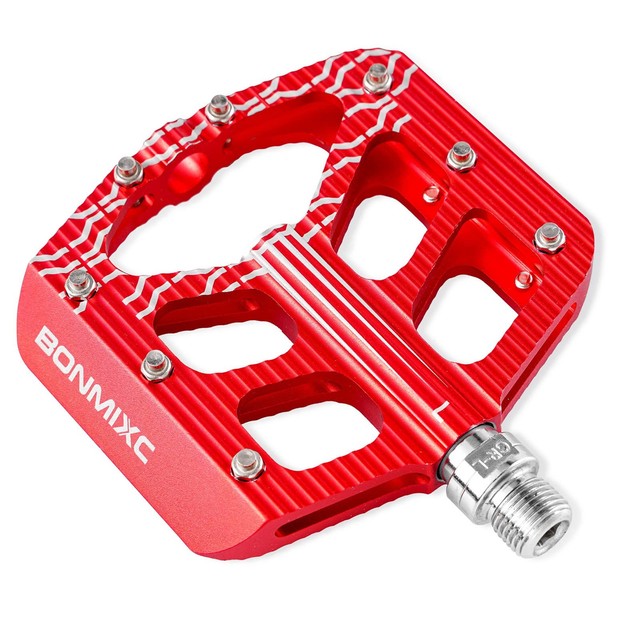
The modern general-purpose option, and the thing to check is whether the specific model has a pair of through-holes in the platform. Many do, cast in for exactly this purpose. A 100 mm wide alloy body with replaceable steel pins gives you the grip that a strap alone does not provide, and alloy takes a drill cleanly if you need to make your own holes.
- Alloy body, typically 95–110 mm wide
- Replaceable steel traction pins
- Sealed cartridge bearings on better models
- Some models have cast strap holes
- Wide enough to spread strap pressure well
- Steel pins add the sideways grip straps do not
- Alloy drills cleanly if holes are missing
- Not all models have strap holes — check before buying
- Steel pins tear shoes and shins
- Sealed bearings are not always serviceable

Hold Fast Strap Set
The straps themselves, for completeness, because the mounting hardware is part of what you are buying. The design is a padded nylon loop with a rigid back that holds the opening upright so you can get a foot in without reaching down, plus bolts and backing plates. The fit range is generous but check it against a winter boot if you ride in one — they adjust, within limits.
- Padded nylon and neoprene loop
- Rigid back keeps the opening upright
- Bolts and backing plates supplied
- Adjustable over a range of shoe sizes
- Loop stays open, so entry is quick
- Hardware supplied rather than sourced separately
- Works with any pedal that takes the bolts
- No release mechanism — exit is a deliberate movement
- Range of adjustment does not cover very large boots
- Neoprene soaks up water and stays wet

MKS Sylvan Touring Pedal
A Japanese-made cage pedal with the traditional mounting points and a reputation for bearings that last decades. It is the choice for someone building a bike they intend to keep — serviceable, rebuildable, and the cage holes are exactly where a strap or a toe clip expects them. Narrower than a modern platform, so pressure from the strap is more concentrated.
- Alloy cage with standard clip mounting holes
- Serviceable cup-and-cone bearings
- Double sided
- Made in Japan
- Exceptional bearing life and fully rebuildable
- Standard mounting holes for straps and clips
- Classic appearance
- Narrow cage concentrates strap pressure
- Less grip than a pinned platform
- More expensive than generic cage pedals

BMX Platform Pedal, Nylon Body
A wide nylon BMX pedal is cheap, grippy, wide enough to spread the strap load, and — crucially — easy to drill accurately because the body is soft enough to work with a normal bit. If you cannot find a pedal with the holes already in it, this is the cheapest way to make one. Mark the position with the strap held in place before drilling, not from a diagram.
- Wide nylon composite body
- Moulded or replaceable pins
- Very wide platform, often 100 mm plus
- Inexpensive
- Easy to drill cleanly for strap hardware
- Very wide platform spreads pressure well
- Cheap enough to experiment with
- Drilling voids any warranty
- Nylon bodies crack if the bolt is overtightened
- Bushings rather than sealed bearings at the low end
Stainless Bolts, Washers and Nyloc Nuts
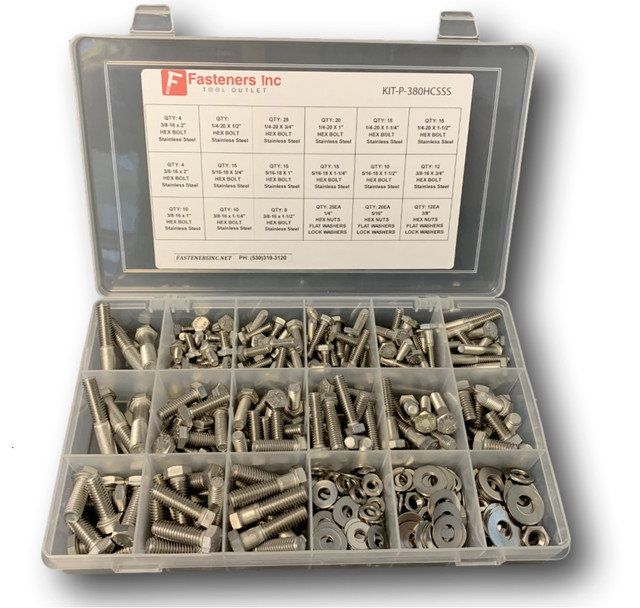
The unglamorous part that decides whether the installation survives. The hardware supplied with straps is adequate, but a longer stainless bolt with a proper backing washer spreads the load across a composite pedal body rather than pulling through it, and a nyloc nut does not vibrate loose — which is the actual failure mode, because a pedal is a vibrating component and a plain nut will back off.
- Stainless machine screws in common sizes
- Wide backing washers to spread load
- Nyloc or thread-locked nuts
- Assorted lengths
- Stops the strap mount pulling through a composite body
- Nyloc nuts resist the vibration that loosens plain ones
- A few pounds for the whole set
- Requires measuring the pedal thickness to get the length right
- Stainless bolts gall if overtightened dry
- Excess thread needs cutting or it catches your ankle
Grippy Flat-Sole Shoe
The other half of the system, and it matters more than the pedal choice for most riders. A strap holds the foot down and forward; nothing stops it sliding sideways except friction between the sole and the pedal. A flat, stiff, sticky rubber sole — the kind sold for flat-pedal mountain biking — transforms how secure a strapped setup feels, and it does so for less than a new set of pedals.
- Flat, stiff rubber outsole
- Sticky compound designed for pins
- Reinforced toe box
- Skate or flat-MTB styling
- Adds the sideways grip straps cannot provide
- Stiff sole spreads pedal pressure over a long ride
- Works with any pedal on this list
- Sticky compounds wear quickly when walked in
- Stiff soles are uncomfortable off the bike
- Good flat-pedal shoes are not cheap
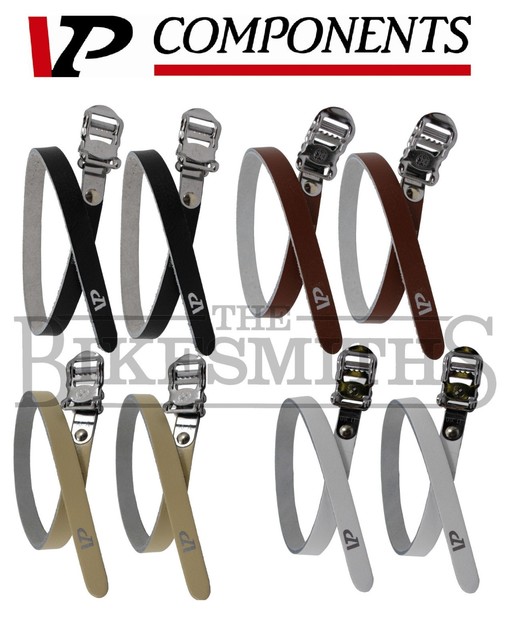
Toe Clips and Leather Straps (the traditional alternative)
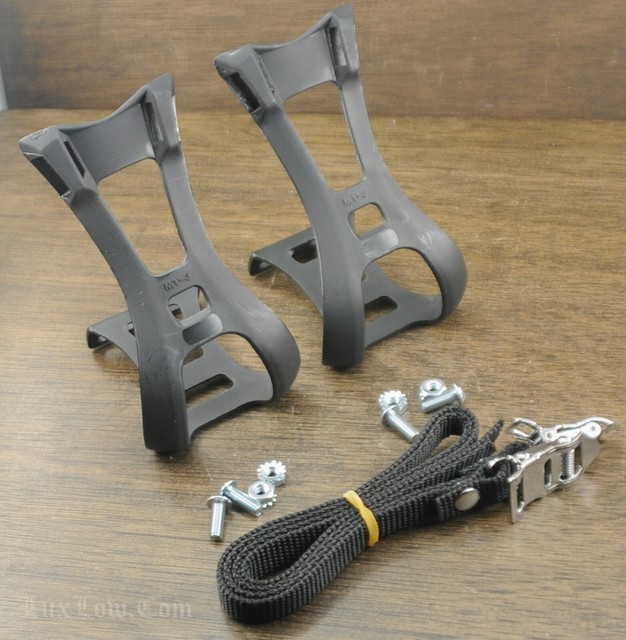
Worth knowing about because it does the same job differently and is far cheaper. A steel toe clip with a leather strap has been the standard for a century, adjusts with a buckle rather than a hook-and-loop closure, and mounts to the same holes. The trade is that a clip constrains the toe rather than the whole forefoot, and getting into one requires flipping the pedal, which a modern strap avoids.
- Steel or alloy clip with a leather or nylon strap
- Mounts to standard cage holes
- Buckle adjustment
- Sold in sizes by shoe length
- Very cheap
- Century-old standard with universal fitment
- Buckle adjusts precisely
- Requires flipping the pedal to get in
- Constrains the toe rather than the forefoot
- Leather straps stretch when wet
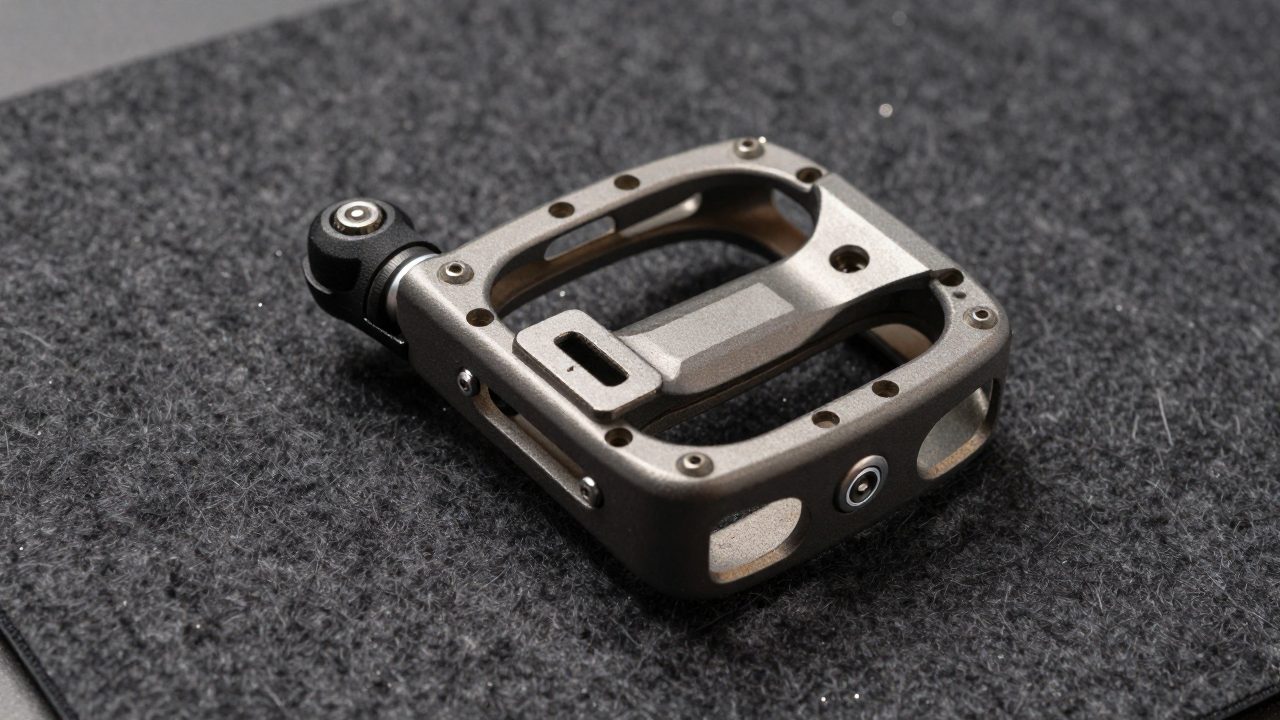
Sealed Magnesium Platform with No Through-Holes
Named as the incompatibility, because these are excellent pedals and people buy them for this job by mistake. A one-piece sealed magnesium or alloy platform with no cast holes gives you nothing to bolt to, and drilling magnesium is a genuinely bad idea — it work-hardens, it cracks, and magnesium swarf is flammable. Lovely flat pedals; not strap pedals.
- One-piece machined or cast body
- Replaceable pins
- Sealed cartridge bearings
- No strap mounting provision
- Excellent as a plain flat pedal
- Light and durable
- Very good bearings
- No mounting holes and no safe way to add them
- Magnesium should not be drilled
- Bought for straps by mistake regularly
Buying tips
- Check the pedal has through-holes before anything else. Hold Fast straps bolt through the body, so a sealed platform with nowhere to put a bolt is not a candidate however good the pedal is.
- Look for a platform around 90 mm wide or more. A narrow cage concentrates the strap across the arch instead of the ball of the foot, which is uncomfortable within a few miles.
- Remember the strap does not stop sideways movement. Pins on the pedal and a sticky flat sole on your shoe are what keep the foot located.
- Practise getting out in a car park before riding in traffic. There is no release mechanism and no float — exit is a deliberate backwards and upwards pull, and it needs to be automatic before you need it.
- Set them loose to begin with and tighten over weeks. Almost everyone tightens straps far too early, which is how the first low-speed topple happens.
- Use a wide backing washer and a nyloc nut. A pedal vibrates constantly; plain nuts back off, and a bolt head without a washer pulls straight through a composite body.
- Drill nylon or alloy, never magnesium. Magnesium work-hardens and cracks, and its swarf is flammable.
- Spin the cranks backwards by hand before the first ride. A wide pedal plus a strap sits further out than a plain pedal, and the buckle can catch a chainstay at full lock.
As an Amazon Associate and eBay Partner, toptenpick.com earns from qualifying purchases. Prices and availability are subject to change.