

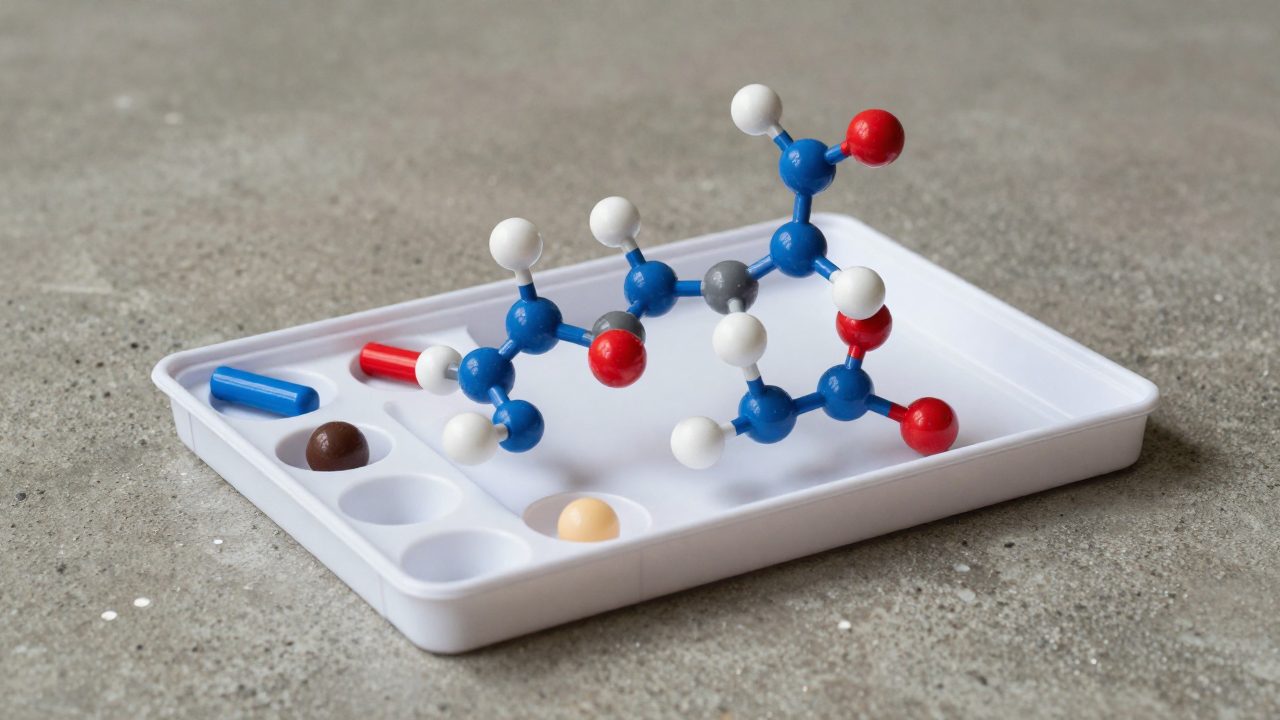
About this guide
An organic-chemistry model kit is a visual aid for connectivity and spatial geometry, not a molecular simulation or a substitute for structural drawings. The useful distinction is atom count, link count, whether double and triple bonds can be represented, and whether the included elements make the functional groups in your course possible. Check an instructor’s specified model system before buying: incompatible atom-and-bond pieces cannot be assumed to interchange. The selections below are distinct sets or materially different classroom-pack formats, rather than duplicate colorways or storage sizes.
As an Amazon Associate and eBay Partner, toptenpick.com earns from qualifying purchases. Prices and availability are subject to change.
The picks, in detail
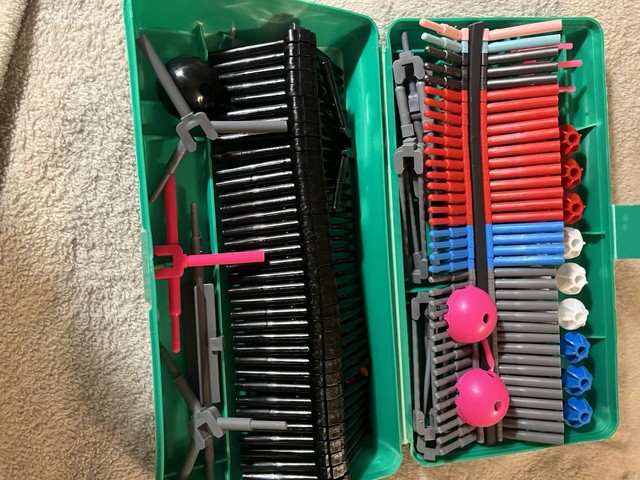
Molecular Visions Kit #1 Organic, Inorganic, Organometallic
Molecular Visions Kit #1 is a 120-piece set in a 9 by 4.5 by 2-inch green plastic box, sold for organic, inorganic, and organometallic structures.
- 120 pieces
- plastic storage box
- organic/inorganic/organometallic scope
- Exact kit number and piece count
- Compact storage dimensions
- Check the course’s required model system
Molymod Basic Student Organic Model Set MMP-AT2
Molymod’s basic student organic set contains 19 atoms and 24 bonds per set.
- 19 atoms
- 24 bonds
- plastic atom centers and links
- Organic functional-group examples are listed
- Atoms have angle-specific bond holes
- Small set limits simultaneous large structures
Why we picked it
The description specifically identifies alcohols, acids, esters, and chloro-hydrocarbons among the buildable structures.
Molymod Student Molecular Modeling Kit
Arbor Scientific’s student Molymod kit contains 51 atoms and 38 bonds in a plastic box.
- 51 atoms
- 38 bonds
- single double and triple bonds
- Published atom and bond counts
- Useful individual-student scale
- Not the larger teacher demonstration set
Why we picked it
It supports organic and inorganic structures with single, double, and triple bond types.
Molymod Teacher Molecular Modeling Kit
The larger Arbor Molymod teacher kit has 106 atoms and 86 bonds, including carbon, hydrogen, oxygen, nitrogen, sulfur, phosphorus, halogens, metals, basic links, and flexible links for double and triple bonds.
- 106 atoms
- 86 bonds
- flexible double/triple-bond links
- Element inventory is published
- Class demonstration capacity
- More costly and larger than a student kit

Molymod Organic Teacher Set MMS003
Molymod MMS003 is a 111-atom organic teacher set listed in laboratory education catalogs.
- 111 atoms
- organic teacher set
- Molymod system
- Large organic-focused inventory
- Teacher-set scale
- Confirm link inventory and course requirements with supplier
Why we picked it
It is a materially larger organic-focused configuration than the student sets.
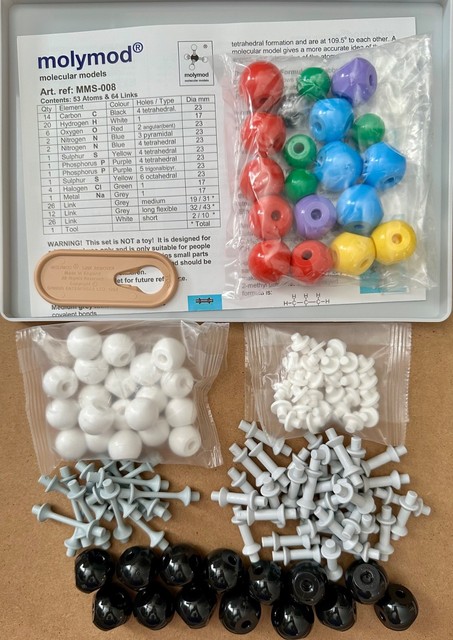
Molymod Organic Student Set MMS008
Molymod MMS008 is a 50-atom organic student set, listed separately from the inorganic/organic student set.
- 50 atoms
- organic student set
- Molymod system
- Distinct organic-only configuration
- Smaller storage and budget
- Fewer atoms than a teacher set
Why we picked it
It is suited to individual molecule building where the course needs an organic-focused kit.

Molymod Organic Stereochemistry Set MMS051
Molymod MMS051 is a 74-atom organic stereochemistry set.
- 74 atoms
- organic stereochemistry focus
- Molymod system
- Distinct stereochemistry-oriented set
- Larger than the basic organic student set
- Verify included links against assigned models
Why we picked it
Its materially different focus makes it useful when a course emphasizes spatial arrangements rather than simply maximum atom count.
Cornerstone 186-Piece Introductory and Organic Chemistry Model Kit
This 186-piece kit lists multiple bond lengths, electron-cloud pieces, a disconnector tool, and element atoms.
- 186 pieces
- multiple bond lengths
- electron-cloud pieces
- Largest low-cost piece count in this list
- Functional-group capability is stated
- Confirm material durability and connection style for intensive coursework
Why we picked it
Its product description expressly includes carbon chains, functional groups, VSEPR, and structural formulas.
VXB Hands-On Organic Chemistry Molecular Model Kit
VXB’s student kit contains 53 color-coded atom parts and 64 links in a compartmented storage box, with a link-removal tool and instruction sheet.
- 53 atom parts
- 64 links
- color-coded plastic parts
- More links than the basic small kits
- Removal tool included
- Retail price is higher than many comparable student sets
Why we picked it
The listing identifies it for functional groups and reactions.
What each one costs
Typical price, cheapest first. Tap a name to jump to that pick and its buy link.
Compare any three
| Molecular Visions Kit #1 Organic, Inorganic, Organometallic | Molymod Basic Student Organic Model Set MMP-AT2 | Molymod Student Molecular Modeling Kit | |
|---|---|---|---|
| Price | $21-$30 | $14-$20 | $30-$35 |
| Key features |
|
|
|
| Pros |
|
|
|
| Cons |
|
|
|
Buying tips
- Confirm the course-required brand or connection system before purchasing; model pieces from different systems may not mate.
- For organic chemistry, verify that the included atoms and link types can represent carbon chains, oxygen and nitrogen functional groups, and the assigned double or triple bonds.
- Use models to check geometry and stereochemical relationships, then still draw the required line-angle, wedge-dash, or mechanism notation separately.
As an Amazon Associate and eBay Partner, toptenpick.com earns from qualifying purchases. Prices and availability are subject to change.