


As an Amazon Associate and eBay Partner, toptenpick.com earns from qualifying purchases. Prices and availability are subject to change.
Before the comparison, the detail that shows you exactly what a translator is doing: the first three sentences.
The book opens with the narrator calling himself a sick man, a spiteful man, an unattractive man. The Russian word in the second clause is злой, and it will not sit still in English — it covers spiteful, wicked, mean, angry and bad-tempered, and no single English word carries all of that at once. Constance Garnett chose “spiteful”. Others chose “wicked” or “mean” or “angry”. Open any edition to the first page and read those three lines, and you will know within ten seconds whether that translator’s voice is one you want to spend a hundred and fifty pages with. It is a better test than any review.
The second thing worth knowing is that this is really two books, and translators are rarely equally good at both. Part One is a monologue — a ranting, self-interrupting philosophical argument full of dashes, italics and sentences that double back on themselves. Part Two is a story, told in scenes, with other people in it. Translators who capture the derangement of Part One sometimes flatten Part Two into plain narrative prose, and the ones who read most smoothly in Part Two often tidy away exactly the stammering syntax that makes Part One work.
Third, the practical point: this book is short and cheap. A hundred and fifty pages, and most editions cost less than a sandwich. Buying two translations and reading them side by side for the first ten pages is a genuinely reasonable thing to do here in a way it would not be with The Brothers Karamazov — and the Garnett is out of copyright, so one of the two can cost nothing at all.
Ten editions below, with what each one is actually for.
| # | Product | Price | Where to buy |
|---|---|---|---|
| 1 | Notes from Underground — trans. Richard Pevear and Larissa Volokhonsky (Vintage Classics) | $10–$18 | Amazon · eBay |
| 2 | Notes from Underground — trans. Michael R. Katz (Norton Critical Edition) | $14–$25 | Amazon · eBay |
| 3 | Notes from Underground — trans. Kirsten Lodge (Broadview Editions) | $15–$26 | Amazon · eBay |
| 4 | Notes from Underground — trans. Ronald Wilks (Penguin Classics) | $10–$16 | Amazon · eBay |
| 5 | Notes from Underground — trans. Jessie Coulson (Penguin Classics) | $6–$14 | Amazon |
| 6 | Notes from the Underground — trans. Constance Garnett (Dover Thrift and free ebook) | $0–$8 | Amazon · eBay |
| 7 | Notes from the Underground — trans. Hugh Aplin (Hesperus Press) | $10–$20 | Amazon |
| 8 | Notes from Underground — trans. Andrew R. MacAndrew (Signet Classics) | $5–$12 | Amazon · eBay |
| 9 | Notes from the Underground — trans. Jane Kentish (Oxford World’s Classics) | $10–$18 | Amazon · eBay |
| 10 | Записки из подполья — Russian original or dual-language edition | $0–$25 | Amazon · eBay |
The picks, in detail
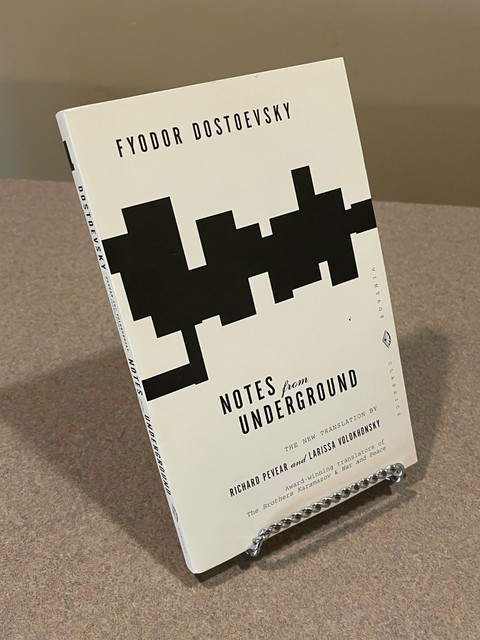
Notes from Underground — trans. Richard Pevear and Larissa Volokhonsky (Vintage Classics)
The most-recommended modern translation, and the one that stays closest to the shape of the Russian. Pevear and Volokhonsky preserve the italics, the dashes and the self-interrupting rhythm rather than smoothing them into idiomatic English, which makes Part One pulse the way it is supposed to. The cost is a slight foreignness in the prose that some readers find deliberate and others find stilted.
- Pevear and Volokhonsky translation, Vintage Classics
- Preserves Dostoevsky’s italics, dashes and broken syntax
- Introduction by Richard Pevear
- Widely stocked and inexpensive
- Closest to the rhythm and punctuation of the original
- Part One is exceptional in this version
- Easy to find anywhere
- The deliberate foreignness divides readers sharply
- Not the smoothest first read in English
- P&V have vocal detractors — read the first page before committing

Notes from Underground — trans. Michael R. Katz (Norton Critical Edition)
The student edition, and the best value on this list if you want to understand the book rather than only read it. The Norton Critical format surrounds a clear, readable translation with sources, contemporary responses and critical essays — which matters here more than with most novels, because Part One is arguing with specific books that nobody now reads. Katz’s prose is plain and American and gets out of the way.
- Michael R. Katz translation, Norton Critical Edition
- Extensive critical apparatus and contemporary sources
- Backgrounds section explaining what Part One is arguing against
- Standard text in many university courses
- By far the most helpful edition for a first reader
- The apparatus explains references the novel assumes you know
- Clear, unfussy translation
- Bulkier and pricier than a plain paperback
- Plain prose loses some of the narrator’s strangeness
- More apparatus than a casual reader wants

Notes from Underground — trans. Kirsten Lodge (Broadview Editions)
The other strong scholarly edition, and arguably the better-supplied one. Lodge’s 2014 translation is clear and modern, and the edition includes translated supplementary material from Fourier, Nekrasov and Chernyshevsky — the writers the Underground Man is actually attacking. Reading Chernyshevsky’s utopianism alongside the novel is what makes Part One stop being abstract.
- Kirsten Lodge translation, 2014, Broadview
- Translated appendices from Fourier, Nekrasov and Chernyshevsky
- Clear, modern English prose
- Full scholarly apparatus
- The best supplementary material of any edition here
- Clear prose that reads easily
- Makes Part One’s argument legible for the first time for many readers
- Harder to find in shops than the Penguin or Vintage editions
- Broadview pricing is above a mass-market paperback
- Newer, so fewer second-hand copies about

Notes from Underground — trans. Ronald Wilks (Penguin Classics)
The most natural-sounding English on this list. Wilks’s Underground Man is caustic and immediately recognisable, with none of the slight strangeness of the Pevear and Volokhonsky method, and the prose moves quickly. The pick if you have bounced off a more literal translation and want to actually finish the book this time.
- Ronald Wilks translation, Penguin Classics
- Fluent, native-sounding English
- Standard Penguin introduction and notes
- Inexpensive paperback
- The easiest version to read straight through
- Sharp, believable narrative voice
- Cheap and widely available
- Smooths some of the deliberately broken syntax of Part One
- Less useful apparatus than the critical editions
Notes from Underground — trans. Jessie Coulson (Penguin Classics)
The older Penguin translation, and a good one — the opening pages in particular are widely regarded as among the best-handled in English. Coulson’s earlier Dostoevsky work has been criticised for sounding translated, but this text is a stronger showing. Worth comparing directly against Wilks if you are choosing between the two Penguin options.
- Jessie Coulson translation, Penguin Classics
- British English register
- Long-established standard edition
- Commonly found second-hand
- Strong handling of the opening pages
- Plentiful and cheap used
- Restrained, unfussy British prose
- Coulson’s Dostoevsky can read stiffly in places
- Superseded in Penguin’s own catalogue by Wilks
- Dated register for some readers
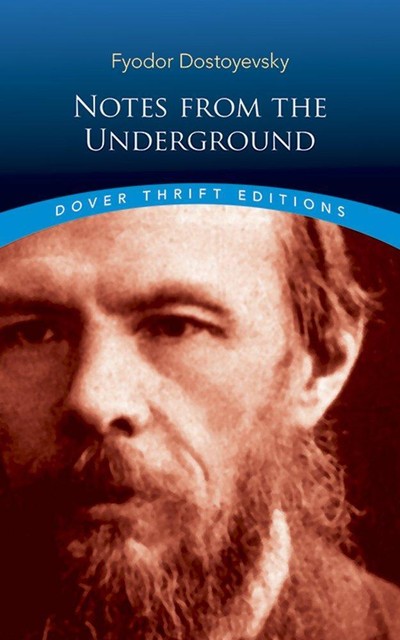
Notes from the Underground — trans. Constance Garnett (Dover Thrift and free ebook)
The historical default, out of copyright, and therefore free — Project Gutenberg has it, and Dover print it for a couple of dollars. Garnett made Russian writers sound like Edwardian Englishmen, which is either a charming period artefact or a serious distortion depending on who you ask. Either way, it is the version that introduced Dostoevsky to the English-speaking world and it costs nothing to sample.
- Constance Garnett translation, public domain
- Free as an ebook; Dover Thrift print edition is very cheap
- Edwardian English register
- The translation most quoted in older criticism
- Free, so there is no reason not to compare it
- Historically the most influential English Dostoevsky
- Dover print edition costs almost nothing
- Genuinely dated, and inaccurate in places
- Smooths Dostoevsky’s roughness into polite prose
- No notes or apparatus in the cheap editions
Notes from the Underground — trans. Hugh Aplin (Hesperus Press)
A 2006 translation published by Hesperus with a foreword by Will Self, which is a better reason to buy it than it sounds — Self is a novelist whose own prose owes something to this book, and his introduction is a reading rather than a summary. The translation itself is modern and readable. A good choice if the critical editions feel like homework.
- Hugh Aplin translation, Hesperus Press, 2006
- Foreword by Will Self
- Modern, readable English
- Slim, well-made paperback
- Will Self’s foreword is genuinely worth reading
- Readable modern prose without a scholarly apparatus
- Attractive physical edition
- Less widely distributed than the Penguin or Vintage editions
- Minimal notes
- Can be hard to find new
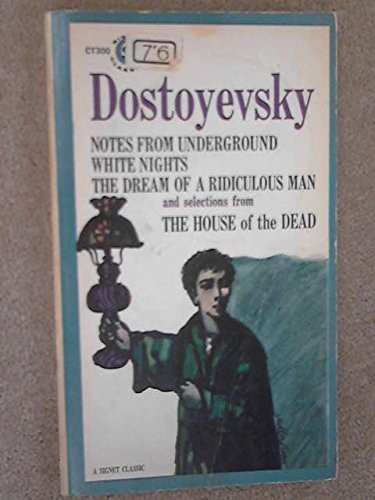
Notes from Underground — trans. Andrew R. MacAndrew (Signet Classics)
The cheap American mass-market edition that a great many people first read this book in. MacAndrew’s English is plain and direct, the volume is pocket-sized and it usually costs less than a coffee. No apparatus to speak of, which is the trade — this is the edition to carry about and annotate, not the one to study from.
- Andrew R. MacAndrew translation, Signet Classics
- Plain, direct American English
- Mass-market paperback format
- Often bundled with other Dostoevsky short works
- Cheapest print option after the Dover Garnett
- Genuinely readable, unfussy prose
- Small enough to carry anywhere
- Almost no notes or context
- Mass-market paper and binding will not last
- Flattens the stylistic oddity of Part One

Notes from the Underground — trans. Jane Kentish (Oxford World’s Classics)
Oxford’s edition, usually paired with The Gambler in one volume, which makes it the best value here if you want two Dostoevsky works rather than one. Oxford World’s Classics notes are consistently excellent and less overwhelming than a Norton Critical apparatus — a sensible middle ground between a bare paperback and a full scholarly edition.
- Jane Kentish translation, Oxford World’s Classics
- Commonly paired with The Gambler in one volume
- Oxford’s standard explanatory notes and introduction
- Good paper and binding for the price
- Two works in one volume — strong value
- Notes are thorough without being a textbook
- Well-made paperback
- You are buying The Gambler whether you want it or not
- Less discussed than P&V or Katz, so fewer opinions to check against
- Introduction contains plot discussion — read it afterwards
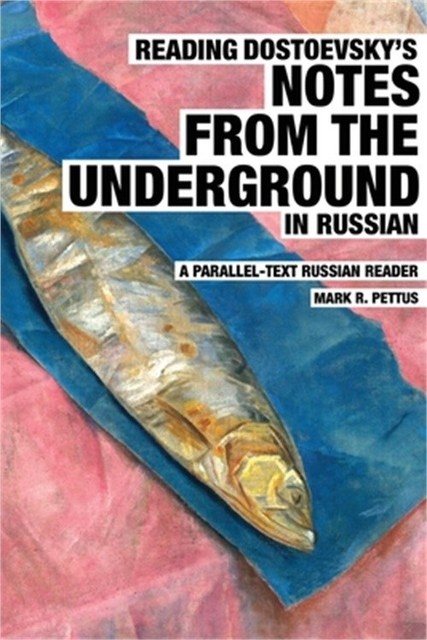
Записки из подполья — Russian original or dual-language edition
For anyone with any Russian at all, and more useful than it sounds even at a beginner’s level. Dual-language editions put the Russian and English on facing pages, so when a translation choice looks strange you can go and look at what it is a choice about — злой in the second sentence being the obvious first stop. The original is also public domain and free.
- Russian original, public domain and freely available
- Dual-language print editions with facing-page English
- Useful for checking specific disputed passages
- Also sold as a graded reader for learners
- Settles arguments about specific word choices
- Free in its plain Russian form
- A genuinely good text for an intermediate learner — short and modern
- Needs at least some Russian to be worth anything
- Nineteenth-century vocabulary is a step up for learners
- Dual-language print editions vary a lot in quality
Buying tips
- Read the first three sentences in any edition before buying. The word translated as spiteful, wicked, mean or angry tells you the whole translator’s approach in ten seconds.
- Judge Part One and Part Two separately. They are a monologue and a story, and few translators are equally good at both.
- The book is short and cheap. Buying two translations is a reasonable thing to do here, and the Garnett is free.
- Buy a critical edition if it is your first read. Part One argues with specific 1860s writers, and without notes that argument is invisible.
- Read the introduction last. Most editions discuss the plot of Part Two in the opening pages.
- Pevear and Volokhonsky are the most literal and the most divisive. Sample them rather than taking anyone’s word for it.
- The Oxford edition bundles The Gambler, so check you want a second novel before comparing it on price alone.
- Free ebooks are Garnett unless the listing says otherwise. That is fine for a first look and not what you want for study.
As an Amazon Associate and eBay Partner, toptenpick.com earns from qualifying purchases. Prices and availability are subject to change.