

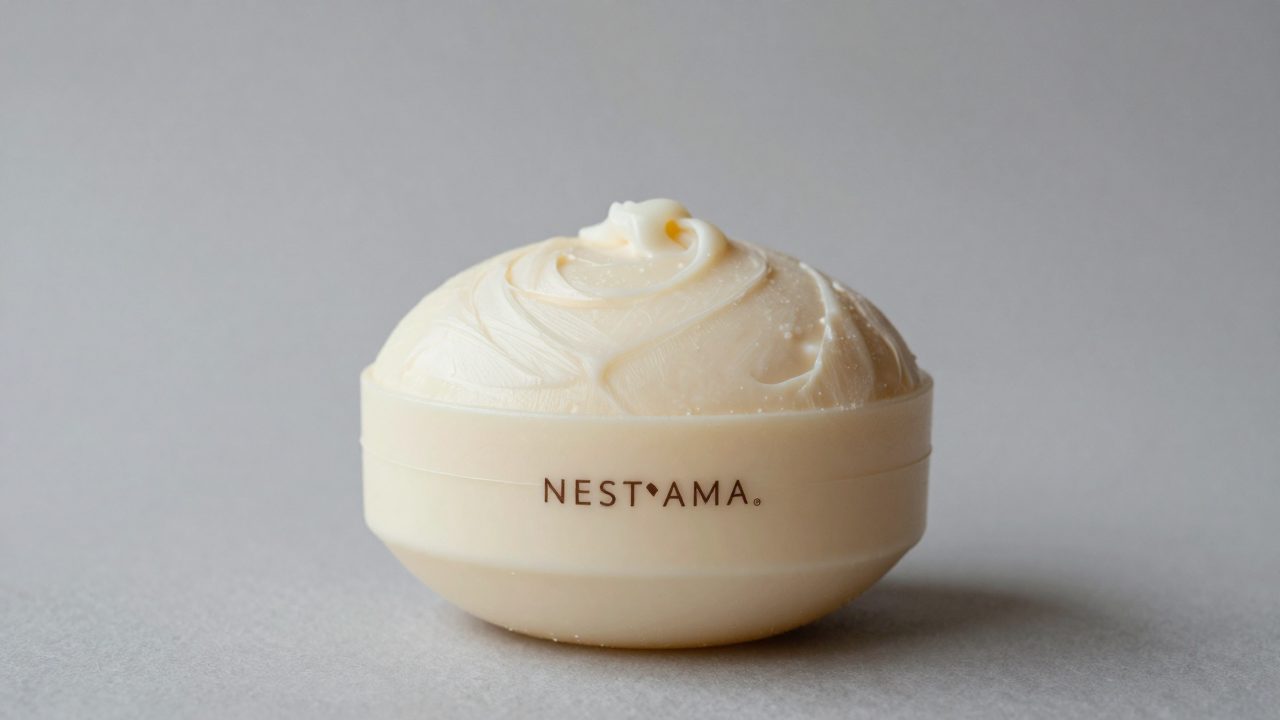
A search for ‘NEST Mama body butter’ is specific enough that it should not be padded into a generic list of pregnancy products or an invented brand range. The responsible way to approach a named body-butter query is to identify the exact item on the pack, inspect its size and ingredients, and decide whether it is an authentic, sealed personal-care product. Body butter is a cosmetic moisturiser. It should not be represented as preventing, treating or curing skin conditions, nor should a product name be used to make claims about pregnancy.
Confirm the product identity first
Begin with the full brand name, the exact product name, the net contents and the product category printed on the container. ‘NEST’ is used by more than one business and ‘mama butter’ can be confused with similarly named products. A retailer title, a social-media caption or a search-result image is not a reliable substitute for the label. Compare the front and back photographs, including the jar shape, closure, scent description and volume. If the item is described as a body butter in one place and as a lotion, balm or oil in another, ask the seller for a photograph of the current stock before ordering.
Size should be copied exactly from the pack: grams, ounces and millilitres are not automatically interchangeable. Cosmetics are commonly listed by mass or volume depending on texture and market. Do not create a price-per-unit comparison until the quantity, currency and whether shipping is included are clear. A discount marketplace image may be old, may show a different size, or may include a multipack. The only useful comparison is between the same current size and formula.
How to read an INCI ingredients list
Cosmetic ingredients are normally listed using International Nomenclature of Cosmetic Ingredients, often called INCI. The order generally gives a practical indication of what is present in greater and lesser amounts, although it is not a recipe and does not reveal exact percentages. A body butter may contain water, plant oils, butters, humectants, fatty alcohols, emulsifiers, preservatives, fragrance and colourants. The function of an ingredient matters more than a romantic marketing word on the front label.
Look for the complete, current INCI list on the jar or the maker’s official product page. Avoid relying on a reseller’s shortened ‘key ingredients’ summary. Fragrance can be shown as parfum or fragrance, while individual fragrance allergens may be listed separately where required. People who know they react to a particular fragrance component or botanical should check the current label, not an old review. ‘Unscented’ and ‘fragrance-free’ are not always used with the same precision by every seller, so the INCI list remains the reference point.
Plant-derived oils and butters can make a rich texture, but they are not a guarantee that every user will tolerate the formula. Patch testing can help identify a personal reaction, but it cannot prove universal safety. Follow the manufacturer’s directions, avoid use on broken or irritated skin unless the label specifically directs otherwise, and stop use if irritation occurs. Seek professional advice for persistent, severe or widespread skin symptoms rather than escalating cosmetic use.
Authenticity and condition checks
Buy from the brand, an authorised retailer or a seller that can identify the supply chain. Inspect the outer packaging, safety seal, batch code and best-before or period-after-opening symbol where present. A batch code is useful if a product needs to be reported or checked with the manufacturer; it is not a promise that a listing is genuine by itself. Avoid jars with broken seals, leakage, an unexpected odour, separated texture, damaged labels or no ingredient panel. Body butter can soften in warmth and firm in cool conditions, but visible contamination or a changed smell is a reason not to use it.
Online photos can be misleading because packaging changes. Ask for current photographs that show the base label and batch area, not only a polished front image. Be cautious with offers that omit the size, use stock photos only, make unusually broad therapeutic promises or cannot identify the responsible seller. A genuine seller should be able to state the net contents, country or responsible business details, return policy for unopened cosmetics and the exact formula printed on stock.
Using a body butter sensibly
Apply a small amount to intact skin and observe the label’s directions. The right amount depends on the product’s texture, climate and personal preference; more product is not inherently better. Use clean, dry hands or a clean spatula so water and debris are not introduced into a jar. Close the lid promptly and store the product as its label directs, away from direct heat and sunlight. Do not share a jar if hygiene or infection is a concern.
A body butter is usually chosen for feel, scent, texture and ordinary cosmetic moisturising. It is not a sunscreen unless its label supplies the required sun-protection information, and it is not a substitute for medical assessment. If the intended user has a known fragrance allergy, eczema, a skin disorder, is recovering from a procedure or has a baby or child in mind, an ingredient-aware clinician or pharmacist is better placed to advise than a product ranking.
What to keep before discarding the box
- Photograph the front, full INCI list, net contents and batch code.
- Keep the seller invoice and the original listing while the return period is open.
- Record the date opened and follow any period-after-opening symbol.
- Check every replacement purchase; formulas and pack sizes can change.
- Report suspected defects or reactions with the product and batch details available.
This approach keeps a named-product page useful without inventing alternatives or promising outcomes the product cannot establish. The exact NEST Mama item and its own current label are the source of truth.