

As an Amazon Associate and eBay Partner, toptenpick.com earns from qualifying purchases. Prices and availability are subject to change.
The M50 has a 3.5mm microphone input, but nothing to monitor it with — there’s no headphone jack anywhere on the body, on either the original M50 or the Mark II. That single omission changes how to shop for a microphone more than any spec sheet does: whatever gets recorded is recorded blind. There’s no way to catch a rattling lens cap, a clipped peak, or a dead mic mid-take by listening while it happens; the only real check is playing back a test clip before committing to the real one.
The input itself is also weaker than it looks. It supplies a small amount of plug-in power through the mic jack — confirmed on Canon’s own community forum — enough for small pre-polarized condensers like the Rode VideoMicro or Movo VXR10-PRO, but not enough to run a larger professional shotgun. Mics in that class, the Sennheiser MKE 400 and Deity V-Mic D3 Pro among them, carry their own AA or lithium battery for exactly this reason. Before buying, check which camp a microphone falls into: “battery-free” is a real selling point on this camera, not a footnote.
The other well-documented M50 limit is clip length: 29 minutes 59 seconds at standard frame rates, 7 minutes 29 seconds at high frame rates, the same industry-wide cutoff most stills-first cameras inherited. It isn’t a flaw specific to a cheap microphone or a slow card, and no mic on this list changes it. What it does mean is that anyone planning a long interview or podcast-style recording should think about where the audio lives if the video clip cuts mid-sentence — a wireless system that keeps recording onboard, like the Rode Wireless GO II, doesn’t lose the conversation just because the camera’s clip did.
None of this rules anything out; it just narrows the decision to two real questions. First: does the mic run on the M50’s own weak power, or does it carry its own? Second: how much does recording blind actually matter for the kind of video being made — a run-and-gun vlog tolerates a missed level far better than a scripted voiceover does. The picks below cover both answers, from sub-$50 battery-free shotguns to a wireless system built around the fact that the M50 can’t monitor anything at all.
| # | Product | Price | Where to buy |
|---|---|---|---|
| 1 | Rode VideoMicro II | $70–$85 | Amazon · eBay |
| 2 | Rode VideoMic GO II | $90–$105 | Amazon · eBay |
| 3 | Sennheiser MKE 200 | $55–$100 | Amazon · eBay |
| 4 | Sennheiser MKE 400 | $190–$230 | Amazon · eBay |
| 5 | Movo VXR10-PRO | $45–$55 | Amazon · eBay |
| 6 | Boya BY-MM1 | $40–$55 | Amazon · eBay |
| 7 | Deity V-Mic D3 Pro | $130–$180 | Amazon · eBay |
| 8 | Rode Wireless GO II | $190–$220 | Amazon · eBay |
| 9 | Rode Lavalier GO | $70–$85 | Amazon · eBay |
| 10 | Boya BY-M1 | $15–$35 | Amazon · eBay |
The picks, in detail

Rode VideoMicro II
The default recommendation for a first M50 microphone: a true shotgun capsule in a body small enough to disappear on the hot shoe, and it runs entirely on the M50’s plug-in power with no battery to manage. Output is noticeably tighter and less noisy than the cheapest budget shotguns, without stepping up to Rode’s larger, pricier models.
- 80mm length, 39g including shock mount
- Supercardioid capsule with annular line tube design
- Powered entirely by camera plug-in power, no battery
- Includes foam and furry windshields, Helix shock mount
- No battery to forget or replace
- Noticeably quieter self-noise than budget alternatives
- Compact enough to leave mounted permanently
- Fixed 3.5mm TRS cable, no USB or digital output
- No gain control on the mic itself, all gain comes from the M50’s menu
- No onboard recording backup
Rode VideoMic GO II
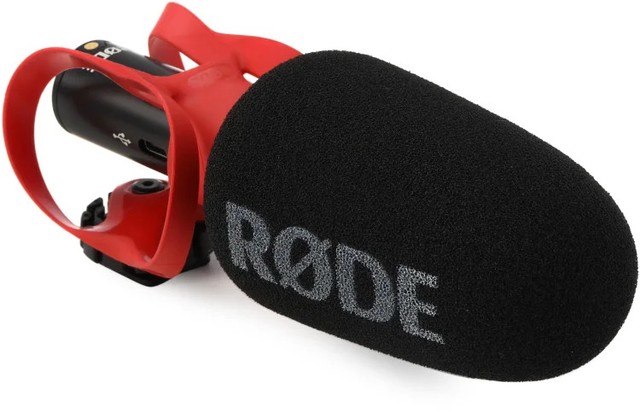
A larger shotgun than the VideoMicro II with more output headroom, plus a USB-C connection for using the same mic on a laptop or phone between shoots. Like the VideoMicro II it needs no battery on the M50, drawing power from the same 3.5mm jack, which keeps setup down to plugging in and hitting record.
- 89g, supercardioid pre-polarized condenser
- 3.5mm TRS/TRRS analog output plus USB-C digital output
- No battery required, powered by plug-in power or USB bus power
- MFi-certified for Lightning-equipped iOS devices
- More output than the VideoMicro II for louder environments
- Doubles as a USB mic for a computer or phone
- Still no battery to manage on the M50
- Larger and heavier than the VideoMicro II on a small body
- USB output isn’t usable at the same time as the camera connection
- Costs more for headroom a quiet room may not need

Sennheiser MKE 200
A compact shotgun built specifically for cameras with weak mic-input power, drawing current directly from the body with no battery at all. Sennheiser’s own spec lists a 2-10V input range, comfortably inside what the M50 supplies, and the mic ships with both TRS and TRRS cables so it moves between the camera and a phone without buying a second cable.
- 48g, 69x60x39mm, supercardioid pre-polarized condenser
- Frequency response 40-20,000Hz, max SPL 120dB
- Battery-free, powered by camera at 2-10V input
- Ships with both 3.5mm TRS and TRRS cables
- Designed around exactly the kind of weak mic input the M50 has
- Comes with both cable types for camera and phone use
- Compact and light on a small mirrorless body
- Lower max SPL than the larger MKE 400, so it saturates sooner in loud settings
- No gain or filter controls on the mic itself
- Street price varies widely by retailer
Sennheiser MKE 400
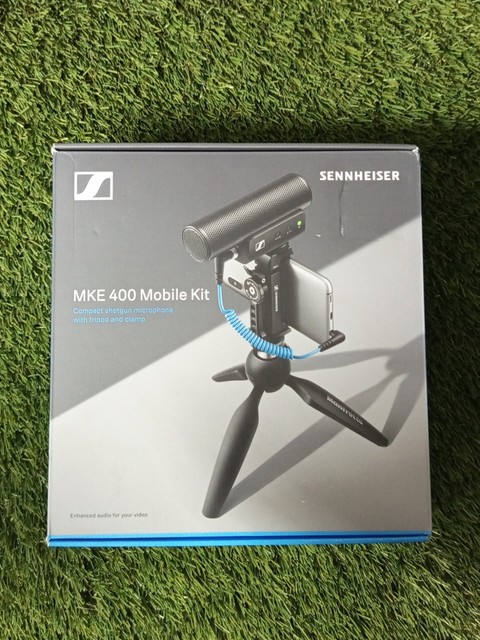
A larger, louder shotgun that runs on its own AAA battery rather than the M50’s plug-in power, which sidesteps any concern about whether the camera can drive it. That independence is the appeal here: output stays consistent regardless of what the mic input can supply, at the cost of one more battery to keep charged.
- 130x21x62mm, supercardioid condenser, max SPL 132dB
- Powered by AAA battery, rated over 100 hours
- Frequency response 40-20,000Hz
- 3.5mm stereo mini-jack output
- Own battery means it’s never limited by the M50’s weak plug-in power
- Higher max SPL than compact camera-powered shotguns
- Long battery life rated over 100 hours
- Battery can die mid-shoot with no camera-side warning since there’s no monitoring
- Larger and heavier than the MKE 200 or VideoMicro II
- Costs roughly double the compact battery-free options

Movo VXR10-PRO
A budget supercardioid shotgun that, like the Rode and Sennheiser compacts, needs no battery and draws entirely from the M50’s plug-in power. It won’t match those two on self-noise, but for scripted voiceover or vlogging in a controlled room it’s a significant step up from the camera’s built-in mic for a small outlay.
- Supercardioid capsule, frequency response 20Hz-18kHz
- Sensitivity -36dB, signal-to-noise ratio 78dB
- 1 x 3.9 inches, 2.1oz, Rycote Lyre shock mount included
- Battery-free, powered by camera
- Lowest price of the battery-free shotguns here
- Rycote shock mount is a genuine step up from foam mounts at this price
- No battery logistics to manage
- Higher self-noise than the Rode or Sennheiser compacts
- Plastic housing feels less durable over years of use
- No onboard gain or filter controls

Boya BY-MM1
The cheapest usable shotgun in this list and a reasonable way to find out whether an external mic is worth the upgrade before spending more. It needs no battery, ships with both TRS and TRRS cables, and its metal shock mount is sturdier than the price suggests, with the tradeoff being a narrower frequency response than the pricier options.
- 86g, frequency response 35-18kHz plus or minus 3dB
- Signal-to-noise ratio 76dB SPL
- Battery-free, powered by camera
- TRS and TRRS output cables both included
- Lowest price of any usable shotgun here
- Metal shock mount construction at a budget price
- Both cable types included for camera and phone use
- Narrower frequency response than the Rode or Sennheiser options
- Audibly noisier in quiet rooms than pricier compacts
- No gain control, entirely dependent on camera-set levels

Deity V-Mic D3 Pro
The one shotgun here with real onboard controls: a stepless analog gain dial and a selectable low-cut filter, both useful precisely because the M50 offers no way to check levels while recording. It runs on its own rechargeable lithium battery rather than the camera’s plug-in power, so output stays consistent regardless of what the M50’s jack can supply.
- Built-in 320mAh lithium battery, rated up to 51 hours
- Stepless analog gain dial, up to 20dB
- Selectable low-cut filter at 75Hz or 150Hz
- Auto-adjusting 3.5mm TRRS output, LED status/power indicator
- Onboard gain dial helps set levels correctly before a blind recording
- Own battery means consistent output regardless of the M50’s weak input power
- Low-cut filter cuts handling and wind rumble at the source
- Costs several times more than a basic battery-free shotgun
- One more battery to charge and monitor on shoot day
- No headphone or level-metering output despite the extra controls
Rode Wireless GO II
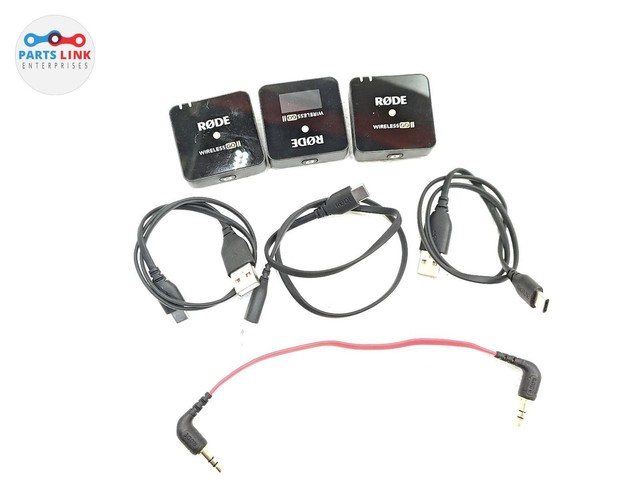
A clip-on wireless system rather than a shotgun, and the most useful answer here to the M50’s lack of monitoring: the receiver has its own screen showing live input level, so levels can be checked by eye even with no headphone jack to check by ear. It also records a backup copy onboard, which survives past the camera’s 30-minute clip limit.
- Built-in rechargeable battery, about 7 hours per charge
- 3.5mm TRS analog output plus USB-C digital output
- Onboard backup recording on receiver and transmitter
- Range up to 200m line of sight, 24-bit/48kHz digital audio
- Receiver screen shows real-time level, a visual substitute for the missing headphone jack
- Onboard backup recording isn’t cut off by the camera’s 29:59 clip limit
- Works untethered for interview-style or moving subjects
- Significantly more expensive than any shotgun on this list
- Battery life caps a single charge around 7 hours
- Overkill for a stationary vlogging setup where a shotgun would do

Rode Lavalier GO
A wired clip-on mic designed as a companion to Rode’s Wireless GO transmitters, but its plug-in power spec also lets it run straight into the M50’s mic jack for a simple, low-profile talking-head setup. Proximity to the mouth beats a shotgun at this price point, though it runs quieter plugged directly into the camera than through a wireless transmitter.
- Omnidirectional condenser, frequency range 20Hz-20kHz
- 3.9 foot Kevlar-reinforced cable, gold-plated 3.5mm TRS connector
- Powered by camera plug-in power
- Includes mounting clip, foam pop filter, carry pouch
- Clip-on proximity beats a hot-shoe shotgun for dialogue clarity
- No battery required when run directly into the M50
- Durable cable built for daily clip-on use
- Quieter direct into the M50 than through a Wireless GO transmitter it was designed for
- Visible clip and cable run to the camera unless routed under clothing
- Single mic only, no second channel for interviews without buying another

Boya BY-M1
The entry point for clip-on audio: a long 20-foot cable, an omnidirectional capsule, and a physical switch between Smartphone and Camera power modes. In Camera mode it runs off its own LR44 battery rather than the M50’s plug-in power, which is exactly the workaround needed on a body whose mic input can’t be relied on for larger loads.
- 20 foot (6m) cable, 3.5mm TRRS connector
- Omnidirectional condenser, frequency range 65Hz-18kHz
- Camera/Smartphone power switch, Camera mode uses one LR44 battery
- Includes clip, foam windscreen, quarter-inch adapter
- Camera-mode battery switch sidesteps the M50’s weak plug-in power entirely
- Very long cable useful for a tripod-mounted M50 and a moving subject
- Lowest price of any mic on this list
- Omnidirectional pickup grabs more room noise than a shotgun
- LR44 battery is easy to forget until it’s already dead mid-shoot
- Basic clip and windscreen compared to purpose-built lav kits
Buying tips
- Record a 10-second test clip and play it back before every session — it’s the only way to catch a bad connection since there’s no headphone monitoring on this camera.
- Check whether a shotgun mic needs its own battery before buying: the M50’s plug-in power comfortably runs small mics like the VideoMicro II but can leave a larger shotgun sounding weak or silent.
- Set the M50’s audio recording level to Manual in the menu rather than Auto for anything scripted; auto-gain rides up in silence and adds audible noise that can’t be heard until playback.
- For interviews longer than 20 minutes, plan around the 29:59 recording cap by either starting a fresh clip early or recording audio separately on a device, such as a wireless receiver with onboard storage, that doesn’t share the camera’s cutoff.
- A 3.5mm TRRS mic works on the M50’s TRS input, but a true TRS-only mic (most dedicated shotguns) will not work on a phone’s TRRS jack — check which cable ships in the box if the mic will ever be shared with a phone.
- Mount any shotgun in the M50’s hot shoe rather than resting it on top of the camera, so its shock mount actually isolates handling and autofocus-motor noise from the body.
- In warm rooms or direct sun, expect the M50 to run hotter during long 4K sessions; a lighter shotgun that doesn’t need a battery adds no extra heat source next to the body.
- For talking-head video with the camera on a tripod, a clip-on lavalier close to the mouth will usually out-perform a hot-shoe shotgun at the same price point — proximity matters more than mic type at this budget.
As an Amazon Associate and eBay Partner, toptenpick.com earns from qualifying purchases. Prices and availability are subject to change.