

As an Amazon Associate and eBay Partner, toptenpick.com earns from qualifying purchases. Prices and availability are subject to change.
Almost every guide to magnetising a speedcube frames the decision as a strength question: N35 for a light feel, N42 for something firmer, N52 if you want the cube to snap hard. That framing is not exactly wrong, but it hides the thing that actually determines how the finished cube feels — the gap between the two magnets when a layer reaches alignment. Magnetic attraction between two small discs falls away extremely steeply with distance at these scales. Move a pair of magnets half a millimetre further apart and you lose far more force than you would gain by stepping up two grades of neodymium. In practical terms: a sloppy glue job with strong magnets produces a weaker, less consistent cube than a careful glue job with mild ones.
That has two consequences worth knowing before you spend anything. First, the glue and the placement matter more than the magnet grade, so budget your attention accordingly — a thick pillow of glue under a magnet is not a minor cosmetic flaw, it is the single biggest variable in the build. Second, buying the strongest magnets you can find is an actively bad idea rather than merely an expensive one. Strong magnets do not make you faster. They resist the wide overturns that finger-tricks depend on, they make cube rotations feel sluggish, and they punish the slightly imprecise turning that speed actually requires. Most experienced cubers converge on something mild.
There is a third thing, and it is the most useful advice in this article: factory-magnetised cubes got very good and very cheap. A magnetic MoYu or GAN under thirty dollars will out-turn most hand-magnetised budget cubes, because the factory sets its magnets into moulded wells at a fixed depth rather than into a hand-dug pocket of glue. DIY magnetising still makes complete sense for a cube you already love, for a puzzle nobody sells magnetised, or because the build itself is the fun part. It rarely makes sense purely to save money on a 3×3.
A standard 3×3 build takes 48 magnets — three in each of the eight corners and two in each of the twelve edges — so buy at least 50 and expect to lose one or two to the carpet.
| # | Product | Price | Where to buy |
|---|---|---|---|
| 1 | Cubicle Labs 3×3 Magnet Kit (Strong) | $10-$18 | Amazon |
| 2 | Cubicle Labs 3×3 Magnet Kit (Regular) | $9-$16 | Amazon |
| 3 | Bulk N35 Neodymium Discs, 4 x 2 mm | $8-$16 per 100 | Amazon · eBay |
| 4 | Bulk N42 Neodymium Discs, 3 x 1.5 mm | $9-$18 per 100 | Amazon · eBay |
| 5 | Core Magnet Upgrade Kit | $6-$20 | Amazon |
| 6 | Plastic-Safe Cyanoacrylate Gel Glue | $5-$12 | Amazon |
| 7 | Cyanoacrylate Debonder | $5-$12 | Amazon · eBay |
| 8 | Fine Curved Non-Magnetic Tweezers | $6-$20 | Amazon · eBay |
| 9 | Speedcube Lubricant Set | $10-$25 | Amazon · eBay |
| 10 | MoYu RS3M Factory-Magnetised 3×3 | $12-$30 | Amazon · eBay |
The picks, in detail
Cubicle Labs 3×3 Magnet Kit (Strong)
The kit most people should start with, and the reason is not the magnets — it is that everything arrives matched. Fifty 5×1 mm N48 discs, polyurethane glue in a syringe, and a count that already allows for the two you will drop. The 5×1 format is the interesting choice: a wide, thin disc sits flush in a shallow pocket rather than standing proud, which keeps the gap at alignment small and consistent. That geometry does more for the finished feel than the N48 rating does. Despite the name it is a moderate feel, not a punishing one.
- 50 x N48 neodymium discs, 5 x 1 mm
- 1.5 mL polyurethane glue in a syringe
- Enough magnets for a full 48-magnet 3×3 build
- Wide, thin disc profile sits flush
- Glue and magnets chosen to work together
- Spare magnets included as standard
- Thin profile keeps the alignment gap small
- Costs several times what loose bulk magnets do
- Polyurethane glue has a working time you have to respect
Cubicle Labs 3×3 Magnet Kit (Regular)
The same kit with a milder magnet, and for a lot of cubers it is the better purchase. A regular-strength build gives you a definite, reassuring click into alignment without fighting your hands during rotations or wide overturns. If you have never magnetised a cube before, this is the sensible first attempt: it is far easier to wish a cube were slightly stronger than to undo 48 magnets you set too firm. Same glue, same count, same geometry as the strong kit — only the pull changes.
- 50 neodymium discs at a milder grade
- Matched polyurethane glue included
- Full 48-magnet 3×3 coverage
- Same disc geometry as the strong kit
- Far more forgiving of imprecise turning
- Does not slow down cube rotations
- The strength most experienced cubers settle on
- May feel underwhelming to anyone expecting a hard snap
- Same premium over bulk magnets as the strong kit
Bulk N35 Neodymium Discs, 4 x 2 mm
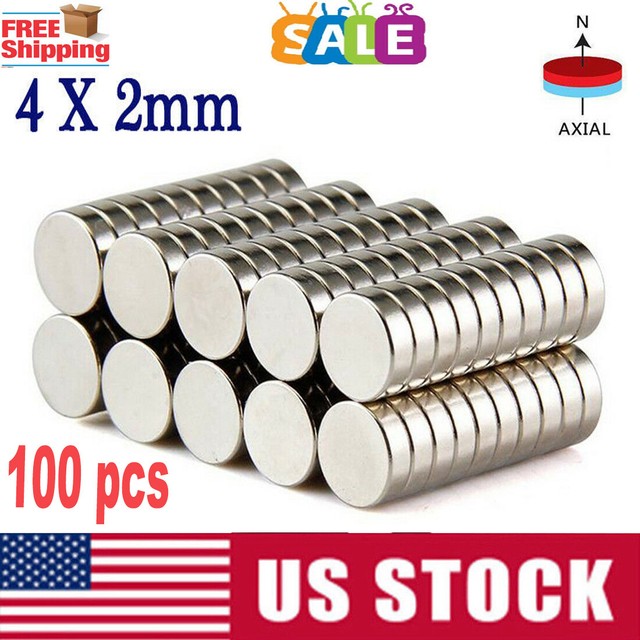
The cheap, proven route. N35 in 4×2 mm is the size and grade a lot of the original DIY magnetising community landed on, and it gives a subtle, pleasant feel rather than a hard lock. Buying loose means you get a hundred or more for the price of a single branded kit, which is the right move if you plan to do several cubes or if you are magnetising a bigger puzzle that needs far more than 48. The 2 mm thickness is the thing to watch — it is a taller magnet, so the pocket needs to be deep enough that it does not stand proud.
- N35 grade, 4 mm diameter x 2 mm thick
- Sold in packs of 100 and up
- Mild, subtle magnetic feel
- Nickel-plated finish
- By far the cheapest per magnet
- Enough spares for several cubes or a large puzzle
- A well-tested size and grade for 3×3 builds
- No glue included, so you buy that separately
- 2 mm height needs a deeper pocket than a thin disc

Bulk N42 Neodymium Discs, 3 x 1.5 mm
A firmer feel in a smaller package, and the compromise a lot of builders prefer. Stepping up to N42 buys you more pull, while the smaller 3 mm footprint and 1.5 mm height make the magnet easier to seat cleanly in a shallow pocket. Remember what the intro said: the smaller magnet sitting flush will often beat a larger, stronger magnet sitting on a bed of glue, because the gap at alignment is what the feel is made of. Handle these carefully — smaller magnets are much easier to lose and they clump viciously.
- N42 grade, 3 mm diameter x 1.5 mm thick
- Firmer pull than N35 at a smaller size
- Packs of 100 or 200
- Low profile seats flush in shallow pockets
- Stronger feel without needing a deeper pocket
- Small footprint suits cubes with tight internals
- Cheap enough to experiment with
- Fiddly to handle and very easy to lose
- Clump together hard — separating them takes patience
Core Magnet Upgrade Kit
A completely different mechanism and a genuinely different feel. Core magnets sit between the centre pieces and the core rather than between corners and edges, so instead of pulling a layer into alignment they add a springy resistance through the whole turn. Modern MoYu and GAN flagships ship with these or accept them as an upgrade, and they stack with conventional corner-edge magnets rather than replacing them. It is the closest thing to a genuine step change available to an existing cube, and it is a much shorter job than a 48-magnet build.
- Magnets seat between centres and the core
- Compatible with specific MoYu and GAN models
- Adds resistance through the turn, not just at alignment
- Often includes multiple strength options
- Distinctly different feel from corner-edge magnets
- Quick to fit compared with a full build
- Stacks with existing magnetisation
- Model-specific — check compatibility before buying
- Not a substitute for corner-edge magnets
Plastic-Safe Cyanoacrylate Gel Glue
Use a gel, not a thin liquid, and check that it is rated safe for ABS. Thin cyanoacrylate wicks into the cube’s moving surfaces through capillary action and will happily glue a piece solid; gel stays where you put it. It is also the right consistency for the job, because you want a thin bed under the magnet rather than a pool around it. Some cubers prefer the polyurethane glue that ships with branded kits for its slightly longer working time, but a good ABS-safe CA gel is easier to buy locally and sets fast enough to keep the build moving.
- Gel consistency, does not run or wick
- Rated safe on ABS plastics
- Precision nozzle or micro-tip applicator
- Sets in seconds, cures fully in minutes
- Stays exactly where it is applied
- Fast enough to work through 48 magnets in one sitting
- Available in any hardware shop
- Fast set punishes hesitation — position before you press
- Fumes can frost dark plastic if you over-apply

Cyanoacrylate Debonder
Buy this at the same time as the glue, not after you need it. Somewhere in a 48-magnet build you will set one crooked, or one will flip polarity as you lower it towards its partner, and the difference between a five-minute fix and a ruined piece is having debonder on the bench. It softens cured cyanoacrylate enough to lift a magnet without gouging the plastic. Apply it sparingly and to the joint only — it is a solvent, and a generous pour on an ABS cube piece is its own kind of disaster.
- Softens cured cyanoacrylate bonds
- Small bottle with a precision applicator
- Works in minutes rather than instantly
- Also removes glue from skin
- Turns a ruined piece into a five-minute correction
- Costs a fraction of a replacement cube
- Useful well beyond cubing
- A solvent — keep it off the wider plastic
- Needs a few minutes to work, so patience is required
Fine Curved Non-Magnetic Tweezers
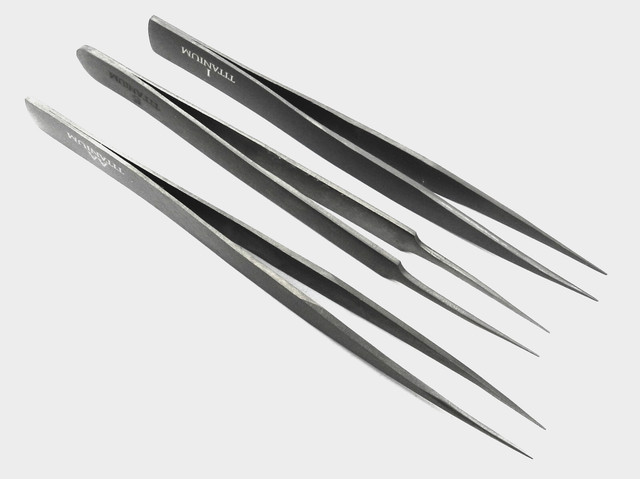
Steel tweezers and neodymium magnets are a miserable combination: the magnet jumps to the tool, flips its polarity as it goes, and sticks to the tip you are trying to release it from. Titanium or plastic tweezers solve the problem completely. Curved tips matter as much as the material, because you are lowering a magnet into a recess and need to see what you are doing. This is a few dollars that removes most of the frustration from the build, and it is the item people most often wish they had bought first.
- Titanium, ceramic or plastic construction
- Curved, fine tips for recessed work
- Anti-static variants available
- Often sold in sets with straight tips
- Magnets do not jump to the tool
- Curved tip keeps the pocket visible
- Cheap and immediately useful
- Plastic tips flex and wear out
- Titanium versions cost noticeably more

Speedcube Lubricant Set
Magnetising changes how a cube feels, and lubricant is how you tune the result rather than living with it. The convention is straightforward: a thicker, heavier silicone on the core and pieces slows and smooths a cube that has become too loose and fast, while a light, thin lubricant speeds up one that feels sluggish. A set covering a few weights lets you compensate for a build that came out firmer than intended without touching a single magnet. Apply little and often — over-lubricating produces a gummy cube that no magnet strength will rescue.
- Multiple silicone weights from light to heavy
- Needle applicators for internal use
- Plastic-safe formulations
- Small bottles that last months
- Tunes the finished feel without redoing the build
- Compensates for magnets that came out too strong
- One set covers several cubes
- Easy to over-apply, which makes things worse
- Needs reapplying every few weeks with heavy use

MoYu RS3M Factory-Magnetised 3×3
Included deliberately, because for a lot of readers it is the honest answer. The RS3M ships with all 48 magnets already set into moulded wells at a fixed, repeatable depth — the precise thing that is hard to achieve by hand — and it costs less than a decent magnet kit plus glue plus tweezers. If your goal is a good magnetic cube, buy this. If your goal is to magnetise the specific cube you already own and love, or a puzzle nobody makes magnetised, the rest of this list is for you. Both are entirely reasonable reasons to be here.
- 48 factory-set magnets in moulded wells
- Dual adjustment for tension and compression
- Stickerless, competition legal
- Available in MagLev and standard versions
- Consistency no hand build reliably matches
- Cheaper than buying magnets, glue and tools
- Adjustable, so the feel is tunable out of the box
- Fixed magnet strength — you cannot choose the grade
- Removes the project, if the project was the point
Buying tips
- The gap, not the grade, sets the feel. Attraction between small discs drops off very steeply over a fraction of a millimetre, so a magnet sitting on a bed of glue is dramatically weaker than the same magnet seated flush. If your finished cube feels limp, the fix is almost never stronger magnets — it is less glue and a deeper, cleaner pocket. Get this right and mild magnets feel excellent.
- Do not buy the strongest magnets available. Strong magnets resist the wide overturns finger-tricks rely on, drag during cube rotations, and punish slightly imprecise turning — which is the kind of turning speed actually produces. Most experienced cubers land somewhere mild. It is far easier to add a core magnet later than to remove 48 magnets that turned out too firm.
- Plan for 48 magnets and buy at least 50. Three in each of the eight corners, two in each of the twelve edges. You will lose one to the carpet and set one crooked. Kits that ship 50 are not being generous, they are being realistic, and bulk packs of 100 cost so little that there is no reason to run the build short.
- Check polarity before every single glue-up. Set the corner magnet, then offer its partner edge magnet up to it in the air and confirm they attract. A magnet glued the wrong way round repels its partner and actively fights alignment, and it is the most common single mistake in a first build. The check costs two seconds; the fix costs debonder and a clean-up.
- Use gel glue, never thin cyanoacrylate. Thin CA wicks along seams by capillary action and will weld a moving piece solid somewhere you cannot see. Gel stays where it is put. If you prefer the longer working time of the polyurethane glue that comes in branded kits, that is a reasonable choice too — the rule is simply that nothing thin and runny goes near a puzzle with moving surfaces.
- Work over a tray, not a table, and keep steel away. Neodymium discs clump into stacks that are genuinely difficult to separate, and they leap several centimetres to any steel tool. A shallow plastic tray contains the mess, non-magnetic tweezers stop the jumping, and moving your steel ruler and scissors off the bench prevents most of the swearing.
- Magnetising a cube you already have is rarely the cheap option. Magnets, glue, debonder and tweezers together usually cost more than a factory-magnetised MoYu or a budget GAN, and the factory sets its magnets more consistently than a hand build. Do it for the puzzle you love, for a size nobody sells magnetised, or because building things is the point — not to save money on a 3×3.
- Give the cube a full cure before you judge it. Cyanoacrylate grabs in seconds but reaches full strength over several minutes to an hour, and a cube turned hard too early can shift a magnet a fraction out of place — which, per the first tip, is exactly the error that matters. Assemble, leave it alone, then lube and tension it before deciding whether the strength was right.
As an Amazon Associate and eBay Partner, toptenpick.com earns from qualifying purchases. Prices and availability are subject to change.