

As an Amazon Associate and eBay Partner, toptenpick.com earns from qualifying purchases. Prices and availability are subject to change.
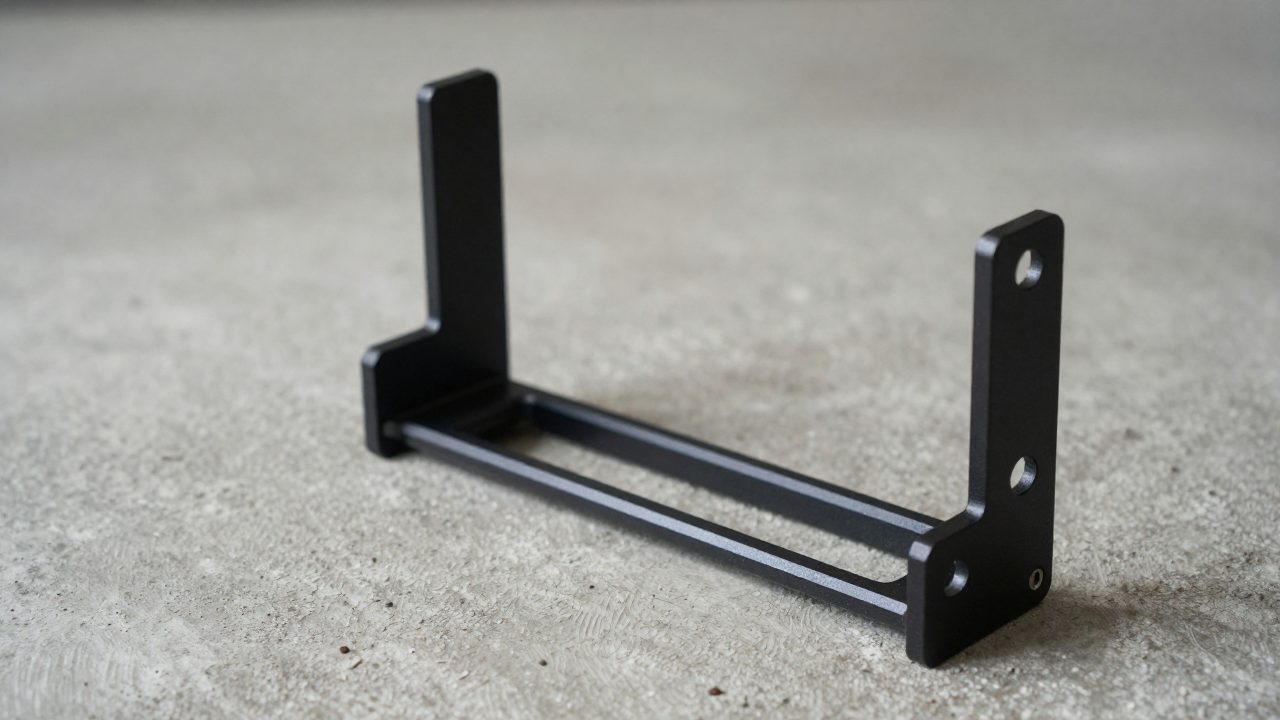
Most people buy an L-bracket to shoot portrait orientation without flopping the ball head over sideways. That is the visible benefit. The reason it actually matters is more interesting, and it explains why a cheap universal bracket is often worse than none.
When you drop a ball head into its side notch to shoot vertically, the camera hangs off the side of the tripod. Its mass is now cantilevered well away from the centre of the support, which does three things: the head is far more likely to creep under load, the whole assembly becomes much more susceptible to vibration, and the optical axis moves off the tripod’s centre — which ruins panoramas, because your rotation point is no longer under the lens. An L-bracket keeps the camera centred and upright in both orientations, so the head stays in its strong position and nothing hangs out sideways.
Which brings us to the specification that eliminates most brackets for an EOS R specifically. The EOS R has its microphone, headphone, HDMI and USB-C ports on the left side of the body — exactly where the vertical arm of an L-bracket sits. A universal bracket, or one designed for a different body, covers them. If you shoot video, use an external monitor, or ever tether, that bracket is unusable and you will find out after buying it. An EOS R-specific bracket has a cutout or a removable, slideable vertical arm that clears the port door and lets it open fully.
Two more things worth checking. The bracket must have an anti-twist flange — a lip that engages the body so the bracket cannot rotate around its single mounting screw under load. And the battery door must remain accessible, which the better designs achieve with a cutout rather than requiring removal.
Almost everything here is Arca-Swiss compatible, which is the near-universal dovetail standard. Check your head takes it. Ten picks below.
| # | Product | Price | Where to buy |
|---|---|---|---|
| 1 | EOS R-Specific L-Bracket with Port Cutout | $50-$180 | Amazon · eBay |
| 2 | L-Bracket with a Sliding Vertical Arm | $70-$200 | Amazon |
| 3 | Modular Two-Piece L-Bracket | $60-$180 | Amazon |
| 4 | Universal Adjustable L-Bracket | $25-$70 | Amazon · eBay |
| 5 | Arca-Swiss Quick-Release Clamp | $40-$150 | Amazon · eBay |
| 6 | Nodal Slide / Panoramic Rail | $50-$200 | Amazon · eBay |
| 7 | Ball Head with an Arca-Compatible Clamp | $100-$400 | Amazon · eBay |
| 8 | Replacement Hex Keys and Mounting Screws | $8-$20 | Amazon |
| 9 | Remote Shutter Release or Intervalometer | $20-$80 | Amazon · eBay |
| 10 | Camera Strap with Arca-Compatible Hardware | $40-$120 | Amazon · eBay |
The picks, in detail

EOS R-Specific L-Bracket with Port Cutout
The correct answer, and the specification to insist on. A bracket designed for the EOS R’s body has the vertical arm shaped around the left-side port cluster so the door opens fully and cables run without fouling. It will also have an anti-twist flange matching the body’s contour, so the bracket cannot rotate on its mounting screw. Machined aluminium, Arca-Swiss dovetails on both faces, and a cutout for the battery door. This is the one to buy and the reason the cheap ones are a false economy.
- Cutout clearing the left-side port cluster
- Anti-twist flange matched to the EOS R body
- Arca-Swiss dovetail on base and vertical arm
- Battery door access retained
- Ports and battery remain fully accessible
- Cannot rotate on its mounting screw
- Keeps the camera centred over the tripod in both orientations
- Body-specific, so it does not transfer to another camera
- Costs more than a universal bracket
L-Bracket with a Sliding Vertical Arm
The more flexible design, and often the better buy. The vertical arm slides outward on a rail, so you can move it away from the body to clear a cable or an articulating screen and then slide it back when you do not need the room. That solves the port problem without permanently giving up the tight, rigid fit. Check how positively the slide locks — a vertical arm that creeps under load defeats the purpose, and this is where cheap implementations fail.
- Vertical arm slides outward on a rail
- Locks in multiple positions
- Clears cables and articulating screens
- Arca-Swiss on both faces
- Clears cables without a permanent compromise
- Works with an articulating screen swung out
- Adapts to different shooting setups
- The slide mechanism is a point of flex
- Cheap slides creep under load
Modular Two-Piece L-Bracket
A base plate plus a detachable vertical arm, so you can run the camera with just the base plate for handheld work and add the vertical arm only when you need it. That matters because an L-bracket adds bulk to a camera you may be carrying all day, and a full bracket can foul a hand strap or a smaller camera bag. The compromise is one more thing to lose and slightly less rigidity at the joint than a single machined piece.
- Detachable vertical arm
- Base plate usable on its own
- Arca-Swiss on both parts
- Hex key stored in the plate on better designs
- Slim base plate for handheld days
- Full bracket when the tripod comes out
- Fits smaller bags without the arm
- Slightly less rigid than a one-piece
- The arm is easy to leave at home

Universal Adjustable L-Bracket
Included with the caveat the introduction gives. A universal bracket adjusts to fit many bodies and is much cheaper than a machined body-specific one — sensible if you own several cameras or expect to change bodies soon. On an EOS R specifically, check port clearance carefully before buying, because the left-side cluster is exactly where the vertical arm wants to be. Also check that it has some form of anti-twist provision; many universal brackets rely on friction alone.
- Adjustable to fit multiple bodies
- Arca-Swiss dovetails
- Much cheaper than body-specific
- Rubber pads to grip the base
- Transfers between camera bodies
- Considerably cheaper
- Sensible if you change bodies often
- Frequently blocks the EOS R’s left-side ports
- Friction-only designs can rotate under load

Arca-Swiss Quick-Release Clamp
The other half of the system, and worth upgrading if your head came with a proprietary plate. A good Arca clamp — screw-knob or lever — accepts any Arca dovetail, which is what makes the whole ecosystem work: one standard across brackets, lens feet, monopods and sliders. Screw-knob clamps hold more securely and work with slightly out-of-spec plates; lever clamps are faster but must be adjusted to each plate’s exact width. Both should have a safety stop.
- Arca-Swiss standard jaw
- Screw-knob or lever action
- Safety stop screws
- Fits standard head threads
- One standard across all your support gear
- Screw clamps tolerate small dovetail variations
- Safety stops prevent a plate sliding out
- Lever clamps need adjusting per plate width
- Cheap clamps have poorly cut jaws

Nodal Slide / Panoramic Rail
The next step for panoramas, and directly related to why the bracket matters. Even a centred camera rotates around the tripod’s axis rather than around the lens’s no-parallax point, and any foreground object will shift between frames and refuse to stitch. A nodal slide lets you move the camera back until the rotation point sits at the correct place for your lens. If you shoot panoramas with anything closer than infinity in the frame, this is what actually solves the problem the L-bracket only half addresses.
- Arca-Swiss rail with a graduated scale
- Clamps at both ends
- Lets you set the no-parallax point per lens
- Works with a panning clamp or head
- Eliminates the parallax that breaks stitching
- Scale makes lens settings repeatable
- Uses the same Arca system as the bracket
- One more thing to carry and set up
- Needs finding the no-parallax point for each lens

Ball Head with an Arca-Compatible Clamp
The component the bracket sits in, and the one most worth spending on. A ball head’s job is to lock absolutely and stay locked — and the failure people blame on brackets is very often a head that creeps under the weight of a camera and a long lens. Look for a stated load rating well above your heaviest setup, a separate panning base with its own lock, and a genuine Arca clamp rather than a proprietary plate system. Smooth, positive locking is what you are paying for.
- Arca-compatible clamp built in
- Separate panning base with its own lock
- Load rating well above your heaviest rig
- Friction control as well as a main lock
- Stops the creep that gets blamed on the bracket
- Separate panning base is essential for panoramas
- Arca clamp keeps the system standard
- Good heads cost as much as a lens
- Heavier than a cheap head
Replacement Hex Keys and Mounting Screws
Small items that prevent a specific frustration. L-bracket screws work loose with use and vibration, and a bracket that has loosened by a fraction of a turn feels wobbly in a way that is hard to diagnose in the field. A folding hex key that lives in your bag — several brackets include one that clips into the plate itself — means you can nip it up in seconds. Buy spare screws too; the supplied one is small and easily lost on a hillside.
- Hex key sized to the bracket screw
- Folding or plate-integrated designs
- Spare 1/4-20 mounting screws
- Some include a coin-slot head
- Fixes a loosened bracket in seconds
- Plate-integrated keys are always with you
- Costs almost nothing
- Loose keys get lost immediately
- Screw sizes vary between brands

Remote Shutter Release or Intervalometer
Relevant because a bracket exists to make tripod work rigid, and pressing the shutter by hand undoes that. A remote release — cable or wireless — lets you fire without touching the camera, which matters most at exactly the shutter speeds where a tripod is necessary. An intervalometer adds timed sequences for long exposures beyond the camera’s own limit and for time-lapse. Check the connector type for the EOS R before buying, since Canon uses several across its range.
- Wired or wireless shutter release
- Intervalometer functions on better units
- Bulb timer for long exposures
- Canon-specific connector
- Removes the shake that a tripod was meant to eliminate
- Enables exposures beyond the camera’s own timer
- Cheap relative to the gear it improves
- Connector types vary across Canon bodies
- Cheap wireless triggers can be unreliable

Camera Strap with Arca-Compatible Hardware
Worth knowing about, because a conventional strap and an L-bracket fight each other — the bracket covers the side strap lug on many cameras and the strap dangles into the tripod clamp. Straps with Arca-compatible plates attach through the bracket’s own dovetail instead, so you carry the camera from the same hardware the tripod uses and nothing has to be unclipped when you mount it. Check that the plate is genuinely Arca-spec so your head will still accept it.
- Attaches via an Arca-compatible plate
- Sling or shoulder designs
- Quick-release connectors
- Safety screw on the plate
- Strap and tripod use the same hardware
- Nothing to unclip when mounting
- Resolves the strap-lug conflict a bracket creates
- Some strap plates are not true Arca spec
- Carrying weight on one screw needs a safety stop
Buying tips
- Check the left-side port clearance before you buy. The EOS R has its microphone, headphone, HDMI and USB-C ports on the left side, exactly where an L-bracket’s vertical arm sits. A universal or wrong-body bracket covers them, and you will find out the first time you plug in a monitor. Insist on a cutout or a sliding arm.
- Look for an anti-twist flange. A bracket held by one screw with nothing else engaging the body will rotate under load, which feels like a loose tripod and is actually a bracket turning. The flange is a lip shaped to the body that stops it. Universal brackets often rely on friction alone, which is not the same thing.
- The point is keeping the camera centred, not just shooting portrait. Flopping a ball head into its side notch cantilevers the camera off the side of the tripod, which invites creep and vibration and moves the optical axis away from the rotation point. An L-bracket keeps the mass over the centre and the head in its strong position.
- Make sure the battery door still opens. Better brackets have a cutout; cheaper ones require removing the bracket to change a battery, which is a miserable thing to discover on a cold morning at the end of a shoot. Check this alongside the port clearance — it is the second most common design failure.
- Buy into Arca-Swiss and stay there. It is the near-universal dovetail standard, and once your head, your bracket, your lens feet and your rails all speak it, everything works with everything. A proprietary plate system locks you to one manufacturer and is the single most common regret in tripod gear.
- Check the bracket screw before every serious shoot. They work loose with use and vibration, and a bracket loosened by a fraction of a turn produces a wobble that is genuinely hard to diagnose in the field — most people blame the tripod or the head. A folding hex key in the bag, or one stored in the plate itself, fixes it in seconds.
- An L-bracket does not solve panoramic parallax on its own. It centres the camera over the tripod, but the rotation point that matters for stitching is the lens’s no-parallax point, which is somewhere else. If you shoot panoramas with any near foreground, you need a nodal slide as well — this is the most common misunderstanding about what a bracket does.
- If the head creeps, the head is the problem. A camera that slowly droops after you lock it is a head with insufficient holding power for the load, not a bracket fault — though it gets blamed on the bracket constantly. Check the head’s stated load rating against your heaviest body and lens combination before buying anything else.
As an Amazon Associate and eBay Partner, toptenpick.com earns from qualifying purchases. Prices and availability are subject to change.