

As an Amazon Associate and eBay Partner, toptenpick.com earns from qualifying purchases. Prices and availability are subject to change.
Before the list, the mistake that looks like an upgrade: do not plumb a catch can with ordinary silicone hose.
It is the obvious thing to buy. It comes in colours, it looks like a proper modification, and every performance shop sells it. But standard silicone is porous to oil and fuel — it is a superb coolant and air hose and a poor oil one. Run oil vapour through it and over months it swells, softens, and eventually weeps or goes soft enough to collapse under vacuum. There is a version that works — fluorosilicone, which is lined specifically for hydrocarbon service — but it is a different product at a different price, and the blue hose in the bargain bin is not it.
What you actually want is ordinary nitrile fuel-injection hose, and it costs almost nothing. NBR is the rubber the industry uses for fuel and oil for exactly this reason, it resists the hot oil mist a PCV system carries, and a metre of it from any parts shop will outlast the can. This is one of the rare cases where the cheap correct answer and the expensive wrong answer sit on the same shelf.
Second thing: match the size to your fittings, not to a forum post. The two common sizes are 3/8 inch and 5/8 inch, and which you need depends on your catch can’s barbs and your engine’s PCV and intake ports — which are frequently not the same as each other. Measure both ends before ordering, because a hose that is a size too large will not seal properly no matter how hard you clamp it.
Third, and this one bites in winter: route it so it cannot form a low loop. Blow-by carries water as well as oil, that water condenses in the hose, and a sagging loop collects it. In cold weather it freezes, blocks the PCV path, and pressurises the crankcase — which pushes oil out of the nearest seal. Keep the runs short, keep them sloping, and support them.
Ten options below, plus the clamps and fittings that actually fail.
| # | Product | Price | Where to buy |
|---|---|---|---|
| 1 | Gates Barricade Fuel Injection Hose (3/8″) | $8–$20 | Amazon · eBay |
| 2 | Gates Barricade Fuel Injection Hose (5/8″) | $10–$25 | Amazon · eBay |
| 3 | Generic SAE 30R7 / 30R9 Nitrile Fuel Hose | $6–$18 | Amazon · eBay |
| 4 | PCV / Crankcase Ventilation Hose | $10–$25 | Amazon · eBay |
| 5 | Fluorosilicone Hose | $25–$70 | Amazon · eBay |
| 6 | PTFE-Lined Braided Hose with AN Fittings | $60–$200 | Amazon · eBay |
| 7 | Viton / FKM-Lined Rubber Hose | $25–$80 | Amazon · eBay |
| 8 | Fuel-Injection Rated Hose Clamps (Constant Tension) | $10–$25 | Amazon |
| 9 | Brass or Aluminium Barbed Fittings and Adapters | $12–$30 | Amazon · eBay |
| 10 | Heat Sleeving or Reflective Hose Wrap | $10–$30 | Amazon |
The picks, in detail
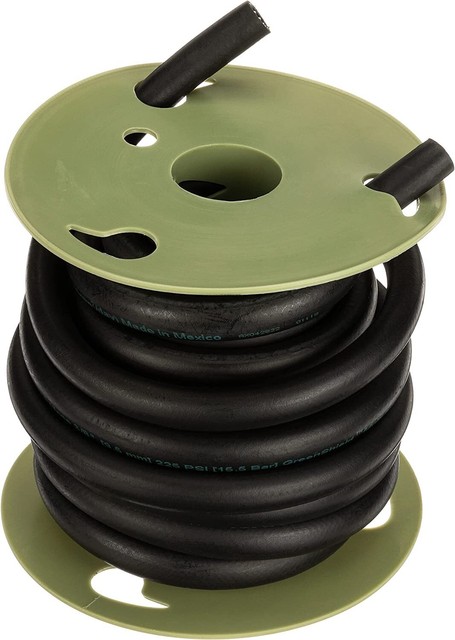
Gates Barricade Fuel Injection Hose (3/8″)
The default correct answer in the smaller of the two common sizes. Gates Barricade is a nitrile fuel-injection hose with a low-permeation liner, rated for fuel and oil and for the temperatures of an engine bay. It is sold by the foot at any parts counter, it costs a few dollars, and it is what the hose on your car already is.
- Nitrile (NBR) fuel injection hose
- 3/8 inch internal diameter
- Low-permeation liner rated for fuel and oil
- Sold by the foot
- Correct material for oil vapour service
- Very inexpensive and available everywhere
- Resists the heat of an engine bay
- Plain black — no cosmetic appeal
- Stiffer than silicone, so tight bends need care
- Must be clamped properly; it does not stretch over an oversized barb

Gates Barricade Fuel Injection Hose (5/8″)
The same hose in the larger common size, which is what most catch can kits and many PCV ports actually use. If you are guessing between the two, 5/8 inch is the more frequent recommendation for catch can plumbing — but measure rather than assume, because getting this wrong means buying twice.
- Nitrile (NBR) fuel injection hose
- 5/8 inch internal diameter
- Low-permeation liner
- Sold by the foot
- The most commonly needed size for catch can work
- Correct material at a trivial price
- Widely stocked
- Large diameter is stiff and wants gentle bends
- Takes more room in a crowded engine bay
- Cosmetically plain

Generic SAE 30R7 / 30R9 Nitrile Fuel Hose
The specification to look for rather than a brand. SAE 30R7 is standard fuel hose; 30R9 is the higher-pressure, lower-permeation fuel-injection grade. Either is right for a catch can, and buying to the spec rather than the label means any parts counter in any country can sell you the correct thing.
- SAE 30R7 or 30R9 rated nitrile hose
- Available in both common sizes
- Sold by the foot or in pre-cut lengths
- Stocked internationally under many brand names
- Buying to spec works anywhere in the world
- Cheapest correct option
- Multiple brands compete on price
- Quality varies between unbranded suppliers
- Check the printed rating on the hose itself, not the listing
- Plain appearance

PCV / Crankcase Ventilation Hose
Purpose-made for this exact duty — oil vapour, heat and manifold vacuum. Its advantage over general fuel hose is wall construction that resists collapsing under vacuum, which matters if your can is plumbed on the suction side and you are running long runs. Slightly harder to find than fuel hose but worth asking for by name.
- Designed for crankcase ventilation service
- Resists collapse under manifold vacuum
- Oil-vapour rated
- Available in common PCV sizes
- Purpose-built for oil vapour and vacuum
- Will not collapse on long suction-side runs
- Correct material by definition
- Less widely stocked than fuel hose
- Fewer size options
- Costs a little more
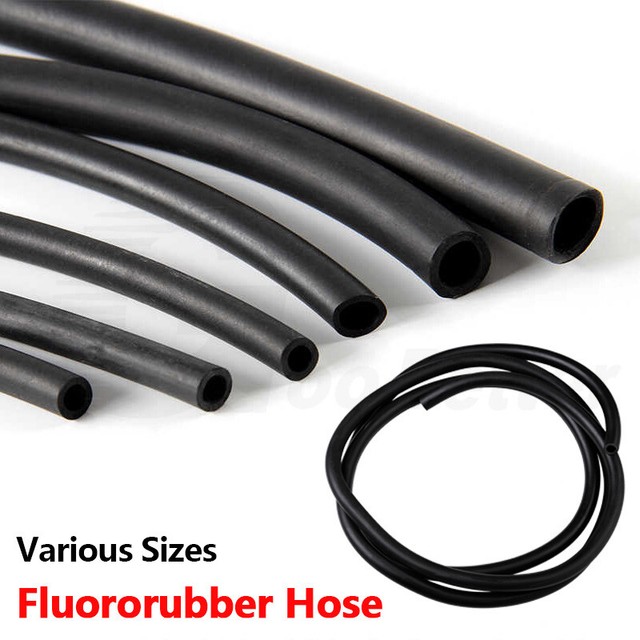
Fluorosilicone Hose
The silicone that actually works here. Fluorosilicone has a fluorocarbon liner over a silicone body, which gives it silicone’s heat tolerance and flexibility with genuine resistance to oil and fuel. This is the right answer if you want the flexibility and the appearance of silicone; plain silicone is not, and the two look identical in a photograph.
- Fluorocarbon liner over a silicone body
- Genuine oil and fuel resistance, unlike standard silicone
- High temperature tolerance
- Available in coloured finishes
- The only silicone-family hose appropriate for this job
- Very flexible — easy in a tight engine bay
- Excellent heat resistance
- Several times the price of nitrile fuel hose
- Easily confused with ordinary silicone when buying
- Check the listing explicitly says fluorosilicone, not just ‘oil resistant’

PTFE-Lined Braided Hose with AN Fittings
The over-engineered option, and a genuinely good one if you are building something you want to look finished. A PTFE liner is chemically inert to everything an engine produces, the stainless braid protects it, and AN fittings give a proper mechanical seal instead of a clamp on a barb. Expensive, and you need the crimping or assembly tools or a shop that has them.
- PTFE inner liner, stainless or nylon braided cover
- AN threaded fittings rather than hose clamps
- Complete resistance to oil, fuel and heat
- Available in assembled lengths or as components
- Chemically the most resistant option available
- Proper sealed fittings rather than clamped barbs
- Looks genuinely professional
- Many times the cost of fuel hose for no functional gain on a street car
- Needs the right tools or a shop to assemble
- Stiff — plan the routing before you cut

Viton / FKM-Lined Rubber Hose
The other high-resistance elastomer worth knowing. FKM, usually sold under the Viton name, has excellent resistance to oil and heat and is used where nitrile is marginal — very hot engine bays, or forced-induction cars where the vapour is hotter. Sits between fuel hose and PTFE on both performance and price.
- Fluoroelastomer (FKM/Viton) liner
- Higher temperature tolerance than nitrile
- Excellent oil and fuel resistance
- Available in common hose sizes
- Better heat tolerance than standard fuel hose
- Good choice near a turbo or a hot manifold
- Long service life
- Considerably dearer than nitrile
- Unnecessary on most naturally aspirated street cars
- Confusing to source — many listings say Viton loosely
Fuel-Injection Rated Hose Clamps (Constant Tension)
The part that actually fails. A worm-drive clamp bites into rubber and then loses tension as the hose takes a compression set and as the bay heats and cools — which is why a catch can that was dry in spring weeps in August. Constant-tension or spring clamps maintain their grip through that cycle and are what the factory used in the first place.
- Constant-tension or spring-band design
- Maintains clamping force through heat cycles
- Sized for specific hose diameters
- Sold in multipacks
- Fixes the most common leak, which is the clamp and not the hose
- Cheap
- What the manufacturer fitted originally
- Need the correct size — they are not adjustable like worm drives
- Spring clamps need proper pliers to fit comfortably
- Less adjustable if you re-route later

Brass or Aluminium Barbed Fittings and Adapters
Almost every catch can install needs an adapter somewhere, because the can’s barbs and the engine’s ports are rarely the same size. Buying a small assortment of barbed reducers up front saves the specific frustration of having the hose, the can and the clamps in hand and being one fitting short on a Sunday.
- Barbed reducers and straight couplers in common sizes
- Brass or anodised aluminium
- Sold in assortment packs
- Compatible with standard fuel hose
- Bridges the gap between can barbs and engine ports
- An assortment costs less than two individual fittings ordered separately
- Reusable across future jobs
- Every joint is another potential leak point
- Cheap cast fittings can have rough barbs that cut hose
- Aluminium and brass in a damp bay can corrode at the joint
Heat Sleeving or Reflective Hose Wrap
Cheap insurance where the routing has to pass near a manifold or a turbo. Hose that spends its life a few inches from an exhaust goes hard and cracks years before hose that does not, and a fibreglass or reflective sleeve buys most of that life back for a few dollars. Fit it when you fit the hose, not after the first failure.
- Fibreglass or aluminised reflective sleeving
- Slides over the hose before fitting
- Rated for sustained high radiant heat
- Sold by the foot or in kits
- Substantially extends hose life near heat sources
- Cheap and quick to fit during installation
- Also protects against abrasion
- Must be fitted before the hose is connected
- Traps moisture against the hose if it gets soaked
- Adds bulk in a tight bay
Buying tips
- Do not use ordinary silicone hose. Standard silicone is porous to oil and fuel and will swell and soften — fluorosilicone is the version that works.
- Nitrile fuel-injection hose is the cheap correct answer. Look for SAE 30R7 or 30R9 printed on the hose itself.
- Measure both ends before ordering. Catch can barbs and engine PCV ports are frequently different sizes, and 3/8 and 5/8 inch are both common.
- Route so the hose cannot form a low loop. Condensed water collects there, freezes in winter, blocks the PCV path and pushes oil past a seal.
- Keep the runs as short as the layout allows. Long runs cool the vapour, collect more condensate and are more likely to sag.
- Use constant-tension clamps, not worm drives. The clamp losing tension through heat cycles is the usual cause of a weep.
- Sleeve any run that passes near the exhaust. Radiant heat is what turns good hose hard and cracked.
- Empty the can at every oil change and look at what came out. Milky content means water, which is the thing that freezes.
As an Amazon Associate and eBay Partner, toptenpick.com earns from qualifying purchases. Prices and availability are subject to change.