

As an Amazon Associate and eBay Partner, toptenpick.com earns from qualifying purchases. Prices and availability are subject to change.
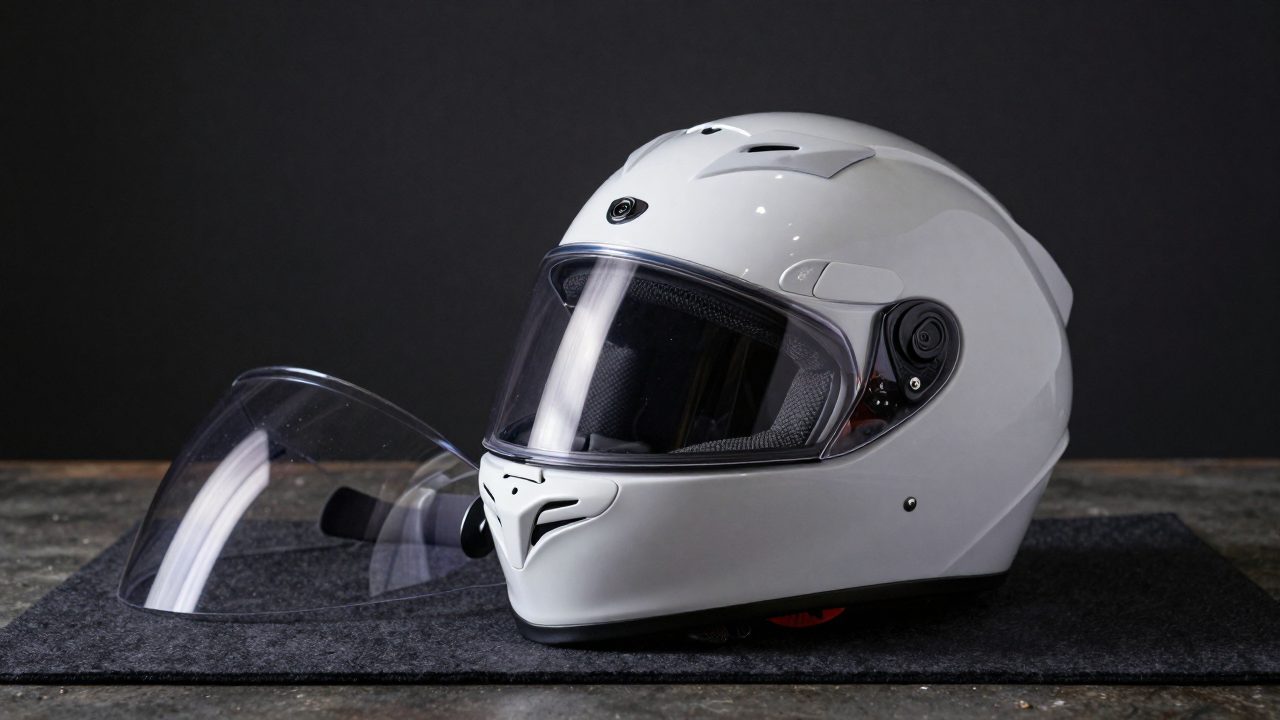
There is a number that settles this, and almost nobody selling visors puts it on the front of the box: 80 percent light transmission. Under the ECE standard, a visor that passes 80 percent or more of the light reaching it is approved for use day and night. A visor passing between 80 and 35 percent gets an approval marked “Daytime Use Only”. Anything below 35 percent is not road approved at all — that is a track visor. So the honest answer to “best visor for night” is: a clear one, or something specifically rated above 80 percent, and everything smoked, tinted, iridium or mirrored is by definition daytime equipment. Check the marking on the edge of the visor itself, not the marketing.
That makes this an article about what separates a good clear visor from a bad one, which is a more interesting question than it sounds.
The first variable is optical quality, and it is the one riders never think about. A visor is a curved piece of plastic you look through at speed, and cheap ones distort — straight lines bend near the edges, and your eyes work harder without your noticing until you have a headache after an hour. The approval standard covers optical distortion, so a properly approved visor from a helmet manufacturer is meeting a measured threshold. An unbranded eBay replacement may not be.
The second is fogging, and at night it matters more than in daylight. A fogged visor in daylight is annoying; a fogged visor at night turns every oncoming headlight into a starburst that hides the road behind it. Anti-fog coatings help and wear out. A Pinlock insert — a second lens sealed to the visor by silicone beads, creating an insulating air gap — is a genuinely different mechanism and is the thing that actually works. If your visor has the small pins for one, fit one.
The third is scratches, and this is the specific reason old visors are dangerous after dark. A scratch is invisible in flat daylight and becomes a bright streak when a headlight hits it, because the damage scatters that point of light across your field of view. A visor that seems perfectly serviceable by day can be genuinely hazardous at night. Hold it up to a bright light at an angle before you trust it.
One thing to be sceptical about: yellow or amber “night vision” visors. They increase contrast in mist and reduce total light transmission, and at night less light reaching your eye is the wrong direction. They have a place in fog and dusk. They are not a night upgrade.
| # | Product | Price | Where to buy |
|---|---|---|---|
| 1 | Manufacturer Clear Replacement Visor (Shoei, Arai, AGV, HJC) | $45–$110 | Amazon · eBay |
| 2 | Pinlock 120 Max Vision Insert | $30–$50 | Amazon · eBay |
| 3 | Photochromic / Transitions Visor | $90–$180 | Amazon · eBay |
| 4 | Anti-Fog Spray or Gel | $10–$20 | Amazon · eBay |
| 5 | Breath Guard / Chin Curtain | $15–$35 | Amazon · eBay |
| 6 | Visor Cleaning Kit and Microfibre Cloths | $12–$25 | Amazon · eBay |
| 7 | Spare Clear Visor | $45–$100 | Amazon · eBay |
| 8 | Internal Drop-Down Sun Visor Helmet | $180–$450 | Amazon · eBay |
| 9 | Yellow or Amber High-Contrast Visor | $40–$90 | Amazon |
| 10 | Smoked / Iridium Visor (daytime only) | $50–$120 | Amazon · eBay |
The picks, in detail

Manufacturer Clear Replacement Visor (Shoei, Arai, AGV, HJC)
Start here, because fit is the specification people underestimate. A visor is part of a sealed system with the helmet’s eyeport gasket, and a manufacturer’s own clear visor seals properly, latches properly and meets the optical approval the helmet was tested with. Generic replacements frequently seal imperfectly, which produces wind noise and, more importantly at night, drafts that fog the inside.
- Model-specific fitment to the helmet’s mechanism
- ECE approved with optical class rating
- Pinlock pins fitted on most current models
- Anti-scratch hard coating
- Seals correctly against the eyeport gasket
- Meets the optical standard the helmet was approved with
- Pinlock-ready on nearly all recent helmets
- Two to three times the price of a generic
- Model-specific, so no reuse on your next helmet
- Availability tails off on older helmet models

Pinlock 120 Max Vision Insert
The single most useful purchase on this page for night riding. The insert is a second lens held against the visor by silicone beads, trapping an air gap that stops the inner surface reaching dew point — the same principle as double glazing. The 120 rating is the clearest of the range, which is what you want after dark. Max Vision means the insert covers more of the eyeport rather than leaving a visible frame in your sightline.
- Sealed insert creating an insulating air gap
- 120 clarity rating — the highest
- Max Vision sizing covers more of the eyeport
- Model-specific to visor and helmet
- Genuinely prevents fogging rather than delaying it
- Highest clarity rating suits night use
- Fits in two minutes with no tools
- Requires a visor with Pinlock pins
- The insert edge is visible in your peripheral vision
- Scratches easily — it is softer than the visor

Photochromic / Transitions Visor
A visor that darkens in sunlight and clears indoors or at night, which sounds like the perfect answer and mostly is — with one caveat worth knowing. ECE 22.06 specifically addresses light transmission through photochromic visors and permits them to darken substantially, so check that the specific visor’s clear state meets the 80 percent threshold for night use. They also take time to clear, which matters riding into a tunnel.
- Darkens with UV exposure, clears indoors
- Covered explicitly by ECE 22.06
- Model-specific fitment
- Usually Pinlock compatible
- One visor for day and night in normal conditions
- No swapping visors at dusk
- Approval standard now covers them explicitly
- Takes time to clear — a problem entering tunnels
- Does not darken fully behind a car windscreen
- Expensive, and the effect degrades over a few years
Anti-Fog Spray or Gel
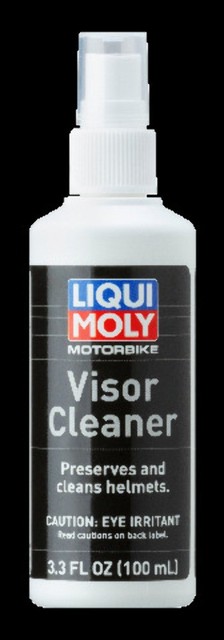
The option when your visor has no Pinlock pins. A surfactant coating spreads condensation into a thin even film rather than droplets, so it stays transparent. It genuinely works and it genuinely wears off — plan on reapplying every week or two in cold weather. Apply to a clean, dry visor and buff properly, because a badly applied coat streaks, and streaks and headlights are the combination you are trying to avoid.
- Surfactant anti-fog coating
- Spray, gel or wipe formats
- Works on visors and goggles
- Needs periodic reapplication
- The answer for visors without Pinlock pins
- Cheap
- Also works on glasses worn under the helmet
- Wears off within days to weeks
- Streaks badly if applied to a dirty visor
- Nowhere near as effective as a Pinlock insert

Breath Guard / Chin Curtain
Attacks the cause rather than the symptom: most visor fogging is your own warm breath being directed up the inside of the visor. A breath guard deflects it down and out through the chin vent, and a chin curtain reduces the cold draft coming up from below. Together they cut fogging substantially for very little money, and they also reduce wind noise, which is a real bonus on a long night ride.
- Fits into the helmet’s chin bar
- Deflects exhaled air downward
- Often sold as a pair with a chin curtain
- Model-specific on most helmets
- Addresses the source of the fog
- Reduces wind noise as a side effect
- Very cheap
- Some riders find it claustrophobic against the face
- Model-specific fitment
- Reduces airflow, so warmer in summer

Visor Cleaning Kit and Microfibre Cloths
Named because the commonest way a visor gets scratched is being cleaned badly. Dried insects and road grit get dragged across the surface by a dry cloth, and every one of those micro-scratches becomes a streak of glare when a headlight hits it. Soak with warm water and a damp cloth first, never rub dry, and keep cloths clean — a microfibre that has been in a tank bag with grit in it is sandpaper.
- Visor-safe cleaner, no ammonia or solvents
- Multiple microfibre cloths
- Some kits include a soak cloth for insects
- Small enough for a tank bag
- Prevents the scratches that cause night glare
- Ammonia-free formulas will not attack the coating
- Cheap
- Needs discipline, not just ownership
- Microfibres must be washed or they carry grit
- Will not restore a visor already scratched

Spare Clear Visor
The practical answer for anyone who runs a tinted visor in summer, and it is worth being blunt about why: a tinted visor is daytime equipment, the day ends earlier than people plan for, and the moment you need to swap is at the side of a dark road. A second clear visor in the top box or under the seat costs less than one tank of fuel and removes the temptation to ride home on a smoked visor.
- Identical model-specific clear visor
- Stores flat in a soft pouch
- Swaps in under a minute on modern mechanisms
- ECE approved for night use
- Removes the reason people ride tinted after dark
- Quick change on current helmet mechanisms
- Doubles as a spare if the main one is damaged
- Needs a pouch or it gets scratched in storage
- Some older mechanisms are fiddly in the dark
- Another item to remember to carry

Internal Drop-Down Sun Visor Helmet
Not a visor but the structural fix, and worth mentioning because it solves this problem permanently. A helmet with an internal drop-down sun shade keeps the clear outer visor on at all times and flips the tint out of the way with a lever — so you are always night-legal on the outside. Note that internal sun visors are themselves covered by the transmission rules and are not intended to be used after dark either.
- Clear outer visor plus retractable internal tinted shade
- Lever or slider operation while riding
- ECE approved as a complete system
- Common on touring and modular helmets
- Outer visor is always clear and always night-legal
- Tint deploys and retracts without stopping
- Removes the swap-at-dusk problem entirely
- Adds thickness and a little weight to the shell
- The internal shade is also daytime-only
- Mechanism can rattle or stick as it ages
Yellow or Amber High-Contrast Visor
Listed with a correction attached, because it is widely sold as a night visor and it is not one. Amber tinting increases apparent contrast in fog, haze and flat dusk light, which is genuinely useful in those conditions. It also reduces total light transmission, and at night the problem is a shortage of light, not an excess. Check its rating: if it is marked daytime use only, that is the answer.
- Amber or yellow tint
- Marketed for contrast in low light
- Check the light transmission rating on the visor edge
- Model-specific fitment
- Genuinely helps in fog, haze and flat dusk light
- Reduces glare from low winter sun
- Popular with off-road and enduro riders
- Reduces light transmission, which is wrong for night
- Frequently marked daytime use only despite the marketing
- Colour shifts how you read brake lights and signals

Smoked / Iridium Visor (daytime only)
Here so the page is complete and unambiguous. A smoked or mirrored iridium visor typically transmits well under the 80 percent needed for night approval, and often under the 35 percent needed for any road approval at all. It is excellent daytime equipment and it is not a candidate for this article. If you own one, own a clear one too.
- Tinted or mirror-coated finish
- Typically well below 80% light transmission
- Often marked Daytime Use Only, or unapproved entirely
- Model-specific fitment
- Effective against glare in bright daylight
- Reduces eye fatigue on long sunny rides
- Widely available for most helmets
- Not approved for night use, and frequently not road legal at all
- Dangerous in tunnels and under trees at dusk
- Iridium coatings scratch and flake
Buying tips
- Look for 80 percent light transmission or better. Under the ECE standard that is the threshold for day and night approval; 80 down to 35 percent is marked Daytime Use Only, and below 35 percent is not road approved at all.
- Read the marking on the edge of the visor, not the product listing. The approval and any daytime-only restriction are moulded or printed onto the visor itself.
- Fit a Pinlock insert if your visor has the pins. It creates an insulating air gap and genuinely prevents fogging, where a coating only delays it — and at night a fogged visor turns every headlight into a starburst.
- Hold an old visor up to a bright light at an angle before trusting it after dark. Scratches that are invisible in flat daylight scatter oncoming headlights across your whole field of view.
- Never dry-wipe a visor. Soak dried insects off with warm water first — dragging grit across the surface with a dry cloth is how most visors get scratched.
- Carry a spare clear visor if you run a tint. The moment you need to swap is always at the side of a dark road, and that is exactly when people decide to risk it instead.
- Treat yellow and amber visors as fog and dusk equipment, not night equipment. They raise contrast but reduce total light transmission, and at night light is what you are short of.
- Remember an internal drop-down sun visor is also daytime-only. It keeps the outer visor clear, which is the real benefit, but it is not something to ride with deployed after dark.
As an Amazon Associate and eBay Partner, toptenpick.com earns from qualifying purchases. Prices and availability are subject to change.