

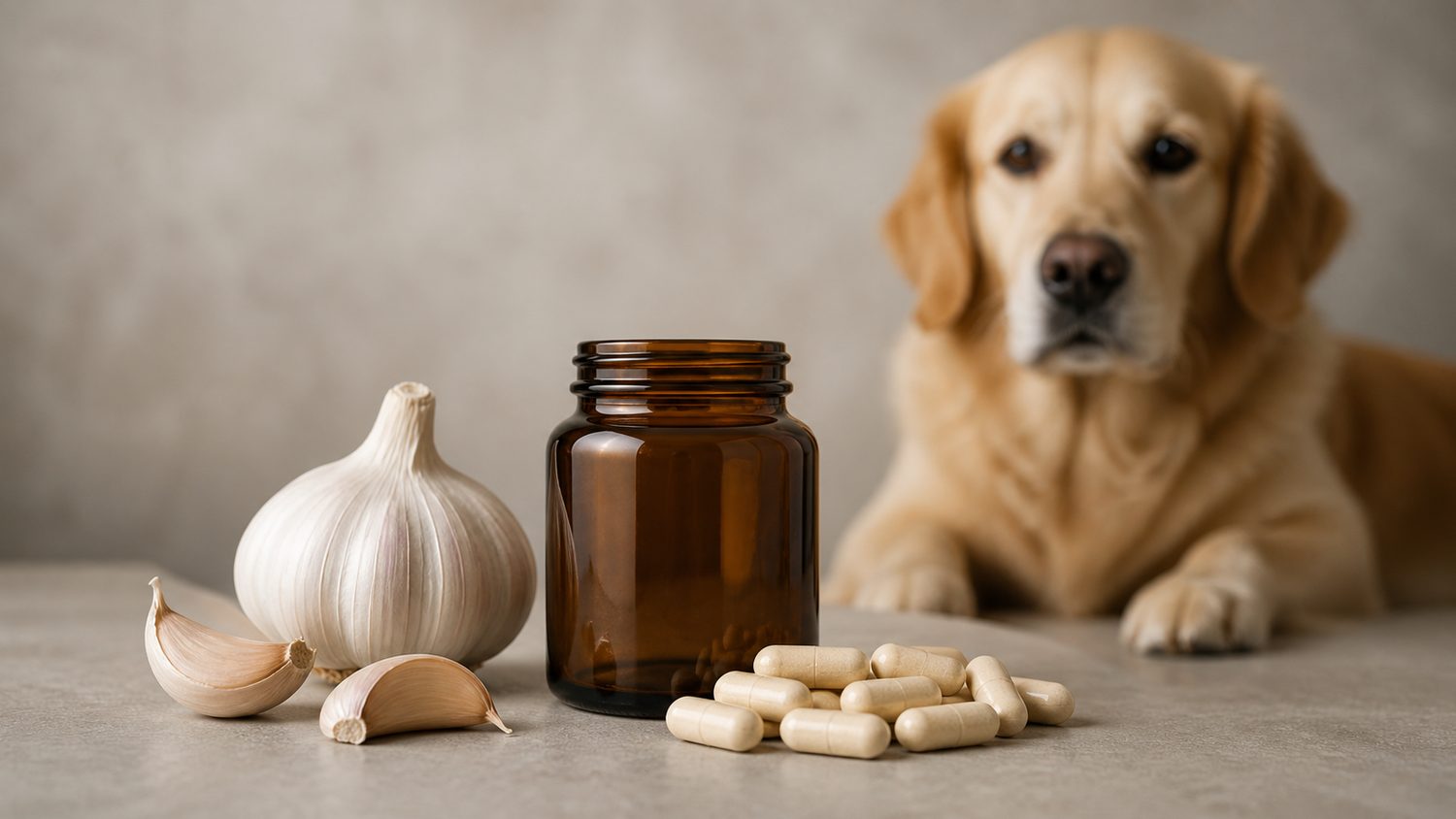
Garlic pills are not a routine dog supplement
This is not a product roundup. Garlic is an Allium, the same plant family as onion, leek and chives, and veterinary toxicology sources identify Alliums as toxic to dogs. A tablet, capsule, powder, oil, extract or “natural” blend is not made safe merely because it is sold as a supplement. Concentrated products can make it especially difficult to know what a dog consumed. Do not start, substitute or continue a garlic pill because an online listing describes it as natural or pet-focused. Discuss any supplement with the veterinarian who knows the dog’s age, diet, medical history and current medicines.
Why the ingredient matters
Garlic contains sulfur compounds that can damage red blood cells in susceptible animals. Merck Veterinary Manual describes Allium toxicosis as a cause of oxidative red-cell injury and hemolytic anemia in dogs and cats; it notes that raw, cooked, dehydrated and granulated forms have been involved. Pet Poison Helpline likewise identifies garlic, onion, chives and leeks as poisonous to dogs. The question is not whether a dog likes the taste, whether a capsule hides its odor, or whether a label says “extract.” The ingredient family, product form and amount swallowed all matter.
There is no safe universal conversion from a human garlic product to a dog product. Concentration can differ dramatically among fresh food, powder, aged-garlic preparations, oils, tablets, softgels and multi-ingredient blends. Labels may express whole-plant powder, an extract ratio, a standardized constituent or a proprietary blend. Those descriptions are not interchangeable, and a pill can contain other ingredients unsuitable for a dog. Never estimate a serving from body weight, split a human tablet, or apply advice written for a different animal.
“Pet-labelled” does not replace clinical judgment
A pet-focused package can look reassuring, but packaging is not an individualized safety assessment. Read the complete ingredient panel, not just the front-label claims. Look for garlic under direct names and within multi-ingredient botanicals; consider inactive ingredients, flavorings and delivery formats. A veterinarian or veterinary pharmacist can assess whether the whole formula conflicts with the dog’s disease history, medicines or diet. That review is particularly important for a young, elderly, pregnant, ill or already anemic dog.
Do not treat a supplement listing as evidence that it prevents fleas, parasites, heart disease, infection or any other condition. Those are medical questions requiring diagnosis and an appropriate prevention or treatment plan. A review, anecdote or marketing phrase cannot establish efficacy for an individual dog. If the goal is odor control, skin care, a diet concern or parasite prevention, explain that goal to the clinic and ask for options supported for that purpose. The safer choice may be a completely different intervention.
What to do after possible ingestion
If a dog has eaten garlic pills, a garlic-containing supplement, loose capsules or a human product, contact a veterinarian, emergency veterinary hospital or animal poison service promptly. Keep the container. Report the exact product name, ingredient list, label strength, approximate number of pills missing, time of exposure, the dog’s approximate size and age, and any observed signs. Do not wait for a web search to declare the product harmless, and do not induce vomiting or give home remedies unless a veterinary professional directs it.
Signs can be delayed. Toxicology references describe gastrointestinal upset and, later, signs associated with red-cell injury and anemia. Weakness, unusual tiredness, pale gums, rapid breathing, reduced appetite, vomiting, diarrhea, dark urine, collapse or a marked behavior change all warrant urgent veterinary attention. These signs are not specific to garlic, which is another reason not to self-diagnose from a symptom list. The timing, dose form, amount, dog and any other exposure affect the clinical response.
Why dosage advice online is risky
Internet discussions often offer arithmetic such as “one clove per weight range” or “one capsule per day.” That approach is not dependable. It confuses garlic forms, assumes two labels are chemically comparable, overlooks other dietary exposure and ignores health differences. A number printed for one product or one case does not create a safe home dose. This page deliberately provides no dose chart, conversion formula or trial schedule.
Questions for a veterinarian
Bring the packaging or a photograph of every label panel. Ask whether garlic is appropriate for this specific dog, whether there are medicine interactions or blood-related concerns, whether a product has an evidence-based purpose for the stated goal, what monitoring is needed and which signs require an urgent call. If the clinic recommends against it, that is not a cue to hunt for a different brand; it may be the appropriate safety decision.
Mention all foods, treats, chews, powders and medicines the dog receives. A supplement choice should not be made in isolation: ingredients can overlap and a clinician may need to distinguish a dietary issue from a condition needing examination. For parasite prevention, use a veterinary plan appropriate to the dog’s location, species risk and health status instead of an unverified garlic-based substitute.
Store supplements as potential hazards
Keep human and pet supplements in original closed containers and out of reach. Do not leave pills in a weekly organizer, open purse, bedside dish or treat jar where a dog can consume multiple units. Dispose of unwanted products securely. When more than one person cares for the dog, make sure everyone knows not to offer a supplement casually. Clear storage and communication prevent accidental repeat exposure.
The practical bottom line
Garlic pills are a veterinary-safety question, not a shopping category. Garlic is recognized as toxic to dogs, and risk is complicated by concentration, product form, amount, the individual animal and other ingredients. Do not use a product ranking or human-dose conversion to make the decision. For possible exposure, contact veterinary or poison-control help promptly with the package in hand. For a planned supplement, ask the dog’s veterinarian to address the specific goal and recommend a safer, evidence-based course where one is needed.