

As an Amazon Associate and eBay Partner, toptenpick.com earns from qualifying purchases. Prices and availability are subject to change.
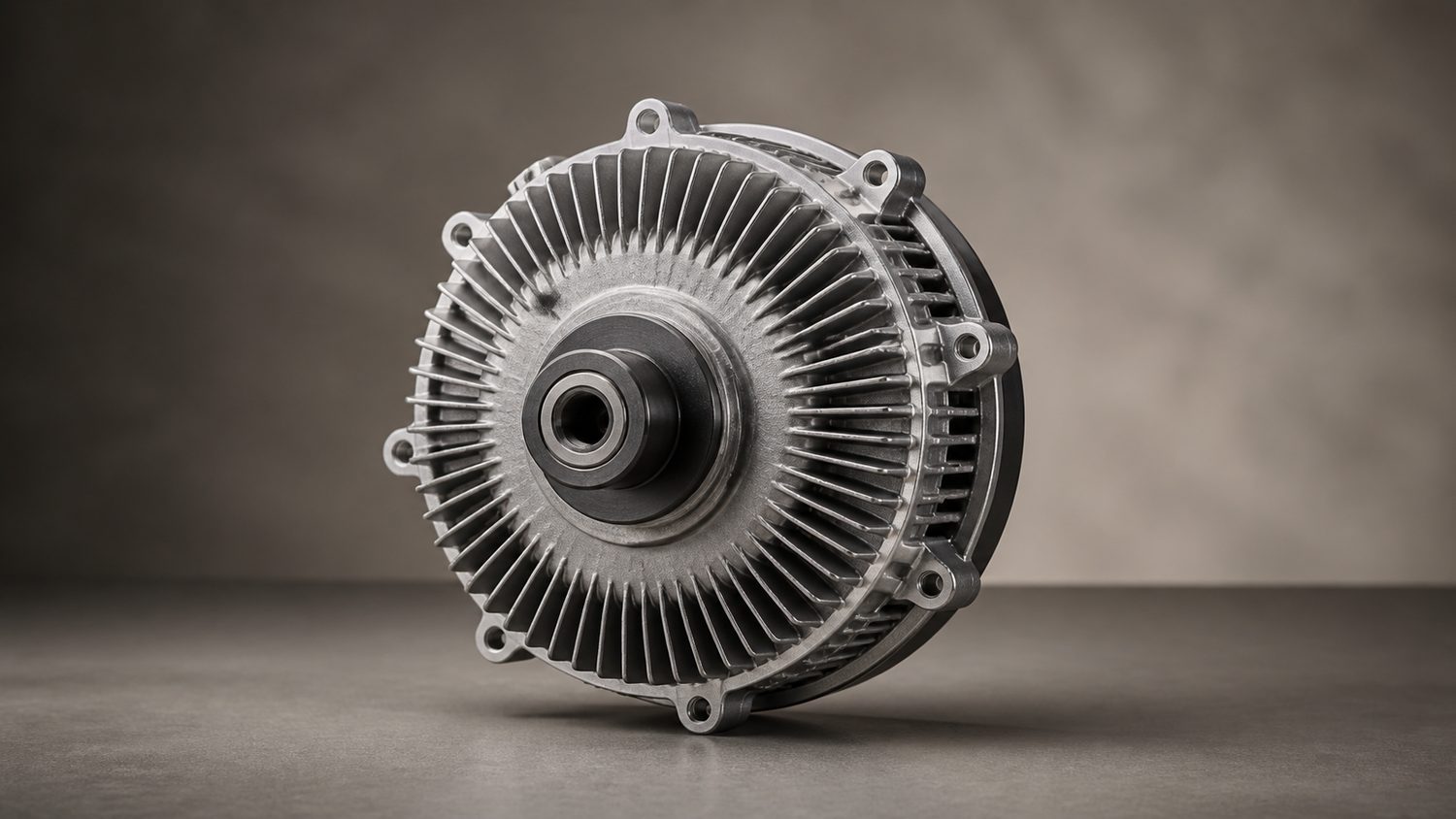
The 6.0 Power Stroke does not use an ordinary thermal fan clutch. It uses an electro-viscous clutch that the PCM controls with a pulse-width-modulated signal, varying how much the fan locks up based on engine oil temperature, air conditioning demand and several other inputs. That one design fact explains nearly everything that confuses people about this part.
It explains why a roaring fan is not automatically a failed clutch — the PCM may be commanding it, correctly, because something else is hot. It explains why deleting the clutch or fitting a fixed fan causes trouble under tow, since the truck’s cooling strategy assumes a fan it can modulate. And most importantly, it explains the single most useful thing to know about this repair: a clutch that is stuck engaged sets no diagnostic trouble code.
Think about what that means when you are diagnosing. A stuck-on fan gives you a truck that sounds like a jet under acceleration, loses noticeable fuel economy and power, and hands you a clean scan. Owners plug in a reader, see nothing, and go looking elsewhere — at the turbo, at the EGR cooler, at the injectors — for a problem sitting in plain sight on the front of the engine. The reverse case, a clutch that will not engage, shows up as overheating under load with a fan that never seems to come on, and that one will usually get your attention faster because the temperature gauge moves.
The test for both is refreshingly low-tech and needs nothing but your ears and a cold start. A healthy clutch roars for a few seconds when you first start the truck — that is the fan spinning up with the engine before the viscous coupling releases — and then goes quiet within about 30 seconds. If it never goes quiet, it is stuck engaged. If it never roars at all on a cold start, it is not engaging.
One more warning worth having before you order parts: the clutch is extremely tight and needs the right tool. People snap things trying to shortcut this. Ten picks below, and the tool is genuinely one of them.
| # | Product | Price | Where to buy |
|---|---|---|---|
| 1 | Motorcraft Electro-Viscous Fan Clutch | $300-$500 | Amazon · eBay |
| 2 | Aftermarket Direct-Replacement Fan Clutch | $130-$280 | Amazon · eBay |
| 3 | Pneumatic Fan Clutch Wrench Set | $50-$120 | Amazon · eBay |
| 4 | Manual Fan Clutch Wrench Set | $25-$60 | Amazon · eBay |
| 5 | Replacement Fan Blade Assembly | $60-$160 | Amazon |
| 6 | OBD-II Scan Tool with Ford Enhanced Data | $80-$400 | Amazon |
| 7 | Infrared Thermometer | $20-$70 | Amazon · eBay |
| 8 | Penetrating Oil | $8-$20 | Amazon |
| 9 | Serpentine Belt and Tensioner | $60-$180 | Amazon |
| 10 | Fan Shroud and Mounting Hardware | $70-$200 | Amazon · eBay |
The picks, in detail

Motorcraft Electro-Viscous Fan Clutch
The factory part, and the safe default. The 6.0’s clutch is not a generic viscous unit — it responds to a PCM-controlled PWM signal, and the calibration between the clutch and the truck’s cooling strategy is the thing you are paying for. A Motorcraft unit removes any question about whether the clutch responds the way the PCM expects across the whole duty range. It is the most expensive option on this list and it is the one a shop will fit.
- Electro-viscous, PCM controlled via PWM
- Factory calibration for the 6.0’s cooling strategy
- Direct fit with no adapters
- OE warranty
- No question about PCM compatibility
- Correct behaviour across the full temperature range
- The reference part everything else is compared against
- Considerably more expensive than aftermarket
- Availability can be patchy by region

Aftermarket Direct-Replacement Fan Clutch
The value route, and a reasonable one if you buy from an established supplier rather than the cheapest listing. What you need to verify is that the unit is genuinely an electro-viscous clutch for this application, not a thermal clutch that happens to bolt on — a thermal clutch ignores the PCM entirely and responds only to the air temperature in front of it, which is not how this engine is designed to cool. Read the description carefully; several listings are vague about exactly this point.
- Electro-viscous design for PCM control
- Direct fit to the 6.0 fan hub
- Typically a one- or two-year warranty
- Widely stocked
- Substantially cheaper than the Motorcraft part
- Good availability from multiple suppliers
- Adequate for a truck that is not towing heavy
- Some listings are actually thermal clutches — verify
- Shorter service life than the OE unit in general
Pneumatic Fan Clutch Wrench Set
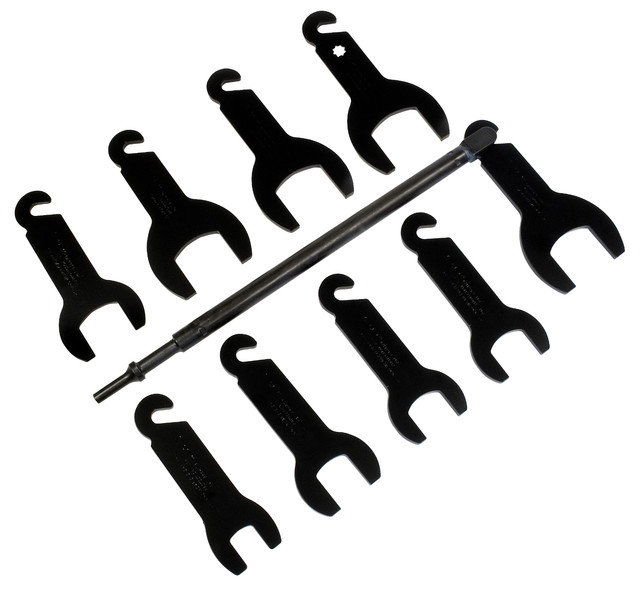
Not optional, and the reason a lot of these jobs go wrong. The clutch threads onto the hub and after years of heat cycling it is exceptionally tight — people break knuckles, bend brackets and round the flats trying to shortcut it. A pneumatic fan clutch tool uses an air hammer to shock the joint loose rather than trying to overcome it with steady force, which is what actually works here. Harbor Freight’s Maddox set and the Lisle equivalent are the two commonly recommended.
- Air-hammer driven clutch wrench
- Hub-holding tool included in sets
- Covers the common Ford and GM sizes
- Steel construction with a storage case
- Shock loading is what actually frees a seized clutch
- Far safer than improvising with a hammer and drift
- Reusable across other trucks
- Needs a compressor and an air hammer
- A tool you may use once and then store

Manual Fan Clutch Wrench Set
The no-compressor alternative. A set of thin spanners plus a hub-holding tool lets you break the clutch loose with a sharp blow to the wrench rather than steady pull — which is still the principle that works. It is slower and more awkward than the pneumatic version and it will test your patience on a clutch that has never been off, but it costs less and needs no air supply. Soak the joint with penetrant for a day first either way.
- Thin-profile wrenches for the clutch nut
- Hub-holding tool or pin spanner
- Multiple sizes for Ford applications
- No compressor required
- Works without an air supply
- Cheaper than the pneumatic set
- Compact to store
- Much harder work on a seized clutch
- Easy to round the flats if the wrench is loose
Replacement Fan Blade Assembly
Worth inspecting while the clutch is off, and worth replacing if there is any doubt. A plastic fan blade that has been heat-cycled for fifteen years becomes brittle, and a blade failing at engine speed inside an engine bay does expensive damage on its way out — to the radiator, the shroud and anything else in reach. Look for hairline cracks at the root of each blade and any sign of the hub being loose. It is cheap insurance while everything is already apart.
- Moulded fan blade assembly for the 6.0
- Direct fit to the clutch
- Balanced from the factory
- Includes any required hardware
- Removes the risk of a brittle old blade letting go
- No extra labour if fitted during a clutch change
- Cheap relative to a radiator
- Often unnecessary — inspect before buying
- Cheap blades can be poorly balanced
OBD-II Scan Tool with Ford Enhanced Data
The counter-intuitive purchase on a part that sets no codes — and it is exactly why you want one. A tool that reads Ford enhanced data lets you watch engine oil temperature and the commanded fan duty cycle live. That is how you tell whether a roaring fan is a failed clutch or a PCM correctly responding to something genuinely hot, which is the question this whole article turns on. Without it you are replacing a $300 part on a guess.
- Ford enhanced powertrain data, not just generic
- Live engine oil temperature
- Commanded fan duty cycle where supported
- Data logging for intermittent faults
- Distinguishes a stuck clutch from a correctly working one
- Shows oil temperature, the 6.0’s key cooling input
- Useful across every other 6.0 diagnosis
- Generic readers do not show the enhanced data
- Not every tool exposes the fan duty parameter

Infrared Thermometer
The cheap companion to the scan tool and a fast sanity check. Pointed at the radiator core, the upper and lower hoses and the fan shroud, it tells you within a minute whether the cooling system is moving heat and whether the fan is actually shifting air — a core that is hot at the top and cold at the bottom is a blocked radiator, not a fan problem. It also confirms your thermostat behaviour. Under thirty dollars and it will settle several arguments before you spend on parts.
- Non-contact infrared measurement
- Range covering coolant and exhaust temperatures
- Laser pointer for aiming
- Emissivity adjustment on better units
- Fast check of whether heat is actually moving
- Finds a blocked radiator that looks like a fan fault
- Cheap and useful across the whole truck
- Reads shiny surfaces inaccurately without adjustment
- Measures surface, not coolant, temperature
Penetrating Oil
The first thing to apply and the last thing people think of. The clutch has been on a hot engine for years and it will be seized to the hub. Penetrant applied to the threads the day before — and again a few hours later — does a genuine amount of the work for you, and it costs almost nothing. Use a proper capillary-creep penetrant rather than a general-purpose spray lubricant; the two sit next to each other on the shelf and behave completely differently on a seized thread.
- Low-viscosity capillary creep formula
- Straw applicator for tight access
- Works across repeated heat cycles
- Safe on aluminium and steel
- Does real work on a seized joint for a few dollars
- Can be applied days in advance with no downtime
- Useful on the rest of a truck of this age
- Needs time and repeat applications to work
- General-purpose lubricants do not do the same job
Serpentine Belt and Tensioner
Do them together, because the belt has to come off anyway and both are wear items on a truck old enough to need a fan clutch. A tired tensioner lets the belt slip under the load a fully engaged fan puts on it, which produces squealing, reduced fan speed and eventually a thrown belt — symptoms that get blamed on the clutch. The labour overlap is almost total, so fitting these at the same time is nearly free in time terms and removes another suspect.
- Serpentine belt to the correct length
- Automatic tensioner assembly
- Idler pulleys sold in kits
- Direct fit for the 6.0
- Almost no extra labour during a clutch job
- Removes a cause of symptoms blamed on the clutch
- Both are due on a truck of this age anyway
- Adds cost to a job you hoped was one part
- Cheap tensioners have short service lives

Fan Shroud and Mounting Hardware
The part nobody photographs and everybody needs. The shroud directs the fan’s airflow through the radiator core rather than letting it swirl around the engine bay — without it, or with a cracked one, a perfectly good fan clutch moves far less air through the radiator than it should. Plastic shrouds crack at the mounting tabs after years of vibration, and the crack is easy to miss. Check yours while the fan is out; replacing it is trivial then and awkward later.
- Moulded plastic shroud for the 6.0
- Mounting clips and hardware
- Direct fit to the radiator
- Some kits include replacement tabs
- Makes the fan pull air through the core rather than around it
- Trivial to fit while the fan is already out
- Cheap relative to the cooling problem it causes
- Cracked tabs are easy to overlook
- Aftermarket shrouds vary in fit quality
Buying tips
- A stuck-engaged fan clutch sets no trouble code. That is the most useful fact about this part. You get a truck that roars under acceleration, loses fuel economy and power, and hands you a clean scan — so people go looking at the turbo and the EGR system for something sitting on the front of the engine. Do the cold-start listen test before you spend on diagnosis.
- The cold-start test needs no tools. On a cold start the fan should roar for a few seconds and then go quiet within about half a minute as the coupling releases. Never quiet means stuck engaged. Never roars at all means it is not engaging. Both diagnoses are free and take one morning.
- Understand that the PCM commands the fan. This is an electro-viscous clutch on a PWM signal, driven by engine oil temperature, air conditioning demand and other inputs. A fan that runs hard is not automatically broken — it may be the PCM responding correctly to something else that is hot. Watch oil temperature and commanded duty on a scan tool before condemning the clutch.
- Do not fit a thermal clutch or delete the fan. A thermal clutch responds only to the air temperature in front of it and ignores the PCM, and a fixed or manual fan removes the modulation the truck’s cooling strategy depends on. Both cause trouble under tow, which is exactly when you need the cooling system working properly. Verify any aftermarket unit is genuinely electro-viscous.
- Buy or borrow the right tool before you start. The clutch is seized to the hub after years of heat cycling, and shock loading from a pneumatic clutch wrench is what frees it — steady force is not. People snap brackets and round flats improvising. Soak the threads with a proper capillary penetrant the day before as well.
- Check the radiator and the shroud before blaming the fan. A blocked core or a cracked shroud produces overheating a perfectly good fan cannot fix. An infrared thermometer across the radiator face finds a blocked core in a minute — hot at the top and cold at the bottom is the signature. Both are cheap to check and expensive to misdiagnose.
- Do the belt and tensioner at the same time. The belt has to come off anyway, both are wear items at this age, and a tired tensioner lets the belt slip under a fully engaged fan — which produces noise and reduced fan speed that gets blamed on the clutch. The labour overlap is almost total, so the extra time is nearly nothing.
- Inspect the fan blade while it is out. Fifteen years of heat cycling makes plastic brittle, and a blade letting go at engine speed destroys the radiator and the shroud on its way through. Look for hairline cracks at the root of each blade and any play in the hub. It is a two-minute check on a part that is already in your hands.
As an Amazon Associate and eBay Partner, toptenpick.com earns from qualifying purchases. Prices and availability are subject to change.