

As an Amazon Associate and eBay Partner, toptenpick.com earns from qualifying purchases. Prices and availability are subject to change.
The number that actually matters on a rotary tool for scale-model work isn’t top speed — nearly everything in this price range advertises something like 30,000 or 35,000 rpm — it’s how low the dial goes. Styrene starts to soften at a fairly low temperature, and a bit spinning fast enough generates that heat through friction alone. Run a cutting wheel or sanding drum too fast on plastic and it doesn’t cut cleanly; it melts and smears, gums up the abrasive, and leaves a rounded, gooey edge instead of a crisp one. The tools worth owning for this hobby are the ones that idle comfortably down around 5,000 rpm, not the ones that spin fastest at the top of the dial.
That’s also where some inexpensive or compact tools quietly fail modelers. A few budget and lightweight cordless rotary tools bottom out at 8,000 rpm or higher, because their smaller motors lose usable torque at low speed and stall out before they get there. Dremel’s own cheapest cordless model is a real example of this. Check the minimum speed on the spec sheet, not just the maximum, before buying one specifically for styrene.
Technique matters as much as the tool itself: low speed, light pressure, short passes, and letting the abrasive do the work rather than pushing it through the material. The type of accessory matters too — a cutting wheel or sanding band meant for plastic and wood behaves very differently from a stone meant for metal or glass, and stones load up with melted styrene fast enough to become useless mid-project.
The accessories below matter as much as which tool body you buy. A flex-shaft attachment moves the heavy motor off the tip entirely, which buys more real control on delicate parts than any amount of extra speed range does. Sanding drums and bands in a couple of grits handle seams and mold lines, and a plastic-safe cutting wheel handles sprue gates more cleanly than a hobby knife alone.
For anyone doing this often enough to want both hands free and speed held by a foot pedal instead of a thumb dial, the professional flex-shaft systems from Proxxon and Foredom below cost significantly more but hold a chosen speed far more precisely than any handheld dial does, and take the motor’s weight and vibration out of your hand for long detail sessions.
| # | Product | Price | Where to buy |
|---|---|---|---|
| 1 | Dremel 4300-5/40 Variable Speed Rotary Tool Kit | $120–$140 | Amazon · eBay |
| 2 | Dremel 3000-2/28 Variable Speed Rotary Tool Kit | $80–$120 | Amazon · eBay |
| 3 | Dremel 8220-1/28 12V Max Cordless Rotary Tool | $130–$150 | Amazon · eBay |
| 4 | Dremel 8050 Micro Cordless Rotary Tool | $80–$95 | Amazon · eBay |
| 5 | Dremel Stylo+ (2050-15) | $40–$60 | Amazon · eBay |
| 6 | Dremel Lite 7760 Cordless Rotary Tool | $45–$55 | Amazon · eBay |
| 7 | Proxxon IBS/E Professional Rotary Tool | $140–$160 | Amazon · eBay |
| 8 | Foredom SR Series Flex Shaft Kit | $340–$450 | Amazon · eBay |
| 9 | Dremel 225-02 Flex Shaft Attachment | $30–$40 | Amazon · eBay |
| 10 | Dremel SC407 EZ SpeedClic Sanding Set | $8–$15 | Amazon · eBay |
The picks, in detail

Dremel 4300-5/40 Variable Speed Rotary Tool Kit
Dremel’s higher-end corded rotary tool, with electronic feedback that holds a set speed under load instead of bogging down when a cutting wheel meets resistance in thicker styrene sheet. The bundled 40-accessory kit covers cutting, sanding and polishing, making it a reasonable single-tool starting point for a modeler building a bench from scratch.
- 5,000–35,000 rpm variable speed with electronic feedback
- EZ Twist nose cap for tool-free bit changes
- Includes 5 attachments and 40 accessories
- Corded, no battery to manage mid-session
- Full-range speed control down to a genuinely usable 5,000 rpm
- Electronic feedback keeps torque consistent at low speed
- Large accessory kit covers most modeling tasks out of the box
- Corded, which some find less convenient at a cluttered bench
- Many of the 40 bundled accessories are for wood or metal work a plastic modeler won’t use
- Bulkier in-hand than the pen-style tools below

Dremel 3000-2/28 Variable Speed Rotary Tool Kit
A mid-range corded rotary tool that reaches the same low 5,000 rpm floor as the pricier 4300 but skips the electronic feedback circuitry, making it a sensible choice for a modeler who wants genuine low-speed control without paying for features aimed at general home DIY use.
- 5,000–35,000 rpm across 6 speed settings
- 1.2-amp motor
- Includes 1–2 attachments and roughly 24–28 accessories depending on kit
- Corded
- Reaches the same low-end 5,000 rpm as more expensive Dremels
- Noticeably cheaper than the 4300
- Widely available with easy-to-find replacement parts and accessories
- No electronic feedback, so it can bog slightly under load at low speed
- Corded
- Bundled accessory kit is generic rather than plastic-specific

Dremel 8220-1/28 12V Max Cordless Rotary Tool
Dremel’s full-size cordless rotary tool, for modelers who want to work away from an outlet without stepping down to a lighter-duty tool. It keeps the same wide 5,000–35,000 rpm range as the corded models, so low-speed styrene work isn’t compromised by going cordless, and it accepts the same wide range of Dremel bits and attachments as the corded 3000 and 4300 lines.
- 12V lithium-ion battery
- 5,000–35,000 rpm variable speed
- EZ Twist nose cap
- Includes case, charger and roughly 28 accessories
- Same low-end speed control as the corded Dremels
- No cord to manage across a cluttered workbench
- Compatible with other Dremel attachments
- Noticeably heavier in-hand than the corded 3000 due to the battery
- Runtime drops faster if used at high speed for cutting
- Pricier than an equivalent corded kit
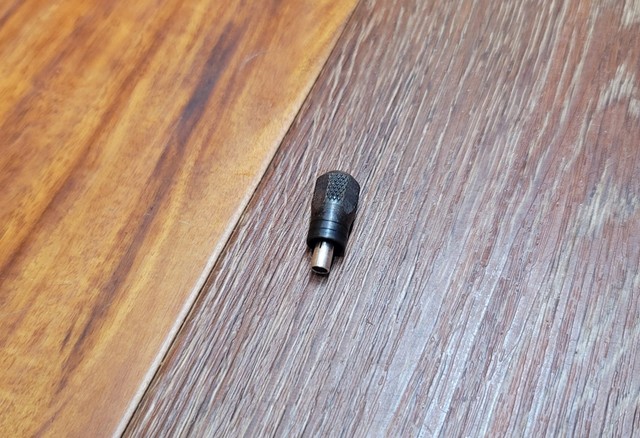
Dremel 8050 Micro Cordless Rotary Tool
A compact, pencil-grip cordless rotary tool meant to be held like a pen rather than gripped like a power tool, which suits the small, close-up cuts and sanding typical of scale-model detail work better than a full-size tool body does. The tapered nose and built-in LED make it easier to see exactly where a sanding drum or small cutting wheel is touching a part.
- 8V lithium-ion battery
- 5,000–25,000/28,000 rpm variable speed
- Slim pen-style body for a thumb-and-forefinger grip
- Built-in LED at the nose for close work
- Genuinely easier to control on fine detail than a full-size rotary tool
- Low end still reaches a usable 5,000 rpm
- Cordless with no cable dragging across the bench
- Smaller battery means shorter continuous runtime than the full-size cordless models
- Less torque than the 8220 or corded tools, so it can bog on thicker material
- Limited to smaller accessory shank sizes than full-size Dremels

Dremel Stylo+ (2050-15)
A lightweight, pen-shaped corded tool built for light engraving, sanding and polishing rather than heavy cutting — a good fit for delicate styrene detail work like panel lines or polishing clear canopy parts, where a full-power rotary tool is more than needed and harder to control precisely at close range.
- 5,000–22,000 rpm variable speed
- Slim corded pen-style body
- Keyed chuck
- Includes 15 accessories
- Lower maximum speed makes it harder to accidentally overheat styrene
- Comfortable grip for long detail sessions
- Inexpensive
- Less torque than a full-size rotary tool, struggles beyond light material removal
- Corded
- Not built for heavier cutting tasks like separating thick sprues

Dremel Lite 7760 Cordless Rotary Tool
Dremel’s cheapest cordless option, aimed at light craft use — worth flagging here specifically because its minimum speed sits higher than every other tool on this list, which matters more for styrene than for most of the materials it’s actually marketed toward, like wood and light metal.
- 4V lithium-ion battery, USB rechargeable
- 4-speed dial from 8,000 to 25,000 rpm
- EZ Twist nose cap
- Includes 10 accessories
- Cheapest cordless Dremel here
- Simple, low learning curve for a beginner
- USB charging is convenient
- Cannot go below 8,000 rpm, already close to where styrene starts to soften and smear under a bit — the main reason it’s last on this list rather than first
- Lower torque than the other cordless options
- Smaller accessory kit

Proxxon IBS/E Professional Rotary Tool
A German-made rotary tool built specifically for hobbyists and model builders rather than general home DIY, with electronics designed to hold constant torque at low speed — exactly the situation where cheaper general-purpose tools bog down or start heating up the plastic under load instead of cutting through it cleanly.
- 100W motor with full-wave electronic speed control
- 5,000–20,000 rpm
- Six steel collets from 1/32 to 1/8 inch
- Includes 34 bits and cutters
- Purpose-built for modeling rather than general hardware-store use
- Holds torque at low rpm more consistently than most Dremels
- Useful range of collets included for small bit sizes
- Costs more than any Dremel on this list
- Narrower top speed of 20,000 rpm, not the tool to reach for on harder materials
- Corded only
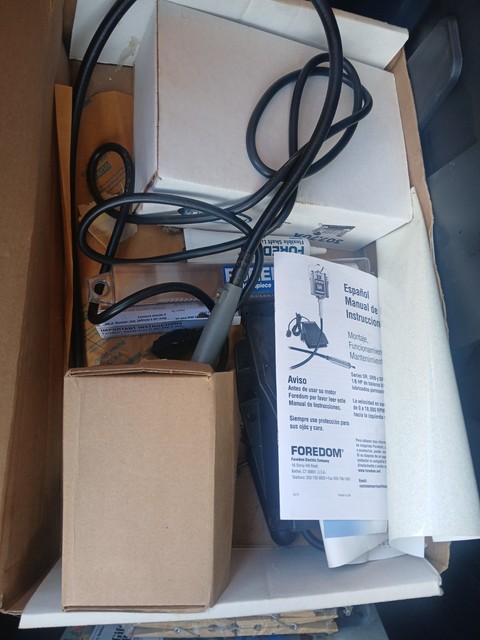
Foredom SR Series Flex Shaft Kit
A professional flex-shaft system used by jewelers and serious model makers, with the motor mounted separately from the handpiece and speed controlled by a foot pedal rather than a thumb dial — the setup that gives the most precise, fatigue-free low-speed control of anything on this list, at a real price jump.
- Separate hang-up motor connected via flexible shaft to a handpiece
- Foot-pedal speed control
- Roughly 18,000–20,000 rpm depending on motor
- Interchangeable handpieces and collets
- Foot-pedal control allows finer mid-cut speed adjustment than any handheld dial
- Motor weight sits off the handpiece entirely, reducing fatigue and vibration
- Durable, with replacement parts and handpieces sold separately for years
- Substantially more expensive than any Dremel or Proxxon here
- Takes up more bench space and setup time than a handheld tool
- Overkill unless you do this often enough to justify it

Dremel 225-02 Flex Shaft Attachment
An accessory rather than a standalone tool — it connects to a compatible corded Dremel’s collet and moves the cutting or sanding tip onto the end of a flexible cable, so the heavy motor sits on the bench instead of in your hand. On small, delicate styrene parts, that buys more control than any speed setting does.
- Fits standard corded Dremel rotary tools
- Roughly 36-inch flexible shaft
- Pen-style handpiece with its own collet
- Reduces vibration transmitted to the tip
- Meaningfully improves control on fine detail work
- Makes a bulky rotary tool feel closer to a hobby knife in the hand
- Relatively inexpensive add-on
- Only compatible with corded Dremel models with the matching collet, not the Micro or Stylo
- Adds a setup step versus just picking up the tool
- One more cable to manage on the bench

Dremel SC407 EZ SpeedClic Sanding Set
A small set of sanding bands and a mandrel sized for a rotary tool, in two grits — the actual accessory that does most of the styrene shaping and mold-line removal day to day, regardless of which tool body is driving it or how much it cost.
- Two sanding bands, 60 and 120 grit
- EZ SpeedClic mandrel included
- 1/2-inch drum size
- Tool-free band changes
- Inexpensive way to add plastic-safe abrasive to any rotary tool
- Two grits cover both rough shaping and finer cleanup
- Bands swap without any tools
- Bands wear out faster on styrene than on wood, since melted plastic clogs the grit
- Only fits tools with an EZ SpeedClic-compatible collet or the included mandrel
- Useful for sanding only, not cutting
Buying tips
- Set the speed dial low, around 5,000 to 10,000 rpm, for styrene, and let the abrasive or blade do the work instead of pressing harder.
- Test on a scrap sprue first to find the right speed before touching the actual kit part.
- Use a sanding drum or band for shaping styrene rather than a stone meant for metal or glass — stones load up with melted plastic much faster.
- A flex-shaft attachment moves the heavy motor out of your hand, which improves control more than any extra speed range does.
- Clean melted plastic residue off an abrasive with a dry brush before the next pass — built-up gunk burns and smears rather than cutting.
- Check a tool’s minimum rpm, not just its maximum, before buying it for plastic — some inexpensive cordless models can’t go below 8,000 rpm.
- Keep separate sanding and cutting accessories for plastic versus metal or resin work, since cross-contaminated grit smears instead of cutting cleanly.
- Only step up to a foot-pedal-controlled flex shaft like the Proxxon or Foredom if you build often enough to want both hands free at the bench.
As an Amazon Associate and eBay Partner, toptenpick.com earns from qualifying purchases. Prices and availability are subject to change.