

As an Amazon Associate and eBay Partner, toptenpick.com earns from qualifying purchases. Prices and availability are subject to change.
Colour advice for cars is usually generic — dark shows dirt, light hides it, silver is boring, black is classy. On a Charger there is a specific structural reason to take it more seriously than that, and it is worth understanding before you choose.
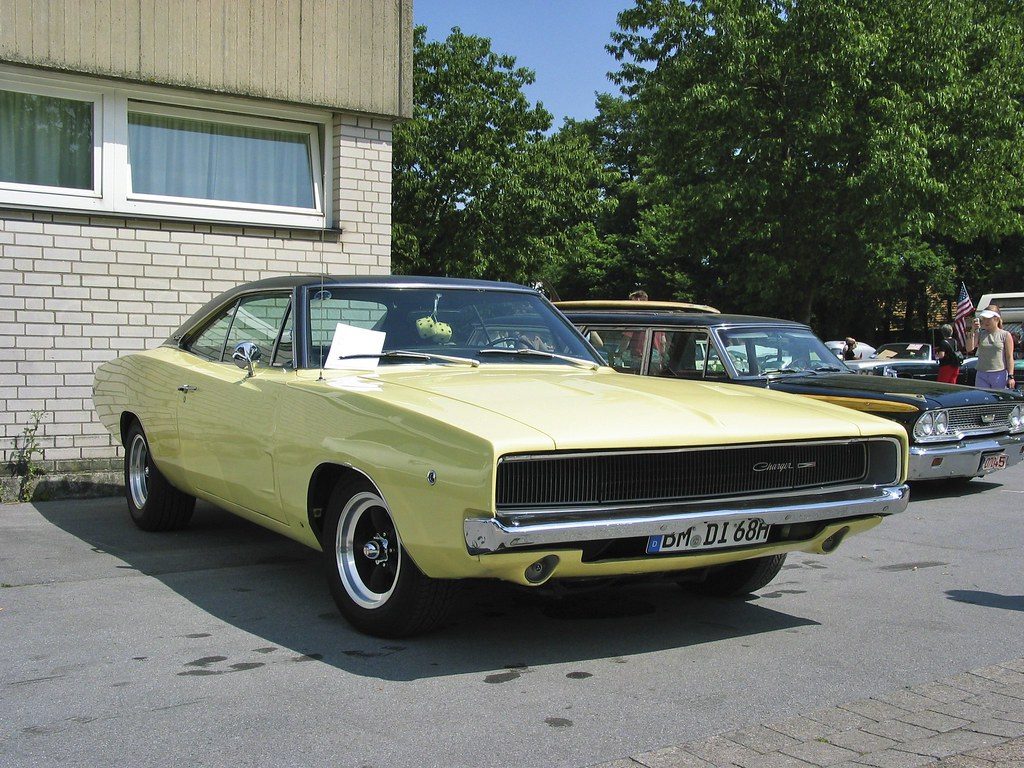
A Charger is built from unusually large, unusually flat panels. The hood is long and broad, the doors are deep slabs, the roof is a wide plane, and the flanks run almost straight from wheel to wheel. Curvature is what hides paint defects: a curved panel scatters reflections in every direction, so a swirl mark or an orange-peel texture never lines up into a visible pattern. A flat panel does the opposite. It acts like a mirror, reflecting a light source cleanly enough that every fine scratch around that reflection lights up in a halo. This is why the same black paint looks glassy on a small curvy hatchback and looks like a spider web on a Charger’s hood under a parking-lot light.
So the real question is not which colour looks best in a photograph. It is how much washing discipline you are honestly willing to commit to, because that is what decides whether your car looks like the photograph in two years. Black and the dark blues and greys demand a two-bucket wash with grit guards, clean microfibre, and a drying method that never drags across the paint. Skip that and you will put the swirls in yourself — the great majority of swirl marks are inflicted during washing, not by the road.
The other factor worth weighing is resale, and here the Charger is unusual in a good way. Most cars depreciate fastest in unusual colours. On a Charger, the heritage high-impact colours — the purples, the oranges, the bright blues Dodge revives from the 1970s, often as limited-run options — tend to hold value better than the silver and grey that dominate the used listings, because the enthusiast buyers who want a Charger want the ones that look like a Charger.
Below are ten things worth buying once you have chosen, ordered roughly by how much difference they make.
| # | Product | Price | Where to buy |
|---|---|---|---|
| 1 | Ceramic Coating Kit | $60-$200 | Amazon · eBay |
| 2 | Two-Bucket Wash System with Grit Guards | $30-$70 | Amazon · eBay |
| 3 | Dual-Action Polisher | $120-$350 | Amazon · eBay |
| 4 | Compound and Polish Set | $40-$100 | Amazon · eBay |
| 5 | Paint Thickness Gauge | $30-$120 | Amazon · eBay |
| 6 | Paint Protection Film for the Front End | $150-$800 DIY, more installed | Amazon · eBay |
| 7 | Factory-Matched Touch-Up Paint | $15-$45 | Amazon · eBay |
| 8 | Vinyl Wrap or Stripe Kit | $60-$300 for stripes | Amazon |
| 9 | Microfibre Drying Towel | $20-$50 | Amazon · eBay |
| 10 | Iron Remover and Clay Bar Kit | $25-$60 | Amazon · eBay |
The picks, in detail

Ceramic Coating Kit
The single highest-value purchase for anyone who chose a dark colour. A ceramic coating bonds a hard, hydrophobic layer to the clear coat, so dirt releases more easily, washing takes less mechanical effort, and less mechanical effort means fewer swirls — which, per the introduction, is the entire battle on a flat-panelled dark car. It also adds real gloss. The work is in the preparation: the paint has to be decontaminated and corrected first, because a coating locks in whatever is underneath it.
- SiO2 or graphene-based coating
- Two to five years of durability depending on product
- Strong hydrophobic and self-cleaning behaviour
- Applicator, cloths and prep spray in kit form
- Makes washing far gentler, which is what prevents swirls
- Substantial gloss increase on dark colours
- Years of protection from one application
- Locks in any defects present when applied
- Preparation is most of the work and most of the time

Two-Bucket Wash System with Grit Guards
The cheapest thing here and the one that prevents the most damage. One bucket holds your wash solution, the other holds clean rinse water, and the grit guard at the bottom of each traps the dirt you rinse off the mitt so it stays out of the mitt. That is the whole mechanism — and it is what stops you sanding your own paint with the grit you just removed from it. On a flat-panelled dark car this is not a refinement, it is the difference between glossy and hazy.
- Two buckets with grit guard inserts
- Usually supplied with a wash mitt
- Colour-coded buckets to avoid mixing them up
- Lids so they can be stacked and stored
- Directly prevents the main cause of swirl marks
- Costs less than a single polish
- Lasts indefinitely
- Takes more time than a one-bucket wash
- Bulky to store

Dual-Action Polisher
The tool that removes the swirls already there. A dual-action machine rotates and oscillates simultaneously, which spreads heat and makes it very hard to burn through a clear coat — unlike a rotary, which is a professional tool that punishes inexperience. On a Charger the large flat panels are actually an advantage here: they are easy to work, with few tight curves to catch a pad. Start with the least aggressive pad and polish combination that works, and only step up if it does not.
- Random-orbital dual action movement
- Variable speed control
- 5 or 6 inch backing plate
- Usually supplied with a set of pads
- Very difficult to damage paint with, unlike a rotary
- Large flat panels are easy and quick to work
- Transforms a swirled dark car
- A full correction is a weekend, not an afternoon
- Pads and compounds add meaningfully to the cost

Compound and Polish Set
What the machine actually works with. Compound is the aggressive stage that removes defects by levelling the clear coat slightly; polish is the refining stage that removes the haze the compound left behind. You need both, and the mistake to avoid is starting too aggressive — clear coat is finite and every correction uses some of it up. Test on a small area first, and remember that on the Charger’s flat panels any remaining haze will be far more visible than on a curvy car.
- Cutting compound and finishing polish
- Matched cutting, polishing and finishing pads
- Body-shop-safe formulations available
- Panel wipe to check true results
- Removes defects rather than filling them
- Test-area approach makes it low risk
- One set does several cars
- Clear coat is finite — over-correction is permanent
- Some products fill defects temporarily rather than removing them

Paint Thickness Gauge
The instrument that stops a correction becoming a repaint. It measures how much clear coat you have, in microns, so you know whether a panel has been resprayed, whether previous owners have already polished it thin, and how much material you can safely remove. On a used Charger — and most Chargers are bought used — this routinely reveals a panel that has been repainted after a knock, which is exactly the panel you do not want to hit with a compound. Cheap ones are available and adequate.
- Measures coating thickness in microns
- Works on steel and, on better units, aluminium
- Instant readout
- Pocket sized
- Prevents polishing through a clear coat permanently
- Reveals repainted panels on a used car
- Useful before buying a car at all
- Cheap gauges read steel only
- Needs several readings per panel to be meaningful
Paint Protection Film for the Front End
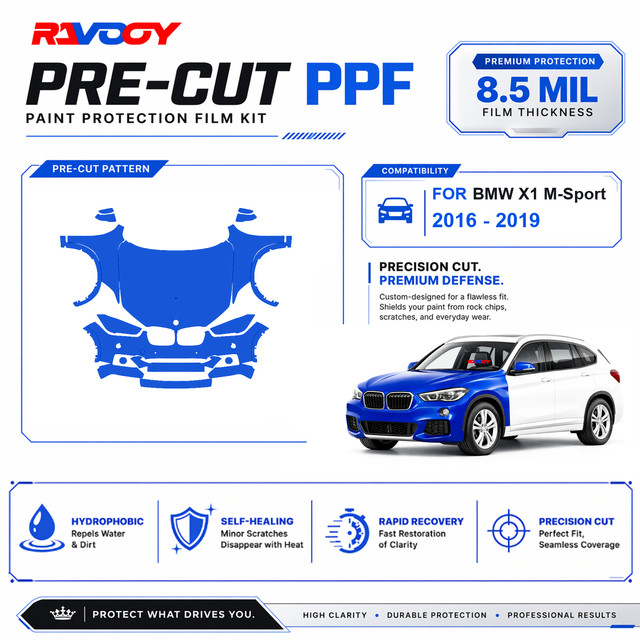
The only thing on this list that actually prevents stone chips, and the Charger’s long flat hood is exactly the surface that collects them. A clear urethane film over the leading edge of the hood, the bumper and the mirrors takes the impacts instead of the paint, and modern films are self-healing for fine scratches. Professional installation is expensive; pre-cut DIY kits exist and are doable with patience. Particularly worth it on the bright heritage colours, where a chip is much harder to touch up invisibly.
- Clear self-healing urethane film
- Pre-cut kits for specific model years
- Covers hood leading edge, bumper and mirrors
- Five to ten year durability
- The only product here that actually stops stone chips
- Self-healing surface removes fine scratches with heat
- Protects resale value on a rare colour
- Professional installation is costly
- A visible edge line where the film ends

Factory-Matched Touch-Up Paint
Buy it in the colour code on your door jamb, not by the colour name. Charger colour names have been reused and revived across decades and trims, and “Go Mango” or “B5 Blue” from the wrong year is close but wrong — which on a large flat panel is worse than a chip, because the mismatch is visible in exactly the same reflection that shows every other defect. Get the code, buy a pen or bottle with a matching clear coat, and fix chips promptly before rust starts underneath.
- Matched to the factory paint code
- Pen, brush or aerosol formats
- Matching clear coat included in kits
- Primer for chips down to metal
- Stops a chip becoming a rust spot
- Exact code matching beats a colour name
- Very cheap relative to a body shop
- Colour names are reused across years — use the code
- Invisible repairs need real patience and technique
Vinyl Wrap or Stripe Kit
The reversible way to change your mind. A full wrap lets you run a colour the factory never offered and take it off again, and it protects the paint underneath while it is on — which matters for resale, since the original colour is preserved. A stripe kit is the cheaper version and suits the Charger’s long flat surfaces particularly well, because a stripe breaks up exactly the expanse of flat panel that makes defects visible. Professional installation is strongly advised for a full wrap.
- Cast vinyl in gloss, satin and matte finishes
- Full wraps or pre-cut stripe kits
- Protects the original paint underneath
- Removable without damaging good paint
- Completely reversible colour change
- Preserves the factory paint for resale
- Stripes visually break up large flat panels
- Full wraps need professional installation to look right
- Cheap vinyl fails and can pull at failing paint on removal

Microfibre Drying Towel
More paint damage is done drying than washing, because a dry cloth dragged across a panel has no lubrication at all. A large, deep-pile twist-loop microfibre towel absorbs enough water to dry a Charger in a couple of passes, and the right technique is to lay it flat and pull it gently rather than to rub. Wash drying towels separately, never with fabric softener — softener coats the fibres and turns an absorbent towel into something that smears water around.
- Twist-loop or deep-pile microfibre
- Large enough to cover a panel
- High absorbency, typically 1,000 gsm and up
- Edgeless or silk-banded to avoid scratching
- Drying is where most swirls are inflicted
- One large towel dries the whole car
- Cheap, and lasts years if washed correctly
- Fabric softener permanently ruins absorbency
- Dropped on the ground it must be retired

Iron Remover and Clay Bar Kit
Decontamination, and the step people skip before coating or polishing. Brake dust embeds tiny iron particles into the clear coat where they corrode and cause brown speckling; an iron remover dissolves them chemically, turning purple as it works, which is oddly satisfying and also a useful indicator. A clay bar or mitt then shears off the bonded contamination you can feel with a fingertip through a plastic bag. Do both before any coating, or you seal the contamination in for years.
- pH-balanced iron remover spray
- Clay bar or clay mitt with lubricant
- Visual colour-change indicator on the iron remover
- Safe on coated and uncoated paint
- Essential preparation before coating or polishing
- Removes contamination polishing cannot
- Leaves the paint genuinely smooth to the touch
- Claying can mar soft paint if under-lubricated
- Iron removers smell strongly — use outdoors
Buying tips
- The Charger’s flat panels are why dark colours are harder work here. A curved panel scatters reflections and hides fine scratches; a big flat hood acts like a mirror and lines every swirl up into a visible halo around each light source. The same black paint that looks glassy on a small curvy car looks hazy on a Charger. Choose with your washing habits in mind, not the showroom lighting.
- Most swirl marks are self-inflicted during washing. They come from dragging grit across the paint with a mitt or a towel, not from the road. A two-bucket system with grit guards, a clean mitt and a proper drying towel prevents the great majority of them, and costs less than one polish. This matters most on exactly the colours that look best in photographs.
- Heritage colours hold value on this car specifically. The revived high-impact purples, oranges and bright blues, often limited-run, tend to resell better than the silver and grey that fill the used listings — because the people who want a Charger want one that looks like a Charger. That is unusual: on most cars, unusual colours depreciate faster.
- Never dry by rubbing. Lay a large deep-pile microfibre towel flat on the panel and draw it gently across, or blot. A dry cloth rubbed over paint has no lubrication at all, which is why drying does more damage than washing. And never wash microfibre with fabric softener — it coats the fibres and turns an absorbent towel into a smearing one.
- Decontaminate before you coat or polish. Embedded iron particles from brake dust corrode inside the clear coat and cause brown speckling, and bonded contamination makes paint feel rough through a plastic bag. An iron remover and a clay bar deal with both. Apply a ceramic coating over contamination and you have sealed it in for years.
- Measure your clear coat before correcting a used car. A paint thickness gauge shows which panels have been resprayed and how much material previous owners have already polished away. Clear coat is finite and polishing through it means a respray. Several readings per panel, and be cautious anywhere the numbers are low or inconsistent.
- Buy touch-up paint by the code on the door jamb, never by the colour name. Charger colour names have been revived across decades and applied to slightly different formulations. A near-match on a large flat panel is arguably worse than the chip, because the mismatch shows up in the same reflection that reveals everything else.
- Consider a wrap if you want a colour the factory never sold. It is fully reversible, it protects the original paint underneath — which preserves resale value — and a stripe kit in particular suits the Charger’s long flat flanks, because breaking up that expanse of panel visually is doing the same job that a curve would. Use cast vinyl and a professional installer for a full wrap.
As an Amazon Associate and eBay Partner, toptenpick.com earns from qualifying purchases. Prices and availability are subject to change.