

As an Amazon Associate and eBay Partner, toptenpick.com earns from qualifying purchases. Prices and availability are subject to change.
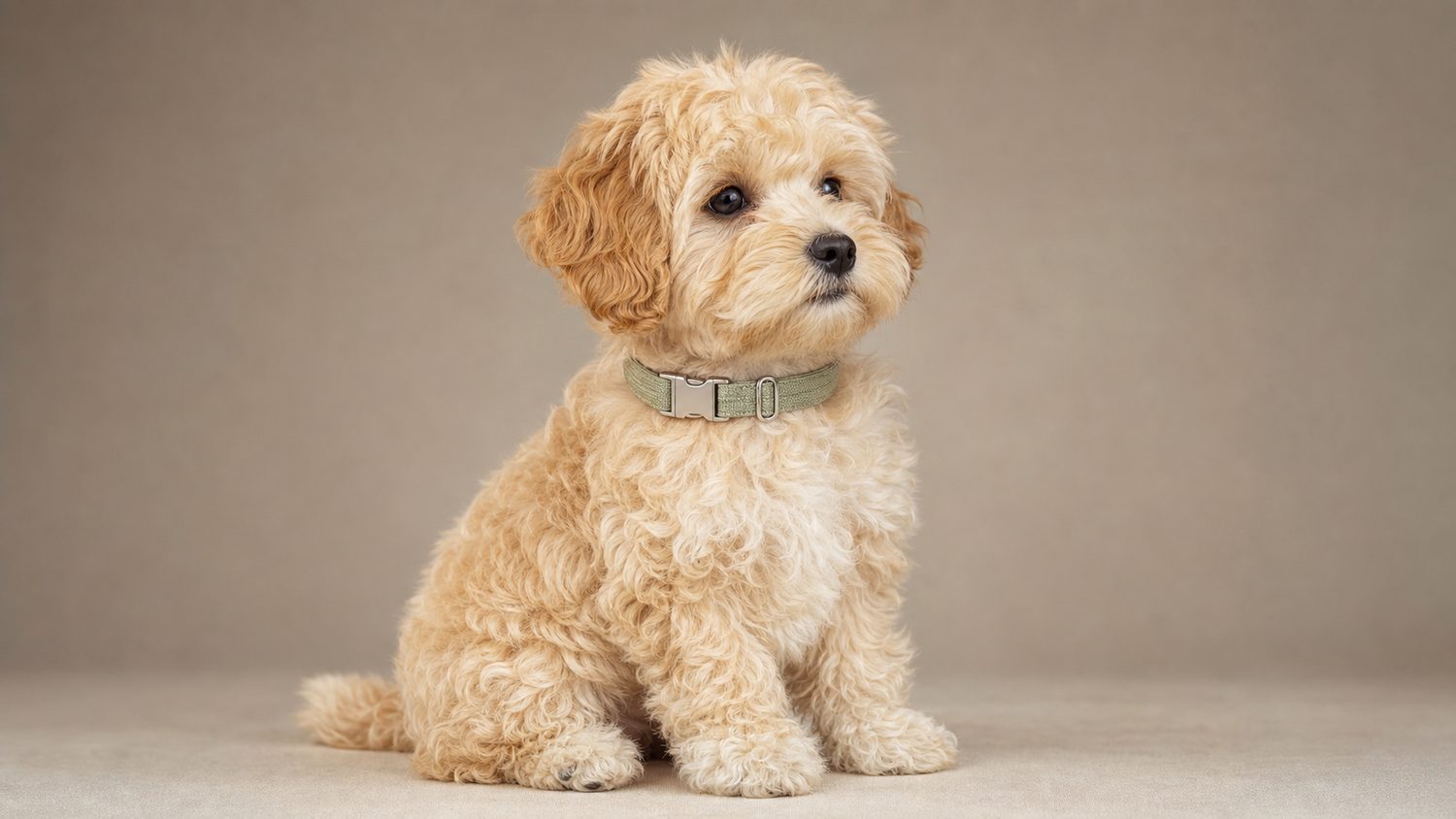
A Maltipoo puppy is a very small dog with a very small neck, and that changes the collar question in a way that matters more than any feature comparison.
Toy breeds are prone to collapsing trachea. The windpipe is held open by rings of cartilage, and in small breeds those rings can be weak or soften with age, letting the airway flatten. Pressure on the front of the neck — which is exactly what a lead attached to a collar applies every time a puppy pulls, lunges at a squirrel or is checked back — is a known aggravating factor. The characteristic symptom is a dry, honking cough. It is a real condition, it is common in toy crosses, and it can be worsened by how you walk the dog.
The practical conclusion is the most useful thing in this article: use a harness for walking and a collar for identification. A collar carrying an ID tag, sitting loosely, doing no work, is entirely appropriate and in many places legally required. A collar taking the full force of a lead on a four-kilo dog is not. This is standard advice from toy-breed veterinarians and it costs nothing to follow.
Two more things specific to this puppy.
Maltipoos have fine, curly, tangle-prone coats, and a collar sits in exactly the spot where mats form. A rough webbing collar worn constantly will felt the hair underneath it, and that mat is uncomfortable and hard to remove. A smooth, rolled or padded collar substantially reduces it, and the hair under the collar needs checking and combing regularly.
And a puppy’s neck grows fast. A collar fitted correctly in March can be tight by June, and a collar that has become tight on a rapidly growing puppy is a genuine welfare problem. Check the fit weekly — the two-finger rule — rather than at some remembered interval.
Ten picks below.
| # | Product | Price | Where to buy |
|---|---|---|---|
| 1 | Lightweight Rolled Leather ID Collar | $20-$50 | Amazon · eBay |
| 2 | Soft Padded Nylon Collar | $12-$30 | Amazon · eBay |
| 3 | Step-In Harness for Small Dogs | $18-$45 | Amazon · eBay |
| 4 | Soft Mesh Vest Harness | $15-$40 | Amazon · eBay |
| 5 | Lightweight Lead (4-6 ft, Small Clip) | $12-$30 | Amazon |
| 6 | Engraved ID Tag or Collar Plate | $10-$25 | Amazon · eBay |
| 7 | Puppy Coat Comb and Slicker Brush | $15-$35 | Amazon · eBay |
| 8 | Adjustable Puppy Collar with Growth Range | $12-$30 | Amazon |
| 9 | Breakaway Safety Collar | $15-$35 | Amazon · eBay |
| 10 | Reflective or LED Collar Accessory | $10-$25 | Amazon · eBay |
The picks, in detail

Lightweight Rolled Leather ID Collar
The best collar type for a coat like this, and the reason is geometry. A rolled collar is a round cord rather than a flat strap, so it presents a much smaller contact area against the hair and does not press a flat band of coat into a mat. Soft leather becomes more supple with wear and does not abrade. Sized for a toy breed, with a small buckle and a light D-ring for a tag only — this is an identification collar and should never take a lead.
- Rolled round leather rather than flat webbing
- Toy-breed sizing with small hardware
- Softens with wear
- D-ring for an ID tag
- Markedly less matting than a flat collar
- Soft leather is kind to a fine coat
- Light hardware suits a very small dog
- Leather needs keeping dry and occasionally conditioned
- Must not be used to attach a lead

Soft Padded Nylon Collar
The practical everyday alternative, and better than plain webbing for this coat. A collar with a soft padded lining — neoprene, fleece or a rolled edge — spreads the contact and does not abrade the hair the way a raw nylon edge does. Nylon has the advantages of being washable, quick-drying and cheap enough to replace as the puppy grows, which it will do repeatedly. Look for a small quick-release buckle rather than a chunky one sized for a larger dog.
- Padded or fleece-lined interior
- Quick-release buckle sized for toy breeds
- Washable and quick drying
- Adjustable over a range
- Kinder to a fine coat than raw webbing
- Washable, which matters with a puppy
- Cheap enough to replace as the puppy grows
- Still flat, so more matting than a rolled collar
- Cheap buckles are bulky on a small neck

Step-In Harness for Small Dogs
What the lead should actually attach to, and a step-in design is the easiest for a puppy to accept. The dog puts its front feet through two loops and the harness fastens over the back, so nothing goes over the head — which matters, because many puppies object strongly to things being pushed over their faces and that resistance becomes a lasting association. The load spreads across the chest and shoulders instead of the throat, which is the entire point.
- Step-in design, nothing over the head
- Padded chest and shoulder panels
- Back D-ring for the lead
- Toy-breed sizing
- Removes all pressure from the trachea
- Nothing over the head, which puppies accept far more easily
- Spreads load across the chest
- Some designs still concentrate pressure at the shoulders
- Needs correct sizing or it rubs under the armpits
Soft Mesh Vest Harness
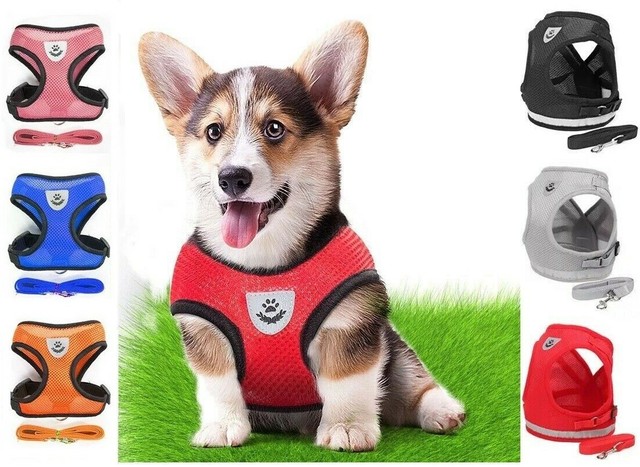
The other harness format, and the gentlest of all for a very small puppy. A mesh vest spreads the load over a large area of the chest and back, which means even a determined lunge applies no concentrated pressure anywhere. Mesh also breathes, which matters on a dog wearing a garment in summer. Check the fit under the front legs specifically — a vest harness that is too tight there rubs the thin skin in the armpit, which is the one place these commonly cause a problem.
- Soft breathable mesh construction
- Load spread over a wide area
- Velcro and buckle closure
- Very light weight
- Gentlest load distribution of any format
- Breathable in warm weather
- Weighs almost nothing on a tiny dog
- Rubs under the front legs if incorrectly sized
- Velcro closures lose grip as they collect hair
Lightweight Lead (4-6 ft, Small Clip)
Match the lead to the dog, which people routinely do not. A standard lead with a heavy trigger clip weighs a noticeable fraction of a Maltipoo puppy and that weight hangs constantly from the harness ring, which is both uncomfortable and off-putting during early training. A thin, light lead with a small bolt snap solves it. Four to six feet gives enough freedom for a puppy to explore without being far enough away to get into trouble.
- Thin, light webbing or rope
- Small bolt snap or trigger clip
- 4 to 6 ft length
- Padded handle
- Weight matters enormously on a four-kilo dog
- Light clips are easier on a small harness ring
- Fixed length is safer than a retractable for training
- Light leads offer less grip if the dog lunges
- Thin webbing can cut the hand without a padded handle

Engraved ID Tag or Collar Plate
The reason the collar exists, and worth getting right. A small dog cannot carry a heavy tag comfortably, and a jangling disc is also a constant noise that some dogs genuinely dislike. A slide-on collar plate — riveted or threaded flat against the collar — is silent, cannot catch on anything, and cannot be lost the way a dangling tag can. Engrave your phone number rather than the dog’s name, which is what actually gets a lost dog home.
- Slide-on plate or lightweight tag
- Deep engraving that will not wear off
- Silent against the collar
- Stainless steel or brass
- Silent and cannot snag, unlike a hanging tag
- Cannot fall off the way a split ring can
- Very light
- Must be replaced if your number changes
- Cheap engraving wears off within a year

Puppy Coat Comb and Slicker Brush
Directly relevant, because the collar is where mats start. A Maltipoo’s fine curly coat felts under anything that sits against it, and a mat under a collar goes unnoticed until it is tight and uncomfortable. A slicker brush and a fine metal comb used on the neck specifically, a few times a week, prevents it. The comb is the important one: a slicker brush glides over the top of a mat and leaves it in place, and a comb is what tells you it is there.
- Slicker brush with coated pin tips
- Fine-tooth metal comb
- Small heads for a toy breed
- Comfortable handles
- Prevents the matting collars cause
- The comb finds mats a brush glides over
- Establishes grooming tolerance early
- Needs doing several times a week to work
- Aggressive brushing causes brush burn on thin skin
Adjustable Puppy Collar with Growth Range
A practical acknowledgement that a puppy outgrows things fast. A collar with a wide adjustment range covers several months of growth rather than a few weeks, which saves buying three collars in a season. The trade-off is a longer tail of spare webbing at the small end, which should be trimmed and sealed or tucked into a keeper rather than left to dangle where it can be chewed. Check the fit weekly regardless; a wide range does not mean it fits itself.
- Wide adjustment range for a growing puppy
- Keeper loop for the spare tail
- Light hardware
- Washable materials
- Lasts through several months of growth
- Cheaper than buying a series of collars
- Keeper loop tidies the excess
- Long spare tail invites chewing
- Still needs weekly fit checks

Breakaway Safety Collar
Worth knowing about for a dog left unsupervised. A breakaway buckle releases under sustained pressure, so a collar caught on a crate wire, a fence, a branch or another dog’s teeth during play comes off rather than strangling the dog. Collar strangulation is a real and under-discussed cause of death in small dogs, and this is the direct answer. The trade-off is that a breakaway collar is not suitable for attaching a lead — which, per the introduction, you should not be doing anyway.
- Buckle releases under sustained pressure
- Some have a second ring for lead use that overrides the release
- Toy-breed sizing
- ID tag attachment
- Prevents collar strangulation on crates, fences and in play
- The right choice for an unsupervised dog
- Still carries an ID tag
- Not suitable for lead attachment
- Can release during normal play and be lost

Reflective or LED Collar Accessory
A small dog is genuinely hard to see in low light, and a Maltipoo is both small and often light-coloured against pavement. A reflective collar, a clip-on LED or a light attached to the harness makes the difference at dusk, in winter and in any car park. Clip-on lights are the flexible option because they move between a collar and a harness. Choose a steady or slow-flash mode; a fast strobe is more visible and more disorienting for everyone including the dog.
- Reflective stitching or clip-on LED
- Rechargeable or coin cell
- Attaches to collar or harness
- Several light modes
- A small dog is genuinely hard to see in low light
- Clip-on lights move between collar and harness
- Cheap
- Coin cells die without warning
- Fast strobe modes are disorienting
Buying tips
- Attach the lead to a harness, not the collar. Toy breeds are prone to collapsing trachea, and pressure on the front of the neck is a known aggravating factor. A collar carrying an ID tag and doing no work is fine and often legally required; a collar taking the force of a lead on a small dog is not. This is standard toy-breed veterinary advice.
- Use the two-finger rule, and check weekly. You should be able to slide two fingers comfortably between the collar and the neck. Puppies grow fast enough that a collar fitted correctly in spring can be tight by summer, and a collar that has become tight on a growing puppy is a genuine welfare problem. Check it on a schedule, not when you remember.
- Choose a rolled or padded collar for this coat. A Maltipoo’s fine curly hair felts under anything flat that sits against it, and the mat forms out of sight under the collar. A rolled collar presents a much smaller contact area; a padded one spreads it. Either is substantially better than plain flat webbing.
- Comb under the collar a few times a week. This is where mats start and where they go unnoticed. Use a fine metal comb rather than only a slicker brush — a slicker glides over the top of a forming mat and leaves it there, while a comb catches and tells you. Take the collar off to do it.
- Match the lead weight to the dog. A standard trigger clip and thick webbing weigh a noticeable fraction of a four-kilo puppy, hanging constantly from the harness ring. A thin light lead with a small bolt snap makes a real difference to how willingly a puppy walks, and it is one of the cheapest improvements available.
- Consider a breakaway collar for unsupervised time. Collars catch on crate wires, fences, branches and other dogs’ teeth during play, and collar strangulation is a real cause of death in small dogs. A breakaway buckle releases under sustained pressure. It cannot take a lead, which is not a limitation if you are using a harness anyway.
- Take the collar off at home sometimes. Constant wear is what causes the matting and the hair loss under a collar, and a dog indoors with you does not need identification on it at every moment. Off in the house, on for the garden and for walks, is a reasonable compromise that solves most of the coat problem.
- Get the puppy used to handling early. Putting a harness on, checking the collar fit, combing the neck — all of it goes far better if it is a normal, rewarded, unremarkable part of every day from the start. A dog that objects to having its neck handled is much harder to groom and much harder for a vet to examine, and both last a lifetime.
As an Amazon Associate and eBay Partner, toptenpick.com earns from qualifying purchases. Prices and availability are subject to change.