

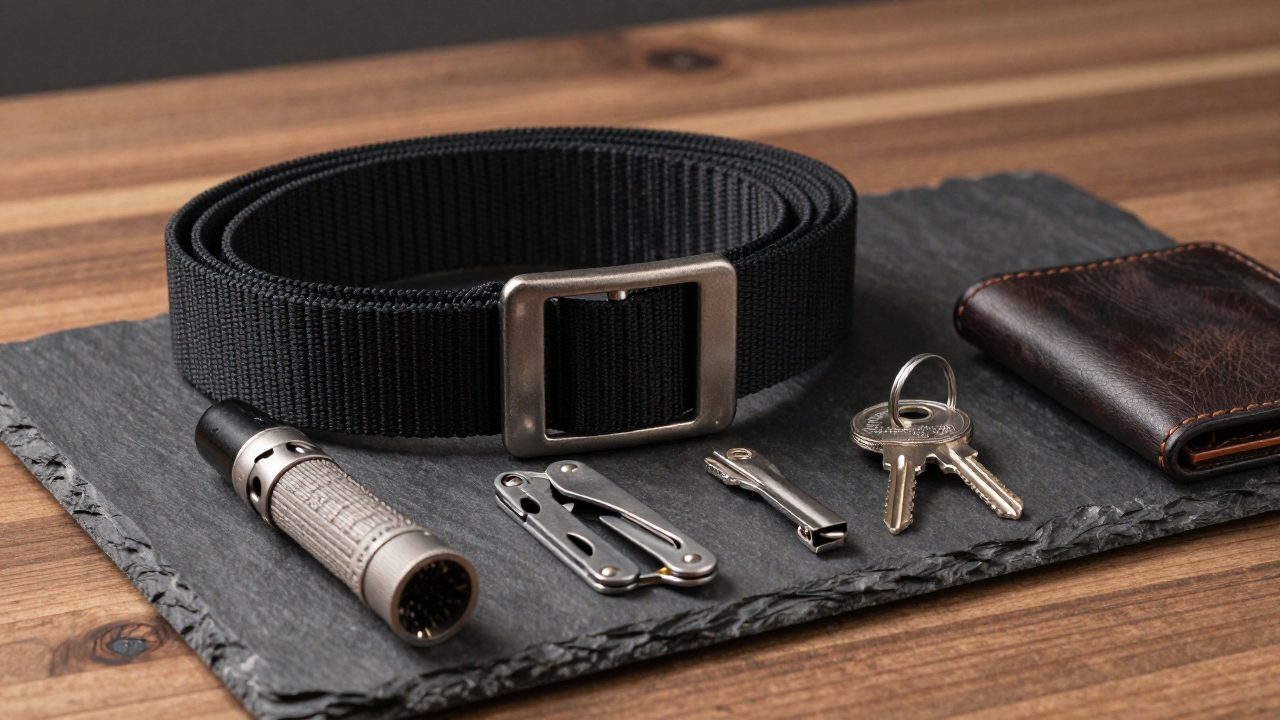
Why this topic needs a safety-first approach
A belt described with a Cobra-style quick-release buckle is often sold as everyday-carry equipment, but the term is commonly used in listings built around concealed firearm carry. That makes it a poor fit for a shopping roundup. The useful question is not which belt to buy; it is how a load-bearing belt, buckle and attachment system affect safe handling, lawful carriage and ordinary clothing use.
A belt is not a universal safety device. It cannot make an unsafe carry arrangement safe, and it cannot replace lawful training, a secure storage plan, or an understanding of local rules. Requirements for licences, permits, locations, vehicle transport and the use of force vary sharply by jurisdiction. Check the law that applies where you live and where you travel; do not assume that an online description or another person’s routine applies to you.
Buckle mechanics and everyday fit
Quick-release buckles use two release tabs and a mating body. The point of the two-tab action is to reduce accidental opening compared with a single catch. That does not mean every buckle, webbing width or stitching pattern is suitable for every task. Dirt, ice, damaged webbing, worn hook-and-loop closure, trapped clothing and a partly engaged buckle can all change how a system behaves. Inspect the parts with the belt unloaded, and do not modify the buckle, cut the webbing or substitute hardware unless its maker expressly allows it.
Belts marketed for carrying a rigid load are usually stiffer than ordinary fashion belts. Stiffness can reduce sag, but excess stiffness can make a belt uncomfortable when seated, can interfere with clothing, and can encourage a wearer to overtighten it. A correct fit is one that lets a person move, sit and breathe normally without relying on a buckle as a tensioning or retention device. Measure the actual waist and follow the maker’s measuring method rather than relying on trouser size, which is inconsistent between brands and cuts.
Retention, attachment and safe boundaries
Retention is a property of the complete system, not just the belt. Any carried object should remain controlled during normal movement and should not shift into a position where it can catch on clothing, furniture or a vehicle. Avoid improvising with loose clips, damaged fasteners, elastic loops or incompatible attachment standards. A belt’s buckle may be strong, yet the weak point can be a worn attachment, a loose screw, a cracked polymer part or an item that was never designed for that use.
Keep the discussion separate from use. No belt should be used to support unsafe handling, and no configuration should defeat established safety rules. If an item must be carried where it could be accessed by others, unsecured or unattended carriage creates additional risk. Follow the storage and transport rules that apply in your location, and seek qualified local instruction for any activity that involves regulated equipment.
Clothing, comfort and practical checks
Everyday clothing creates practical constraints. A bulky buckle can be difficult to thread through belt loops, may press against the body when sitting, and can make a belt less useful with certain workwear. Webbing width, buckle profile and the placement of the adjustment tail all matter. Before relying on a setup outside the home, test ordinary activities such as walking, reaching, sitting in a chair, entering a vehicle and using a restroom. The goal is to identify discomfort, snagging and unwanted movement without treating a casual test as a substitute for professional instruction.
Inspect frequently used belts for frayed edges, crushed webbing, loose stitching, corrosion, distorted buckle parts and loss of closure grip. Remove a damaged belt from service rather than attempting a repair with glue, tape or household hardware. Wash and dry textile components only as their manufacturer directs; solvents, heat and harsh cleaners can weaken fibres or finishes. A clean, undamaged belt still needs periodic fit checks because clothing layers and body measurements change over time.
Legal and social context
“EDC” is a broad term, but product marketing does not determine the legal character of an activity. Local law can regulate what may be carried, how it must be transported, where it is prohibited and who may possess it. Schools, government buildings, workplaces, private businesses and public events may have separate restrictions. When crossing a state or national border, rules can change even if the equipment itself looks ordinary. Obtain current guidance from official local sources or a qualified attorney where that level of advice is needed.
The best outcome is a system that stays within the law, remains comfortable for routine non-hazardous use and is removed from service when damaged. Treat advertising claims about strength, tactical use or rapid release as product descriptions, not proof of suitability or legal permission. Careful measurement, inspection and compliance are more useful than a ranked list of gear.
When to seek help
If a belt causes pain, numbness, restricted movement or recurring snagging, stop using that arrangement and reassess the fit. If a question involves legal possession, public carriage or transport, use an official local resource rather than a retailer’s product page. If a component has been involved in a fall, impact or forced opening, replace it or have it examined by an appropriate qualified professional. Safety depends on judgment, maintenance and lawful conduct—not on a buckle alone.