

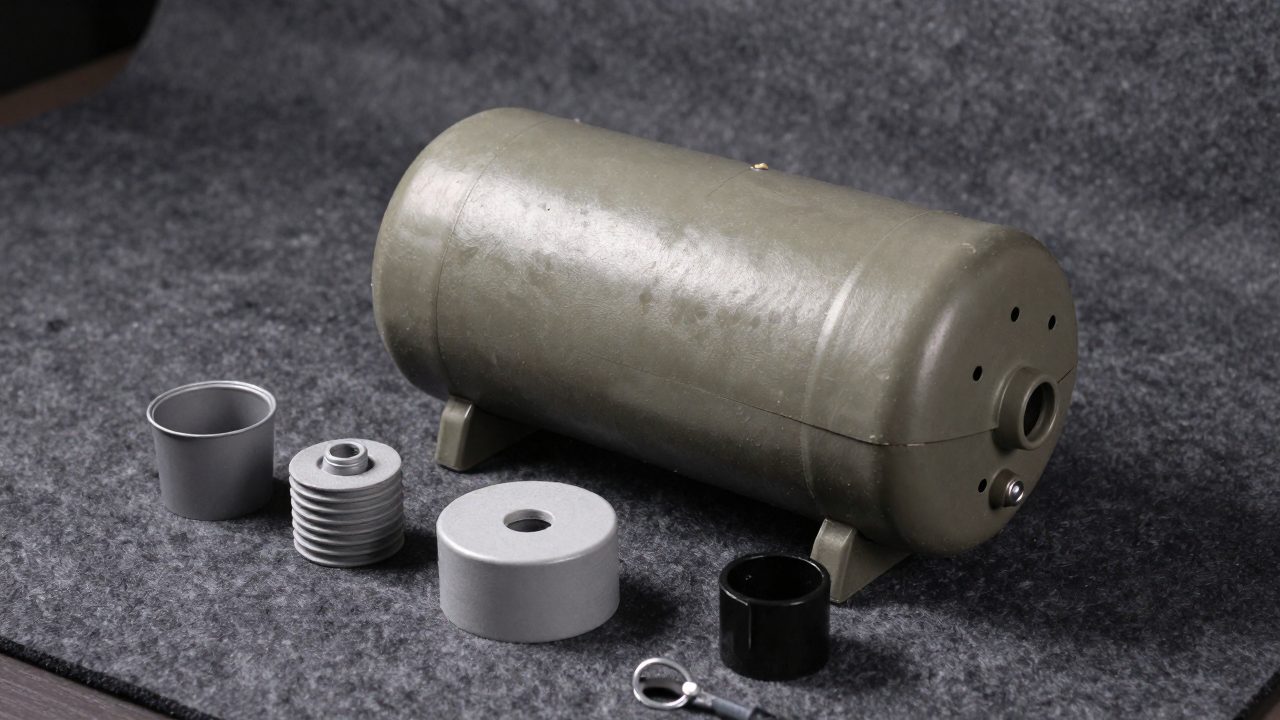
A CNG kit is not a part you buy and bolt on. In India it is a regulated retrofit that has to be fitted by an approved centre, certified, endorsed on the registration certificate and declared to your insurer — and which kit is even permitted depends on which i10 is parked outside. This guide covers the three generations separately, because a 2011 i10 Era and a 2023 Grand i10 Nios need different equipment and different paperwork.
Work out which i10 you have first
Three distinct cars wear the badge, and they are not interchangeable for this purpose. The original i10 sold from 2007 to 2017 with 1.1-litre iRDE and 1.2-litre Kappa petrol engines, all BS3 or BS4. The Grand i10 ran from 2013 to 2019 on the 1.2 Kappa. The Grand i10 Nios arrived in 2019 and moved to BS6, then to BS6 Phase 2 with on-board diagnostics stage two. The emission standard, not the model name, decides the kit.
There is also a factory route on the newer car. Hyundai sells the Grand i10 Nios with a company-fitted CNG system, which arrives already type-approved and warranted. If you are choosing between that and a retrofit on a car you have not bought yet, the factory option removes the certification work entirely and keeps the powertrain warranty intact.
BS6 cars need a sequential OBD-2 kit
Older venturi kits meter gas mechanically and were adequate for BS3 and BS4 engines. A BS6 engine will not tolerate that: its own diagnostics monitor fuelling continuously, and an uncalibrated kit throws permanent fault codes and can put the car into limp mode. What a BS6 i10 requires is a sequential injection kit with OBD-2 integration, calibrated for that engine — the electronic control unit reads the petrol map and injects gas per cylinder in step with it.
For a BS4 i10 a sequential kit is still the better buy even though a venturi system is legal. Sequential injection gives smoother running, cleaner cold starts and noticeably less valve-seat stress, and the price gap has narrowed to the point where the older technology saves little.
The rules changed in August 2022
Retrofitting was previously limited to older emission standards. The Ministry of Road Transport and Highways notified G.S.R. 625(E) on 11 August 2022, which permits retrofitment of CNG and LPG kits on BS-VI petrol vehicles under 3.5 tonnes. That notification is what makes a Nios conversion legal at all.
Components are governed by AIS-024, the Indian standard covering cylinder material, pressure testing, valve certification, pipe routing and crash safety. A kit that is not AIS-024 certified cannot be endorsed, whatever the seller claims, and an uncertified installation is the failure mode that turns a cheap quote into an unregisterable car.
The paperwork is the actual product
Only a government-authorised retrofitment centre can issue the installation certificate, and without that certificate nothing else proceeds. Expect to submit to the RTO: the registration certificate, insurance policy, pollution-under-control certificate, the installation certificate, the cylinder hydro-test certificate and Form 22 for the retrofit. The RC is then endorsed to show the vehicle runs on CNG.
Insurance is the step owners skip. A CNG kit changes the risk profile of the car, and Indian motor insurers require the policy to be endorsed within roughly one to two weeks of installation. An unendorsed kit can void claims generally, not only claims connected to the gas system — a rejected accident claim on an unrelated dent is the realistic consequence.
What it costs
Aftermarket sequential kits from the established Italian brands — Lovato, BRC, Tomasetto Achille, Landi Renzo — start around ₹30,000 and run to about ₹45,000 for a straightforward fitment. Advanced OBD-2 versions for BS6 cars sit higher, roughly ₹45,000 to ₹65,000 including installation, and quotes near ₹48,000 are common for a Grand i10 in metro cities. Lovato is the brand most often recommended for Hyundai engines on calibration availability.
Add the running costs nobody quotes: RTO endorsement fees, the insurance endorsement, and a cylinder hydro-test that recurs every three years for the life of the car.
Cylinder size, boot space and payload
The i10 is a small hatchback and the cylinder lives in the boot. A 45 to 55 litre water-capacity cylinder is the usual choice; it consumes most of the luggage space and adds meaningful weight over the rear axle. Toroidal cylinders that sit in the spare-wheel well preserve more boot space, cost more, and mean carrying the spare elsewhere. Decide this before signing, because it is the change owners most often regret.
What changes in daily driving
Expect roughly a tenth less power and slower response when loaded, which on a 1.1-litre i10 is felt on inclines. Running costs fall sharply enough that the kit typically pays back within a year for high-mileage users and much slower for someone driving 500 kilometres a month — the break-even is mileage, not the kit price.
Maintenance changes too. Gas burns hotter and drier than petrol, so spark plugs wear faster and valve clearances need checking on schedule. Start the car on petrol, keep the petrol tank in regular use so it does not stagnate, and keep the servicing interval the installer specifies rather than the standard petrol one.
Buying a used i10 that already has a kit
Check the RC endorsement first — if the conversion is not on the certificate, the car is not legally a CNG vehicle and regularising it is your problem. Then check the hydro-test date on the cylinder, ask for the installation certificate and the brand of the kit, and confirm the insurance shows the endorsement. An unbranded kit with no papers is a reason to walk away rather than a bargaining position.