

As an Amazon Associate and eBay Partner, toptenpick.com earns from qualifying purchases. Prices and availability are subject to change.
Before the list, the number you must stop believing: the wattage printed on a Class D board is very nearly fiction.
A board advertised as “600W” is quoting the chip’s absolute peak into a low impedance at 10% distortion, with a power supply the board does not come with. The same board delivers something closer to 2×150W at 1% distortion into 4 ohms — and only if you feed it 48V at around 10 amps. Which brings us to the thing almost every first build gets wrong:
The power supply is the amplifier. A TPA3255 board costs $40 and a supply capable of actually driving it costs more than the board. Run a good chip from a weak supply and you get a quiet, clipping amplifier and conclude the chip is overrated. Budget for the supply first, then buy the board.
Chip choice, briefly and honestly. The TPA3255 is the current default for DIY and deserves to be: more power, lower noise and better behaviour under sustained load. The older TPA3116 is cheap, cool and small, but it has a well-known turn-on and turn-off thump and measurably higher crosstalk and distortion — fine for a garage or workshop amp, not what you want driving good speakers. Infineon’s MA12070 is a genuinely different design philosophy, treating its rated power as true peak rather than something to sit near, and it is remarkably efficient at the low levels where domestic listening actually happens.
And plan the heatsinking before you order the case. The TPA3255 will produce real heat under sustained load, and “Class D is efficient” does not mean “Class D is cool” when you are asking it for most of its rating.
Ten boards and modules below, from twenty-dollar chip boards to the modules that go into commercial high-end amplifiers.
| # | Product | Price | Where to buy |
|---|---|---|---|
| 1 | 3e Audio TPA3255 2-Channel Amplifier Board | $50–$110 | Amazon · eBay |
| 2 | Fosi Audio TB10D (TPA3255) | $60–$110 | Amazon · eBay |
| 3 | Texas Instruments TPA3255EVM Evaluation Module | $150–$300 | Amazon |
| 4 | Wondom / Sure Electronics TPA3255 Amplifier Board | $60–$150 | Amazon |
| 5 | TPA3116 Amplifier Board (Aiyima, ZK and similar) | $15–$40 | Amazon · eBay |
| 6 | Infineon MERUS MA12070 Amplifier Board | $60–$150 | Amazon |
| 7 | Hypex NCore NC252MP Module | $400–$700 | Amazon · eBay |
| 8 | Purifi Eigentakt 1ET400A Module | $500–$900 | Amazon · eBay |
| 9 | ICEpower 125ASX2 Module | $250–$450 | Amazon · eBay |
| 10 | Mean Well SMPS Power Supply (36V or 48V) | $40–$120 | Amazon · eBay |
The picks, in detail

3e Audio TPA3255 2-Channel Amplifier Board
The default recommendation in DIY audio circles, and the board most people should buy. 3e Audio do the part that separates a good TPA3255 implementation from a mediocre one — the output filter, the input stage and the layout — rather than simply putting the chip on the cheapest possible PCB. Measured performance is excellent for the money and it runs cleanly from a standard switching supply.
- TPA3255 in a 2-channel configuration
- Well-designed output filter and input stage
- Onboard heatsinking provision
- Runs from a 24V to 48V DC supply
- Best measured performance per dollar in the category
- Implementation quality, not just the chip
- Strong community support and documentation
- Needs a substantial supply to reach its rating
- No case, controls or connectors — this is a board
- Sold direct rather than through mainstream retail
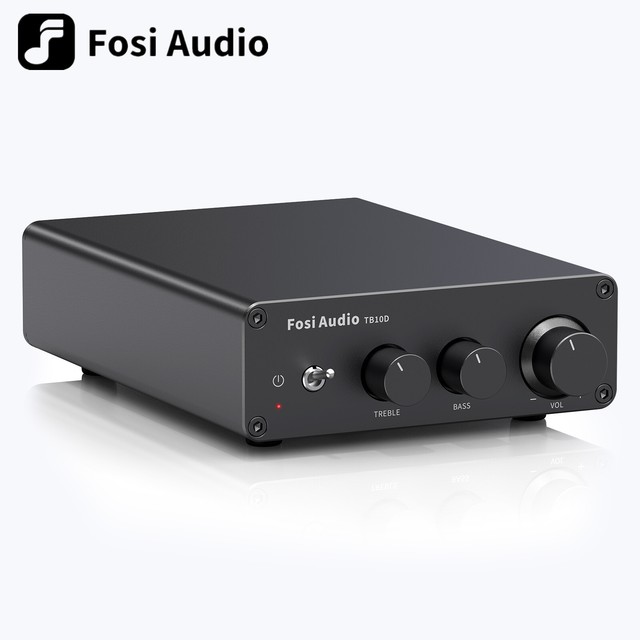
Fosi Audio TB10D (TPA3255)
The complete-amplifier answer for anyone who wants the TPA3255 sound without building anything. It is a finished unit with a case, a volume control, binding posts and a supplied power brick, often for the price of a bare board plus a supply. If “amplifier board” was a means rather than an end, buy this instead and skip the build.
- TPA3255 in a finished enclosure
- Volume control and speaker binding posts
- Power supply included
- Very compact
- Nothing to build, wire or case
- Supply is matched and included
- Excellent value as a finished product
- Included supply limits output below the chip’s potential
- No upgrade path — it is a sealed product
- Not a project if the project was the point
Texas Instruments TPA3255EVM Evaluation Module
The reference implementation, from the company that makes the chip. It is expensive for what it is, and that is not the point — the value is that it is the known-good configuration against which every other board is a cost reduction. If you are designing around this chip rather than assembling a hi-fi, start here and then decide what to compromise.
- Manufacturer’s reference design
- Full documented schematic and layout
- Configurable modes and gain settings
- Supports bridged and stereo operation
- The authoritative reference implementation
- Complete documentation from the chip designer
- Invaluable for a design project
- Costs several times a commercial board
- Bare evaluation board with no consumer amenities
- Overkill if you just want music
Wondom / Sure Electronics TPA3255 Amplifier Board
The practical middle option, with the things a bare board leaves you to solve — mounting holes that line up with real cases, sensible connector choices and available matching accessory boards for power, protection and DSP. Sure’s ecosystem is the reason to choose it: the boards are designed to be assembled into something rather than to win a specification comparison.
- TPA3255 board with practical mounting and connectors
- Matching PSU, DSP and protection boards available
- Documented configuration options
- Suitable for active speaker builds
- Designed to be built into something
- Matching accessory boards simplify the project
- Well documented
- Measured performance trails the best implementations
- Ecosystem pricing adds up quickly
- Documentation quality varies between products
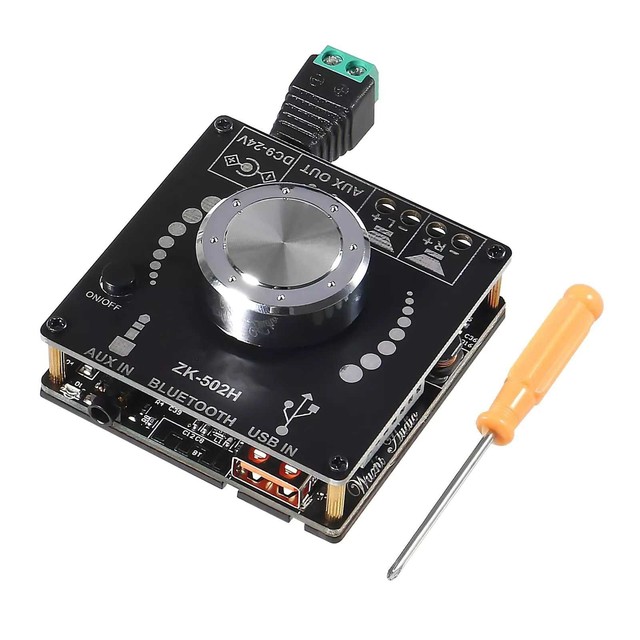
TPA3116 Amplifier Board (Aiyima, ZK and similar)
The twenty-dollar board that got everyone into this. Small, cool-running, happy on a 19V laptop supply, and entirely adequate for a workshop, a garden speaker or a first project. Be aware of what you are accepting: a documented turn-on and turn-off thump, and measurably more crosstalk and distortion than the TPA3255. Fine for the jobs above, not what to put in front of good speakers.
- TPA3116D2 chip, typically 2×50W claimed
- Runs from 12V to 24V — a laptop brick works
- Very small footprint
- Often includes a volume potentiometer
- Cheapest entry into Class D by a wide margin
- Low heat, easy power requirements
- Perfect for utility and workshop amplifiers
- Known turn-on and turn-off thump
- Higher crosstalk and distortion than the TPA3255
- Quality varies enormously between sellers
Infineon MERUS MA12070 Amplifier Board
A genuinely different approach rather than another TPA competitor. The MA12070 is built around efficiency at the low output levels where domestic listening actually lives, and it treats its rated power as true peak rather than something to sit at continuously. Excellent for a compact, cool-running amplifier for bookshelf speakers; the wrong choice if you want to run near rated power all evening.
- Infineon MERUS MA12070 chip
- Around 80W maximum output per channel
- Very high efficiency at low output levels
- Multi-level switching topology
- Outstanding efficiency at realistic listening levels
- Runs cool, so heatsinking is simple
- Different design approach worth hearing
- Peak power is genuinely peak, not continuous
- Fewer board options than the TPA ecosystem
- Smaller community and less documentation
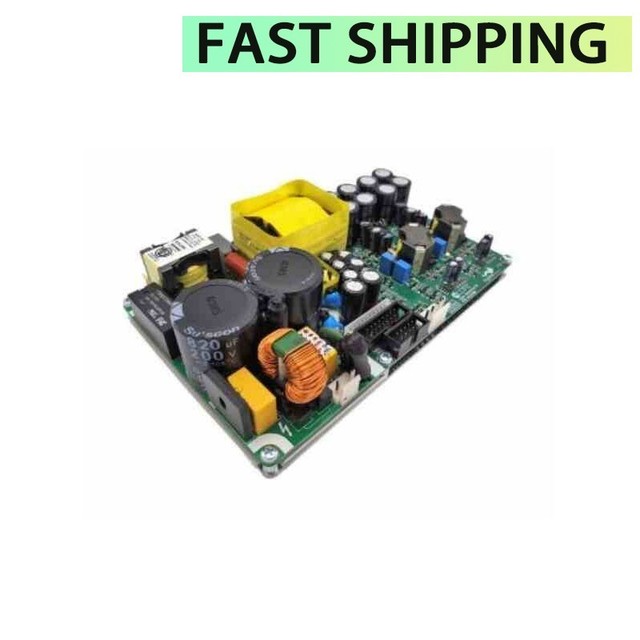
Hypex NCore NC252MP Module
The step from DIY into professional territory. An NCore module is a complete amplifier including its own switch-mode supply on the same board, which removes the biggest variable in any Class D build. The measured performance is the reason these appear inside commercial amplifiers costing several thousand dollars — you are buying the same module they use.
- Complete amplifier with integrated SMPS
- Around 2×250W into 4 ohms
- Extremely low distortion and noise
- Used in commercial high-end amplifiers
- Integrated supply removes the hardest part of the build
- Measured performance at a genuinely high level
- Proven in commercial products
- Several times the price of a chip board
- Mains wiring on the module — competence required
- Little to tinker with, by design
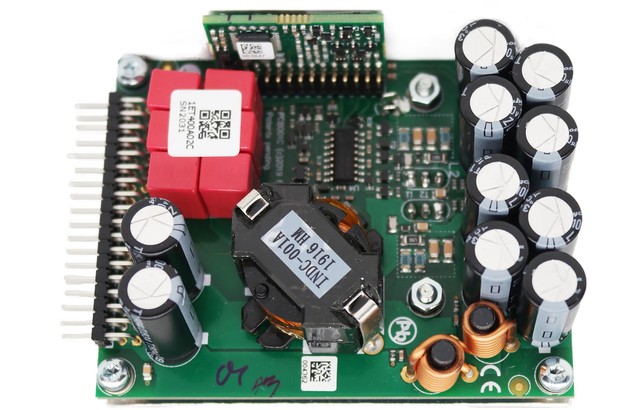
Purifi Eigentakt 1ET400A Module
The current reference point for measured Class D performance, and the module behind a long list of expensive commercial amplifiers. Distortion is low enough to be difficult to measure with ordinary equipment. You will need a separate power supply, a case and competence with mains wiring — and at this level the rest of the system has to justify it.
- Purifi Eigentakt topology
- Around 400W into 4 ohms
- Exceptionally low distortion across the load range
- Requires a separate SMPS
- Among the best measured amplifier performance available at any price
- Behaves consistently into difficult loads
- Used in respected commercial designs
- Very expensive, and the supply is extra
- Needs a matched supply to perform
- Pointless unless the rest of the system is at the same level
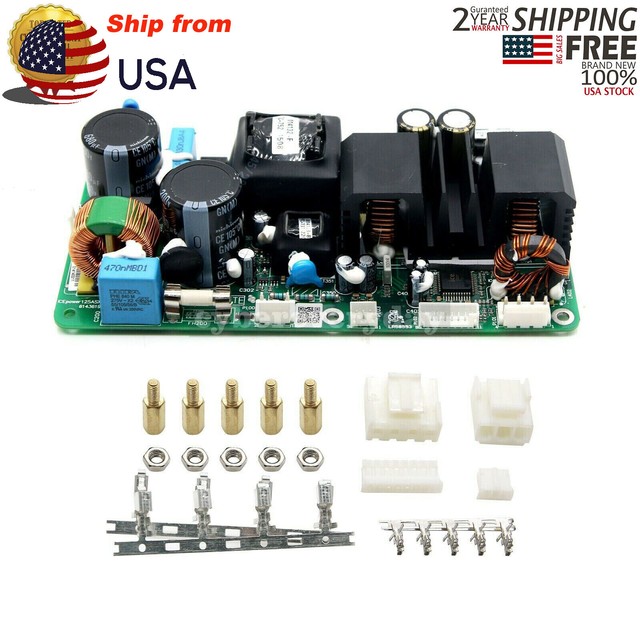
ICEpower 125ASX2 Module
The long-established professional option, with amplifier and power supply integrated on one board and a track record in studio and installed audio going back many years. Less fashionable than Hypex or Purifi and considerably cheaper, with a genuinely good specification and wide availability. A sensible choice for active speaker projects and subwoofer plate amps.
- Integrated amplifier and power supply
- 2×125W into 4 ohms
- Long track record in professional installations
- Compact single-board format
- Integrated supply, like the Hypex, at a lower price
- Proven reliability in commercial use
- Good fit for active speakers and subwoofers
- Measured performance trails NCore and Purifi
- Mains on board — treat it accordingly
- Fixed configuration with little flexibility

Mean Well SMPS Power Supply (36V or 48V)
The part that decides whether your board makes its rated power, and the part most first builds skimp on. A TPA3255 asking for 2×150W into 4 ohms needs a supply that can deliver several hundred watts continuously without sagging — a Mean Well LRS or SE series unit at 36V or 48V does that reliably, with proper protection and a real current rating rather than an optimistic one.
- 36V or 48V regulated output
- 300W to 600W continuous ratings available
- Overload, over-voltage and thermal protection
- Adjustable output voltage
- Honest current ratings — the board will actually reach its power
- Proper protection circuitry
- Cheap relative to what it enables
- Open-frame units carry exposed mains terminals
- Fan-cooled models are audible in a quiet room
- Bulky compared to the amplifier board itself
Buying tips
- Ignore the advertised wattage. It is quoted at peak, into a low impedance, at around 10% distortion, with a supply that is not included.
- Budget for the power supply first. A good chip on a weak supply sounds like a bad chip, and this is the most common mistake in the category.
- Avoid the TPA3116 for anything you care about. The turn-on and turn-off thump is well documented and the distortion and crosstalk are measurably worse.
- Plan the heatsinking before the case. Efficient does not mean cool once you ask a TPA3255 for most of its rating.
- Check the supply voltage against the board’s range. A 24V board on a 48V supply is a single expensive mistake.
- Integrated modules like Hypex and ICEpower remove the supply variable entirely — that is most of what you are paying for.
- Keep input wiring short and away from the output filter. Class D switching noise couples into long unshielded input runs easily.
- Any module with mains on the board needs real competence and a properly earthed metal case. If that sentence gives you pause, buy a low-voltage chip board and a sealed supply.
As an Amazon Associate and eBay Partner, toptenpick.com earns from qualifying purchases. Prices and availability are subject to change.