

As an Amazon Associate and eBay Partner, toptenpick.com earns from qualifying purchases. Prices and availability are subject to change.
A new cast iron dosa tawa will stick. Badly. The first dosa will tear, the second will weld itself to the middle of the pan, and a great many people conclude at that point that they bought a bad tawa. They almost certainly did not.
Cast iron is not non-stick. It becomes non-stick. The surface you want is a layer of polymerised oil — oil heated past its smoke point until it stops being oil and becomes a hard, slick, plastic-like coating bonded to the metal. That layer builds up over many heating cycles, and a factory pre-seasoned pan has perhaps the first coat of it. Getting a tawa to the point where a dosa releases cleanly takes weeks of ordinary use, not one seasoning session. Every batch you cook adds to it, which is why an old family tawa works better than anything you can buy.
The second thing worth knowing is why cast iron is the traditional choice at all, because it is not about the surface. It is thermal mass. Pouring a ladle of cold batter onto a thin pan drops its temperature immediately, and the dosa steams instead of crisping. A heavy cast iron tawa holds its heat through the pour, which is what gives you the crisp base and the lacy texture. A thin non-stick pan can be made to release, and it will never give you that.
The third thing is the test that replaces guessing. Flick a few drops of water onto the tawa. If the droplets skitter across the surface and take a few seconds to vanish, the temperature is right. If they vanish instantly with a crack, it is too hot — take it off the heat or wipe it with a damp cloth. If they sit and boil lazily, it is too cold and your dosa will stick regardless of how well seasoned the pan is. Most sticking on a well-used tawa is a temperature problem, not a seasoning problem.
Ten picks below, including the pan, the tools and the one thing that will destroy your seasoning.
| # | Product | Price | Where to buy |
|---|---|---|---|
| 1 | Pre-Seasoned Cast Iron Dosa Tawa | ₹800-₹2,500 | Amazon |
| 2 | Machine-Polished Smooth Cast Iron Tawa | ₹1,200-₹3,000 | Amazon |
| 3 | Cast Iron Tawa with a Wooden or Wire Handle | ₹1,000-₹2,800 | Amazon |
| 4 | Iron (Sheet Metal) Dosa Tawa | ₹400-₹1,200 | Amazon |
| 5 | Wooden Batter Spreader (Dosa Palta) | ₹100-₹400 | Amazon |
| 6 | Thin Flexible Steel Turner | ₹150-₹500 | Amazon |
| 7 | Seasoning Oil (High Smoke Point) | ₹150-₹500 | Amazon |
| 8 | Chainmail Scrubber | ₹300-₹900 | Amazon |
| 9 | Wet Grinder or Heavy-Duty Mixer | ₹3,000-₹12,000 | Amazon |
| 10 | Batter Fermentation Container with Lid | ₹400-₹1,500 | Amazon |
The picks, in detail
Pre-Seasoned Cast Iron Dosa Tawa
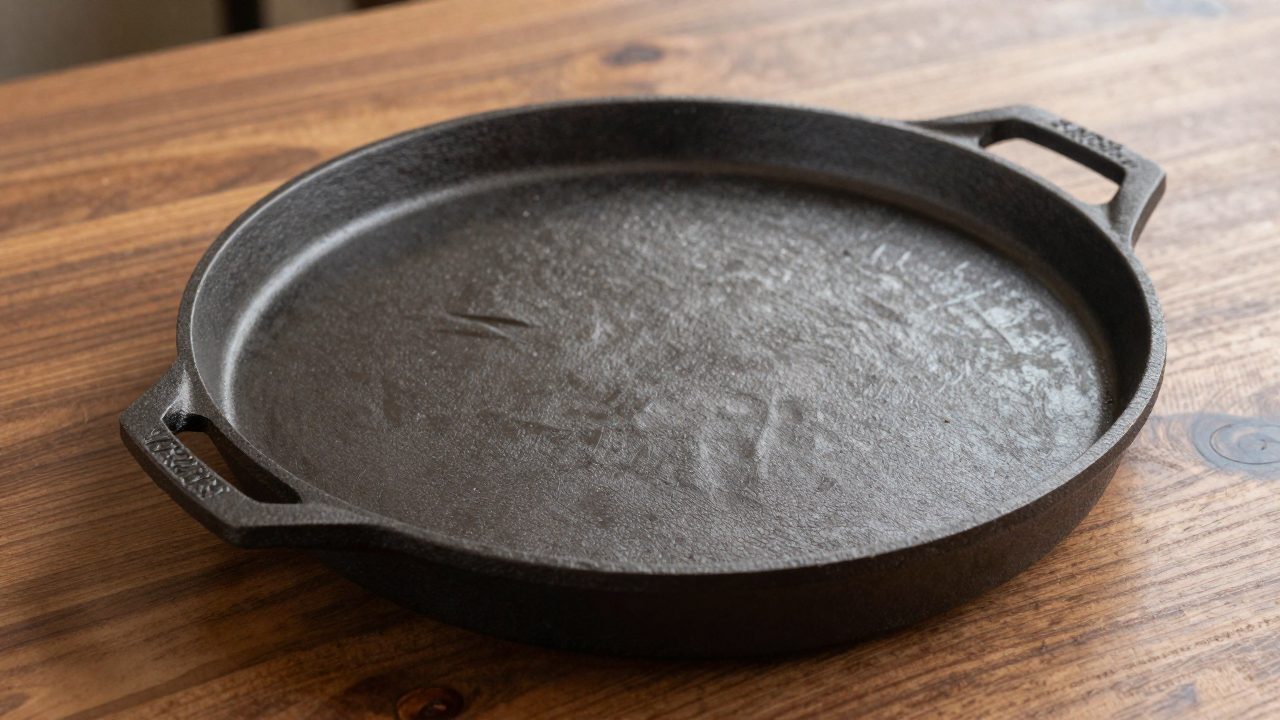
The mainstream choice and the right default. A pre-seasoned tawa arrives with a first coat of polymerised oil already on it, which shortens the frustrating early period without eliminating it. Look for a flat, wide cooking surface — a dosa needs to be spread outward in a spiral, so a pan with a pronounced curve fights you — and a diameter matched to how you eat: 10 inches for individual dosas, 12 or 13 if you want the large ones. Check the weight; heavier means more thermal mass.
- Pre-seasoned cast iron
- Flat or very slightly concave cooking surface
- 10 to 13 inch diameters
- Heavy construction for thermal mass
- Thermal mass holds temperature through the pour
- Improves with every use for decades
- Pre-seasoning shortens the early sticking phase
- Still needs weeks of use to become genuinely non-stick
- Heavy to lift and to store
Machine-Polished Smooth Cast Iron Tawa
Worth the premium, and the difference is easy to feel. Traditional sand-cast iron has a slightly rough, pebbled surface; a machine-polished tawa has been ground smooth, which means the seasoning layer forms a genuinely flat surface rather than filling in valleys. In practice that means it releases sooner and spreads batter more evenly. It is the single upgrade most likely to shorten the frustrating first few weeks, and once seasoned there is no going back to a rough one.
- Machine-ground smooth cooking surface
- Pre-seasoned
- Same thermal mass as a rough tawa
- Usually a slightly higher price
- Releases sooner than a rough sand-cast surface
- Batter spreads more evenly
- Easier to clean
- More expensive than a standard tawa
- Availability varies between brands
Cast Iron Tawa with a Wooden or Wire Handle
A detail that matters daily. Cast iron conducts heat into the handle, so a one-piece tawa needs a cloth every single time you move it — and a slip while carrying two kilos of hot iron and a dosa is a genuine burn. A wooden handle stays cool; a wire handle at least reduces the contact area. Check how the handle attaches: riveted is more durable than screwed, and anything with a plastic component will eventually meet a flame or an oven and fail.
- Wooden, wire or heat-resistant handle
- Riveted or bolted attachment
- Hanging hole on many designs
- Same cast iron body
- Safe to move without a cloth
- Hanging storage keeps it dry
- Meaningful daily convenience
- Wooden handles cannot go in an oven
- Screwed handles loosen over time
Iron (Sheet Metal) Dosa Tawa
The other traditional material, and preferred by a lot of experienced cooks. A pressed iron tawa is much lighter than cast iron, heats faster, and seasons in a similar way — the trade-off is directly the one the introduction describes: less thermal mass, so it drops temperature more when batter hits it. For someone who finds a cast iron tawa too heavy to handle comfortably, particularly when tipping a dosa off, this is a reasonable and much cheaper alternative.
- Pressed sheet iron, not cast
- Much lighter than cast iron
- Heats and cools quickly
- Seasons the same way
- Far easier to lift and handle
- Heats up much faster
- Considerably cheaper
- Loses temperature when batter hits it
- Can warp on very high heat
Wooden Batter Spreader (Dosa Palta)
The tool that makes the spiral work. A short-handled flat wooden or steel spreader lets you start at the centre and work outwards in a continuous spiral in one motion, which is what produces an even, thin dosa. Trying to do it with the back of a ladle works poorly and takes twice as long, during which the leading edge is already cooking. Wooden spreaders are kinder to the seasoning than steel; both work. Keep a dedicated one rather than improvising each time.
- Flat-bottomed spreader, wood or steel
- Short handle for control
- Sized to match the tawa
- Cheap and replaceable
- Produces an even spiral in one motion
- Wood does not scratch the seasoning
- Costs very little
- Wooden spreaders eventually crack
- Takes practice to get an even thickness
Thin Flexible Steel Turner
For lifting and folding, and the thin part is what matters. A thick spatula cannot get under a crisp dosa without tearing it; a thin, flexible, slightly sprung steel blade slides under the edge and lifts cleanly. Get one with a long enough blade to support the dosa as it comes up. Steel on a well-seasoned cast iron surface is fine — the polymerised layer is hard, and a metal turner will not damage it the way it would a chemical non-stick coating.
- Thin, flexible steel blade
- Long enough to support the dosa
- Wooden or heat-resistant handle
- Slightly bevelled leading edge
- Gets under a crisp dosa without tearing it
- Safe on a properly seasoned cast iron surface
- Cheap and long lasting
- Thick or stiff turners tear dosas
- Sharp edges can gouge a young, thin seasoning
Seasoning Oil (High Smoke Point)
What the seasoning layer is actually made of, and the choice matters less than the technique. Any oil with a reasonably high smoke point works — the layer forms when the oil is heated past that point and polymerises. Gingelly or sesame oil is the traditional choice in South Indian kitchens and works well. The crucial discipline is quantity: wipe on a very thin film and then wipe most of it off again. A thick coat does not polymerise properly and goes sticky and tacky instead.
- High smoke point oils
- Gingelly, sesame, refined or flaxseed
- Applied as a very thin film
- Heated past the smoke point to polymerise
- Builds the layer that makes cast iron release
- Any high smoke point oil works
- Very cheap
- Too thick a coat goes tacky rather than hardening
- Takes many cycles to build a real layer
Chainmail Scrubber
The cleaning tool that does not destroy your work. A chainmail scrubber is aggressive enough to lift stuck-on food from a rough or smooth cast iron surface and gentle enough to leave the polymerised layer intact — which steel wool and abrasive powders emphatically do not. Use it with hot water and no detergent, scrub, rinse, and dry on the heat immediately. It is close to indestructible and it replaces the scouring habits that ruin cast iron.
- Stainless steel chainmail
- Lifts residue without stripping seasoning
- Silicone backing on some designs
- Dishwasher safe itself
- Cleans effectively without destroying the seasoning
- Effectively lasts forever
- Works with plain hot water
- Too aggressive on a very young seasoning layer
- Needs drying itself or it will rust
Wet Grinder or Heavy-Duty Mixer
Belongs on this list because the batter matters as much as the pan. A traditional stone wet grinder produces a batter with a texture and an aeration that a mixer struggles to match — the stones grind slowly and generate little heat, which keeps the fermentation alive. A heavy-duty mixer grinder is the practical compromise for a small kitchen. Either way, batter that is properly ground and properly fermented behaves completely differently on the tawa, and no pan rescues a poor batter.
- Stone wet grinder or high-power mixer
- Low heat generation on wet grinders
- 1.25 to 2 litre drums typical
- Tilting mechanism on better grinders
- Batter quality matters as much as the pan
- Low heat preserves the fermentation
- Table-top grinders suit a household easily
- Wet grinders are bulky and expensive
- Mixers heat the batter, which affects fermentation
Batter Fermentation Container with Lid
Unglamorous and genuinely important. Batter roughly doubles in volume as it ferments, and a container filled to the top overflows onto the counter overnight — so you want something meaningfully larger than the batter volume, with a loose-fitting lid that lets gas escape rather than a sealed one. Stainless steel or food-grade plastic both work. In a cool climate, wrapping it or putting it somewhere warm makes the difference between a batter that rises and one that does not.
- At least double the batter volume
- Loose-fitting rather than airtight lid
- Stainless steel or food-grade plastic
- Wide mouth for ladling
- Prevents the overnight overflow
- Loose lid lets fermentation gas escape
- Wide mouth makes ladling easy
- Takes significant fridge or counter space
- Airtight lids can build pressure
Buying tips
- Expect the first few weeks to be frustrating. Cast iron is not non-stick, it becomes non-stick as a polymerised oil layer builds up over many cooking cycles. A pre-seasoned pan has roughly the first coat. Dosas that stick in week one do not mean you bought a bad tawa, and people who give up at that point never find out.
- Use the water-drop test every time. Flick a few drops on the hot tawa. Skittering droplets that take a few seconds to disappear means the temperature is right. Instant vanishing with a crack means too hot. Lazy boiling means too cold. Most sticking on a well-used tawa is temperature, not seasoning, and this test takes two seconds.
- Wipe the tawa with a damp cloth between dosas. It drops the surface temperature back into range and removes residue, which is exactly why every dosa stall does it. On a home hob the pan creeps hotter with each dosa, and without this the fourth one sticks when the first three were perfect.
- Season with a very thin film, wiped almost off. The layer forms when a microscopically thin coat of oil polymerises. A thick coat does not harden properly — it goes tacky and sticky and you have made things worse. Apply, then wipe the pan as though you were trying to remove all of it, then heat until it stops smoking.
- Never use detergent or steel wool, and never soak it. Detergent strips the polymerised layer you spent weeks building, steel wool grinds it off, and soaking rusts the iron. Hot water and a chainmail scrubber, then dry on the heat immediately and wipe with a trace of oil. That is the whole routine and it takes a minute.
- Keep the dosa tawa for dosas. Acidic ingredients — tomato, tamarind, lemon — dissolve the seasoning layer, and a tawa used for a tomato-based dish will be back to sticking the next time you pour batter. Use a separate pan for anything acidic and this problem never arises.
- Dry it on the heat, every time. Cast iron rusts where water sits, and a towel does not get water out of a rough cast surface. Put the washed tawa back on the flame for a minute until it is completely dry and just warm, then wipe a trace of oil over it. Store it dry, and never stack anything damp on top.
- The batter matters as much as the pan. Properly ground and properly fermented batter spreads thin, releases cleanly and crisps; under-fermented batter sticks and tears on any surface. If your dosas fail on a well-seasoned tawa at the right temperature, look at the batter before you look at the pan.
As an Amazon Associate and eBay Partner, toptenpick.com earns from qualifying purchases. Prices and availability are subject to change.