

As an Amazon Associate and eBay Partner, toptenpick.com earns from qualifying purchases. Prices and availability are subject to change.
Before the list, the thing that decides whether this amp is a toy or a gigging head: the cabinet, not the head, sets how loud you get.
The Micro Terror is 20 watts of solid-state power behind a valve preamp, and 20 solid-state watts is a lot quieter than 20 valve watts. What closes that gap is speaker sensitivity — the dB a speaker produces per watt. A single efficient 12-inch speaker can be meaningfully louder than a small 8-inch one on the same amp, and a 2×12 louder still. If your complaint is that the Micro Terror cannot keep up with a drummer, the fix is almost always at the other end of the speaker cable.
The stock pairing is the clearest example. The PPC108 1×8 is the cabinet Orange designed for it and it is genuinely fun — but it is a small speaker in a small box, and it sounds like one: bright, boxy and short on low end. Almost any 1×12 is a bigger upgrade to this rig than any pedal you could buy.
Impedance: the Micro Terror wants 8 ohms minimum, and it will work happily with 8 or 16 ohm cabinets. Do not go below the rated minimum. And check what the cab is actually rated to handle — most guitar cabs are rated well above 20 watts, so power handling is rarely the constraint here, but a 20-watt-rated 1×8 has no headroom at all.
One more practical note: the Micro Terror has no effects loop and a headphone/line out, so if most of your playing is late at night, a load box with speaker simulation may be a better purchase than any cabinet on this list.
Ten options below, from the matched 1×8 up to a proper 2×12.
| # | Product | Price | Where to buy |
|---|---|---|---|
| 1 | Orange PPC108 1×8 Cabinet | $140–$200 | Amazon · eBay |
| 2 | Orange PPC112 1×12 Cabinet | $400–$600 | Amazon · eBay |
| 3 | Orange PPC212OB 2×12 Open-Back Cabinet | $650–$900 | Amazon · eBay |
| 4 | Marshall MX112R 1×12 Cabinet | $200–$300 | Amazon · eBay |
| 5 | Vox BC112 1×12 Cabinet | $200–$300 | Amazon · eBay |
| 6 | Blackstar HT-112OC MkII 1×12 Cabinet | $220–$320 | Amazon · eBay |
| 7 | EVH 5150III 1×12 Straight Cabinet | $350–$500 | Amazon · eBay |
| 8 | Harley Benton G112 Vintage 1×12 Cabinet | $130–$220 | Amazon |
| 9 | Celestion G12M Greenback Speaker (for reloading a cab) | $110–$180 | Amazon · eBay |
| 10 | Two Notes Torpedo Captor X Load Box and Cab Simulator | $450–$600 | Amazon · eBay |
The picks, in detail

Orange PPC108 1×8 Cabinet
The cab Orange built for this head, and the one in the bundle. Twenty watts, 8 ohms, a single Orange-designed 8-inch speaker in a closed back, in a box small enough to carry with one finger. It is the right answer if the appeal of the Micro Terror is portability and bedroom volume — and the wrong answer if you ever want to be heard over a snare drum.
- 1×8 closed-back cabinet
- 20 watts, 8 ohms
- Orange-designed 8-inch speaker
- Matched cosmetics and size to the Micro Terror head
- Genuinely tiny and light
- Designed specifically for this head
- Cheapest Orange-branded option
- Boxy and bright with very little low end
- 20-watt rating leaves no headroom
- Not loud enough to play with a drummer

Orange PPC112 1×12 Cabinet
The upgrade that changes the amp. A closed-back 1×12 loaded with a Celestion Vintage 30, which is a far more efficient and far better-sounding speaker than anything an 8-inch box can offer — the Micro Terror suddenly has low end, and the gain channel stops sounding thin. Heavy for its size because it is built like Orange’s big cabs, which is also why it sounds like them.
- 1×12 closed-back cabinet
- Celestion Vintage 30 speaker
- Birch ply construction
- Orange skunk-stripe cosmetics
- The single biggest improvement available to this rig
- Vintage 30 is efficient as well as good — real volume gain
- Will outlast several heads
- Heavy for a 1×12
- Costs considerably more than the head
- Vintage 30s have a pronounced midrange some players dislike
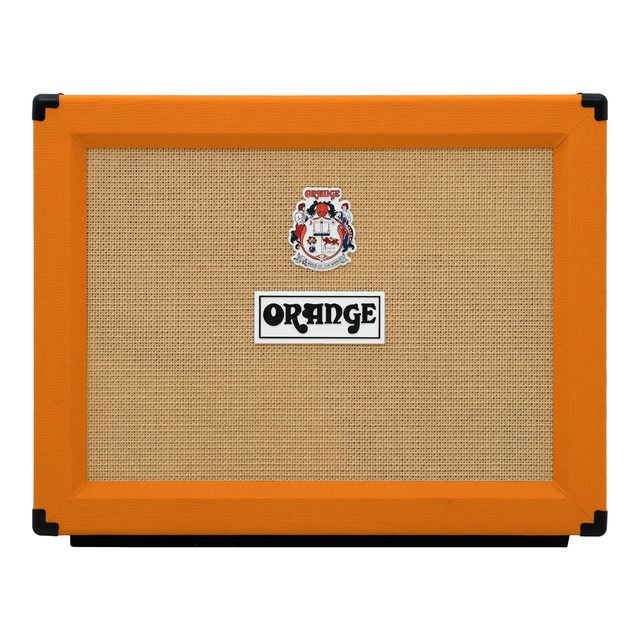
Orange PPC212OB 2×12 Open-Back Cabinet
Two Vintage 30s in an open-back box, which is the loudest and most spacious thing you can reasonably put behind a 20-watt head. Open back gives a wider, airier spread than the closed PPC112 — better for cleans and for small rooms where a closed cab beams straight at the back of the audience. This is the point at which the cabinet costs several times the head, and it is still worth it.
- 2×12 open-back cabinet
- Two Celestion Vintage 30 speakers
- 8 or 16 ohm options
- Birch ply construction
- Loudest option here by a clear margin
- Open back spreads sound rather than beaming
- Works with any future amp you buy
- Large and heavy — a two-hand carry
- Expensive relative to the head
- Less low-end punch than a closed back

Marshall MX112R 1×12 Cabinet
The value 1×12. A Celestion-loaded closed-back cab at roughly a third of the PPC112’s price, in the traditional Marshall format. It will not have the Vintage 30’s midrange bark, but it is a proper 12-inch speaker in a proper box, and against a 1×8 the difference is not subtle. The sensible pick if the head cost you under $200 and the cab should not cost triple that.
- 1×12 closed-back cabinet
- Celestion Seventy 80 speaker
- 8 ohm, 80 watt rating
- Marshall covering and hardware
- Biggest improvement per dollar on this list
- Plenty of power handling headroom
- Widely available new and used
- Seventy 80 is a budget speaker — swappable later
- Cosmetically mismatched with an Orange head if that matters

Vox BC112 1×12 Cabinet
An open-back 1×12 with a Celestion VX12, lighter than most closed-back cabs and easier to carry to a rehearsal. Open back suits the Micro Terror’s clean side well and makes the amp sound larger in a small room than its power rating suggests. A good choice if you mostly play at home and occasionally at a rehearsal studio.
- 1×12 open-back cabinet
- Celestion VX12 speaker
- 8 ohm
- Light for a 1×12
- Easy to carry — genuinely portable
- Open back suits clean tones and small rooms
- Sensibly priced
- Less low-end authority than a closed back
- VX12 is a budget-tier Celestion
Blackstar HT-112OC MkII 1×12 Cabinet
An open-back 1×12 loaded with a Celestion Seventy 80, aimed squarely at small valve and lunchbox heads. Blackstar build these to sit under their own 20-watt heads, which is exactly the duty the Micro Terror puts on a cabinet — so the voicing and the size are already matched to the job.
- 1×12 open-back cabinet
- Celestion Seventy 80 speaker
- 8 ohm, 70 watt rating
- Designed for small-format heads
- Sized and voiced for a 20-watt head
- Good value against the Orange option
- Light enough to move alone
- Budget speaker, as with most cabs in this bracket
- Open back is a taste, not a universal improvement

EVH 5150III 1×12 Straight Cabinet
A closed-back 1×12 with a Celestion G12H and birch ply construction — noticeably better built than most cabs at this price, and voiced for high gain. If the Micro Terror’s gain channel is what you actually use, this cabinet flatters it more than a neutral open-back will, and it handles far more power than you will ever send it.
- 1×12 closed-back cabinet
- Celestion G12H speaker
- Birch ply construction
- 16 ohm
- Excellent construction for the money
- Closed back and a proper Celestion — real low end
- Voiced well for the gain channel
- 16 ohm only, so check your amp is happy there
- Heavier than the open-back options
- Cosmetics are very specific
Harley Benton G112 Vintage 1×12 Cabinet
The budget entry, and the one that makes the case that any 12 beats an 8. A Celestion-loaded 1×12 for roughly what a 1×8 costs, with the obvious caveats about hardware and finish. If money is the constraint and the PPC108 is disappointing you, this is a genuinely defensible way out of it.
- 1×12 cabinet with a Celestion speaker
- 8 ohm
- Available in open and closed-back versions
- Substantially cheaper than branded cabs
- Cheapest way to get a real 12-inch speaker behind the head
- Celestion-loaded at a budget price
- Big step up from any 1×8
- Hardware and covering are where the savings are
- Availability depends on region
- Resale value is minimal

Celestion G12M Greenback Speaker (for reloading a cab)
The other route: buy a cheap empty or budget-loaded 1×12 and put a good speaker in it. A Greenback in a plain pine box will beat a budget speaker in an expensive box, and the swap is four screws and two spade connectors. It is also the cheapest way to change your sound later without buying another cabinet.
- 12-inch classic-voiced guitar speaker
- 8 and 16 ohm versions
- 25 watt power rating — ample for a 20 watt head
- Drop-in fit for standard 1×12 baffles
- The speaker is most of the sound — upgrade it directly
- Cheaper than buying a better cabinet
- Simple, reversible swap
- Check the ohm rating matches before ordering
- 25 watt rating means it will not suit a bigger amp later
- You still need a cabinet to put it in

Two Notes Torpedo Captor X Load Box and Cab Simulator
The honest alternative if most of your playing happens after 10pm. It takes the head’s speaker output into a resistive load, so the amp runs properly with no cabinet, and gives you speaker-simulated output to headphones, an interface or a PA. For a 20-watt head that mostly lives in a flat, this solves the real problem — which is that you cannot turn it up — rather than making the amp louder.
- Reactive load box with speaker simulation
- Headphone and line outputs
- Built-in impulse responses and effects
- USB and app control
- Silent practice and recording at full amp settings
- Removes the volume problem instead of fighting it
- Works with any future amp
- Expensive — several times the price of the head
- Check the impedance setting matches your amp
- Not a replacement for a cabinet when playing with others
Buying tips
- Match at least the amp’s minimum impedance. The Micro Terror is rated for 8 ohms minimum and works fine into 8 or 16 ohm cabinets.
- Speaker sensitivity decides your volume, not the wattage on the head. An efficient 12-inch speaker is dramatically louder on the same 20 watts than a small 8.
- Any 1×12 is a bigger upgrade to this amp than any pedal. If you buy one thing, buy that.
- Closed back for low end and punch, open back for spread and cleans. Neither is better — they are different jobs.
- Power handling is almost never the limit here. A 20-watt head into a 70-watt cab has enormous margin; a 20-watt-rated cab has none.
- Consider an empty or budget cab plus a good speaker. The speaker is most of the sound and the swap takes ten minutes.
- The Micro Terror has no effects loop, so time-based pedals go in front of the amp. Plan your board accordingly.
- If you mostly play late at night, a load box beats a cabinet. The problem is that you cannot turn the amp up, and no speaker fixes that.
As an Amazon Associate and eBay Partner, toptenpick.com earns from qualifying purchases. Prices and availability are subject to change.