

As an Amazon Associate and eBay Partner, toptenpick.com earns from qualifying purchases. Prices and availability are subject to change.
The most persistent piece of advice in pool is that a heavier cue breaks harder. It is not quite wrong, but it is backwards in a way that costs people money and racks.
The physics, as worked out by Dr. Dave Alciatore and others who have actually measured it: breaking power scales with the square of cue ball speed, and only linearly with cue weight. Double your cue’s speed and you have four times the effect. Add 20 per cent to its weight and you have added 20 per cent. So the honest version of the rule is conditional — if you can swing a heavier cue at the same speed, use the heavier cue. Most players cannot. They pick up a 21-ounce break cue, their arm slows down, and they have traded a small mass gain for a large speed loss. That is why a lot of serious breakers use cues within an ounce or two of their playing cue, and why the single best thing an amateur can do for their break is work on stroke speed and accuracy rather than shop for lead.
The tip is where a break cue genuinely differs from a playing cue, and here the effect is large and measurable. A phenolic tip transfers roughly 17 per cent more energy to the cue ball than a medium leather tip, because it barely compresses on contact — a soft layered playing tip absorbs part of the hit, mushrooms over time, and needs replacing. That 17 per cent is far more than most players will gain from any weight change, and it is the reason the tip, not the weight, is the specification to shop on.
There is a practical consequence too: you buy a break cue mainly to stop destroying your playing cue. Breaking is the most violent thing that happens to a cue — it mushrooms tips, loosens joints and dents shafts — and a dedicated breaker takes that abuse for around sixty dollars instead of your four-hundred-dollar player.
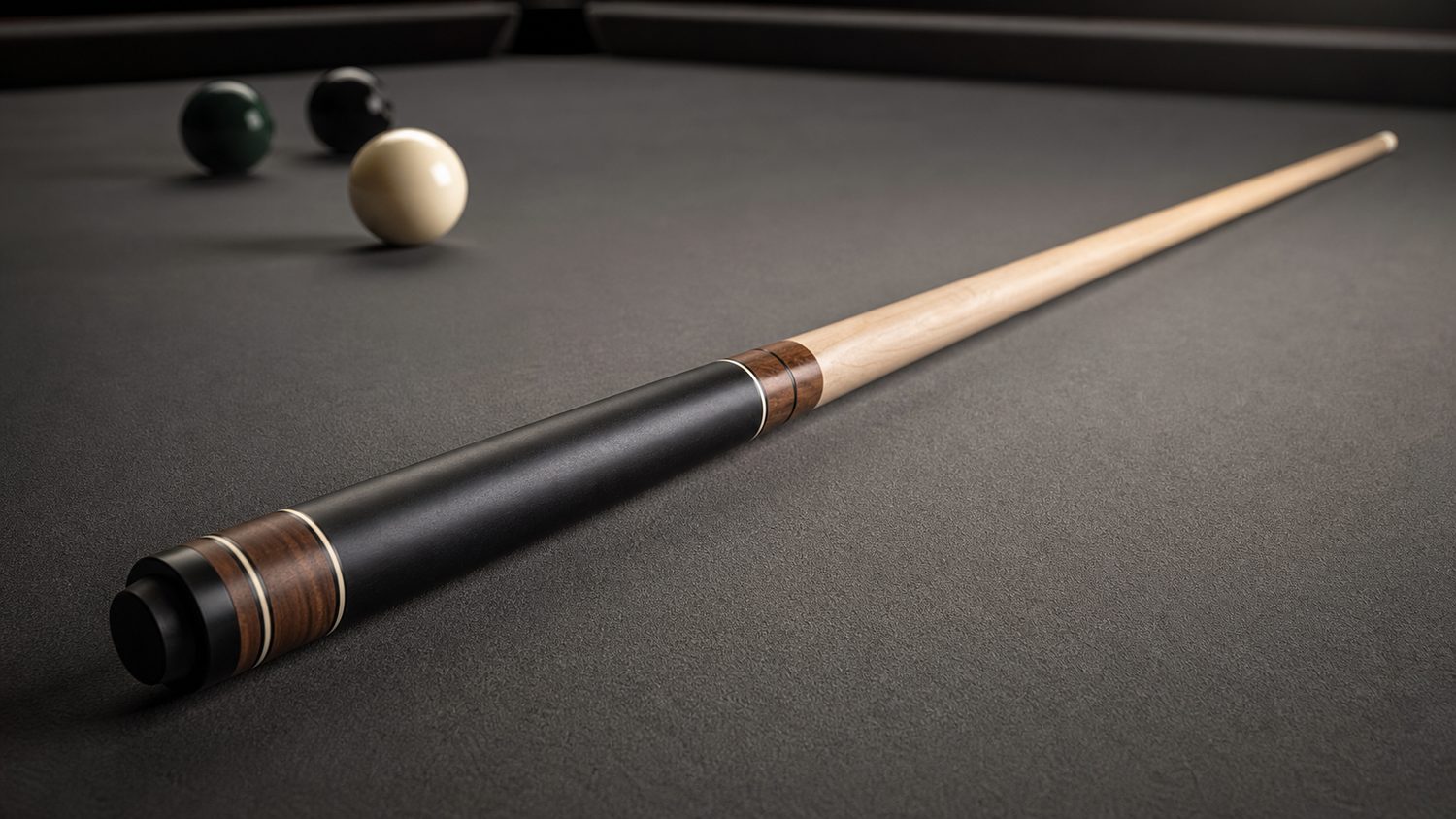
Under $100 you can have a genuinely good break cue. Below are ten, plus the accessories that matter more than the badge on the butt.
| # | Product | Price | Where to buy |
|---|---|---|---|
| 1 | Maple Break Cue with a Phenolic Tip | $55-$95 | Amazon · eBay |
| 2 | Jump-Break Cue (Three-Piece) | $60-$100 | Amazon · eBay |
| 3 | Break Cue with a Hard Leather Tip | $50-$90 | Amazon · eBay |
| 4 | Weight-Adjustable Break Cue | $65-$100 | Amazon |
| 5 | Carbon-Wrapped or Composite Break Shaft | $90-$130 | Amazon · eBay |
| 6 | Break Cue Tip Tool and Scuffer | $6-$20 | Amazon · eBay |
| 7 | Break Chalk (Hard Formulation) | $5-$15 | Amazon · eBay |
| 8 | 2×2 or 3×4 Cue Case | $35-$120 | Amazon · eBay |
| 9 | Shaft Slicker and Burnisher | $8-$25 | Amazon · eBay |
| 10 | Practice Rack or Magic Rack Sheet | $10-$30 | Amazon · eBay |
The picks, in detail

Maple Break Cue with a Phenolic Tip
The straightforward answer in this budget, and what most players should buy. A hard rock maple shaft with a phenolic tip gives you the energy transfer that actually improves a break, on a cue built to be hit hard. Look for a 12.75 to 13 mm tip — a thicker shaft is stiffer and deflects less on a full-power hit — and a solid stainless or phenolic joint. At this price the finish will be plain, which is exactly where the money should not be going.
- Hard rock maple shaft
- Phenolic break tip
- 12.75-13 mm tip diameter
- Stainless or phenolic joint
- Roughly 17% more energy transfer than a medium leather tip
- Stiff shaft holds up to full-power hits
- Cheap enough to be genuinely disposable
- Phenolic holds chalk poorly, so miscues are easier
- No use at all as a playing cue

Jump-Break Cue (Three-Piece)
Two cues in one: unscrew a section and the break cue becomes a short, light jump cue. For a player who has neither, it is obviously good value, and under $100 the compromises are acceptable rather than severe. The honest caveat is that it does neither job quite as well as a dedicated cue — the break half is usually lighter than ideal, and the jump half is a little long. Also check your local rules, since jump cues are not permitted everywhere.
- Converts between break and jump configurations
- Quick-release joint between sections
- Phenolic tip on most models
- Usually 25 oz or under in break configuration
- Two cues for the price of one
- Saves a slot in the case
- Quick-release joints make the change fast
- Compromised at both jobs compared to dedicated cues
- Jump cues are banned in some leagues and rooms

Break Cue with a Hard Leather Tip
The alternative to phenolic, and a better choice than the forums suggest. A hard leather tip transfers energy nearly as well as phenolic while doing something phenolic cannot: it takes chalk properly, because leather scuffs and holds it. That matters if you break with any sidespin or if you have ever miscued on a hard break — a miscue on the break is both embarrassing and a lost rack. Slightly less raw power, noticeably more control and forgiveness.
- Hard pressed leather break tip
- Scuffable surface that holds chalk
- Replaceable with ordinary tip tools
- Usually 13 mm
- Holds chalk properly, so far fewer miscues
- Energy transfer close to phenolic
- Serviceable with standard tools
- A few per cent less power than phenolic
- Wears and eventually needs replacing
Weight-Adjustable Break Cue
The one that lets you test the physics rather than take someone’s word for it. A butt with removable weight bolts means you can break a few racks at 19 oz, then 20, then 21, and find where your own stroke speed starts falling off. That is the whole question this article turns on, and it is far better answered with your own arm than with a rule of thumb. Most players end up back near their playing weight; some genuinely do better heavier. Either way you now know.
- Removable weight bolts in the butt
- Typically 18-21 oz adjustment range
- Allen key supplied
- Phenolic or hard leather tip
- Lets you find your own optimum instead of guessing
- Adaptable if your stroke changes
- No extra cost over a fixed-weight cue
- Bolts can rattle if not tightened properly
- Tempting to fiddle instead of practising

Carbon-Wrapped or Composite Break Shaft
At the very top of this budget you start seeing composite and carbon-wrapped break shafts, and on the break specifically the benefit is real: a stiffer shaft deflects less under a very hard hit, so more of the energy goes where you aimed it. Expect to be at the $100 line and expect the butt to be plain to pay for it. It is a sensible way to spend the money if your break is already reasonably fast, and a waste if your stroke is the limiting factor.
- Composite or carbon-wrapped shaft
- Very low deflection under high load
- Phenolic tip fitted as standard
- Plain butt to keep the price down
- Stiffer than maple under a full-power hit
- More consistent cue ball direction on hard breaks
- Impervious to humidity, unlike wood
- At or above the $100 ceiling
- Only helps a player whose speed is already good

Break Cue Tip Tool and Scuffer
The five-dollar item that makes the tip on any of the above work properly. A phenolic tip will not hold chalk unless it is scuffed, and an unscuffed phenolic tip is the leading cause of the spectacular miscue that sends the cue ball off the table. A combination tool that scuffs, shapes and picks the surface handles it in a few seconds before a session. This belongs in the case with the cue and it is the accessory people most often skip and most often regret.
- Scuffer, shaper and pick in one body
- Works on leather and phenolic
- Keyring or pocket sized
- Replaceable abrasive pads on some models
- Prevents the miscue that phenolic tips are notorious for
- Restores a glazed tip in seconds
- Costs a fraction of a lost rack
- Over-scuffing shortens tip life
- Cheap abrasives wear out fast

Break Chalk (Hard Formulation)
Not the same as playing chalk. Break-specific chalks are harder and formulated to stay put under a much heavier impact, which is exactly the problem a break creates — ordinary chalk gets driven off the tip at the moment you need it most. It is a small and cheap difference that removes a real failure mode. Keep it in a separate cube from your playing chalk, because it is coarser and you do not want it on your player’s tip.
- Harder formulation than playing chalk
- Stays on the tip under heavy impact
- Sold in single cubes or multipacks
- Available in several colours
- Specifically survives the impact of a break
- Meaningfully reduces break miscues
- Cheap and lasts a long time
- Too coarse for a playing cue’s tip
- Some rooms only stock one type of chalk

2×2 or 3×4 Cue Case
The moment you own a second cue, you need somewhere for it — and the point of buying a break cue is partly to protect the playing cue, which a loose cue rattling in a car boot rather undermines. A 2×2 case (two butts, two shafts) is the minimum for a player plus a breaker. Look at the interior: individual tubes protect far better than a shared compartment where shafts knock against each other. Hard cases beat soft for anything travelling in a vehicle.
- Individual tubes for each butt and shaft
- 2×2 through 3×4 configurations
- Hard or soft shell
- Accessory pocket for chalk and tools
- Stops shafts knocking together in transit
- Keeps chalk and tools with the cues
- Hard cases survive being loaded into a car
- Good cases cost as much as a budget break cue
- Soft cases offer limited real protection

Shaft Slicker and Burnisher
A break cue lives a harder life than a playing cue and gets handled with sweatier hands, and a sticky shaft is a slow shaft — a stroke that drags through the bridge loses exactly the speed the physics says matters most. A leather or paper burnisher plus a slicker cloth keeps the shaft polished and sliding. Never use sandpaper on a shaft: it removes wood permanently and eventually changes the taper. Burnishing compresses and polishes the fibres instead.
- Leather or paper burnisher
- Micro-abrasive slicker cloth
- Compresses rather than removes wood
- Pocketable
- A smooth shaft protects the stroke speed that matters
- Non-destructive, unlike sandpaper
- Takes under a minute
- Needs redoing regularly with heavy use
- Useless on a composite shaft, which needs its own care

Practice Rack or Magic Rack Sheet
The item that most directly improves break results and has nothing to do with the cue. A tight rack is the single largest variable in how a break spreads, and a loose one wastes the power you just spent money on. A thin template sheet holds every ball in contact with its neighbours in a way a wooden triangle on a worn cloth cannot. If you practise at home on a table with older cloth, this will change your break results more than any cue upgrade under $100.
- Thin template sheet holding balls in contact
- Versions for 8-ball, 9-ball and 10-ball
- Reusable many times
- Works on worn cloth where a triangle will not
- Fixes the biggest variable in how a rack spreads
- Immediate, obvious improvement in results
- Cheap relative to any cue
- Not permitted in every competition format
- Wears out and needs replacing
Buying tips
- Speed beats weight, and by a lot. Breaking power goes with the square of cue ball speed and only linearly with cue weight. The real rule is conditional: if you can swing a heavier cue at the same speed, use it. Most players cannot, and lose more in speed than they gain in mass. Test it yourself with an adjustable-weight cue rather than accepting the folklore.
- The tip is where the money should go. A phenolic tip transfers roughly 17 per cent more energy than a medium leather tip, which is far more than any weight change will buy you. A soft playing tip absorbs part of the hit and mushrooms. If you are choosing between a prettier cue and a better tip, the tip wins every time.
- Scuff a phenolic tip before every session. Phenolic is extremely hard, which is the point, and it holds chalk badly, which is the cost. An unscuffed phenolic tip is the classic cause of the break miscue that launches the cue ball off the table. A few seconds with a scuffer solves it — and hard break chalk helps more than ordinary chalk does.
- Buying a break cue is mostly about protecting your playing cue. Breaking mushrooms tips, loosens joints and dents shafts, and doing it with a $400 player is expensive maintenance. A $60 breaker takes that abuse instead. Even a mediocre break cue pays for itself against one tip replacement and a re-wrap.
- Aim at the second ball, not the head ball, for a controlled break. Hitting the head ball dead full sends most of the energy straight back at you and leaves the cue ball in the middle of the table. Most break instruction converges on a full, square hit with the cue ball a little off centre — accuracy matters more than the last five per cent of power, because a fast break that misses the centre of the head ball scatters energy sideways.
- A tight rack is worth more than a better cue. If the balls are not touching, the energy stops at the first gap and the spread dies. On worn cloth a wooden triangle cannot pull a rack tight, and a template sheet can. This is the cheapest improvement in the whole category and it is invisible to anyone shopping for cues.
- Keep the shaft slick. A shaft that drags through your bridge slows the stroke, and stroke speed is the thing the physics rewards most. Burnish it rather than sanding it — sandpaper removes wood permanently and eventually alters the taper. A burnisher and a slicker cloth take under a minute and cost very little.
- Do not break with your playing stroke at maximum effort. A break you cannot control is worth less than a slightly slower one that reliably hits the rack square, because a mishit scatters energy in the wrong direction and often leaves you with no shot. Build speed gradually while keeping the contact accurate — that order, not the reverse.
As an Amazon Associate and eBay Partner, toptenpick.com earns from qualifying purchases. Prices and availability are subject to change.