


As an Amazon Associate and eBay Partner, toptenpick.com earns from qualifying purchases. Prices and availability are subject to change.
Four quite different kinds of book get shelved under this one phrase, and they frequently disagree with each other. That is why people so often buy one, find it is not remotely what they were looking for, and conclude the whole category is worthless. It helps enormously to know which of the four you actually want before you order anything.
First, the novels. Frank Peretti’s This Present Darkness and its sequel sold in enormous numbers in the late 1980s and are, for a great many readers, where the mental picture came from in the first place — angels and demons contesting a small town in parallel with the human story. They are fiction and they say so. They are also the most engaging entry point by a wide margin, and the reason so many of the other books on this list exist.
Second, the practical manuals. Neil Anderson, Mark Bubeck, Karl Payne and others write for the reader who wants a method: what to pray, in what order, how to counsel someone. These are the books with checklists and prayers set out in full. They come from a deliverance-ministry tradition, they are widely used in churches, and they are also the books that the third category is often written to push back against.
Third, the scholarship. Clinton Arnold is a New Testament academic, and books like Powers of Darkness and 3 Crucial Questions about Spiritual Warfare work from what the first-century texts actually say against the background of the ancient world. They read like serious scholarship because they are, and their conclusions are frequently more restrained than the manuals’.
Fourth — and this catches people out — the Puritans. William Gurnall’s The Christian in Complete Armour and Thomas Brooks’s Precious Remedies Against Satan’s Devices are seventeenth-century works that use “spiritual warfare” to mean something largely different: the long fight against one’s own sin and self-deception, with the devil as tempter rather than as something to be cast out. Someone arriving from Peretti will find no demons over the town at all.
One practical note that applies across all four. Several of these titles have been revised, retitled, combined into omnibus editions, or published in both a standalone and a workbook version — Anderson’s in particular. Check which edition you are buying, because a study guide without the book it accompanies is a frustrating parcel to open.
| # | Product | Price | Where to buy |
|---|---|---|---|
| 1 | This Present Darkness — Frank E. Peretti | $10–$18 | Amazon · eBay |
| 2 | Piercing the Darkness — Frank E. Peretti | $10–$18 | Amazon · eBay |
| 3 | The Screwtape Letters — C. S. Lewis | $9–$16 | Amazon · eBay |
| 4 | The Bondage Breaker — Neil T. Anderson | $12–$20 | Amazon · eBay |
| 5 | Victory Over the Darkness — Neil T. Anderson | $12–$20 | Amazon · eBay |
| 6 | 3 Crucial Questions about Spiritual Warfare — Clinton E. Arnold | $16–$26 | Amazon · eBay |
| 7 | Powers of Darkness: Principalities and Powers in Paul’s Letters — Clinton E. Arnold | $22–$34 | Amazon · eBay |
| 8 | The Adversary — Mark I. Bubeck | $12–$18 | Amazon · eBay |
| 9 | The Christian in Complete Armour — William Gurnall | $18–$40 | Amazon · eBay |
| 10 | Precious Remedies Against Satan’s Devices — Thomas Brooks | $0–$16 | Amazon · eBay |
The picks, in detail
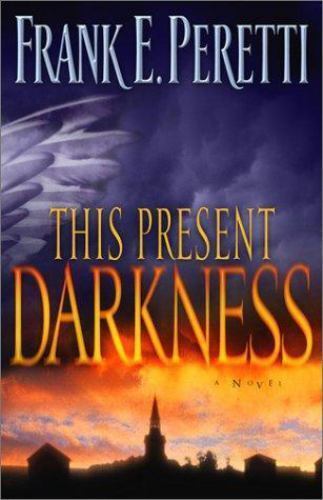
This Present Darkness — Frank E. Peretti
The novel that created the modern popular picture of the subject, and still the most readable thing on the list. A small American town, a local newspaper editor and a pastor, and a parallel narrative of angels and demons contesting the same events. It is a thriller first, and it works as one. If someone has told you to read up on spiritual warfare and you do not know where to start, start here and treat it as fiction, which is what it is.
- Novel, first published 1986
- Sold in very large numbers through the late 1980s and 1990s
- Around 375 pages
- Paperback, ebook and audiobook editions
- Genuinely gripping as a thriller
- The most accessible entry point in the category
- Cheap and available everywhere
- Fiction, and regularly mistaken for teaching
- The 1980s setting and pacing show their age
- Its imagery shapes expectations the other books then have to correct

Piercing the Darkness — Frank E. Peretti
The sequel, published in 1989, following some of the same characters into a story built around a court case and a Christian school. Most readers rate it as the better-constructed of the two, with a tighter plot and less of the first book’s exposition. It stands alone reasonably well, but the two are usually bought and read as a pair and are often sold that way.
- Novel, published 1989
- Direct sequel to This Present Darkness
- Around 475 pages
- Frequently sold in a two-book set
- Better plotted than the first book by most accounts
- Works as a standalone story
- Often bundled cheaply with the first
- Longer and slower to start
- Same dated period detail
- Loses some impact if you have not read the first

The Screwtape Letters — C. S. Lewis
A senior devil writes to his nephew with advice on corrupting an ordinary Englishman, and the whole thing is inverted so that every piece of guidance is a piece of moral observation turned inside out. Published in 1942, still in print, and by a distance the best-written book in this category. It is also the most quoted, which means you may already know several lines without knowing where they came from.
- Epistolary satire, published 1942
- 31 short letters, around 200 pages
- Available in many editions including annotated
- Well-regarded audiobook readings exist
- Outstanding prose and genuinely funny
- Short enough to read in two evenings
- Appeals to readers well outside the usual audience
- Satirical rather than instructional — no method in it
- Mid-century British idiom needs some patience
- So many editions that choosing one is a chore

The Bondage Breaker — Neil T. Anderson
Probably the most widely used practical book in the category. Anderson’s approach is built around identity and a structured process he calls the Steps to Freedom, set out in full, and the book is written for the reader to work through rather than merely read. Whatever you make of the framework, this is the title most often handed to someone by a pastor, so it is worth knowing what is in it.
- Practical manual with the Steps to Freedom included
- Revised and expanded editions in print
- Around 300 pages
- Companion study guide sold separately
- Concrete and usable rather than abstract
- The single most widely circulated book of its type
- Clear structure for working through
- Its theology is contested by other traditions
- Multiple revised editions cause confusion when buying
- Easy to buy the study guide by mistake

Victory Over the Darkness — Neil T. Anderson
Anderson’s other standard title, and the one that comes first in his own scheme — it works on identity and belief, where The Bondage Breaker works on the freedom process. Many readers find this the more useful of the pair and the less contentious, since most of it is about how a person understands themselves rather than about confrontation. The two are frequently sold together.
- Companion volume to The Bondage Breaker
- Focus on identity rather than confrontation
- Around 250 pages
- Study guide and DVD curriculum available
- Less contested than the deliverance material
- Useful to readers who want none of the dramatic content
- Often bundled with the companion volume
- Repeats points across chapters
- Sits oddly on this list if you came for demons
- Curriculum add-ons are an expensive rabbit hole

3 Crucial Questions about Spiritual Warfare — Clinton E. Arnold
The short, careful, academically grounded book to read alongside any of the manuals. Arnold is a New Testament scholar and he works from what the first-century texts say in their own context, taking three specific questions in turn. It is notably more restrained than the popular literature, which is exactly why it is valuable — it is the book that tells you which of the common claims the sources actually support.
- Scholarly treatment aimed at general readers
- Published 1997
- Around 200 pages
- Part of the 3 Crucial Questions series
- Accessible scholarship rather than dense academia
- Useful corrective to the popular material
- Short and well organised
- Offers analysis, not a method to follow
- Deliberately answers less than the manuals promise
- Assumes some familiarity with the New Testament

Powers of Darkness: Principalities and Powers in Paul’s Letters — Clinton E. Arnold
Arnold’s fuller academic treatment, working through what Paul’s letters mean by principalities, powers and rulers against the religious background of the first-century Greco-Roman world. This is the serious version of the previous entry and the one to buy if the short book left you wanting the evidence. It reads like a scholarly monograph written for an educated general reader, because that is what it is.
- Academic study of the Pauline material
- Published by IVP Academic
- Around 250 pages with full references
- Extensive ancient-world background
- The most rigorous book on this list
- Grounds the vocabulary in its actual first-century context
- Properly referenced for further reading
- Demanding compared with everything else here
- Little practical application by design
- Priced as an academic title
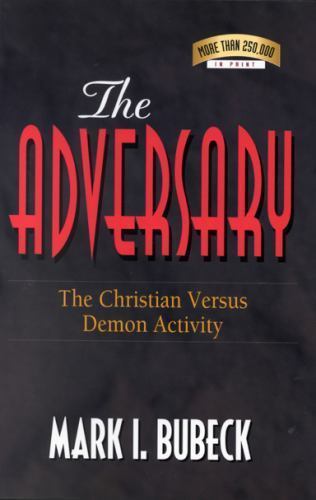
The Adversary — Mark I. Bubeck
One of the older practical manuals and still in print decades after publication, which tells you something. Bubeck writes from long pastoral experience and the book is structured around prayer, with substantial prayers printed in full for the reader to use. It is more measured in tone than some of the later deliverance literature and is often recommended as the gentler starting point in that tradition.
- Practical manual with full prayers included
- In print for several decades
- Around 180 pages
- Companion volume Overcoming the Adversary available
- Calmer in tone than much of the genre
- Short and directly usable
- Long track record of recommendation
- Dated examples and language
- Less structured than Anderson’s material
- Assumes a specific theological framework without arguing for it

The Christian in Complete Armour — William Gurnall
A seventeenth-century Puritan work on the armour of God passage, enormous in its unabridged form and available in abridged and modernised editions for anyone not ready for 1,200 pages of period English. Gurnall’s warfare is largely internal — temptation, self-deception, endurance — which is a completely different book from the ones above and a genuine surprise to readers who arrive expecting confrontation.
- First published in the 1650s
- Unabridged runs to well over 1,000 pages
- Abridged and modernised editions available
- Banner of Truth and other publishers in print
- A genuine classic that has stayed in print for centuries
- Treats the subject as a lifelong discipline rather than an event
- Abridged editions make it approachable
- The unabridged edition is a serious commitment
- Seventeenth-century prose even when modernised
- Not what most people mean by the phrase today

Precious Remedies Against Satan’s Devices — Thomas Brooks
The short Puritan alternative to Gurnall, and a much easier way into that tradition. Brooks sets out a catalogue of the ways a person talks themselves into something they know is wrong, and a corresponding remedy for each. Stripped of the period vocabulary it reads as unusually sharp moral psychology, and it is cheap because it is long out of copyright.
- First published 1652
- Around 250 pages in modern editions
- Structured as devices paired with remedies
- Free in the public domain, also in print editions
- Short and structured, unlike Gurnall
- Genuinely acute observations about self-deception
- Available free as an ebook
- Seventeenth-century idiom throughout
- Nothing at all about demons or deliverance
- Free editions vary wildly in typesetting quality
Buying tips
- Work out which of the four kinds of book you want first: a novel, a practical manual, New Testament scholarship, or a Puritan classic. Most disappointment in this category is someone buying one when they wanted another.
- Read Peretti as fiction. It is a thriller and it says so, but its imagery shapes what many readers then expect from everything else on the shelf.
- Pair a manual with Arnold. Reading a deliverance handbook alongside a scholar working from the first-century sources is the fastest way to see which popular claims the texts actually support.
- Check the edition before ordering, especially with Anderson. Several of these have been revised, retitled or split into a book plus a separate study guide, and the guide on its own is not much use.
- Expect the Puritans to mean something different. Gurnall and Brooks use the phrase for the long fight against your own sin, not for confrontation with demons — that is not a flaw in them, it is a different definition.
- Buy Gurnall abridged the first time. The unabridged work runs well past a thousand pages of seventeenth-century English, and the abridgements exist for a reason.
- Take the free public-domain texts where they exist. Brooks and Gurnall are long out of copyright, so you can read a chapter for nothing before deciding whether you want a printed copy.
- Be wary of titles promising a formula. The books on this list that have lasted are the ones that argue their case; the ones that sell a numbered technique tend to be the ones the scholarship is written to answer.
As an Amazon Associate and eBay Partner, toptenpick.com earns from qualifying purchases. Prices and availability are subject to change.