

As an Amazon Associate and eBay Partner, toptenpick.com earns from qualifying purchases. Prices and availability are subject to change.
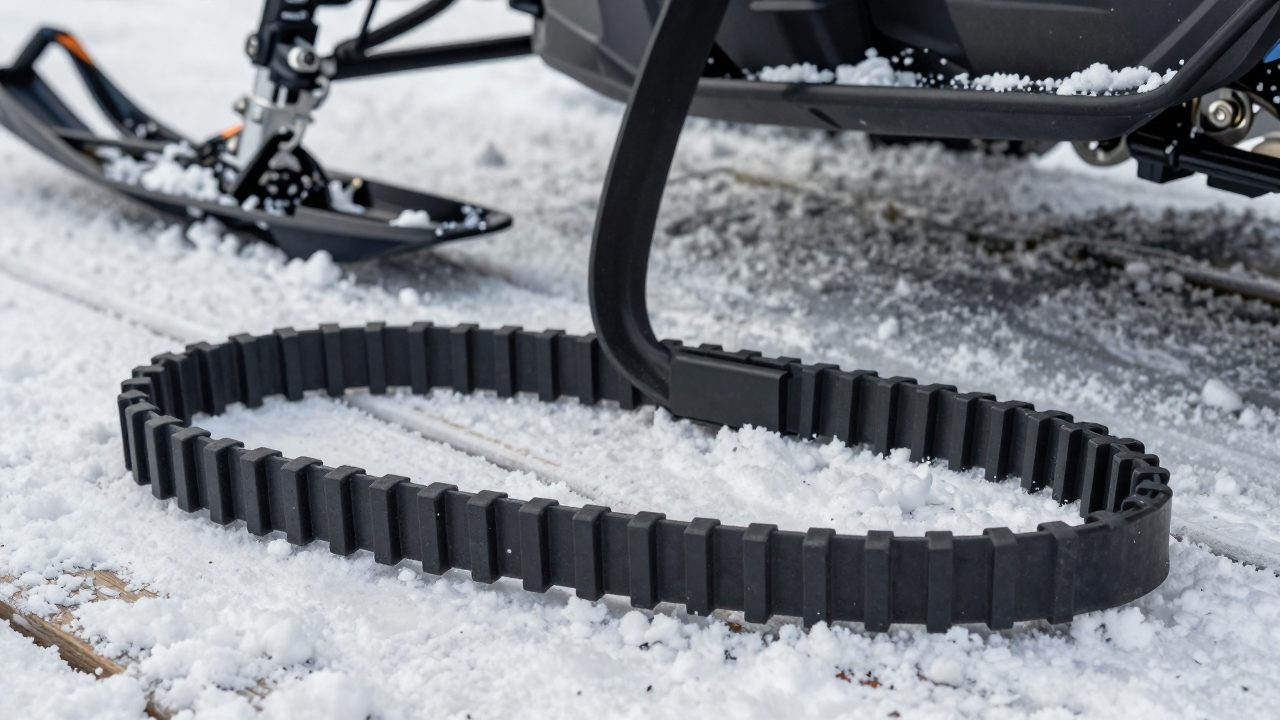
If you are shopping for a Ski-Doo 850 drive belt because the last one shredded, the belt is probably not the thing that failed. A CVT belt is a wear item that runs hot by design, and on the 850 E-TEC it is also the most sensitive diagnostic instrument on the sled. A belt that dies early is reporting a clutch problem, and a new belt will report the same problem again in a few hundred miles.
The mechanism is heat. A belt is squeezed between two pairs of sheaves and drives by friction on its sides; every moment it slips instead of gripping, it converts your engine’s output into temperature in the rubber. Three things cause that slip and none of them is the belt’s brand. Deflection — how deep the belt sits in the secondary clutch — sets how hard it is squeezed at engagement. Too little and the belt drags at idle and cooks before you have left the parking lot; too much and it slips on every hard pull. Alignment and centre distance between the two clutches decide whether the belt runs square or is being twisted on every revolution. And sheave condition decides whether it is gripping clean aluminium or polished glaze and old rubber dust.
There is a fourth item that catches a lot of riders: a brand-new belt needs breaking in. Half a dozen gentle heat cycles with no hard pulls lets the belt seat to your specific sheaves. Pin it fresh out of the box and you can glaze the sides in the first mile, which then guarantees slip, which then guarantees heat, which then guarantees the failure you were trying to avoid.
None of this means the belt choice is irrelevant. The OEM 417300391 and its direct aftermarket equivalents differ in construction, in how much they stretch, and in how they behave when abused. But get the setup right and almost any quality belt lasts; get it wrong and the most expensive belt on the shelf will still leave you walking. The ten picks below cover the belts worth fitting and the four cheap items that decide how long they last.
| # | Product | Price | Where to buy |
|---|---|---|---|
| 1 | Ski-Doo OEM Drive Belt 417300391 | $130-$190 | Amazon · eBay |
| 2 | Gates G-Force RedLine 48R4289 | $150-$210 | Amazon |
| 3 | Gates G-Force Drive Belt (Standard) | $110-$160 | Amazon · eBay |
| 4 | Dayco XTX5034 Drive Belt | $110-$170 | Amazon · eBay |
| 5 | Dayco HPX Drive Belt | $100-$150 | Amazon · eBay |
| 6 | Belt Deflection Gauge | $20-$50 | Amazon |
| 7 | Clutch Alignment Bar | $40-$90 | Amazon |
| 8 | Sheave Cleaning Kit | $15-$35 | Amazon |
| 9 | Spare Belt Holder and Tool Roll | $25-$60 | Amazon |
| 10 | Digital Calipers | $20-$60 | Amazon · eBay |
The picks, in detail

Ski-Doo OEM Drive Belt 417300391
The factory part, and the reference every aftermarket belt is cross-referenced against. If your sled is stock and running a stock clutch calibration, this is what the calibration was developed with, and there is a real argument for keeping that relationship unchanged. It is not the cheapest belt available and it is not the longest-lasting under abuse, but it is the known quantity. For a stock trail or mountain 850 that is not being run at boost or with an aftermarket clutch kit, buy this and spend your attention on setup instead.
- Ski-Doo part number 417300391
- Developed alongside the factory clutch calibration
- Covers a wide range of 850 E-TEC models
- Consistent dimensions unit to unit
- Matches the calibration the sled shipped with
- Predictable, well-documented dimensions
- The baseline against which everything else is measured
- Dearer than most aftermarket equivalents
- No advantage in a heavily modified setup
Gates G-Force RedLine 48R4289
Gates’ premium snowmobile belt and a common upgrade on 850s, including turbo applications. The RedLine construction is aimed at handling higher power and more heat than a standard belt, which is precisely the situation that kills OEM belts early. It is listed for 2017-2022 Ski-Doo 850 E-TEC and 850 Turbo models. If your sled is modified, or if you ride hard enough that belts are a recurring expense rather than an annual one, this is the sensible step up from the factory part.
- Gates part 48R4289
- RedLine construction for higher power and heat
- Listed for 2017-2022 850 E-TEC and 850 Turbo
- Aramid-reinforced cord
- Built for the heat that kills standard belts
- Rated for turbo applications
- Widely available through Gates and NAPA channels
- Premium price over a standard belt
- Overkill on a stock, gently ridden sled
Gates G-Force Drive Belt (Standard)
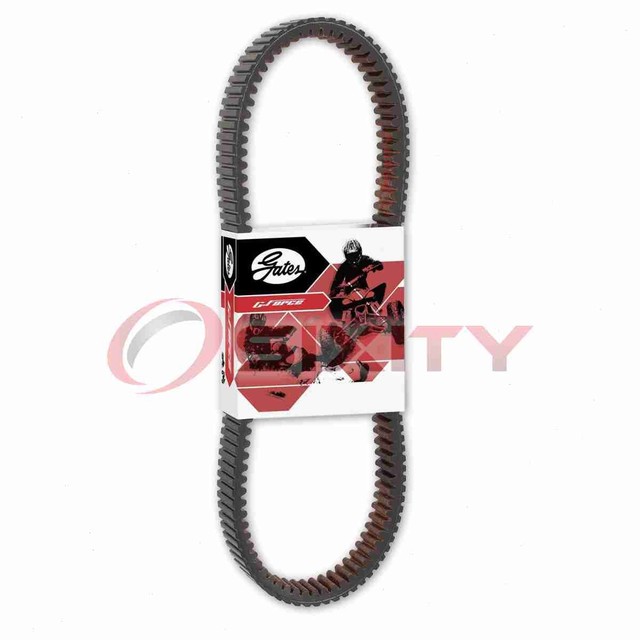
The non-RedLine G-Force is the value option in the Gates range and covers the 850 across Summit, Freeride and trail models. It is a genuine alternative to the OEM belt rather than a budget substitute — Gates supplies belts as original equipment to several manufacturers — and it typically undercuts the Ski-Doo part. For a stock sled ridden normally, this and the OEM belt will both give you a season. Choose on price and on which one your dealer actually has on the shelf in February.
- Aramid tensile cord construction
- Direct cross-reference to 417300391
- Covers Summit, Freeride and trail 850 models
- Moulded cog profile for flexibility
- Usually cheaper than the OEM belt
- Established snowmobile belt manufacturer
- Good availability outside dealer channels
- Not built for turbo or heavily clutched sleds
- Fitment listings vary by model year — check carefully
Dayco XTX5034 Drive Belt
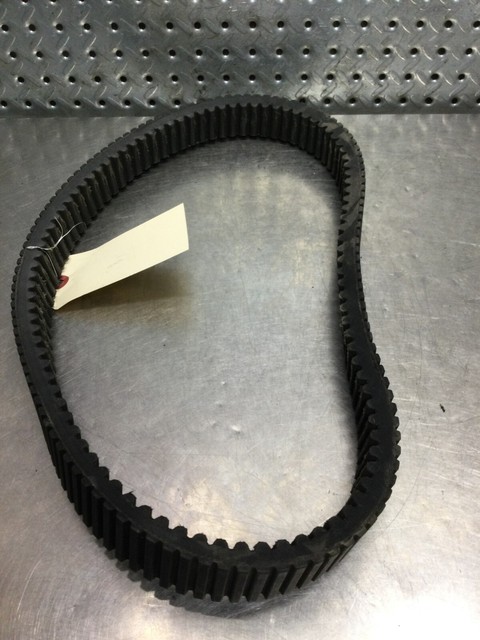
Dayco’s direct replacement for 417300391 and one of the most common aftermarket fitments on an 850. The XTX line is Dayco’s extreme-torque construction, aimed at high-load applications, and it is the belt a lot of riders reach for when the OEM belt keeps letting go. As with all of these, the part number is what matters — Dayco makes a large family of snowmobile belts and the fitment tables on marketplace listings are copied carelessly. Confirm XTX5034 rather than trusting a model-year blurb.
- Dayco XTX5034, replaces OEM 417300391
- Extreme-torque construction
- Fits Summit, Freeride and trail 850 E-TEC models
- Aramid cord reinforcement
- Direct OEM cross-reference
- Built for high-torque, high-heat use
- Commonly stocked by snowmobile retailers
- Marketplace fitment listings are frequently wrong
- Some riders report a short break-in stretch

Dayco HPX Drive Belt
The step below XTX in Dayco’s range, with the TOP COG design that adds flexibility through the cog profile — the point being that a more flexible belt generates less internal heat as it wraps the sheaves, and internal heat is what eventually delaminates a belt. It is a reasonable choice for a stock sled where the priority is a long, uneventful season rather than surviving abuse. Check the specific HPX number for your model and year; Dayco’s snowmobile range is large and the 850 has several listings across its production run.
- Dayco HPX with TOP COG profile
- Increased flexibility for lower internal heat
- Multiple part numbers across the 850 range
- Aimed at extended belt life
- Flexible construction reduces heat build-up
- Good value for stock applications
- Long-established snowmobile belt line
- Below XTX for outright torque capacity
- You must match the exact HPX number to your model
Belt Deflection Gauge
The tool that makes this article actionable. Deflection is how deep the belt rides in the secondary at rest, and it sets the squeeze at engagement — too little and the belt drags and cooks, too much and it slips on every pull. Both failure modes look identical from the outside: a destroyed belt. The gauge measures it in seconds against the number in the service manual. For the price of about one-tenth of a belt, you get the measurement that determines whether the next belt lasts a season or a weekend.
- Measures belt deflection in the secondary clutch
- Graduated scale reading directly in the service-manual units
- Works across brands and models
- Pocket-sized and needs no calibration
- Directly measures the setting that kills belts
- Costs a fraction of a single belt
- Takes under a minute once you know the procedure
- Useless without the correct spec for your model year
- Deflection changes as the belt wears, so it needs rechecking
Clutch Alignment Bar
The second half of the setup story. If the primary and secondary clutches are not parallel and correctly offset, the belt is twisted on every single revolution — and a belt being twisted heats up even when everything else is right. An alignment bar sits between the sheaves and shows you the offset and parallelism directly. Misalignment creeps in after an engine mount job, a clutch removal, or a hard impact, and it is invisible by eye. If you have had two belts fail for no apparent reason, check this before buying a third.
- Machined bar with stepped gauging surfaces
- Checks both offset and parallelism
- Model-specific and universal versions available
- Usually supplied with shim instructions
- Finds a fault that is invisible without a tool
- Explains repeat belt failures nothing else accounts for
- One-time purchase that covers the life of the sled
- Correcting alignment means shimming, which is real work
- Model-specific bars do not transfer between sleds
Sheave Cleaning Kit
A belt grips on clean aluminium. What it usually finds is a glaze of old rubber dust polished into the sheave faces, and a glazed sheave slips, and slip is heat. Cleaning is not complicated — a non-oily solvent, a Scotch-Brite pad worked in the direction of rotation, and a final wipe — but it must be done every time you fit a belt and it is the step most often skipped. Crucially, never use anything that leaves a residue: a lubricating spray on a sheave face turns a clutch into a very expensive slipper.
- Non-residue solvent cleaner
- Abrasive pads suited to aluminium sheaves
- Lint-free cloths
- Small enough to carry in the sled
- Restores the friction surface the belt actually drives on
- Takes ten minutes during a belt change
- Very cheap relative to the belt it protects
- Must be repeated at every belt change
- Residue-leaving products make the problem dramatically worse
Spare Belt Holder and Tool Roll
A drive belt is the one component that will strand you, and a spare in the garage is worth nothing on a mountain. A holder mounted under the hood or on the tunnel keeps a spare belt with the sled permanently, rolled rather than folded so it does not take a set, and out of the way of heat. Pair it with a small tool roll containing whatever your model needs for a trailside change. Riders who carry a spare almost never need it; riders who do not, need it on the coldest day of the season.
- Under-hood or tunnel mount
- Holds the belt rolled rather than folded
- Keeps the spare away from exhaust heat
- Secure enough for rough terrain
- Puts the spare where the failure happens
- Prevents a folded belt taking a permanent set
- Frees up bag space
- Mounting is model-specific and may need drilling
- A spare stored for years still ages
Digital Calipers
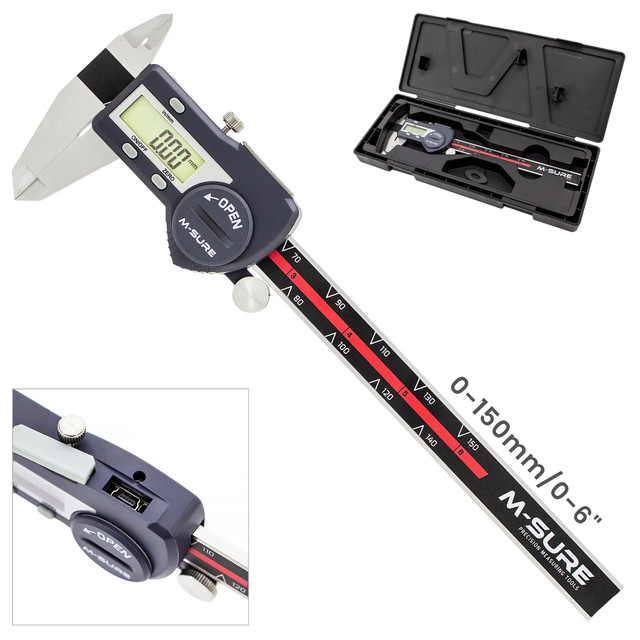
Belts wear by getting narrower, not by getting visibly thin, and a belt that has lost a few millimetres of width rides deeper in the sheaves and changes your entire clutch engagement. Measuring the width of a new belt and writing it on the box gives you a reference; measuring the old one at a change tells you how hard the sled is on belts and whether something is wrong. It is the cheapest diagnostic feedback loop available and it turns “the belt looked fine” into an actual number.
- 0.01 mm resolution digital readout
- Metric and imperial switching
- Battery-powered with auto-off
- Hard case for storage
- Quantifies belt wear instead of guessing
- Reveals a clutch problem long before a failure
- Useful for every other measurement on the sled
- Needs a consistent measuring point to be meaningful
- Cheap calipers drift and eat batteries
Buying tips
- Break a new belt in before you pin it. Half a dozen gentle heat cycles — moderate throttle, no hard pulls, letting it cool between — lets the belt sides seat to your specific sheaves. Running a brand-new belt hard from cold glazes the sides in the first mile, and a glazed belt slips, and slip is the heat that destroys it. This costs one easy ride and routinely doubles belt life.
- Set the deflection to the manual’s number, not to feel. Too little deflection makes the belt drag at idle and cook before you leave the trailhead; too much makes it slip on every hard pull. Both destroy a belt and both look the same afterwards. A deflection gauge costs a tenth of a belt and it is the single highest-value tool in this list.
- Clean the sheaves at every belt change, with a non-residue product. Belts drive by friction on clean aluminium, and what accumulates is a polished glaze of old rubber. A solvent that leaves no film plus an abrasive pad restores the friction surface. Never let a lubricating spray anywhere near a sheave face — the residue turns the clutch into a slipper and no belt will survive it.
- Repeat failures with no obvious cause usually mean alignment. If the primary and secondary are not parallel and correctly offset, the belt is twisted on every revolution and heats up even with perfect deflection and clean sheaves. Misalignment is invisible by eye and appears after engine mount work, clutch removal or a hard hit. Check it with a bar before you buy a third belt.
- Match the part number, not the model-year blurb. The OEM part is 417300391, with Dayco XTX5034 and the Gates G-Force line as the main direct cross-references. Marketplace listings copy fitment tables carelessly and the 850 spans several model years and several chassis. Confirm the number itself rather than trusting a title that mentions your sled.
- Carry the spare on the sled, and roll it rather than folding it. A folded belt takes a permanent set that it may never fully recover from, and a spare at home is not a spare. Mount a holder under the hood or on the tunnel, away from exhaust heat, and put the tools for a trailside change in the same place.
- Measure belt width, do not eyeball it. Belts wear narrower rather than visibly thinner, and a narrower belt rides deeper in the sheaves and shifts your whole engagement. Record the width of each new belt on its box and measure the old one when you change it. Faster-than-expected wear is a clutch problem announcing itself well before the failure.
- If a belt blows, clean the clutches before fitting the new one. A shredded belt fills both clutch assemblies with rubber debris, and that debris jams sheaves, blocks cooling airflow and contaminates the friction surfaces. Fitting a fresh belt into a dirty clutch is how people lose two belts in an afternoon. Pull the cover, clear the mess properly, then fit the spare.
As an Amazon Associate and eBay Partner, toptenpick.com earns from qualifying purchases. Prices and availability are subject to change.