

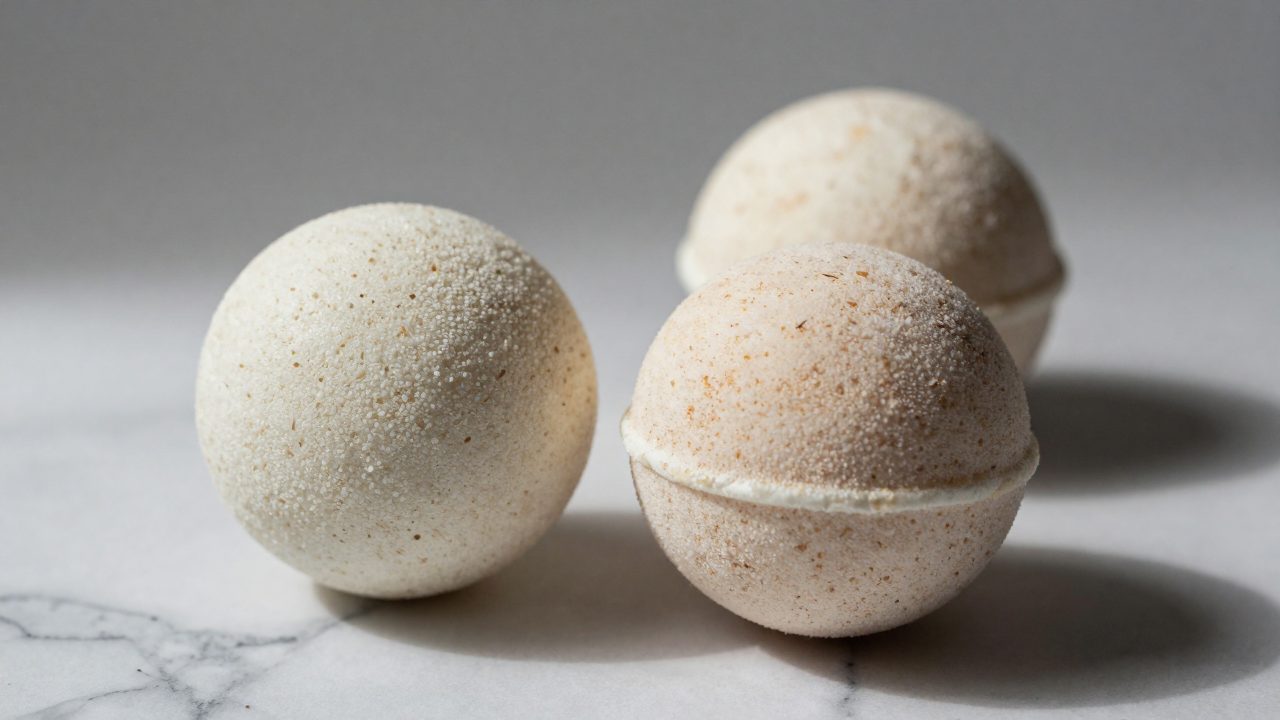
Why this is not a bath-bomb shopping list
A bath bomb is made to fizz, scent the water and often leave colour or oils behind. That makes it a poor category for a blanket recommendation to people who have eczema. The National Eczema Association advises avoiding fragrance in the bath and notes that fragrances are common irritants and allergens in bathing products. Its bathing guidance instead emphasises lukewarm water, a fragrance- and dye-free gentle cleanser, no vigorous scrubbing, patting dry and moisturising while skin is still damp. This page is therefore a buying and label-reading guide, not a claim that any bath bomb treats eczema.
Labels can sound reassuring while still describing a strongly scented product. Words such as natural, botanical, essential-oil, handmade, clean, calming and spa do not identify the ingredients that matter to a person trying to avoid a reaction. A product can be attractively packaged, vegan or colourful and still be a bad fit for an individual’s skin. Start with the ingredient list and your own known triggers, not the front-label promise.
What bath bombs usually contain
The fizz normally comes from sodium bicarbonate and citric acid reacting in water. Those basic ingredients are only part of the formula. Many bath bombs also use fragrance or essential oils, colourants, glitter, dried flowers, salts, butters, surfactants and binders. Each addition changes the experience and also gives a sensitive buyer another item to assess. A bomb that leaves a visible coloured ring or floating petals may make cleanup harder; it does not tell you whether the formula suits your skin.
Fragrance deserves special attention because it may appear simply as fragrance, parfum, perfume or as one or more named aromatic oils. Essential oils are fragrances too; “essential” does not mean neutral for every user. Colour may be described by a colour index number or by a named pigment. If a listing does not publish an ingredient list, treat that as missing purchase information rather than trying to infer the formula from photos, reviews or its scent name.
A practical label screen
Before putting a bath product in the cart, read the complete ingredient list supplied by the maker or retailer. Compare it with ingredients you have previously chosen to avoid. If fragrance, perfume, parfum, essential oils or colourants are present and those are concerns for you, the straightforward choice is to leave that item out. Do not rely on a retailer category called sensitive, gentle or family: those are marketing labels, not a substitute for the actual list.
Also check the format. A loose powder, a bomb with petals, or a product with a large amount of mica can leave material on the tub and on the body after the water drains. That is a usability issue rather than a diagnosis. If cleanup means rubbing the skin or using a harsher cleaner on the tub, it works against the low-friction routine many people are looking for. Plain bath water can be the more predictable option when you cannot identify every ingredient.
Water temperature, time and routine
The National Eczema Association recommends lukewarm rather than hot water and gives a five- to ten-minute soak as part of its bathing advice. Temperature and time are controllable parts of the experience; a novelty product is not required to control either one. Set out your towel and whatever moisturiser you normally use before bathing, so there is no long delay after drying. Pat rather than rub. A bath bomb cannot replace an established routine or individual advice from a clinician.
If you decide to introduce a new cosmetic bath product, use only one new item at a time. That makes it easier to identify what changed if you notice discomfort or a reaction. Keep the package or a screenshot of the ingredient list. It is more useful than trying to remember the name of a scent several days later. Stop using a product that causes stinging, burning, itching or another unwanted reaction, and seek appropriate professional advice for symptoms that are severe, persistent or concerning.
Why reviews cannot settle suitability
A five-star review can confirm that a buyer enjoyed the scent, colour or fizz. It cannot establish that the same formula will be comfortable for every person with eczema, because triggers and circumstances vary. Conversely, a low review about a broken bomb says little about the ingredient list. Use reviews for practical questions such as shipping, packaging, crumbling and tub cleanup; use the label for formula questions.
Be equally cautious with before-and-after images and statements that a cosmetic product “healed,” “cleared” or “cured” a skin condition. Those claims are not a reliable way to choose a bath product. This guide does not make treatment or cure claims for any bath item. For a child, for widespread symptoms, or when you are unsure how a product fits with a prescribed plan, a healthcare professional is the right source for individual guidance.
Better questions to ask a seller
Ask for the full current ingredient list, not just a list of hero ingredients. Ask whether the colour, scent and seasonal decoration are included in every variant. Ask whether the item is sold by weight and whether the listing photographs a single bomb or a multipack. If the ingredients have changed, read the new label even if you used an older version without trouble. Small-batch makers can legitimately change suppliers, colours or fragrances.
For a gift, avoid assuming that a popular scented set is universally welcome. A practical alternative is a gift receipt or a product chosen by the recipient after they can inspect its ingredients. That is less dramatic than a colourful bath-bomb box but more respectful of the information the recipient needs to make a choice.
The bottom line
Bath bombs are cosmetic, fragranced bath products first. For someone managing eczema, the most useful shopping skill is to read the full formula, avoid known triggers and keep the bathing routine simple and lukewarm. The National Eczema Association specifically highlights fragrance- and dye-free gentle cleansing and prompt moisturising after bathing. If a bath bomb’s ingredient list is incomplete or includes ingredients you prefer to avoid, skipping it is a valid decision—not a missed treatment. Seek individual medical advice when symptoms need it.