

As an Amazon Associate and eBay Partner, toptenpick.com earns from qualifying purchases. Prices and availability are subject to change.
Two facts settle most of this, and the first one causes more wasted orders than anything else in paintball.
The Invert Mini uses Autococker thread, not Ion thread. Both markers came out of the same era and the same corner of the industry, both are commonly owned by the same people, and their barrel threads are completely different. Autococker thread is also sold as Cocker thread, Mini thread, Timmy thread and TM-15 thread — all the same thing. Ion thread was originally the Impulse thread and was renamed when the Ion became popular. An Ion barrel will not screw into a Mini, and the reverse is equally true, and the listing will rarely make it obvious. Check the thread, every time, before you order.
The second fact is about what a barrel actually does. Bore size matters more than length. A barrel’s internal diameter should be a close match to the paint you are shooting that day, and paint varies — between brands, between batches, and with temperature and humidity through a single day. Paint that is too loose for the bore rolls out and loses velocity and consistency; paint that is too tight breaks in the barrel. The stock Mini barrel is .691, which is a reasonable middle. This is exactly why barrel kits with several interchangeable inserts exist — one back, several fronts in different bores, and you fit whichever matches today’s paint. That is a genuine upgrade; a single fixed-bore barrel in a different size is a lateral move.
On length: beyond roughly 12 to 14 inches there is no measurable accuracy gain, and a longer barrel uses more air per shot. Longer barrels are usually quieter and they reach further past a bunker, which are real reasons to want one — accuracy is not.
And the honest note: paint quality and marker consistency affect accuracy far more than any barrel. Ten picks below.
| # | Product | Price | Where to buy |
|---|---|---|---|
| 1 | Autococker-Threaded Barrel Kit with Multiple Inserts | $70-$200 | Amazon · eBay |
| 2 | Single-Piece Autococker Barrel, 14 Inch | $40-$120 | Amazon · eBay |
| 3 | Short Barrel (8-10 Inch) | $35-$90 | Amazon · eBay |
| 4 | Barrel Thread Adapter | $15-$35 | Amazon |
| 5 | Barrel Swab / Squeegee | $8-$20 | Amazon · eBay |
| 6 | Barrel Sock / Blocking Device | $8-$18 | Amazon |
| 7 | Chronograph | $40-$150 | Amazon |
| 8 | Marker O-Ring and Rebuild Kit | $15-$40 | Amazon · eBay |
| 9 | Paint Gauge or Bore Sizing Tool | $8-$25 | Amazon |
| 10 | Barrel Case or Padded Sleeve | $10-$30 | Amazon |
The picks, in detail

Autococker-Threaded Barrel Kit with Multiple Inserts
The upgrade that actually does something. A kit gives you one back with Autococker thread and several front inserts in different bores — typically covering roughly .684 through .695 — so you can match the barrel to the paint you are handed on the day. That match is what improves consistency, and it is the only thing about a barrel that reliably does. Kits cost more than a single barrel and they replace the need to ever buy another one. Confirm the thread is Autococker rather than Ion before ordering.
- Autococker (Cocker) thread back
- Several front inserts in different bores
- Typically .684 to .695 range
- Case included with most kits
- Match the bore to the paint on the day
- The one barrel change that measurably helps consistency
- Replaces the need to buy further barrels
- More expensive than a single barrel
- More parts to keep track of at a field

Single-Piece Autococker Barrel, 14 Inch
The simple upgrade, and fine if you shoot the same paint consistently. A one-piece 14-inch Autococker-threaded barrel with a ported front section is lighter than a kit, has nothing to come loose, and is quieter than the stock barrel. Fourteen inches is the sensible length — past that you gain reach past a bunker and lose air efficiency, with no accuracy benefit. Check the stated bore against the paint you usually shoot; the common choices sit around .688 to .693.
- One-piece aluminium construction
- Autococker thread
- 14 inch length, ported front
- Fixed bore, usually .688 to .693
- Lighter and simpler than a kit
- Noticeably quieter than the stock barrel
- Nothing to loosen mid-game
- Fixed bore cannot adapt to different paint
- No accuracy benefit over the stock barrel

Short Barrel (8-10 Inch)
For a marker that is already compact, and the Mini’s whole appeal is that it is small. An 8 to 10 inch barrel keeps the package short and manoeuvrable in tight bunkers and uses less air per shot, which over a day is a real difference in tank fills. The cost is noise — shorter barrels are noticeably louder, because less of the gas is used before the ball leaves. For a woodsball player that matters; for speedball it generally does not.
- 8 to 10 inch length
- Autococker thread
- Better air efficiency
- Keeps the marker compact
- More air-efficient, so more shots per fill
- Keeps a small marker small
- Easier in tight bunkers
- Noticeably louder than a longer barrel
- Less reach past a bunker edge
Barrel Thread Adapter
The part that rescues a barrel you already own in the wrong thread — which, given how easily Ion and Autococker get confused, is a situation a lot of people find themselves in. An adapter lets an Ion-threaded barrel fit an Autococker-threaded marker or vice versa. The trade-offs are honest: it adds length, it adds a joint that can loosen, and it adds a small step in the bore at the junction where a ball passes. Worth it to use an expensive barrel you already have; not worth designing around.
- Converts between common paintball barrel threads
- Aluminium construction
- Ion-to-Cocker and other combinations
- Adds roughly an inch of length
- Makes an existing barrel usable
- Cheap relative to a new barrel
- Widely available for common thread pairs
- Adds a joint that can loosen in play
- A step in the bore at the junction

Barrel Swab / Squeegee
The most useful accessory in paintball, and one every player should carry. A broken ball in the barrel coats the bore with shell and fill, and every shot afterwards is wildly inaccurate until it is cleaned — so a break that costs you ten seconds to clear otherwise costs you the rest of the point. A pull-through swab on a cord clears it in one pass without disassembling anything. Carry it in a pocket, not in a bag on the sideline, because that is where you will be when you need it.
- Absorbent pull-through swab on a cord
- Clears a broken ball in one pass
- Pocket sized
- Washable and reusable
- A broken ball ruins accuracy until cleared
- Clears the bore without disassembly
- Costs very little
- Needs washing or it just redistributes fill
- Useless in a bag on the sideline
Barrel Sock / Blocking Device
Mandatory at essentially every field and required by every governing body, so this is not optional equipment. A barrel sock fits over the end and is retained by an elastic loop around the marker, so a discharge cannot leave the barrel. Fields will not let you off the deck without one, and a worn elastic that no longer holds it firmly is treated as no sock at all. Keep a spare, because the elastic is the part that fails and it fails without warning.
- Fabric cover with a retaining elastic
- Required at virtually all fields
- Fits over the barrel end
- Bright colours for visibility
- Required equipment, not an accessory
- Cheap, and a spare costs nothing
- Bright colours are easy for marshals to see
- Worn elastic is treated as no sock at all
- Easy to lose between games
Chronograph
Velocity is a safety matter and it is the one thing every field checks. A handheld chronograph lets you set and verify your marker’s velocity before you get to the line, which matters because velocity drifts with temperature, tank pressure and paint — a marker set correctly in a warm garage can read high on a cold field. Fields have their own chronographs and being over the limit is a removal offence. Owning one means you arrive already correct rather than adjusting under time pressure.
- Handheld or over-barrel designs
- Reads in feet per second
- Battery powered
- Some record a shot string
- Velocity drifts with temperature and pressure
- Arrive already within the limit
- Shot-string versions reveal consistency problems
- Cheap units are less consistent than field equipment
- Still subject to the field’s own chrono on the day
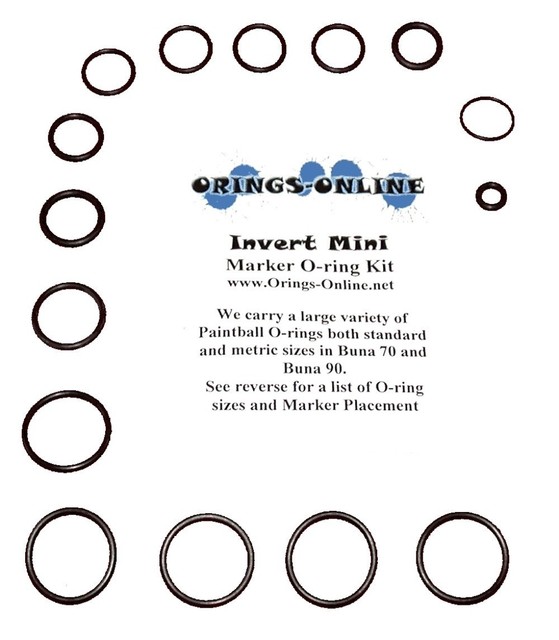
Marker O-Ring and Rebuild Kit
The maintenance that fixes the problems people blame on a barrel. Inconsistent velocity, a marker that starts leaking, or shots that vary shot-to-shot are usually worn O-rings in the bolt or the regulator — not the barrel, and no barrel will fix them. A model-specific rebuild kit with the correct O-rings and a tube of the right lubricant costs very little and restores consistency properly. Use the lubricant the manufacturer specifies; petroleum-based grease destroys some O-ring materials.
- Model-specific O-ring set
- Correct lubricant included in most kits
- Restores velocity consistency
- Cheap relative to a barrel
- Fixes the inconsistency people blame on barrels
- Restores a marker to its original performance
- Very cheap
- Requires partial disassembly
- The wrong lubricant destroys O-rings
Paint Gauge or Bore Sizing Tool
The instrument that makes a barrel kit useful, and cheap enough that there is no reason not to own one. A paint gauge measures the actual diameter of the balls in front of you, which is the number a bore should be matched to — and it varies between brands, between batches, and through a day as temperature and humidity change. Without it, choosing an insert is guesswork. With it, the whole point of a kit becomes usable in about thirty seconds at the start of a game.
- Measures actual paintball diameter
- Stepped gauge or dial calipers
- Pocket sized
- Very cheap
- Turns a barrel kit from guesswork into a measurement
- Paint varies by brand, batch and weather
- Takes seconds to use
- Only useful if you own multiple bores
- Paint size changes through the day, so recheck
Barrel Case or Padded Sleeve
A barrel’s bore is the working surface and a dent or a scratch in it is permanent — a ding in an aluminium barrel changes the airflow past the ball at exactly the point where consistency is decided. A padded case protects it in a gear bag among tanks, hoppers and boots. Kits usually come with one; single barrels usually do not. It also keeps the bore free of grit, which is the other thing that scratches it, on the way in rather than in the bag.
- Padded sleeve or hard tube
- Sized for barrel length
- Keeps grit out of the bore
- Included with most kits
- A dented bore is permanently compromised
- Keeps grit out on the way in as well as out
- Cheap relative to the barrel
- Another item in an already full bag
- Single barrels rarely come with one
Buying tips
- The Invert Mini is Autococker thread, not Ion thread. They came from the same era and are commonly confused, and they are completely incompatible. Autococker thread is also sold as Cocker, Mini, Timmy and TM-15 thread — all the same. Check the thread on every listing before ordering; this is the most common wasted purchase in paintball.
- Bore size matters more than length. The barrel’s internal diameter should closely match the paint you are shooting, and paint varies between brands, batches and weather. Too loose and the ball rolls out losing velocity; too tight and it breaks in the barrel. The stock Mini barrel is .691, which is a sensible middle.
- A barrel kit is the upgrade; a different single barrel is not. Several inserts in different bores let you match today’s paint, which is the only thing about a barrel that reliably improves consistency. Buying one fixed-bore barrel in a different size just moves the mismatch somewhere else.
- Length beyond about 14 inches buys nothing measurable in accuracy. It does buy a quieter marker and more reach past a bunker edge, and it costs air per shot. Those are legitimate reasons to choose a length — accuracy is not one of them, whatever the marketing implies.
- Measure the paint before choosing an insert. A cheap bore gauge tells you the actual diameter of the balls in front of you, which changes between brands, batches and through a day as the weather moves. Without it, the inserts in your kit are guesswork. With it, the decision takes thirty seconds.
- Carry a swab in a pocket, not in your bag. A broken ball coats the bore and every shot afterwards goes anywhere but where you aimed. A pull-through swab clears it in one pass and takes seconds — but only if it is on you when it happens, which is on the field rather than at the sideline.
- Rule out O-rings before blaming the barrel. Inconsistent velocity and shot-to-shot variation are almost always worn seals in the bolt or the regulator, and no barrel fixes that. A model-specific rebuild kit costs a fraction of a barrel and restores the consistency people go shopping to buy.
- Check your velocity before you get to the field. It drifts with temperature and tank pressure, so a marker set correctly in a warm garage can read over the limit on a cold morning — and being over is a removal offence, not a warning. A handheld chronograph means you arrive already correct.
As an Amazon Associate and eBay Partner, toptenpick.com earns from qualifying purchases. Prices and availability are subject to change.