

As an Amazon Associate and eBay Partner, toptenpick.com earns from qualifying purchases. Prices and availability are subject to change.
Most advice about theme park bags is about comfort, capacity and water bottle pockets. All useful. All secondary to a constraint that has quietly reshaped this problem over the last few years: on a growing number of major rides you cannot take a bag on at all.
Loose-article policies have tightened sharply. On many modern coasters, anything not in a zipped pocket must go somewhere else before you board — and the somewhere else is increasingly a bank of lockers at the ride entrance, often free for the duration of the queue, and sized to a specific set of dimensions. A bag that does not fit that locker is a bag you have to carry to a paid locker elsewhere in the park, or hand to someone not riding, or leave a queue over.
So the size question is not “how much do I want to carry?” It is “what fits in the ride lockers at the park I am visiting?” That varies between operators, and the dimensions are published — it takes five minutes to look up and it will determine which of these bags is right for you far more than any comfort feature.
The second insight follows from the first. If your bag spends a lot of the day in lockers, you want a smaller bag and a good pocket-carry strategy, not a bigger bag with better straps. Phone, money and park ticket in a zipped pocket or a small waist pouch means you never need to open the main bag on a ride queue. Some people abandon the backpack entirely in favour of a waist pack and a bottle.
Two other things worth knowing before you shop. Water rides are wetter than you expect, and a bag stored in a ride’s own unsecured bins gets soaked along with the riders — a dry bag liner costs very little. And heat is the real enemy of an all-day park visit: a bag with a ventilated back panel and space for frozen water bottles does more for how the day feels than any amount of padding.
Ten picks below, sized from a waist pouch up.
| # | Product | Price | Where to buy |
|---|---|---|---|
| 1 | Compact 15-20 L Daypack | $30-$80 | Amazon · eBay |
| 2 | Waist Pack / Bum Bag | $15-$45 | Amazon · eBay |
| 3 | Anti-Theft Backpack with Hidden Zips | $45-$110 | Amazon · eBay |
| 4 | Packable Ultralight Backpack | $15-$40 | Amazon |
| 5 | Family-Size 25-30 L Backpack | $50-$120 | Amazon |
| 6 | Waterproof Dry Bag Liner | $10-$25 | Amazon · eBay |
| 7 | Insulated Bottle and Cooler Pocket Insert | $25-$60 | Amazon · eBay |
| 8 | Portable Power Bank | $20-$50 | Amazon · eBay |
| 9 | Ponchos and a Microfibre Towel | $12-$30 | Amazon · eBay |
| 10 | Carabiners and a Zip-Lock Phone Pouch | $8-$20 | Amazon · eBay |
The picks, in detail
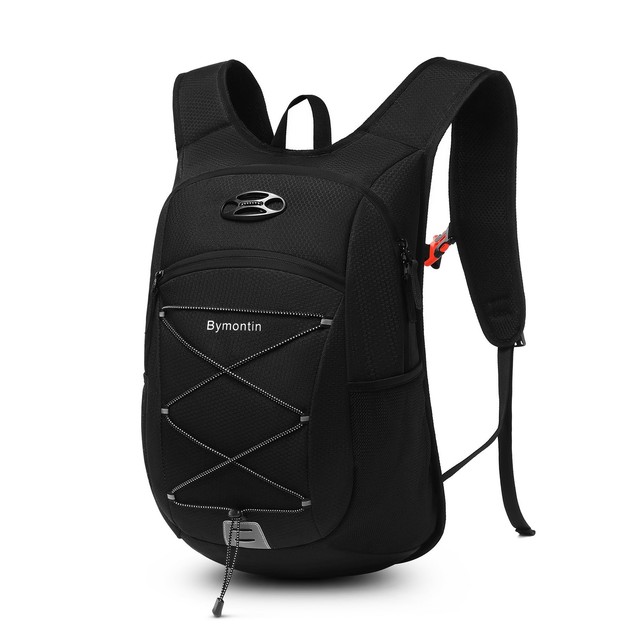
Compact 15-20 L Daypack
The size that fits most ride lockers and still holds what a family needs for a day — sun cream, snacks, a spare shirt, two bottles and a portable charger. Anything larger and you are gambling on locker dimensions; anything smaller and you are buying things in the park at park prices. Look for a genuinely ventilated back panel rather than just a padded one, because a flat foam back against a sweaty shirt for ten hours is genuinely unpleasant in summer.
- 15-20 litre capacity
- Ventilated mesh back panel
- Two side bottle pockets
- Zipped front pocket for small items
- Fits typical ride lockers
- Holds a full day’s supplies for two or three people
- Ventilated backs make a real difference in heat
- Too small for a family of five’s full day
- Check the specific park’s locker dimensions first
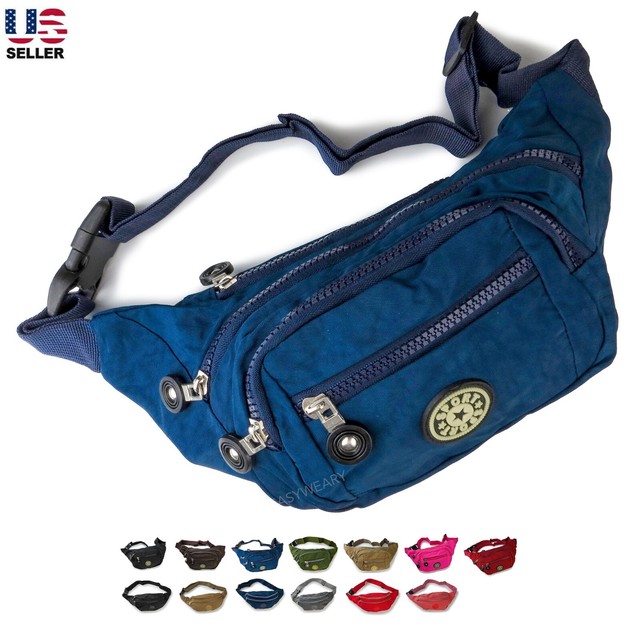
Waist Pack / Bum Bag
The format that sidesteps the whole problem. A waist pack holding phone, cards, ticket and a small bottle can be worn on many rides where a backpack cannot, and it never needs a locker. Plenty of experienced park visitors carry nothing else. Look for a zipped main compartment, a secure buckle rather than a friction clasp, and a strap long enough to wear across the body — which is more comfortable over a long day and harder to lose.
- Zipped main compartment
- Adjustable strap, wearable at waist or cross-body
- Water resistant fabrics on better models
- Small enough to stay on for many rides
- No locker needed at all on many rides
- Nothing to put down, so nothing to lose
- Cheap and light
- Very limited capacity
- Some rides prohibit even these — check park policy

Anti-Theft Backpack with Hidden Zips
Worth considering for crowded parks, where you spend hours pressed into queues with your back to strangers. Anti-theft designs hide the main zips against your back, add slash-resistant panels and use lockable pulls. The realistic benefit is modest — theft is not rampant in most parks — but the peace of mind is worth something, and the designs tend to be well organised anyway. Check that the security features do not make it slow to open when you actually need something.
- Zips concealed against the back panel
- Slash-resistant fabric or wire mesh
- Lockable zip pulls
- RFID-blocking pocket on many models
- Reassuring in dense queue crowds
- Generally well-organised interiors
- Useful for travel beyond the park
- Security features slow down normal access
- Heavier than an equivalent plain daypack
Packable Ultralight Backpack
The clever compromise. A packable bag folds into its own pocket, so you can carry it empty in a waist pack, unfold it when you need to carry a jumper or souvenirs, and stuff it away again before a ride. It weighs almost nothing and costs very little. It will not be as comfortable as a structured daypack under real weight, but for a bag that is empty half the day and lightly loaded the rest, that hardly matters.
- Folds into its own integrated pocket
- Ultralight ripstop nylon
- 15-20 litres when open
- Water-resistant coating on most
- Weighs and costs almost nothing
- Carry it empty and deploy when needed
- Easy to squeeze into a small locker
- Thin straps are uncomfortable under real weight
- Light fabric tears if snagged
Family-Size 25-30 L Backpack
For a group that genuinely needs to carry more — spare clothes for small children, a packed lunch, several bottles. Be clear-eyed about the trade-off: this is very likely too large for free ride lockers, so plan on a paid locker near the entrance and one or two trips back to it during the day. Many families find that works well, using the big bag as a base and a waist pack for the walking-around essentials. Look for a hip belt, since 25 litres of water and food is heavy.
- 25-30 litre capacity
- Padded hip belt to carry the weight
- Multiple compartments and organiser pockets
- Room for a packed lunch and spare clothes
- Genuinely carries a family’s day
- Hip belt makes real weight bearable
- Fewer purchases at park prices
- Very likely too big for free ride lockers
- Needs a paid locker and trips back to it
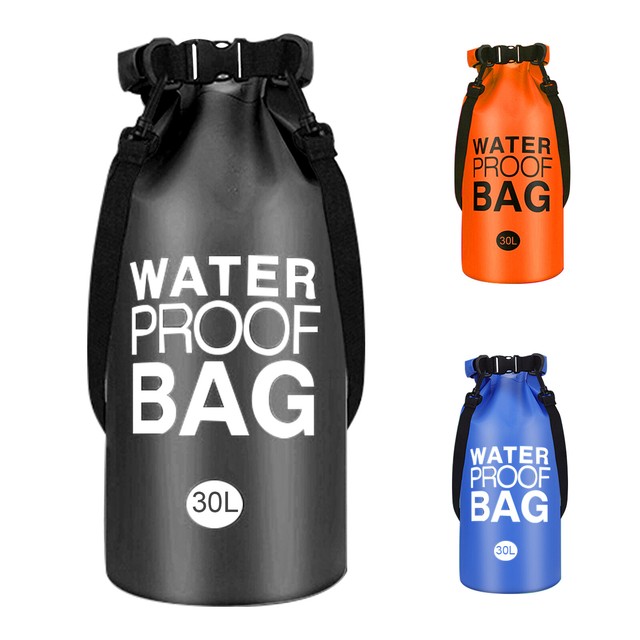
Waterproof Dry Bag Liner
Cheap, light and it saves a phone. Water rides soak far more than the riders, and bags stored in a ride’s own open bins get hit by the same spray. Summer storms do the same thing. A roll-top dry bag inside your backpack keeps phones, chargers and spare clothes genuinely dry, which is more than any ‘water-resistant’ bag fabric will do — the leak point on almost every backpack is the zip, not the fabric.
- Roll-top closure, fully waterproof
- 5-20 litre sizes
- Lightweight ripstop
- Packs to nothing when unused
- Actually waterproof, unlike a water-resistant bag
- Weighs and costs almost nothing
- Doubles as a wet-clothes bag afterwards
- Slower to open and close than a zip
- Needs rolling properly to seal

Insulated Bottle and Cooler Pocket Insert
Heat is what ends theme park days early, and cold water is the direct answer. A vacuum-insulated bottle filled with ice in the morning is still cold in the afternoon, which no plastic bottle manages, and most parks have free water fill stations. An insulated pouch or small cooler insert lets you keep snacks and a second bottle cold too. This is one of the few purchases that measurably improves the day rather than just making it more organised.
- Vacuum insulated stainless steel bottles
- Insulated pouch or cooler insert
- Sized to fit standard side pockets
- Wide mouths for ice
- Cold water all day in real heat
- Free refills at park fill stations save a lot of money
- Directly improves how the day feels
- Steel bottles are heavy when full
- Some parks restrict glass or large containers — check

Portable Power Bank
Park apps are now the ride queue times, the virtual queue, the map, the food ordering and often the tickets — and they will flatten a phone by mid-afternoon. A 10,000 mAh power bank with a short cable gives you two or three full charges and removes an entirely avoidable problem. Charge it the night before, not in the car. A phone that dies at four in the afternoon can mean losing a virtual queue place and not being able to find the rest of your group.
- 10,000 mAh or larger
- USB-C Power Delivery for fast charging
- Short cable to keep it in a pocket while charging
- Pass-through charging on some models
- Park apps drain phones far faster than normal use
- A dead phone can cost a virtual queue place
- Useful well beyond the park
- Adds weight, and needs charging the night before
- Some parks restrict very large capacity banks
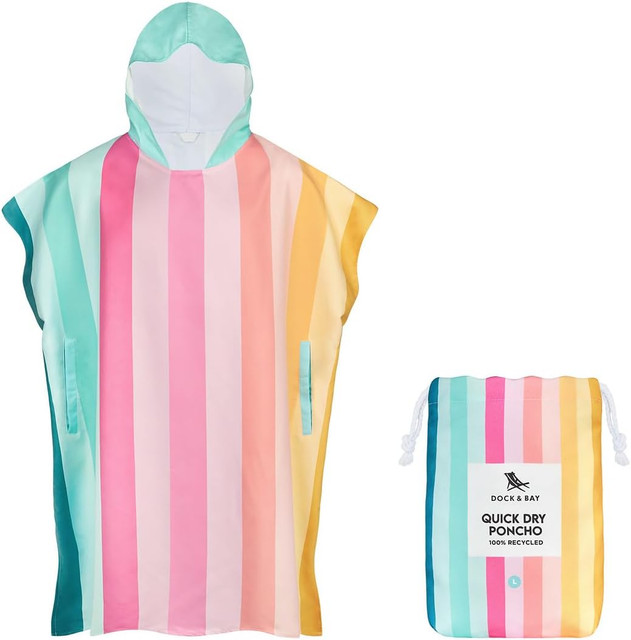
Ponchos and a Microfibre Towel
Two items that cost very little and change the afternoon. Park-sold ponchos are expensive and cheap ponchos bought in advance work identically, for both sudden rain and water rides. A compact microfibre towel dries a soaked seat, a soaked child or a soaked phone far faster than anything else and packs down to nothing. Together they weigh almost nothing and prevent the specific misery of spending four hours in wet clothes because of one ride.
- Disposable or reusable ponchos in multipacks
- Quick-drying microfibre towel with a carry pouch
- Both pack down very small
- Sized for adults and children
- A fraction of park prices
- Prevents hours in wet clothes after one ride
- Takes almost no space or weight
- Ponchos are hot to wear in warm rain
- Disposable ones tear easily
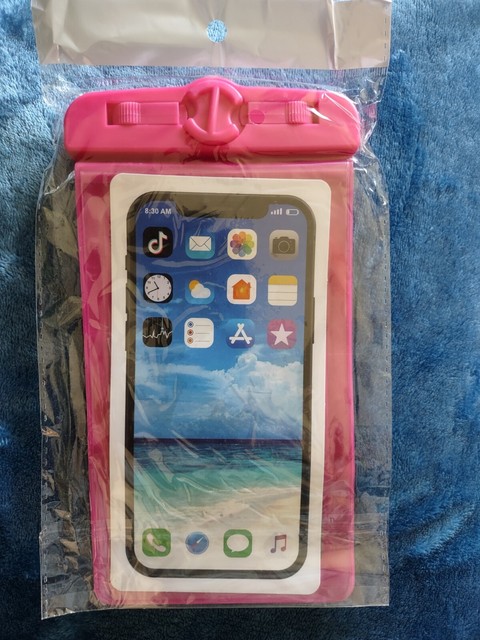
Carabiners and a Zip-Lock Phone Pouch
Small hardware that solves annoying problems. A carabiner clips a bottle, a hat or a stuffed toy to the outside of the bag instead of taking up space inside. A clear zip-lock or waterproof phone pouch means you can use the phone through it on a water ride rather than putting it away. Neither is exciting and both get used all day. Choose a pouch with a proper double seal rather than a single fold-over closure, which is the kind that lets water in.
- Locking carabiners in several sizes
- Clear waterproof phone pouch with a neck cord
- Touchscreen-usable pouch material
- Double-seal closures on better pouches
- Clips bulky items outside the bag
- Use the phone on water rides without risking it
- Costs very little
- Single-seal pouches leak — check the closure
- Items clipped outside can be knocked off
Buying tips
- Look up the ride locker dimensions before you choose a bag. Many major coasters now prohibit loose articles entirely and provide lockers at the ride entrance, often free for the queue duration and sized to specific measurements. A bag that does not fit is a bag you have to walk back across the park with. Five minutes on the park’s website settles which size to buy.
- Smaller is better than bigger for a park day. If the bag spends much of the day in lockers, capacity you cannot bring on rides is capacity you are carrying to and from lockers. Most experienced visitors converge on a compact daypack, or a waist pack and nothing else, rather than the largest bag they own.
- Keep phone, money and tickets in a pocket, not the bag. That way you never need to open the main bag in a queue, and you can drop the bag into a locker without unpacking. A small zipped pocket or a waist pack for the essentials is the single most useful organisational habit in a park.
- Assume water rides will soak everything. The unsecured bins at the ride entrance are not sheltered, and the spray reaches them. A roll-top dry bag inside your pack costs very little and is genuinely waterproof, unlike a ‘water-resistant’ backpack whose weak point is the zip. Put phones and chargers in it before you queue, not after you see the splash.
- Freeze a bottle overnight and it stays cold all day. A frozen bottle in the bag doubles as an ice pack for snacks and gives you cold water for hours. Most parks have free water fill stations, so a vacuum bottle also saves a surprising amount of money over a long day.
- Charge your power bank the night before. Park apps carry the map, queue times, virtual queue places and often the tickets, and they flatten a phone by mid-afternoon. A dead phone can mean losing a queue position and not being able to find your group. This is one of the most common avoidable problems of a park day.
- Wear the bag on your front in dense crowds and on rides where it is allowed. It is easier to keep track of, it does not swing into people in queues, and where a bag is permitted on a ride the operator usually wants it held in your lap anyway. It also removes the temptation to open it behind you where you cannot see it.
- Pack a poncho and a small towel even on a clear forecast. One water ride will otherwise leave you in wet clothes for the rest of the afternoon, and park-bought ponchos cost several times what a multipack does. Both pack down to almost nothing and they are the items people most often say they wish they had brought.
As an Amazon Associate and eBay Partner, toptenpick.com earns from qualifying purchases. Prices and availability are subject to change.