

As an Amazon Associate and eBay Partner, toptenpick.com earns from qualifying purchases. Prices and availability are subject to change.
Before the list, the thing that makes this whole search much less frightening than it feels: Lacri-Lube is white petrolatum and mineral oil, and so is almost every alternative on this page.
It is not a proprietary molecule. It is an ointment base — the same two ingredients, in similar proportions, sold under a dozen names. So if your pharmacy has run out, or the 7g tube you always bought has been discontinued, or you are caught in one of the recurring global supply problems with this class of product, you are not looking for a substitute for something irreplaceable. You are looking for another tube of essentially the same thing.
What actually differs between them is worth knowing, and it is three things. First, lanolin — several ointments include it, and it is a reasonably common contact allergen, which is precisely why lanolin-free versions exist as a named category. Second, preservatives — most of these are preservative-free in single-use or specially sealed tubes, and if you use an ointment several times a day that matters. Third, tube size and price per gram, which varies far more than the formula does.
Now the part that is not about shopping. If you were given Lacri-Lube for dry eye at night, this is a comfort product and swapping brands is a low-stakes decision. If it was prescribed because your eyelid does not fully close — after facial palsy, Bell’s palsy, a stroke, or eyelid surgery — then the ointment is protecting a cornea that cannot protect itself, and that is a different situation entirely. In that case ask your eye clinic before you change anything, because they may also want you taping the lid or using a moisture chamber overnight, and the ointment is only part of it.
Nothing here is medical advice, we do not test products, and an ophthalmologist or optometrist who has looked at your eyes knows things this page cannot.
Ten options below, grouped by what makes them different.
| # | Product | Price | Where to buy |
|---|---|---|---|
| 1 | Refresh P.M. Lubricant Eye Ointment | $12–$22 | Amazon · eBay |
| 2 | Systane Nighttime Lubricant Eye Ointment | $12–$20 | Amazon · eBay |
| 3 | Soothe Night Time Lubricant Eye Ointment | $12–$20 | Amazon · eBay |
| 4 | Lubrifresh P.M. Lubricant Eye Ointment | $8–$15 | Amazon · eBay |
| 5 | Xailin Night Eye Ointment | $10–$20 | Amazon |
| 6 | HYLO NIGHT Eye Ointment (formerly VitA-POS) | $12–$22 | Amazon · eBay |
| 7 | HydraMed Night Sensitive (Lanolin-Free) | $14–$25 | Amazon |
| 8 | Store-Brand Lubricant Eye Ointment (CVS, Walgreens, Equate, Boots) | $6–$12 | Amazon |
| 9 | Preservative-Free Lubricating Gel Drops (Daytime Companion) | $15–$30 | Amazon · eBay |
| 10 | Overnight Moisture Chamber Goggles or Eye Shields | $25–$60 | Amazon · eBay |
The picks, in detail

Refresh P.M. Lubricant Eye Ointment
The closest thing to a like-for-like swap, and from the same manufacturer as Lacri-Lube. White petrolatum and mineral oil in a preservative-free ointment intended for night-time use. If your pharmacist has told you Lacri-Lube is unavailable, this is usually the first thing they reach for, and it is widely stocked in the US.
- White petrolatum and mineral oil base
- Preservative-free
- Made by the same manufacturer as Lacri-Lube
- Sold in 3.5g tubes
- Effectively the same formulation
- Preservative-free, so suitable for frequent use
- Very widely available in the US
- Blurs vision for a while after application, like all ointments
- Small tube — works out expensive per gram
- Contains lanolin alcohols in some formulations; check if you react to lanolin

Systane Nighttime Lubricant Eye Ointment
Alcon’s equivalent, and the most common alternative on a US pharmacy shelf after the Allergan products. Same petrolatum and mineral oil principle, sold in a slightly larger tube than most, and usually a little cheaper per gram. A sensible first try if Refresh P.M. is also out of stock.
- Mineral oil and white petrolatum
- Designed for overnight use
- Available in 3.5g tubes
- Widely stocked in US pharmacies
- Easy to find almost anywhere
- Competitively priced
- Well-established brand with a broad dry-eye range
- Same vision blurring as any ointment
- Formulations vary by region — read the ingredients
- Not always preservative-free; check the packaging

Soothe Night Time Lubricant Eye Ointment
Bausch + Lomb’s entry in the same category, and a genuinely useful third option because stock shortages in this class rarely hit all three major manufacturers at once. Same base ingredients, same overnight intent. Worth knowing the name so you can ask for it specifically rather than leaving empty-handed.
- Mineral oil and white petrolatum
- Overnight lubricant ointment
- Bausch + Lomb manufacture
- Standard small tube
- A third major manufacturer — useful during shortages
- Same active ingredients as the alternatives
- Widely distributed
- Blurs vision after application
- Availability varies more than Systane or Refresh
- Small tube size

Lubrifresh P.M. Lubricant Eye Ointment
The generic, and the reason to know it exists is simply cost. Same petrolatum and mineral oil formulation at a noticeably lower price than the branded equivalents, sold by Major and other generic manufacturers. If you are using an ointment nightly and indefinitely, the price-per-gram difference adds up over a year in a way a single purchase hides.
- Generic white petrolatum and mineral oil ointment
- Direct equivalent to the branded night ointments
- Sold by Major and other generic houses
- Noticeably cheaper per tube
- Cheapest of the mainstream equivalents
- Same actives as the branded products
- Good choice for indefinite nightly use
- Less consistently stocked than the big brands
- Packaging and tube quality are basic
- Check the ingredient list — generics vary slightly
Xailin Night Eye Ointment
One of two products the Royal College of Ophthalmologists have named as suitable alternatives during Lacri-Lube shortages, which is a stronger endorsement than a marketing page. Preservative-free, widely available in the UK and Europe, and the standard swap there. Worth asking for by name if you are in the UK and your pharmacy is out.
- Preservative-free night ointment
- Named by the Royal College of Ophthalmologists as a Lacri-Lube alternative
- Widely available in the UK and Europe
- 5g tube
- Professionally recommended substitute, not just a shelf equivalent
- Preservative-free
- Larger tube than most US equivalents
- Hard to obtain in the US
- Contains lanolin — not for lanolin-sensitive users
- Same post-application blurring

HYLO NIGHT Eye Ointment (formerly VitA-POS)
The other Royal College-named alternative, and different from the rest of this list in that it includes vitamin A palmitate alongside the ointment base. Preservative-free and popular in the UK and Europe. The name change from VitA-POS causes real confusion when searching, so look for both.
- Preservative-free ointment with vitamin A palmitate
- Formerly sold as VitA-POS — same product
- Named by the Royal College of Ophthalmologists as an alternative
- 5g tube
- Professionally recommended substitute
- Preservative-free
- Well regarded by long-term users
- The VitA-POS renaming makes it hard to search for
- Limited US availability
- Contains lanolin
HydraMed Night Sensitive (Lanolin-Free)
The one to know about if lanolin is your problem. Several night ointments include lanolin, it is a recognised contact allergen, and a red, itchy lid margin that gets worse with the ointment meant to soothe it is a classic presentation. This is formulated without it. If you have reacted to a night ointment before, start here rather than cycling through more of the same.
- Lanolin-free formulation
- Preservative-free
- Designed for sensitive and allergy-prone users
- European availability
- Solves a specific and commonly missed problem
- Preservative-free as well as lanolin-free
- Worth trying before assuming ointments do not suit you
- Harder to find than the mainstream brands
- More expensive
- Limited US distribution
Store-Brand Lubricant Eye Ointment (CVS, Walgreens, Equate, Boots)
The honest budget answer. Pharmacy own-brand night ointments are the same white petrolatum and mineral oil, made in the same small number of factories, at roughly half the branded price. Compare the ingredient panel against whichever branded tube you were using — if the actives and the lanolin status match, there is very little left to pay extra for.
- White petrolatum and mineral oil, same as the branded products
- Sold under pharmacy own-brand labels
- Typically around half the branded price
- Widely available
- Substantially cheaper for the same actives
- Easy to compare — the ingredient panel tells you everything
- Stocked even when branded products are short
- Formulations differ slightly between chains — read every tube
- Preservative status is not always clearly marked
- Tube and cap quality is usually poorer
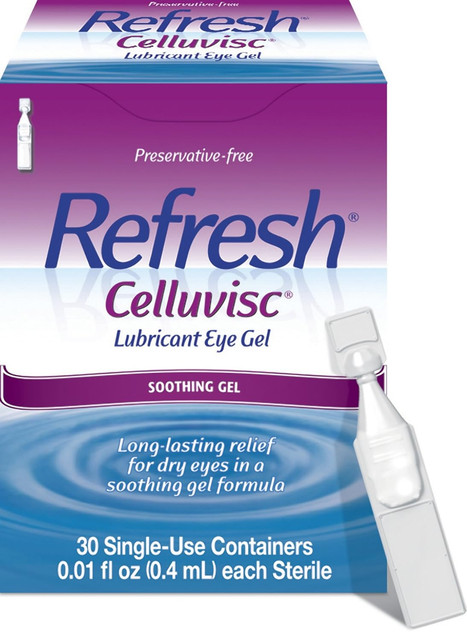
Preservative-Free Lubricating Gel Drops (Daytime Companion)
Not a replacement, but the thing most people actually need alongside one. Ointments blur vision badly, so they are a night product; a thicker preservative-free gel drop covers the daytime gap without the blur. If you have been using an ointment during the day because it was what you had, this is a meaningful quality-of-life change.
- Thicker than standard artificial tears, thinner than an ointment
- Preservative-free single-use vials or specially sealed bottles
- Usable during the day without significant blurring
- Several brands available
- Covers daytime dryness without the ointment blur
- Preservative-free versions suit frequent use
- Widely available
- Does not last as long as an ointment
- Single-use vials generate a lot of packaging
- More expensive per day than a tube of ointment

Overnight Moisture Chamber Goggles or Eye Shields
For anyone using a night ointment because their eyelid does not fully close, rather than for ordinary dryness. A moisture chamber traps humidity against the eye overnight and does what no ointment can do — stop evaporation entirely. Ask your eye clinic first, because for lagophthalmos they may want a specific approach, but this is the product category worth asking about.
- Sealed or semi-sealed chamber worn overnight
- Retains humidity against the eye surface
- Reusable
- Several designs, including gel-lined goggles and adhesive shields
- Addresses evaporation rather than only lubrication
- Reusable, so cheaper over time than nightly ointment
- Genuinely helpful for incomplete lid closure
- Ask your eye clinic before using one — this is a clinical situation
- Takes getting used to overnight
- Fit varies a lot between face shapes
Buying tips
- Compare the ingredient panel, not the brand. Almost all of these are white petrolatum and mineral oil in similar proportions.
- Check for lanolin if you have ever reacted to an eye ointment. It is a recognised contact allergen and lanolin-free versions exist for exactly that reason.
- Prefer preservative-free if you apply more than once a day. Preservatives are the usual cause of irritation that builds over weeks.
- Ointments blur vision — that is why they are night products. Use a gel drop during the day rather than living with the blur.
- Talk to your eye clinic before switching if the ointment was prescribed for a lid that does not fully close. That is corneal protection, not comfort.
- Warm the tube in your hand for a few seconds first. Cold ointment comes out in a lump and is harder to spread along the lid.
- A small amount goes a long way. A strip of about a centimetre inside the lower lid is the usual guidance; more just blurs longer.
- Compare price per gram, not per tube. Tube sizes vary from 3.5g to 5g and the cheapest tube is not always the cheapest product.
As an Amazon Associate and eBay Partner, toptenpick.com earns from qualifying purchases. Prices and availability are subject to change.