

As an Amazon Associate and eBay Partner, toptenpick.com earns from qualifying purchases. Prices and availability are subject to change.
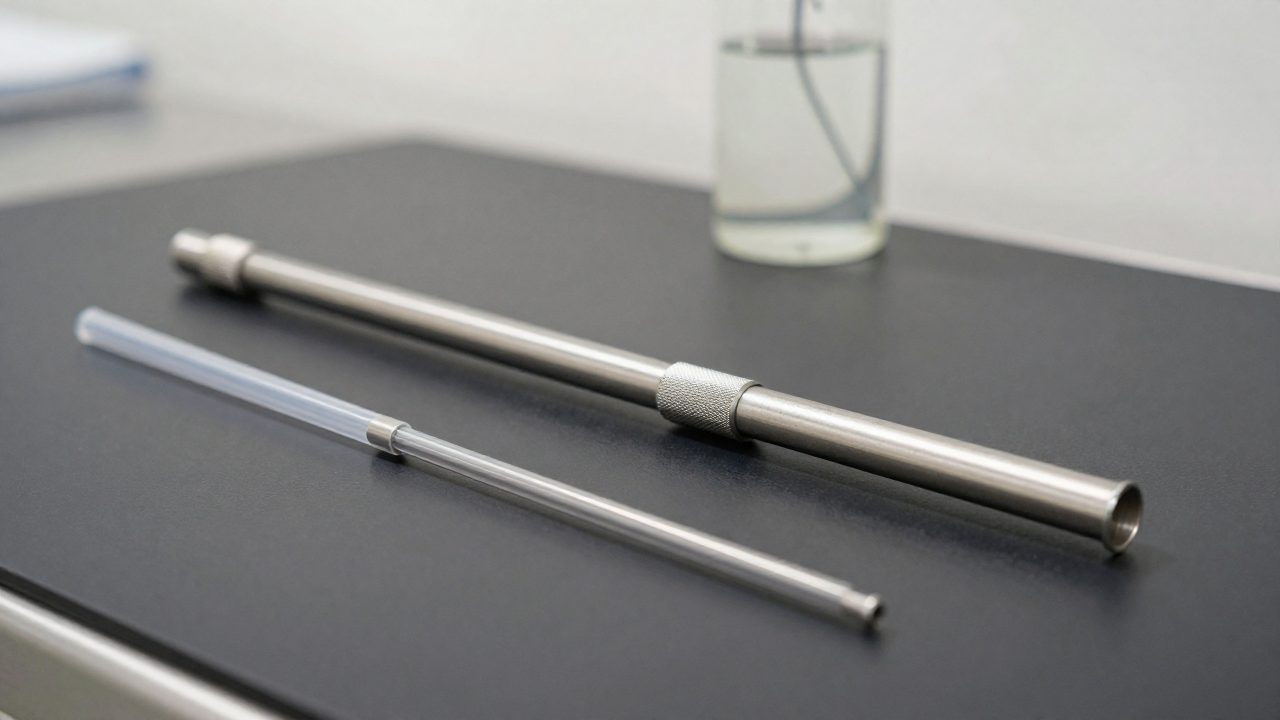
An insemination gun is a stainless steel tube with a plunger. It costs very little, it lasts for years, and — within reason — which one you buy has almost no effect on your conception rate. That is worth saying plainly, because it redirects attention to the things that do.
What actually determines whether a breeding takes is the handling of the semen, and the window is narrower than people expect. Thawing temperature and time are specified for a reason, and straws thawed too cool, too warm or for the wrong duration lose viability before they leave the flask. Then the clock starts: from the moment a straw is thawed, the time to deposition should be short, and every minute it spends cooling in an unwarmed gun or waiting while an animal is caught is working against you. Cold shock is the classic error — a correctly thawed straw loaded into a gun at ambient winter temperature is chilled again immediately, and that damage is not reversible.
So the equipment list that matters is the thaw unit, the thermometer, a way to keep the loaded gun warm on the way to the animal, and the sheaths — with the gun itself as a commodity.
Two compatibility points before you order anything. Straws come in 1/4 cc and 1/2 cc, and a gun must match the straw or be a universal type that takes both. And the sheath system must match the gun: O-ring guns and split-sheath guns use different sheaths and they are not interchangeable. Buying a gun and a box of sheaths that do not fit each other is the most common ordering mistake in this category.
A final point worth making: this is a skill, not a purchase. Conception rates between a trained technician and an untrained one using identical equipment differ enormously. If you are starting out, an AI course from a breeding cooperative or an extension service will do more for your results than anything on this list.
Ten picks below.
| # | Product | Price | Where to buy |
|---|---|---|---|
| 1 | Universal AI Gun (1/4 and 1/2 cc) | $25-$60 | Amazon |
| 2 | Cassou-Style O-Ring AI Gun | $25-$55 | Amazon |
| 3 | Split-Sheath AI Gun | $25-$60 | Amazon |
| 4 | Insemination Sheaths | $20-$70 | Amazon |
| 5 | Thermostatic Straw Thaw Unit | $70-$300 | Amazon |
| 6 | Accurate Thaw Thermometer | $15-$45 | Amazon · eBay |
| 7 | Straw Cutter | $15-$40 | Amazon · eBay |
| 8 | Insulated Gun Warmer or Sheath | $20-$70 | Amazon |
| 9 | Shoulder-Length Palpation Gloves | $25-$60 | Amazon |
| 10 | Liquid Nitrogen Storage Flask | $300-$1,200 | Amazon |
The picks, in detail
Universal AI Gun (1/4 and 1/2 cc)
The sensible default, because it removes the straw-size question entirely. A universal gun accepts both 1/4 cc and 1/2 cc straws, so a change of bull or of supplier does not mean a change of equipment — and straw sizes do vary between studs. Stainless steel construction, a smooth plunger with no play, and an extended length are what you are looking for; a 19-inch gun gives better reach on larger cows. Buy two, because a second gun in the kit lets you load ahead when breeding several animals.
- Accepts both 1/4 cc and 1/2 cc straws
- Stainless steel construction
- Extended lengths around 19 inches available
- Smooth-action plunger
- No straw-size compatibility question
- Works across suppliers and bulls
- Stainless steel lasts for years
- Slightly bulkier than a dedicated-size gun
- Sheath system must still match the gun
Cassou-Style O-Ring AI Gun
The most common design worldwide, and the one most sheaths are made for. The O-ring holds the sheath onto the gun barrel, which is quick to fit, holds securely, and is easy to check before you commit. Available in 0.25 ml, 0.5 ml and universal specifications — match this to your straws or choose universal. Because it is the dominant standard, sheaths are cheap and available everywhere, which over a season matters more than the price of the gun.
- O-ring sheath retention
- 0.25 ml, 0.5 ml and universal versions
- Stainless steel
- The dominant global standard
- Sheaths are cheap and available everywhere
- Quick to fit and easy to check
- The design most training courses teach on
- O-rings perish and need replacing
- Not interchangeable with split-sheath systems
Split-Sheath AI Gun
The alternative retention system, where the sheath locks onto a shouldered gun rather than being held by an O-ring. Users who prefer it cite a more positive lock and one less perishable part. The trade-off is the one to keep in mind: the sheaths are a different product and they are not interchangeable with O-ring sheaths, so you are committing to a supply chain as well as a gun. Check sheath availability locally before choosing this route.
- Shouldered barrel with locking split sheaths
- No O-ring to perish
- Stainless steel construction
- Size-specific and universal versions
- Positive lock with no perishable O-ring
- Preferred by some technicians for feel
- One fewer consumable to keep in stock
- Sheaths are not interchangeable with O-ring types
- Check local sheath availability before committing
Insemination Sheaths
The consumable, and the part that must match the gun. Sheaths are single-use and come in standard, spiral-lock and other patterns depending on the retention system. Buy them in quantity, keep them clean and dry, and — importantly — keep them warm in cold weather, because a correctly thawed straw loaded into a freezing sheath is chilled instantly. Storing a box of sheaths in a warm pocket or an insulated kit on the way to the animal costs nothing and prevents cold shock.
- Single use, matched to the gun’s retention system
- Sold in boxes of 50 to 500
- Standard, spiral-lock and specialist patterns
- Individually wrapped options
- Cheap in bulk and essential in quantity
- Individually wrapped versions stay clean in a kit
- Keeping them warm prevents cold shock
- Must match the gun’s retention system exactly
- A cold sheath undoes a correct thaw
Thermostatic Straw Thaw Unit
The piece of equipment that actually affects conception rate, and the one worth spending on. A thermostatic thaw unit holds water at the specified temperature and holds it there — which a jug of water from a tap does not, especially outdoors in winter where it cools measurably in the time it takes to walk to the flask. Straws thawed outside the specified window lose viability before they reach the animal. Battery-powered portable units exist for field use and are worth having if you breed away from a building.
- Thermostatically controlled water bath
- Holds temperature during repeated use
- Mains and battery-portable versions
- Timer on better units
- Directly affects conception rate, unlike the gun
- Holds temperature where a jug of water does not
- Portable versions work in the field
- Considerably more expensive than the gun
- Battery units need charging before a breeding session

Accurate Thaw Thermometer
The cheap instrument that verifies the expensive one. A thaw unit’s own thermostat can drift, and a couple of degrees either side of the specified temperature is enough to matter — which you will never know without checking. A quick-read digital thermometer accurate to a fraction of a degree costs very little and should live in the kit permanently. Check the thaw unit against it at the start of every session rather than assuming the dial is telling the truth.
- Digital, accurate to a fraction of a degree
- Fast response
- Waterproof probe
- Compact enough for the kit
- Verifies the thaw unit is actually at temperature
- Thermostats drift and this catches it
- Very cheap
- Needs checking against a reference occasionally
- Only useful if you actually use it each session

Straw Cutter
A small tool that solves a real problem. Cutting a straw square with scissors is harder than it sounds with cold hands and gloves, and a ragged or angled cut leaks around the sheath — which loses part of the dose before it goes anywhere. A dedicated straw cutter makes a clean square cut every time, one-handed, and it can be done quickly. Cheap, and the alternative is a technique problem that recurs every single breeding.
- Single-action straw cutter
- Clean square cut
- One-handed operation
- Pocket sized
- Prevents the leakage a ragged cut causes
- Works with cold hands and gloves
- Very cheap
- Blades dull and need replacing
- Another item to keep track of in the kit
Insulated Gun Warmer or Sheath
Directly addresses the cold shock problem that the introduction describes. A loaded gun carried across a cold yard chills the straw inside it, and that damage is done before the technician reaches the animal. An insulated gun sleeve, a warm pocket, or a purpose-made warmer holds the temperature over the walk. In cold climates this is the difference between a correctly executed thaw and a wasted straw, and it is one of the cheapest items in the whole kit.
- Insulated sleeve or purpose-made warmer
- Holds the loaded gun at temperature
- Some battery heated
- Fits standard gun lengths
- Prevents cold shock between thaw and deposition
- Cheap relative to a wasted straw
- Essential in cold climates
- Heated versions need charging
- Easy to forget in mild weather and then need in winter
Shoulder-Length Palpation Gloves
Non-negotiable, for the animal’s welfare and for hygiene, and worth buying properly rather than economising. Shoulder-length disposable gloves need to be thin enough to retain feel — rectal palpation is how the technician guides the gun, and a thick glove costs sensitivity — while being strong enough not to tear. Buy them in bulk and buy a quantity, because they are single-use and running out mid-session is not a situation you want. Add non-spermicidal lubricant, which matters.
- Shoulder length, disposable
- Thin enough to retain feel
- Boxes of 100
- Available in several thicknesses
- Essential for hygiene and animal welfare
- Thin gloves preserve the feel the technique depends on
- Cheap in bulk
- Thin gloves tear more easily
- Single use, so quantity matters
Liquid Nitrogen Storage Flask
Where the straws live, and the thing that quietly ruins an entire inventory when it fails. A vacuum-insulated flask holds liquid nitrogen for weeks between refills, and the critical discipline is monitoring the level — a flask losing vacuum boils off far faster than normal, and by the time you notice the straws are gone. Check the level on a schedule and keep a record. Handle nitrogen with proper gloves and eye protection and never in an unventilated space.
- Vacuum-insulated nitrogen storage
- Canisters and goblets for straw organisation
- Static holding times of weeks
- Several capacities
- Protects an inventory worth far more than the flask
- Canister systems keep straws findable
- Long holding times between refills
- A failing vacuum boils off fast and silently
- Nitrogen handling needs gloves, eye protection and ventilation
Buying tips
- The gun is the least important purchase here. It is a stainless tube with a plunger and it lasts years. What determines conception rate is the thaw protocol, the time from thaw to deposition, and the technician’s skill. Spend accordingly — a thermostatic thaw unit and a thermometer do more than any gun upgrade.
- Match the gun, the straws and the sheaths. Straws are 1/4 cc or 1/2 cc and a gun must take the size you use or be a universal type. Separately, O-ring guns and split-sheath guns use different, non-interchangeable sheaths. Ordering a gun and sheaths that do not fit each other is the standard mistake in this category.
- Thaw exactly as specified, and verify the temperature. A thaw unit’s thermostat can drift, and a couple of degrees outside the window damages viability before the straw leaves the flask. A cheap digital thermometer checked at the start of every session is the fix. A jug of tap water is not a thaw unit, particularly outdoors in winter.
- Keep the loaded gun warm on the way to the animal. Cold shock undoes a correct thaw, and it happens during the walk across a cold yard with a gun at ambient temperature. An insulated sleeve or an inside pocket costs almost nothing and prevents an error that is invisible until the non-return rate comes in.
- Minimise the time from thaw to deposition. The clock starts the moment the straw comes out of the flask. Have the animal caught and restrained before you thaw, not after. Thawing a straw and then going to find the cow is one of the most common and most costly sequencing errors in on-farm AI.
- Cut the straw square. A ragged or angled cut leaks around the sheath and loses part of the dose before it is placed. A dedicated straw cutter makes a clean cut one-handed with gloves on, which scissors in cold weather do not. It costs very little and it removes a recurring technique problem.
- Monitor your nitrogen level on a schedule. A flask that has lost vacuum boils off far faster than normal, and by the time it is obvious the entire inventory is gone. Check the level on a set interval and write it down. The flask is cheap relative to what it holds, and a dipstick check takes a minute.
- Get trained, and get retrained. Conception rates between a trained technician and an untrained one using identical equipment differ enormously, and technique drifts over time without feedback. A course through a breeding cooperative or an extension service will do more for your results than every item on this list combined.
As an Amazon Associate and eBay Partner, toptenpick.com earns from qualifying purchases. Prices and availability are subject to change.