

As an Amazon Associate and eBay Partner, toptenpick.com earns from qualifying purchases. Prices and availability are subject to change.
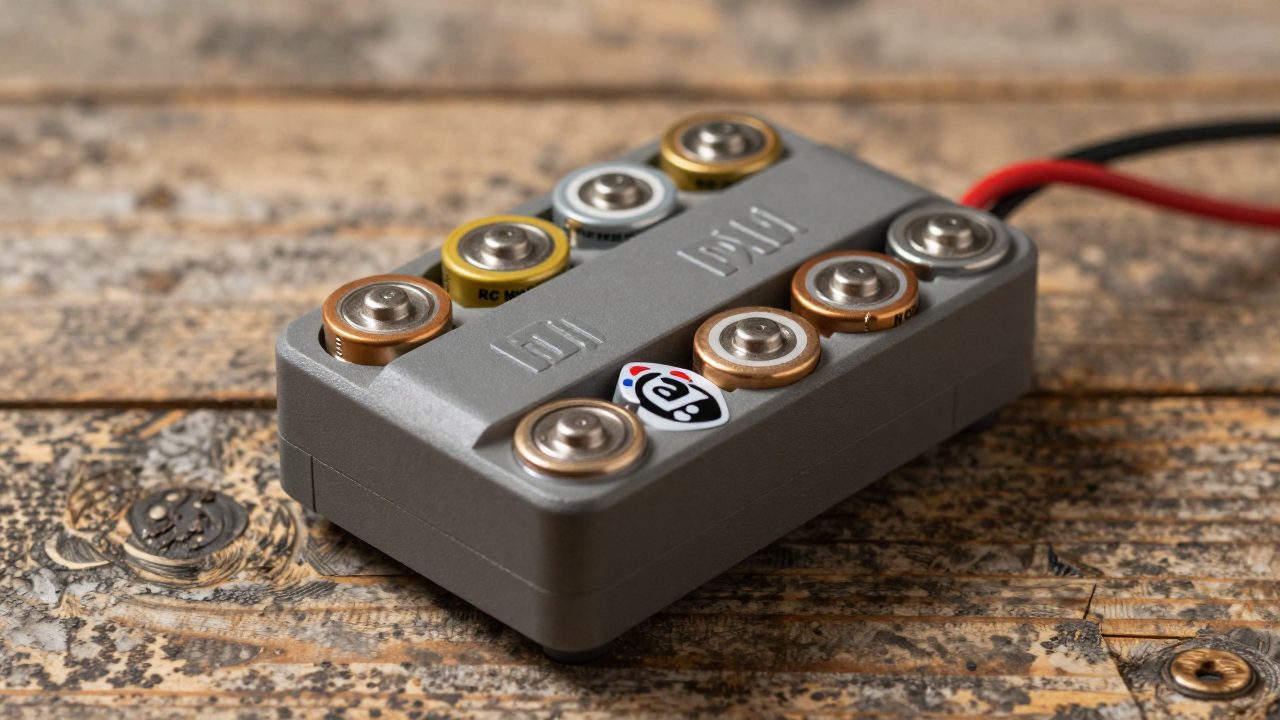
An RC transmitter doesn’t draw much current compared to the vehicle it’s controlling, but it needs to hold steady voltage for hours in the field — a transmitter that browns out mid-flight or mid-drive is worse than a dead receiver battery. The real choice is chemistry: rechargeable NiMH is the cheapest per-use over time but its voltage sags as it discharges; primary lithium (Energizer Ultimate Lithium) holds voltage flatter and performs better in cold weather but isn’t rechargeable; rechargeable lithium-ion AAs (EBL, Pale Blue Earth) are a newer middle ground that recharges via USB-C while holding a true 1.5V like alkaline. Plain alkaline is the one to avoid for a transmitter you use regularly — fine as a glovebox backup, not as your primary set.
| # | Product | Price | Where to buy |
|---|---|---|---|
| 1 | Panasonic Eneloop Pro AA (2550mAh NiMH, 8-pack) | $40-$48 | Amazon · eBay |
| 2 | Panasonic Eneloop AA (2100mAh NiMH, 8-pack) | $17-$33 | Amazon · eBay |
| 3 | Energizer Ultimate Lithium AA (8-pack) | $21-$23 | Amazon · eBay |
| 4 | EBL Rechargeable Lithium AA 1.5V (USB-C, 4-pack) | $20-$25 | Amazon · eBay |
| 5 | Pale Blue Earth AA Lithium Rechargeable (4-pack) | $29-$32 | Amazon · eBay |
| 6 | Duracell Rechargeable AA NiMH (4-pack) | $14-$20 | Amazon · eBay |
| 7 | Duracell Coppertop AA Alkaline (8-pack) | $10-$12 | Amazon · eBay |
The picks, in detail
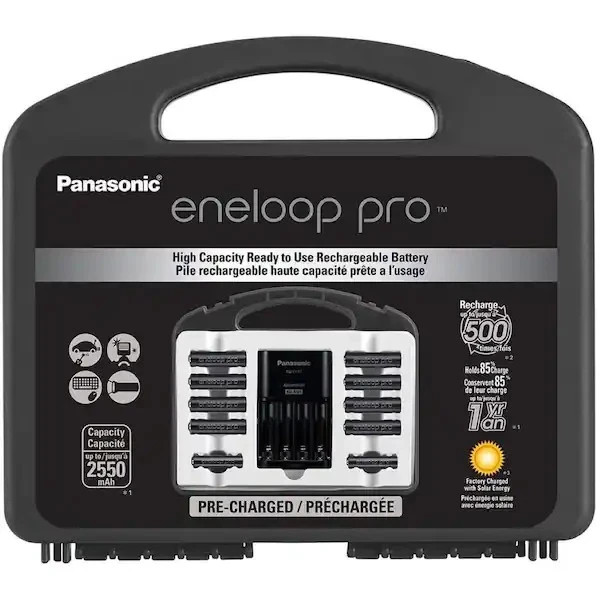
Panasonic Eneloop Pro AA (2550mAh NiMH, 8-pack)
The highest-capacity mainstream Eneloop variant, trading some cycle life for more capacity per charge than the standard Eneloop below.
- 2550mAh rated capacity
- Pre-charged from the factory
- 8-pack with storage case
- Highest capacity in the Eneloop lineup for longer runtime per charge
- Panasonic’s low self-discharge tech means it holds charge for months in a bag
- Rated for fewer charge cycles than the standard Eneloop (about 500 vs. 2100)
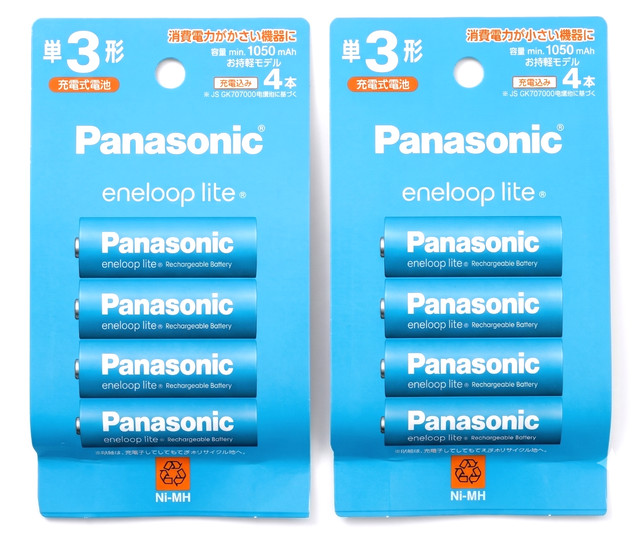
Panasonic Eneloop AA (2100mAh NiMH, 8-pack)
The standard Eneloop, trading a bit of capacity for a much longer rated cycle life — the better pick if you’re charging and using these constantly.
- 2100mAh rated capacity
- Rated for up to 2100 charge cycles
- Low self-discharge, pre-charged from factory
- Far more charge cycles than the Pro variant for heavy daily use
- One of the most field-proven rechargeable AA lines for hobby electronics
- Like all NiMH, voltage sags gradually through the discharge curve rather than holding flat

Energizer Ultimate Lithium AA (8-pack)
Primary (non-rechargeable) lithium cells that hold voltage flatter under load than any NiMH or alkaline, and keep performing in cold weather better than either.
- Lithium iron disulfide chemistry
- Rated for extreme temperature performance
- 1.5V nominal, flatter discharge curve than alkaline
- Best cold-weather performance of any chemistry here — relevant for winter flying or driving sessions
- Flattest voltage curve under load, so transmitter behavior stays consistent as the pack discharges
- Not rechargeable, so cost adds up if you fly or drive often

EBL Rechargeable Lithium AA 1.5V (USB-C, 4-pack)
A rechargeable lithium-ion AA that outputs a true 1.5V like alkaline (unlike NiMH’s 1.2V), recharging directly via a built-in USB-C port with no separate charger needed.
- True 1.5V lithium-ion output
- Built-in USB-C charging port per cell
- LED charge indicator
- Matches alkaline’s 1.5V output instead of NiMH’s lower 1.2V, which some transmitters read more accurately for their battery gauge
- No separate charger needed — just a USB-C cable
- Newer technology with less multi-year track record than Eneloop NiMH

Pale Blue Earth AA Lithium Rechargeable (4-pack)
A premium version of the same USB-C rechargeable lithium concept as the EBL, with a longer-rated cycle life and included charging cable.
- USB-C rechargeable lithium-ion, 1.5V output
- Rated for 1000+ charge cycles
- Includes 4-in-1 USB-A to USB-C charging cable
- Longer rated cycle life than most budget USB-C rechargeable options
- Fast charging, roughly under 2 hours per full cycle
- Priced above the EBL for the same basic concept
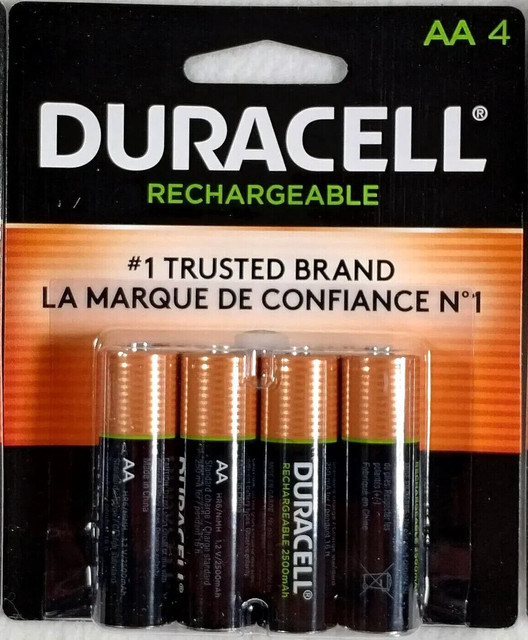
Duracell Rechargeable AA NiMH (4-pack)
A mainstream, easy-to-find NiMH alternative to Eneloop, sold pre-charged and widely stocked at general retailers.
- Pre-charged NiMH
- Widely available at general retailers, not just hobby shops
- All-purpose rechargeable AA
- Easier to find in a pinch at a regular grocery or drug store than Eneloop
- Familiar mainstream brand
- Generally rated for fewer cycles and slightly lower capacity than Eneloop
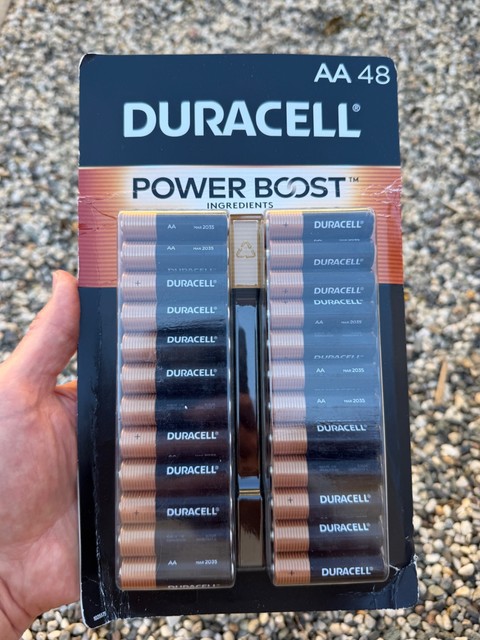
Duracell Coppertop AA Alkaline (8-pack)
Standard alkaline — the cheapest option and fine as an emergency backup pack in your field bag, but not recommended as your primary transmitter batteries.
- Standard alkaline chemistry
- Widely available everywhere
- Long shelf life in storage
- Cheapest option and available at literally any store
- Long unused shelf life for a backup pack that sits in a bag
- Voltage drops off faster under sustained moderate drain than lithium or NiMH — not the pack to rely on for a full day of flying or driving
Buying tips
- If your transmitter’s battery meter is calibrated for 1.2V NiMH cells, swapping in 1.5V lithium or alkaline can make the gauge read inaccurately (often showing more charge than is really left) — check your radio’s battery-type setting if it has one.
- Keep alkaline as a backup only, not your primary set, for any transmitter you use for more than casual short sessions — its voltage sags too much under sustained moderate drain.
- USB-C rechargeable lithium AAs (EBL, Pale Blue Earth) are the newest option and worth it if you want alkaline-matching 1.5V output without buying disposables — NiMH remains the cheaper long-run choice if you don’t mind the lower 1.2V nominal voltage.
As an Amazon Associate and eBay Partner, toptenpick.com earns from qualifying purchases. Prices and availability are subject to change.