

As an Amazon Associate and eBay Partner, toptenpick.com earns from qualifying purchases. Prices and availability are subject to change.
Be honest about what this build is before shopping: NVIDIA discontinued the GTX 1080 Ti in 2018 and moved the whole GTX 10-series to legacy driver status (critical security fixes only, no new Game Ready optimizations) as of 2024, and most modern game engines have dropped SLI support entirely. So every card below is a used-market buy, priced off real listings rather than any imagined retail price, and this is a build for retro/benchmark rigs, older SLI-supported titles, or GPU-compute workloads rather than an expectation of doubled frame rates in anything current. The 1080 Ti uses a traditional SLI bridge (not NVLink), so you’ll also need an SLI-ready motherboard with two properly spaced x8-or-better PCIe slots and a compatible HB bridge.
| # | Product | Price | Where to buy |
|---|---|---|---|
| 1 | NVIDIA GeForce GTX 1080 Ti Founders Edition | $130-$200 used | Amazon · eBay |
| 2 | EVGA GTX 1080 Ti FTW3 Gaming (iCX) | $180-$260 used | Amazon · eBay |
| 3 | EVGA GTX 1080 Ti SC2 Hybrid | $200-$300 used | Amazon · eBay |
| 4 | ASUS ROG Strix GTX 1080 Ti OC 11G | $180-$260 used | Amazon · eBay |
| 5 | MSI GTX 1080 Ti Gaming X 11G | $200-$320 used | Amazon · eBay |
| 6 | Gigabyte Aorus GTX 1080 Ti Xtreme Edition | $220-$350 used | Amazon · eBay |
| 7 | Zotac GTX 1080 Ti AMP Extreme | $200-$320 used | Amazon · eBay |
| 8 | PNY GTX 1080 Ti Blower Edition | $150-$220 used | Amazon · eBay |
| 9 | Palit GameRock Premium GTX 1080 Ti | $180-$260 used | Amazon · eBay |
| 10 | Colorful iGame GTX 1080 Ti Vulcan X OC | $250-$300 used | Amazon · eBay |
The picks, in detail
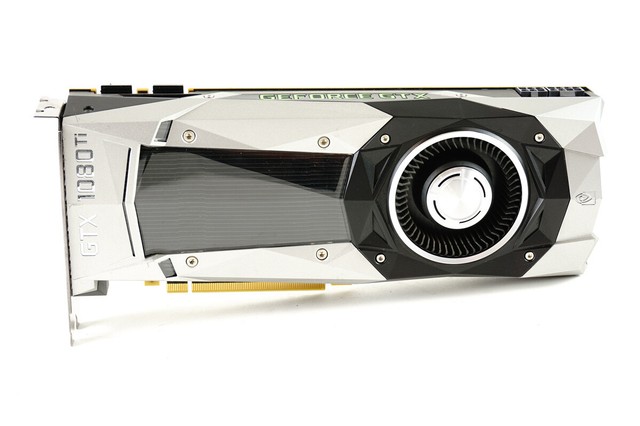
NVIDIA GeForce GTX 1080 Ti Founders Edition
The reference blower-style card NVIDIA sold directly at launch, still the most commonly listed used 1080 Ti on the resale market.
- Reference blower cooler, single-slot exhaust
- 11GB GDDR5X, reference clocks
- Vapor chamber cooling
- Most plentiful used listings, so it’s the easiest to source two matched cards
- Blower design exhausts heat out the case back, useful in an SLI setup where a second card blocks airflow to the first
- Reference clocks are the slowest of any 1080 Ti variant
- Blower coolers run louder under load than open-air AIB coolers

EVGA GTX 1080 Ti FTW3 Gaming (iCX)
EVGA’s flagship 1080 Ti with the iCX 9-sensor thermal monitoring system and a triple-fan open-air cooler.
- iCX technology with 9 onboard thermal sensors
- Triple-fan open-air cooler
- Factory overclock over reference clocks
- Runs cooler than reference blower cards, useful when a second card is stacked directly above it
- EVGA’s step-up and RMA history make it easier to verify a used unit’s condition
- Wider triple-fan cooler needs more case clearance for a second card
- Used prices run above plain reference or blower cards
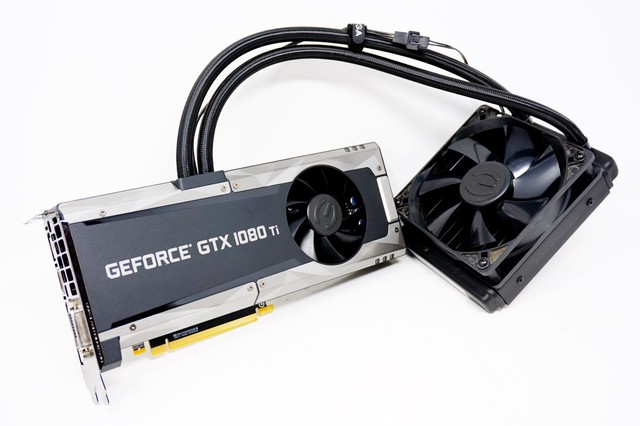
EVGA GTX 1080 Ti SC2 Hybrid
A factory all-in-one liquid-cooled variant, pairing a 120mm radiator with a small onboard fan for VRM cooling.
- 120mm AIO radiator plus onboard blower for VRAM/VRM
- Factory overclocked over reference
- iCX9 thermal sensor array
- Radiator-based cooling avoids stacking two hot air-cooled coolers directly on top of each other in SLI
- Runs quieter under sustained load than open-air triple-fan cards
- Radiator and tubing add case-mounting complexity, doubly so with two cards
- Pricier used than EVGA’s air-cooled FTW3

ASUS ROG Strix GTX 1080 Ti OC 11G
ASUS’s Strix-branded 1080 Ti with a DirectCU III triple-fan cooler and 0dB idle fan stop.
- DirectCU III triple-fan cooler
- 0dB idle fan-stop mode
- Factory OC over reference clocks
- Very common used listing, making it realistic to find two identical units for SLI
- Aura Sync RGB matches a broader ASUS-themed build
- Large triple-slot-width cooler eats into case airflow when a second card sits close behind
- Confirm both cards share the same BIOS/OC revision before pairing

MSI GTX 1080 Ti Gaming X 11G
MSI’s Twin Frozr VI triple-fan card, one of the most widely reviewed AIB 1080 Ti variants at launch.
- Twin Frozr VI triple-fan cooler
- Factory OC over reference clocks
- RGB Mystic Light edge lighting
- Strong reputation for cool, quiet operation among reviewers at launch
- Widely available used, simplifying sourcing a matched pair
- Among the pricier used AIB options for a 1080 Ti
- Large cooler shroud limits case compatibility
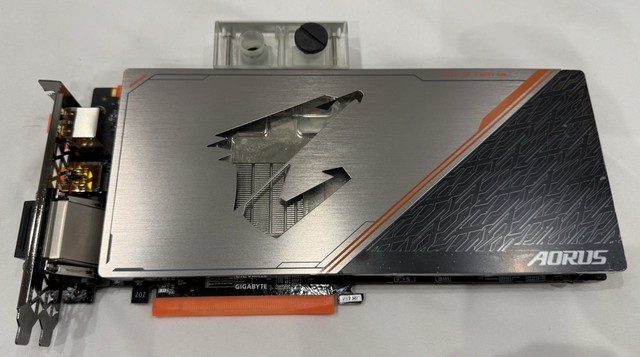
Gigabyte Aorus GTX 1080 Ti Xtreme Edition
Gigabyte’s top-end 1080 Ti, sold with either a triple-fan air cooler or a factory closed-loop WaterForce version.
- WINDFORCE triple-fan cooler (or WaterForce AIO on the liquid variant)
- Highest factory OC of Gigabyte’s 1080 Ti lineup
- RGB Fusion lighting
- Highest factory clocks of the mainstream AIB cards on this list
- WaterForce variant keeps thermals low for a stacked SLI pair
- Priced at the top of the used range here
- Less common on the used market than EVGA, ASUS, or MSI equivalents
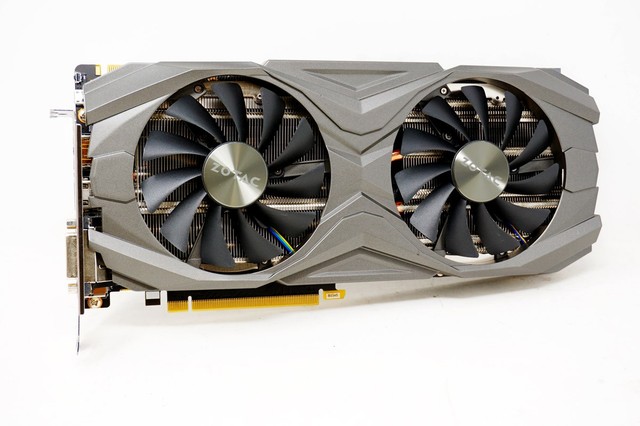
Zotac GTX 1080 Ti AMP Extreme
Zotac’s flagship 1080 Ti with a 16+2 power phase design and IceStorm cooling for sustained high clocks.
- IceStorm dual-fan cooler with Freeze Fan Stop
- 16+2 power phase VRM design
- Spectra RGB lighting
- Robust power delivery suited to running two cards under sustained load
- Less common brand, so listings sometimes go for less than EVGA/ASUS equivalents
- Zotac’s US retail presence was smaller, so fewer used listings to choose from
- Support/RMA options are more limited than EVGA or ASUS this many years out

PNY GTX 1080 Ti Blower Edition
A reference-style blower card similar to the Founders Edition, often the cheapest AIB-branded option on the used market.
- Reference blower cooler
- Reference clocks, 11GB GDDR5X
- Single-slot exhaust design
- Blower design exhausts heat directly out the case, the same SLI-friendly benefit as the Founders Edition
- Typically the least expensive branded 1080 Ti used
- No factory overclock over reference performance
- Fewer used listings than EVGA, ASUS, or MSI
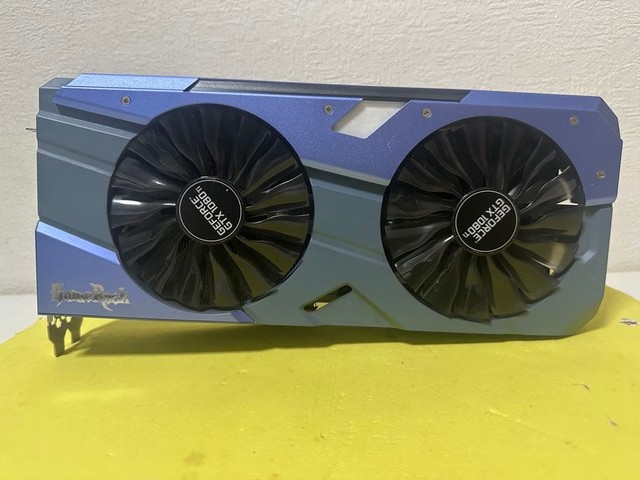
Palit GameRock Premium GTX 1080 Ti
A dual-fan card sold mainly in European/import markets, with an RGB-lit shroud and a factory OC.
- Dual-fan open-air cooler
- Factory OC over reference clocks
- RGB-lit fan shroud
- Slimmer dual-fan design than the triple-fan flagships, easing case fit for a second card
- Was priced below the Aorus Xtreme at launch, and used pricing tends to track that
- Much less common in US used listings — expect to source from import/EU sellers
- Smaller cooler than the triple-fan competition means it runs warmer under sustained SLI load
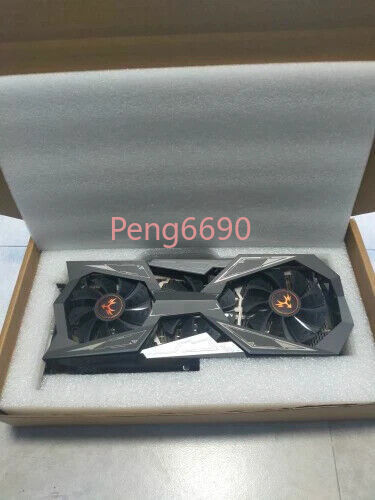
Colorful iGame GTX 1080 Ti Vulcan X OC
A triple-fan, triple-slot card from Colorful’s enthusiast iGame line, sold mainly through import/Asia-market channels but genuinely real and reasonably common on the used import market.
- Triple-fan SWORIZER cooler
- 16+2 phase PCB power delivery
- Onboard LCD status monitor
- Robust power delivery similar in spirit to the EVGA FTW3 and MSI Gaming X, at a competitive used price
- Distinctive LCD status display not found on the US-market AIB cards here
- Sold mainly through import channels in the US, so sourcing two matched units takes more hunting than an EVGA or ASUS card
- Less English-language documentation and community support than the mainstream Western AIB brands
Buying tips
- Buy two identical cards — same AIB partner, same model, ideally the same BIOS revision — for the most reliable SLI profile match; mixing brands (even both “1080 Ti”) can cause micro-stutter or an SLI profile that won’t engage at all.
- The 1080 Ti uses a traditional SLI bridge, not NVLink — confirm your motherboard has two SLI-ready PCIe x16 slots (running at least x8/x8) and budget for an HB SLI bridge if you don’t already own one.
- NVIDIA has moved the GTX 10-series to legacy driver status and most current game engines have dropped SLI support outright, so treat this purely as a budget/retro or GPU-compute build rather than an FPS-doubling upgrade for new titles.
As an Amazon Associate and eBay Partner, toptenpick.com earns from qualifying purchases. Prices and availability are subject to change.