

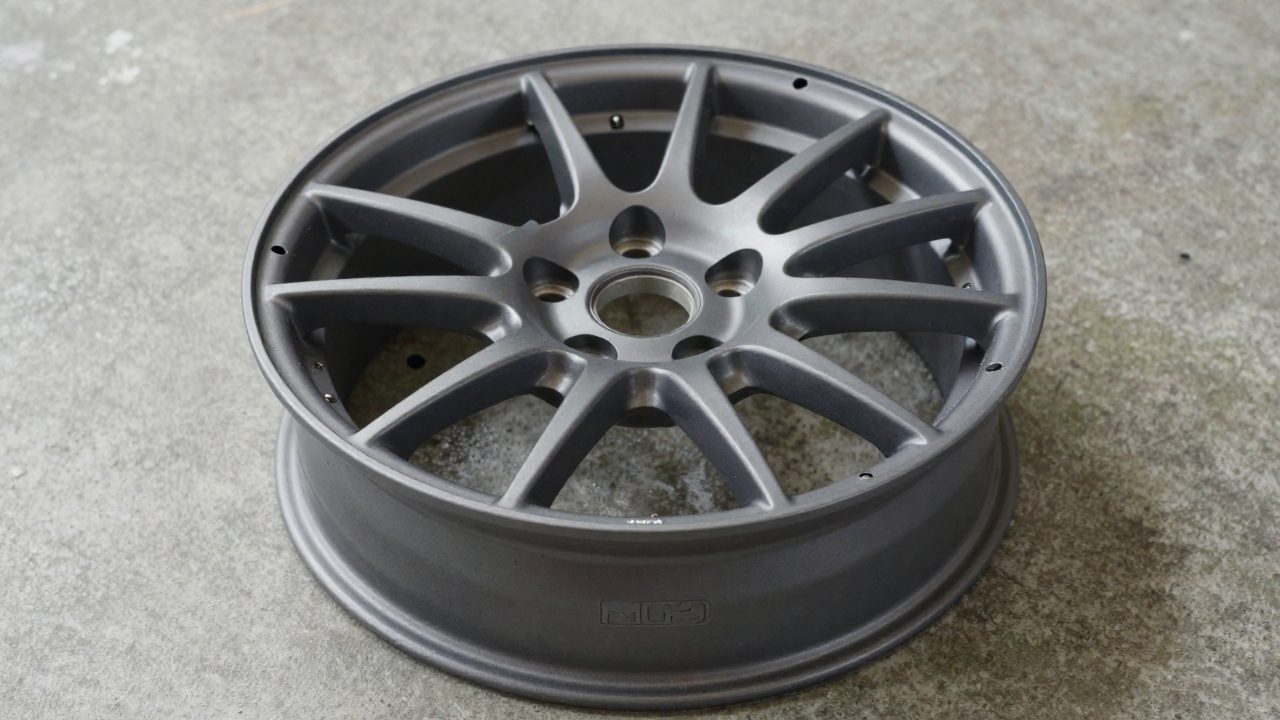
The best wheel size for an Infiniti Q50 is usually the factory diameter already approved for that exact car. Q50 production ran from 2014 through 2024, with different trim, drivetrain and brake packages. A wheel that bolts to one Q50 may still be unsuitable for another because of tire load capacity, offset, center-bore support or caliper clearance. Begin with the tire-and-loading label on the driver’s door jamb, then identify the model year, trim, AWD or rear-drive layout, and brake package before comparing wheel listings.
Use the factory package as the baseline
Q50 factory packages include 17-, 18- and 19-inch wheels. Common published examples include 17 x 7.5-inch wheels with 225/55R17 tires, 18-inch packages with 225/50R18 tires, and 19-inch packages with 245/40R19 tires. These are useful reference points, not a universal interchange chart. Two wheels of the same diameter can have different widths, offsets, spoke shapes and rated capacities. Keeping close to the original outside tire diameter helps preserve ride height, speedometer behavior, effective gearing and the inputs used by the car’s electronic systems.
Start with the essential fitment numbers
The Q50 uses a 5 × 114.3 mm bolt pattern. That only establishes the stud-circle match. A listing such as 18 x 8.5 +33 also identifies an 18-inch bead-seat diameter, 8.5-inch width and 33 mm positive offset. Width determines the tire widths that can seat safely; offset determines how far the wheel and tire move toward the suspension or fender. Both affect clearance at steering lock and through suspension travel. Confirm the wheel’s load rating as well as its dimensions. A visually similar wheel is not automatically appropriate for the vehicle’s axle loads.
Center bore and mounting
Confirm the wheel’s center-bore relationship to the Q50 hub. Use a hub-centric wheel with the correct bore, or a correctly sized hub-centric ring where the wheel maker specifies one. Lug nuts cannot correct a wheel that contacts the hub incorrectly. Check lug-seat geometry too: the original hardware and replacement wheel must use compatible seat shapes. Torque hardware to the Infiniti manual specification with a calibrated wrench and follow the maker’s recheck guidance.
17, 18 and 19 inches
A 17-inch setup offers the deepest sidewall for pothole protection, comfort and often lower tire cost, but it may not clear Sport or Red Sport brakes. Eighteen inches are often the practical balance of sidewall, tire choice and potential spoke clearance; an 18 x 8.5 wheel around a low-thirties positive offset is commonly discussed for stock suspension, not a universal fit. Nineteen inches retain a factory performance look but use shorter sidewalls, increasing pothole exposure and replacement cost. Choose tire size from the wheel maker’s approved width range and a rolling-diameter calculation.
Sport and Red Sport brake clearance
Diameter never proves brake fit. Caliper height and the wheel’s inner-spoke contour matter as much as nominal size, so a 19-inch wheel can still hit a caliper if its spokes sit too flat. Request a brake-clearance template or written confirmation for the exact Q50 year, trim and brake package. Do not use random spacers to solve contact: they change effective offset and can create fender-clearance, hub-support or stud-engagement problems.
Square versus staggered layouts
A square setup uses the same wheel and tire size at all four corners. It simplifies rotation, replacement and circumference matching. A staggered layout uses wider rear wheels and tires, usually for appearance or a rear-drive performance application. It prevents normal front-to-rear rotation and requires deliberate front/rear diameter and clearance calculations. Wider does not automatically mean taller, and the tire must clear under compression and at full steering lock.
AWD needs matched circumference
On an AWD Q50, keep all four tires closely matched in brand, model, size, tread depth and rolling circumference. A substantial difference can make the driveline compensate for different wheel speeds continuously. Replacing one damaged tire with a different model or visibly different remaining tread depth can therefore be a drivetrain decision, not just tire shopping. Follow Infiniti owner documentation and qualified tire-professional measurement guidance when replacement is needed.
Tires complete the fitment
Confirm that tire width is approved for the wheel’s measured width, load index meets or exceeds the door-placard requirement, and speed rating suits the vehicle and local conditions. Calculate proposed overall diameter rather than assuming a matching sidewall number preserves it when tire width changes. A low-profile tire can look right while providing little rim protection; an excessively tall tire can affect speedometer behavior and interfere with liners, fenders or suspension parts.
Suspension and legal tradeoffs
Lowering springs, coilovers, camber changes and aftermarket brake kits make stock fitment advice obsolete. Measure the actual car at ride height, include steering lock and suspension compression, and check alignment after a meaningful wheel-and-tire change. Local rules may regulate fender coverage, wheel protrusion, speedometer changes, inspection and insurance disclosure. Parking-lot clearance is not proof of a safe or legal highway-load setup.
A practical Q50 wheel checklist
- Identify the model year, drivetrain, trim and brake package.
- Use the door-jamb label for tire load, pressure and baseline size information.
- Confirm the 5 × 114.3 mm bolt pattern, center-bore method, width, offset and wheel load rating.
- Verify spoke-to-caliper clearance with the wheel maker for Sport or Red Sport brakes.
- Choose a tire approved for the wheel width and keep overall diameter close to stock.
- For AWD, maintain closely matched tires and rolling circumference at all four corners.
- Check steering lock, suspension compression, fender coverage and local rules before installation.
For most unmodified Q50s, retaining the fitted factory diameter is the lowest-risk answer. An 18-inch wheel is often the balanced choice, while a properly confirmed 19-inch package retains the factory performance look. The correct size is not decided by diameter alone: brake clearance, offset, tire rating and drivetrain compatibility must all be confirmed for the individual car.