

As an Amazon Associate and eBay Partner, toptenpick.com earns from qualifying purchases. Prices and availability are subject to change.
Start with the honest position, because this is a health topic and the marketing around it is not honest.
Whole-body vibration does not repair damaged nerves. No plate treats the underlying cause of peripheral neuropathy, whether that cause is diabetes, chemotherapy, a B12 deficiency or something else. The research that exists is small, mixed and mostly short-term, and where it suggests benefit it is for things adjacent to the condition rather than the condition itself — balance, circulation in the lower limbs, and the muscle weakness that comes from moving less. Those are genuinely worth something: falls are a serious risk when you cannot feel your feet properly, and anything that improves stability matters. But they are a different claim from the one the advertising makes.
Talk to your doctor before you buy one. That is not a formality here. Whole-body vibration has real contraindications — recent surgery, a history of blood clots, retinal conditions, severe osteoporosis, implanted devices and pregnancy among them — and a neurologist or physiotherapist who knows your case can tell you whether it is appropriate and at what settings.
There is one risk specific to this combination that is worth stating plainly. Reduced sensation means you may not feel injury. If you cannot feel your feet properly, you cannot feel the plate becoming uncomfortable, and a session that would have been cut short by a healthy person’s discomfort simply continues. Start with very short sessions at low intensity, and inspect your feet afterwards — which for anyone with diabetic neuropathy should be a daily habit regardless.
On the buying question: the machines split into two types. Pivotal (oscillating) plates see-saw around a central axis, which is gentler and produces less vertical shock through the spine. Lineal plates move straight up and down, which is more intense and used in athletic training. Pivotal at low frequency is the type used in the balance and circulation research.
Ten picks below, including the things that do more with better evidence behind them.
| # | Product | Price | Where to buy |
|---|---|---|---|
| 1 | Pivotal (Oscillating) Vibration Plate | $200-$800 | Amazon |
| 2 | Vibration Plate with a Support Handle or Bar | $250-$900 | Amazon · eBay |
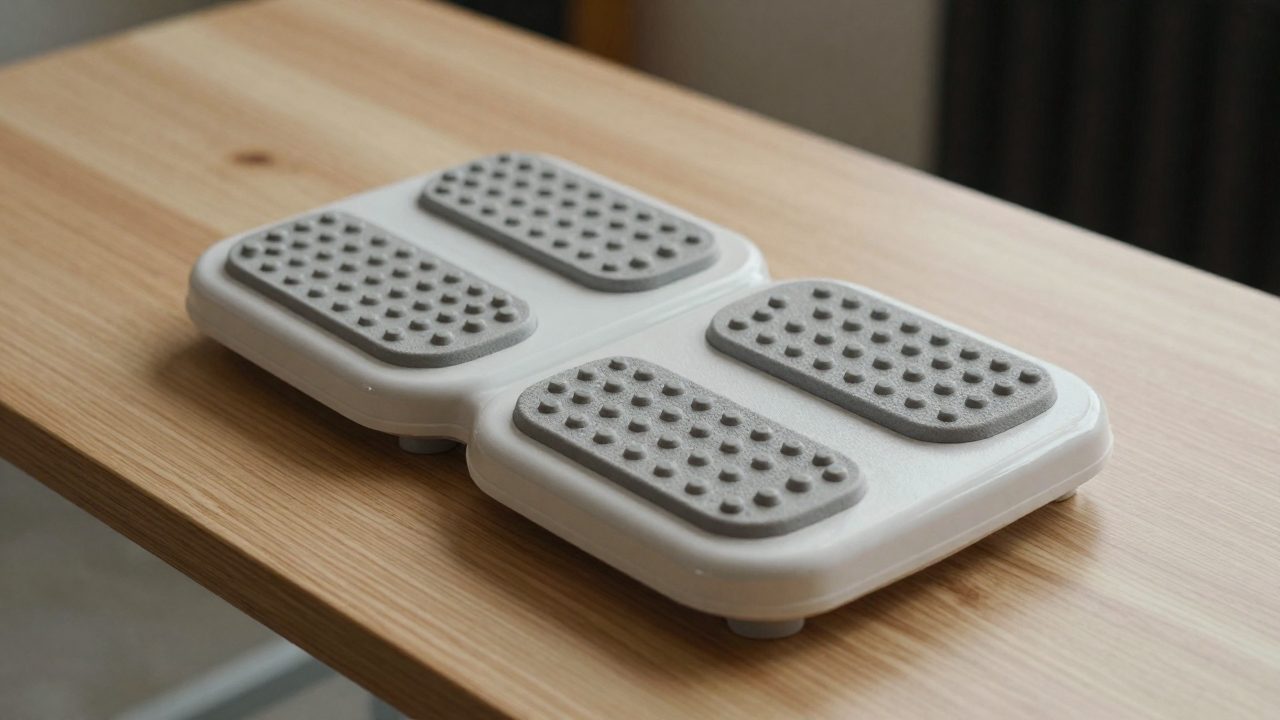
| 3 | Seated-Use Vibration Platform | $80-$300 | Amazon · eBay |
| 4 | Foot Massager with Heat | $60-$250 | Amazon · eBay |
| 5 | Balance Trainer or Wobble Cushion | $20-$70 | Amazon · eBay |
| 6 | Resistance Bands | $15-$45 | Amazon |
| 7 | Non-Slip Exercise Mat | $25-$70 | Amazon · eBay |
| 8 | Well-Fitted Shoes with a Wide Toe Box | $80-$250 | Amazon · eBay |
| 9 | Foot Inspection Mirror | $10-$30 | Amazon |
| 10 | Seamless Cushioned Socks | $20-$50 | Amazon · eBay |
The picks, in detail
Pivotal (Oscillating) Vibration Plate
The type used in most of the research on balance and circulation, and the gentler of the two. A pivotal plate rocks around a central axis like a see-saw, so the movement at your feet is alternating rather than a simultaneous vertical jolt — which means considerably less shock transmitted up through the spine and head. Look for a low frequency range at the bottom of its scale, a handle or bar to hold, and a non-slip surface. Start at the lowest setting for very short periods.
- See-saw motion around a central axis
- Low frequency range available
- Support handle or upright bar
- Non-slip platform surface
- Gentler than lineal, with less spinal shock
- The type used in balance and circulation studies
- Support handle matters if balance is affected
- Not a treatment for nerve damage itself
- Has genuine contraindications — ask your doctor first

Vibration Plate with a Support Handle or Bar
The feature that matters most for anyone with neuropathy, and it is a safety feature rather than a comfort one. Reduced sensation in the feet impairs balance, a vibrating surface impairs it further, and stepping off a plate after a session is a moment when people stumble. A sturdy upright bar or handle gives you something to hold throughout and — just as importantly — something to steady yourself on when getting on and off. Check it is firmly mounted rather than a flexible strap.
- Rigid upright bar or grab handles
- Firmly mounted to the base
- Height suited to standing use
- Non-slip platform
- Support during the session and getting on and off
- Directly addresses the fall risk
- Allows a stable stance without concentrating on balance
- Larger footprint than a flat plate
- Flexible straps are not the same as a rigid bar

Seated-Use Vibration Platform
For anyone whose balance makes standing on a moving surface unwise, which is a substantial share of people with significant neuropathy. A low platform used with your feet on it while seated in a chair delivers vibration to the lower limbs with no balance demand at all and no risk of falling. It is a smaller effect than standing use, and it removes the single largest risk. For many people this is the sensible way to try whole-body vibration at all, and it costs considerably less.
- Low platform for seated foot placement
- Adjustable intensity
- Compact and light
- No balance requirement
- No fall risk at all
- Suitable when standing on a plate is unwise
- Cheaper and far easier to store
- Smaller effect than standing use
- Does not train balance, which is a key benefit of standing
Foot Massager with Heat
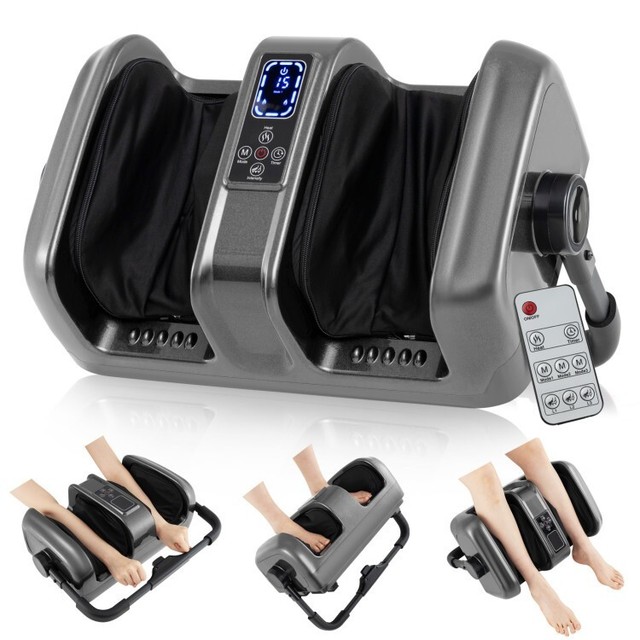
The gentler and far more accessible alternative, with a similar rationale — increasing local circulation and providing sensory input to the feet. It is used seated, costs a fraction of a vibration plate, and has none of the balance risk. One important caution specific to neuropathy: be extremely careful with any heat function. If you cannot feel temperature properly you cannot feel a burn developing, and burns from heated foot devices are a recognised problem in diabetic patients. Use heat only if your clinician says it is safe, or not at all.
- Kneading, rolling or vibrating action
- Optional heat function
- Used seated with no balance demand
- Timer and intensity settings
- Far cheaper and no fall risk
- Comfortable, so people actually use it regularly
- Provides sensory input to the feet
- Heat is genuinely risky with reduced temperature sensation
- Evidence for symptom benefit is limited
Balance Trainer or Wobble Cushion
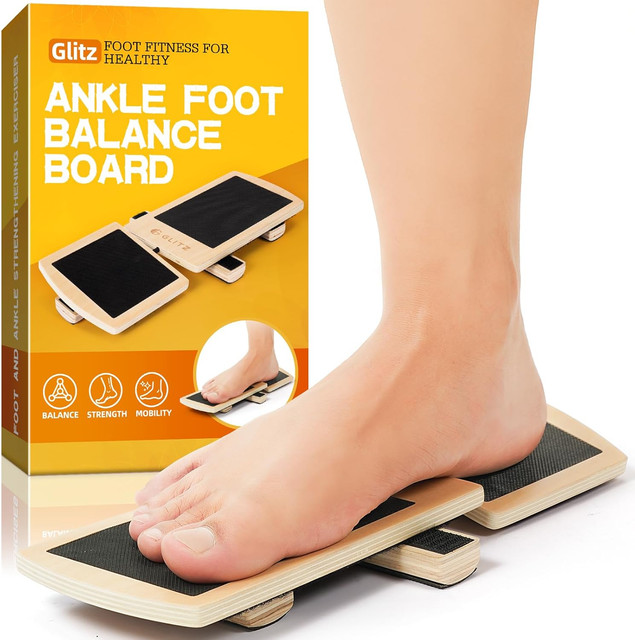
The intervention with the better evidence behind it, and the one a physiotherapist is most likely to recommend. Balance training is well supported for reducing falls in people with peripheral neuropathy, and the equipment is a cushion or a board rather than a machine. Crucially, it should be done with support nearby — a kitchen counter, a chair back, a wall corner — and ideally with exercises a physiotherapist has chosen. This is the cheapest item here and probably the most useful.
- Inflatable cushion or wobble board
- Progressive difficulty by inflation level
- Used standing or seated
- Very small and easy to store
- Balance training has the strongest evidence for fall reduction
- Extremely cheap
- A physiotherapist can prescribe specific progressions
- Must be used with support nearby
- Needs guidance to progress safely
Resistance Bands
Also better evidenced than vibration, and cheaper still. Neuropathy leads to reduced activity, reduced activity leads to muscle weakness, and weakness makes both balance and mobility worse — a loop that strength work interrupts directly. Bands let you do seated or standing lower-limb strengthening at home at whatever resistance suits, with no impact and no balance demand if done seated. Ask a physiotherapist which exercises apply to your situation rather than following a generic programme.
- Graded resistance levels
- Loop and tube styles
- Usable seated or standing
- Anchor and handle accessories
- Strength work is well supported for this population
- Can be done seated with no balance demand
- Costs very little and stores in a drawer
- Needs a programme rather than improvisation
- Latex bands perish and can snap

Non-Slip Exercise Mat
The floor under the equipment, and it matters more than it sounds. A vibration plate on a hard floor transmits noise and can walk across the surface; a plate on a thick soft mat absorbs some of the vibration it is meant to deliver. A dense, thin, non-slip mat is the right compromise. It also gives a stable surface for balance work and for stepping off a plate — and stepping off is the moment people stumble, per the safety note in the introduction.
- Dense, thin, non-slip construction
- Grips hard floors
- Reduces transmitted noise
- Rolls for storage
- Stops the plate walking across the floor
- Safe surface for stepping off
- Also serves for balance and band work
- Thick soft mats absorb the vibration
- Cheap mats slide on smooth floors

Well-Fitted Shoes with a Wide Toe Box
Belongs on any neuropathy list, and it is probably the single most important purchase. Poorly fitting shoes cause pressure injuries that someone with reduced sensation does not feel until they are serious — and foot ulcers are the complication that changes lives. A wide toe box, a seamless interior, no rubbing seams, and enough depth for any orthotic. Have your feet measured properly rather than buying your usual size, and check inside the shoe for grit before every wear.
- Wide, deep toe box
- Seamless or minimal-seam interior
- Removable insole for orthotics
- Firm heel counter for stability
- Prevents the pressure injuries that cause ulcers
- Improves stability, which reduces falls
- Accommodates prescribed orthotics
- Should be fitted properly rather than bought online blind
- Good therapeutic footwear is expensive
Foot Inspection Mirror
Simple, cheap and genuinely important. If you cannot feel your feet, you have to look at them — every day, including the soles and between the toes, where you cannot see without help. A long-handled mirror makes that possible without contorting. This is standard advice from every diabetes and neuropathy service, and it is the habit that catches a blister, a cut or a pressure mark while it is still trivial rather than after it has become an ulcer.
- Long handle with an angled mirror
- Unbreakable acrylic on many
- Lit versions available
- Lightweight
- Makes daily foot inspection actually possible
- Catches problems while they are still trivial
- Costs very little
- Requires the daily habit to be worth anything
- Small mirrors make it hard to see the whole sole
Seamless Cushioned Socks
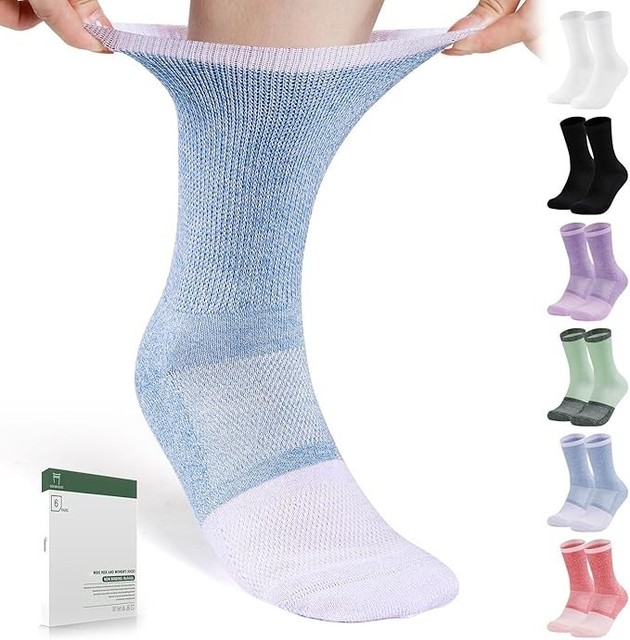
The other half of the footwear story. Socks with a prominent toe seam create a pressure point that someone with reduced sensation will not feel, and a tight elastic top restricts circulation in a limb where circulation is already the concern. Seamless, non-binding, cushioned socks in a moisture-wicking material address all three. Change them daily, and check the inside of the shoe for anything that has worked its way in — grit, a small stone, a fold in the insole.
- Seamless toe construction
- Non-binding, loose top
- Cushioned sole
- Moisture-wicking material
- Removes a pressure point you would not feel
- Non-binding tops do not restrict circulation
- Cushioning reduces peak pressures
- More expensive than ordinary socks
- Need replacing as the cushioning flattens
Buying tips
- Talk to your doctor before buying a vibration plate. Whole-body vibration has real contraindications — recent surgery, a history of blood clots, retinal conditions, severe osteoporosis, implanted devices and pregnancy among them. A neurologist or physiotherapist who knows your case can say whether it is appropriate and at what settings, which no article can.
- No plate treats nerve damage. The research that exists points to possible benefits for balance, lower-limb circulation and the muscle weakness that comes from moving less — not to repairing nerves. Those are worth having, and they are a different claim from the one the advertising makes. Buy with the realistic expectation.
- Reduced sensation means you may not feel injury. If you cannot feel your feet properly, you will not feel a session becoming uncomfortable, and the discomfort that would stop a healthy person simply does not arrive. Start with very short sessions at the lowest intensity, and inspect your feet afterwards every time.
- Choose pivotal over lineal, and choose a support bar. Pivotal plates see-saw around a central axis and transmit far less shock up the spine; lineal plates move straight up and down and are more intense. A rigid handle or upright bar is a safety feature rather than a convenience, because balance is already affected and stepping off is when people stumble.
- Balance training and strength work have better evidence. Reducing falls is the outcome that matters most in peripheral neuropathy, and balance exercises and lower-limb strengthening are the interventions with real support behind them. A wobble cushion and a set of resistance bands cost a fraction of a vibration plate. Ask a physiotherapist for a programme.
- Be very careful with heated devices. If you cannot feel temperature properly you cannot feel a burn developing, and burns from heated foot devices are a recognised problem. Use heat only if your clinician has said it is safe for you, and if in any doubt, choose a device without a heat function at all.
- Footwear is probably more important than any machine here. Poorly fitting shoes cause pressure injuries that you will not feel until they are serious, and foot ulcers are the complication that changes lives. A wide toe box, a seamless interior, and feet measured properly rather than a size assumed. Check inside the shoe for grit every single time.
- Inspect your feet every day, including the soles. A long-handled mirror makes it possible without contorting. This is standard advice from every neuropathy and diabetes service and it is the habit that catches a blister or a cut while it is still trivial. It costs almost nothing and it matters more than anything else on this list.
As an Amazon Associate and eBay Partner, toptenpick.com earns from qualifying purchases. Prices and availability are subject to change.